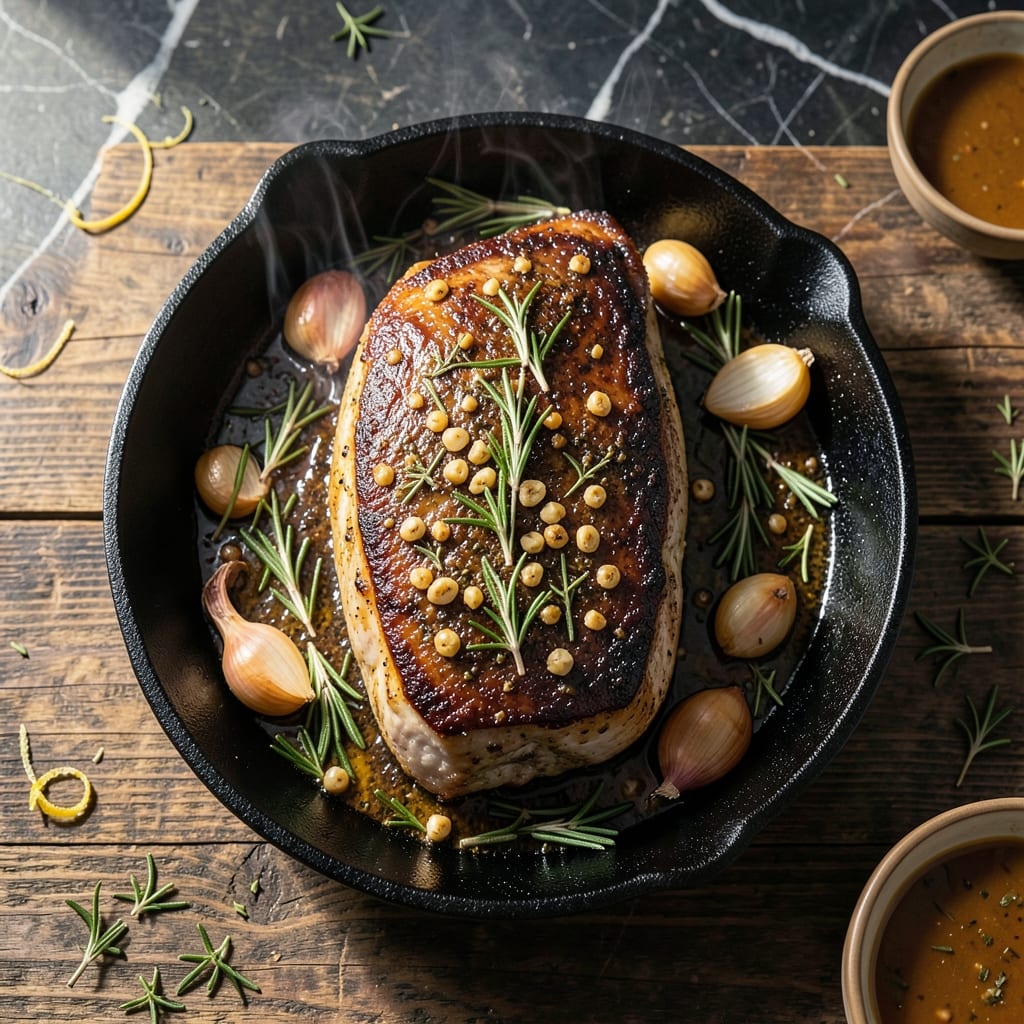
There’s a reason cast iron is the chef’s choice for pork tenderloin—it delivers perfectly seared meat with a caramelized crust that locks in juices. This method transforms an affordable cut into a restaurant-worthy centerpiece.
The secret lies in preheating the skillet to achieve that ideal sear, then finishing in the oven for even cooking. A simple herb crust adds aromatic depth without overpowering the pork’s natural flavor.
What emerges is tender meat with a golden-brown crust, juicy throughout with herbs that form a flavorful seal. The cast iron ensures consistent heat distribution for reliable results every time.
Serve with roasted vegetables or mashed potatoes to complete the meal. This technique works for both weeknight dinners and special occasions.
Ingredients for Pork Tenderloin Recipe in Cast Iron Skillet
Transform an affordable cut into a restaurant-worthy centerpiece with these precise ingredients for perfect searing.
| Ingredient | Amount | Notes |
|---|---|---|
| Pork Tenderloin 🥩 | 1 ½ lb | Trimmed of excess fat |
| Kosher Salt 🧂 | 1 ½ tsp | Diamond Crystal preferred |
| Black Pepper 🌶️ | 1 tsp | Freshly cracked for best flavor |
| Garlic Cloves 🧄 | 4 cloves | Minced finely for crust |
| Fresh Rosemary 🌿 | 2 tbsp | Finely chopped, stems discarded |
| Fresh Thyme 🍃 | 2 tbsp | Finely chopped, stems discarded |
| Dijon Mustard 🟡 | 2 tbsp | For herb crust adhesion |
| Olive Oil 🫒 | 2 tbsp | High smoke point for searing |
| Unsalted Butter 🧈 | 2 tbsp | For basting during searing |
| Shallot 🧅 | 1 whole | Minced for herb crust |
| Dry White Wine 🍷 | ¼ cup | For deglazing pan |
| Chicken Stock 🥣 | ¼ cup | Low-sodium preferred for control |
[recipe_ingredient_scaler]
The pork tenderloin should be uniform in thickness for even cooking. Whole Foods or Costco offer high-quality options with good marbling. Diamond Crystal kosher salt is the professional choice for consistent seasoning. For the herbs, fresh rosemary and thyme are non-negotiable—the dried versions lack the aromatic depth needed for this crust.
No white wine? Substitute with additional chicken stock and a splash of lemon juice. If fresh herbs are unavailable, dried herbs at one-third the quantity work in a pinch, though the flavor will be less vibrant. The Dijon mustard can be replaced with whole-grain mustard for a rustic texture. Clarified butter may be used instead of regular butter for a higher smoke point.
Pork tenderloin is best cooked immediately after purchase but can be refrigerated for up to 2 days. The herb crust mixture can be prepared 1 day ahead and stored in the fridge. Leftovers keep well for 3-4 days and reheat beautifully in a low oven.
Why You’ll Love This Recipe
- One Pan Wonder: I love that everything cooks in a single cast iron skillet—pork, garlic, rosemary, and all.
- Dinner in 20: The tenderloin sears fast, and the aromatics do the rest.
- Crowd Pleaser: From weeknight dinners to Sunday suppers, this never fails.
- Leftover Magic: Honestly, the flavors taste even better the next day in sandwiches.
Step-by-Step Instructions for Pork Tenderloin in Cast Iron Skillet
These proven steps ensure a perfectly seared tenderloin with a fragrant herb crust every time.
Step 1: Prepare the Herb Crust Mixture
In a small bowl, combine the 2 tbsp Dijon mustard, 2 tbsp Fresh Rosemary, 2 tbsp Fresh Thyme, minced 4 cloves Garlic Cloves, and minced 1 whole Shallot. The mustard acts as an adhesive for the herb crust while adding a subtle tang.
I use finely minced aromatics to ensure even distribution and maximum flavor contact with the meat. The mixture should be thick enough to cling to the pork tenderloin without running off during searing.
Step 2: Season and Coat the Pork Tenderloin
Pat the 1.5 lb Pork Tenderloin completely dry with paper towels. This crucial step ensures a proper sear. Season all sides aggressively with the 1.5 tsp Kosher Salt and 1 tsp Black Pepper.
Brush the herb mixture evenly over the entire surface of the pork. The mustard base will create a beautiful golden crust when seared. Let the coated tenderloin rest at room temperature for 15 minutes while you preheat your skillet.
Step 3: Sear the Pork Tenderloin to Perfection
Place a cast iron skillet over medium-high heat and add the 2 tbsp Olive Oil. When the oil shimmers and a drop of water sizzles violently, add the pork tenderloin. Sear undisturbed for 3-4 minutes per side until a deep golden crust forms.
Reduce heat to medium and add the 2 tbsp Unsalted Butter to the skillet. Tilt the pan slightly and baste the pork with the melted butter continuously for 2 minutes. This basting process enhances the herb crust and adds richness.
Step 4: Deglaze and Finish Cooking
Transfer the pork to a plate and tent with foil. Pour out excess fat from the skillet, leaving the browned bits. Return to medium-high heat and add the 0.25 cup Dry White Wine. Scrape the fond from the bottom with a wooden spoon.
Let the wine reduce by half, then add the 0.25 cup Chicken Stock. Return the pork to the skillet, spoon the liquid over it, and cook for 3-5 minutes until the internal temperature reaches 145°F.
Step 5: Rest and Serve
Transfer the pork to a cutting board and let it rest for 10 minutes. This allows the juices to redistribute, ensuring tenderness. The internal temperature will rise 5-10°F during resting.
Slice the pork tenderloin against the grain into ½-inch thick medallions. Spoon the pan sauce over the top before serving. The result should be a perfectly tender interior with a crisp, herb-infused exterior.
Pro Tips For Making Pork Tenderloin Recipe In Cast Iron Skillet
- Pat It Dry: Blot the pork tenderloin with paper towels before seasoning—excess moisture steams instead of sears, and I learned this the hard way after too many pale, soggy crusts.
- Start Ripping Hot: Get that cast iron screaming hot before adding the pork, about 2 minutes on medium-high, or the meat will stick and tear instead of forming a proper crust.
- Smash the Garlic: Lightly crush the garlic cloves with the flat of your knife—no need to peel—so they infuse the oil without burning, and you can remove them before serving.
- Rest Under Foil: Tent the cooked tenderloin with foil for 10 minutes before slicing, or all those juices you worked for will end up on the cutting board, not in the meat.
Common Mistakes When Making Great pork tenderloin recipe in cast iron skillet
Overcrowding the Pan
Your cast iron needs room for heat circulation. Searing too much at once drops the temperature, leading to steamed pork instead of a crisp crust. I cook 1-2 tenderloins max in a 12-inch skillet for proper browning.
Skipping the Dry
Moisture on the surface prevents a good sear. Pat the pork completely dry with paper towels before seasoning. Even a little dampness creates steam, which softens the crust instead of caramelizing it. 💡
Peeking While Searing
Resist the urge to move or flip the pork early. Let it sear undisturbed for 3-4 minutes per side to develop that deep golden crust. I set a timer to avoid premature flipping.
Under-Seasoning
Pork tenderloin needs bold seasoning. Use the full 1.5 tsp kosher salt and 1 tsp black pepper—this isn’t the time for timidity. The herb crust adds flavor, but the base seasoning is crucial.
Rushing the Rest
Slicing too soon causes juices to spill out, leaving dry meat. Always rest for the full 10 minutes after cooking. I tent with foil to keep it warm while the internal temperature stabilizes. ⏰
Ignoring Temperature
Pork is safe at 145°F, but overcooking dries it out. Use an instant-read thermometer—I pull mine at 140°F and let carryover cooking do the rest. Guessing leads to disappointment.
Nutrition Facts
Frequently Asked Questions
What temperature should the oven be for finishing?
Preheat your oven to 400°F for even cooking after searing. This high heat ensures the pork reaches 145°F internally while maintaining a crisp crust.
Can I use a different pan if I don’t have cast iron?
Stainless steel works as a substitute, but avoid nonstick as it won’t achieve the same sear. Cast iron’s heat retention is ideal for this method.
How do I know when it’s done without a thermometer?
The meat should feel firm but still slightly springy to the touch. However, a thermometer is the most reliable way to avoid overcooking.
Can I make this with a larger cut of pork?
This recipe is optimized for pork tenderloin’s size and cooking time. For larger cuts like pork loin, adjust the cooking time and temperature accordingly.

Trained in classic French technique but raised on slow-cooked ribs and spicy rubs, she blends culinary skill with smoke and soul.
- Best Smoked Oxtail Recipe: Deep-Rich Flavor After Low-and-Slow Cooking - October 14, 2026
- Pit Boss Smoked Prime Rib Roast Recipe: Bark-to-Bone Crispness in 4 Hours - October 14, 2026
- Smoked Tuna Steak Recipe: Seared Crust Meets Silky Centers - October 14, 2026