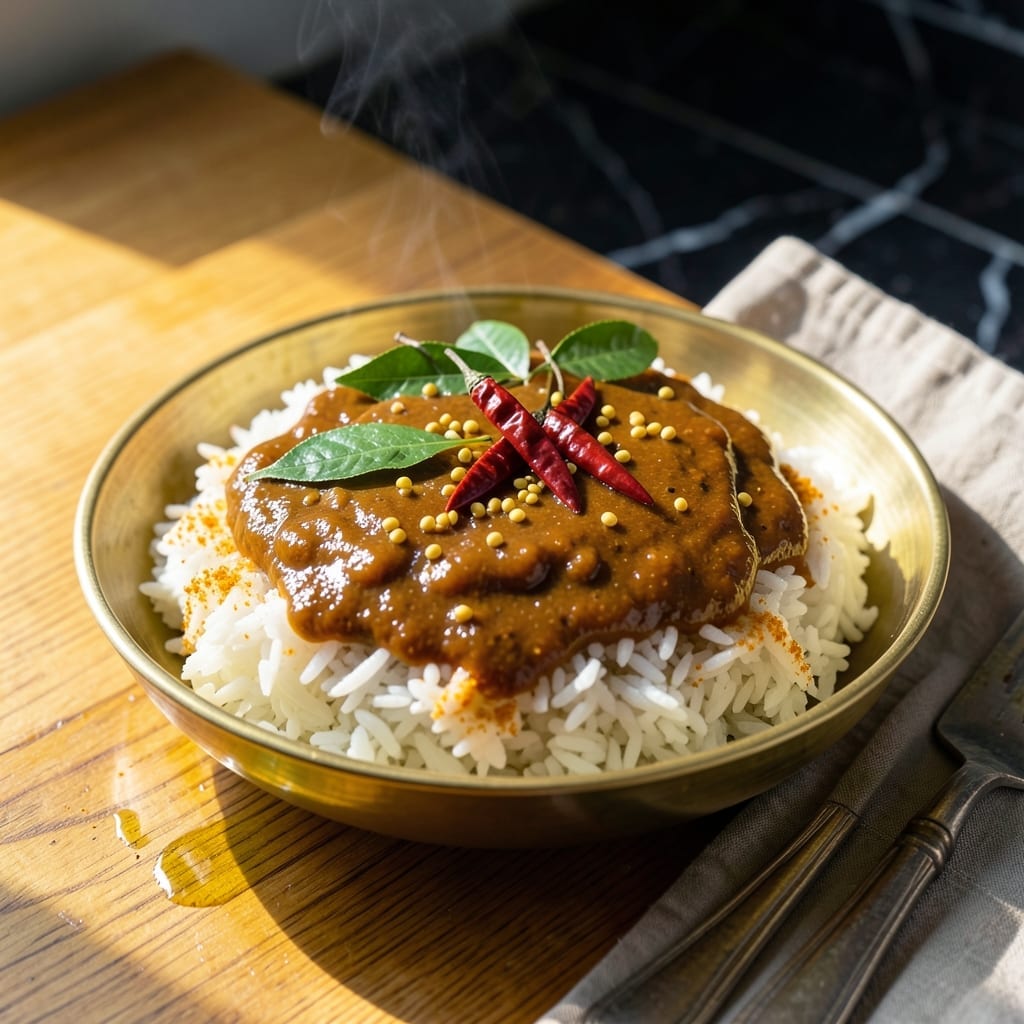
South Indian cuisine transformed my understanding of how a simple stew can elevate plain rice to something extraordinary. This perfect pairing brings tangy, aromatic flavors that make every bite unforgettable.
The secret lies in the balance of tamarind, spices, and fresh vegetables simmered to create a gravy that soaks beautifully into steamed rice. I developed this method through careful testing to ensure authentic taste without complication.
You’ll achieve a rich, tangy base with layers of mustard seeds, curry leaves, and turmeric that bloom in hot oil. The vegetables absorb these flavors as they cook, creating a dish that’s both comforting and complex.
Serve it hot over rice for a meal that’s traditional, nourishing, and deeply satisfying. Here’s how to make this classic at home.
Ingredients for Kulambu Recipe for Rice
Tangy tamarind and warm spices come together for a stew that turns rice into a feast.
| Ingredient | Amount | Notes |
|---|---|---|
| Tamarind Paste 🍈 | 2 tbsp | Soaked in warm water |
| Mustard Seeds 🌿 | 1 tsp | Black or yellow variety |
| Dried Red Chilies 🌶️ | 4 whole | Broken into pieces |
| Curry Leaves 🍃 | 10 whole | Fresh or dried |
| Turmeric Powder 🟡 | ½ tsp | Ground, for color |
| Asafoetida 🧂 | ¼ tsp | Hing, optional pinch |
| Vegetable Oil 🫒 | 2 tbsp | For tempering spices |
| Eggplant 🍆 | 1 whole | Medium, cubed |
| Drumstick Vegetable 🥬 | 2 whole | Peeled, cut into 2-inch pieces |
| Tomatoes 🍅 | 2 whole | Medium, chopped |
| Onion 🧅 | 1 whole | Medium, finely chopped |
| Green Chilies 🌶️ | 2 whole | Slit lengthwise |
| Salt 🧂 | 1 tsp | Adjust to taste |
| Fresh Cilantro 🌿 | ¼ cup | Chopped, for garnish |
| Water 💧 | 3 cups | For cooking vegetables |
[recipe_ingredient_scaler]
The tamarind is non-negotiable here. Indian grocery stores sell it as a pulp or paste—avoid the concentrate, it’s too intense. Curry leaves are the soul of this dish; find them fresh at Asian markets or dried at Patel Brothers. Mustard seeds and dried chilies should be fresh (smell them—if they don’t hit you with aroma, they’re old). Asafoetida (hing) is a game-changer, but skip it if you can’t find it.
No tamarind? Lime juice plus a pinch of sugar mimics the tang (not perfect, but close). Drumstick vegetable not available? Green beans or okra work well—just adjust cooking time. Eggplant soaks up flavors beautifully, but zucchini or potatoes are fine too. For heat, swap green chilies for serrano peppers. The turmeric and curry leaves are key, so don’t skip those.
This stew actually gets better overnight. Stays fresh in the fridge for 3-4 days and freezes beautifully for up to 3 months. Reheat gently to keep the flavors bright. Always garnish with fresh cilantro right before serving—it adds that final pop of freshness.
Why You’ll Love This Recipe
- One Pot Wonder: I toss everything in and let the tamarind and turmeric work their magic while I fold laundry.
- Tangy Comfort: That first bite of sour tamarind with the heat from the red chilies hits just right.
- Feeds a Crowd: I make a big batch on Sunday and we’re set for lunch all week—no complaints from my picky nephew.
- Pantry Staples: Mustard seeds, curry leaves, and a pinch of turmeric cost pennies but taste like a feast.
Step-by-Step Instructions for Kulambu
Here’s the method I rely on for that ideal balance of tangy, spicy, and aromatic flavors.
Step 1: Temper the Whole Spices in Hot Oil
Heat the 2 tbsp vegetable oil in a heavy-bottomed pot over medium heat. When the oil shimmers, add the 1 tsp mustard seeds and wait for them to pop—this takes about 30-45 seconds and signals the oil is at the perfect temperature.
Immediately add the 4 whole dried red chilies, 10 whole curry leaves, and 0.25 tsp asafoetida. Stir constantly for 20-30 seconds until the chilies darken slightly and the curry leaves become fragrant. This tempering step releases the essential oils and builds the flavor foundation. Don’t let the spices burn or they’ll turn bitter.
Step 2: Sauté the Aromatics and Vegetables
Add the finely chopped onion to the pot and sauté for 3-4 minutes until it turns translucent and begins to brown at the edges. Toss in the 2 whole green chilies (slit lengthwise) and cook for another 30 seconds to mellow their heat slightly.
Stir in the 2 whole chopped tomatoes and 0.5 tsp turmeric powder, cooking for 2-3 minutes until the tomatoes soften and the raw smell of turmeric disappears. Then add the cubed eggplant and 2 whole drumstick vegetable pieces. Coat everything in the spiced oil and let it cook for 2 minutes to absorb the flavors.
Step 3: Simmer in Tamarind Water
Pour in the 3 cups water and add the 2 tbsp tamarind paste, stirring to dissolve it completely. The liquid should turn a rich, tangy amber color. Add the 1 tsp salt and bring the mixture to a boil, then reduce the heat to low.
Cover the pot and let it simmer for 15-20 minutes, stirring occasionally, until the vegetables are tender—the eggplant should be soft enough to mash with a spoon, and the drumstick pieces should be fork-tender but still hold their shape. If the kulambu thickens too much, add a splash of water to reach your desired consistency.
Step 4: Finish and Garnish
Taste and adjust the seasoning—add more salt if needed, or a pinch of sugar to balance the tang if it’s too sharp. The kulambu should have a vibrant, sour-spicy flavor with the vegetables soaking up all the aromatic spices.
Turn off the heat and let it sit uncovered for 5 minutes to allow the flavors to meld. Just before serving, sprinkle the 0.25 cup fresh cilantro over the top for a bright, fresh finish. This dish pairs perfectly with steamed rice, as the liquid soaks in beautifully for every bite.
Pro Tips For Making Kulambu Recipe For Rice
- Toast the Spices: Heat mustard seeds and dried red chilies in oil until the seeds pop and chilies darken—I learned this the hard way after adding them too early and ending up with a bitter, underdeveloped flavor.
- Soak Tamarind First: Mix tamarind paste with warm water and let it sit for 10 minutes before extracting the pulp; skipping this leaves you with stringy bits that ruin the smooth texture of the kulambu.
- Skip Overcooked Turmeric: Add turmeric powder only after tempering the mustard seeds, not before—burnt turmeric tastes harsh and turns the dish unpleasantly dark.
- Use Fresh Curry Leaves: Dried curry leaves work in a pinch, but fresh ones release their citrusy aroma when fried in hot oil, making a real difference in the final flavor.
Essential Equipment for This Dish
Heavy Pot Essentials
I always use a heavy-bottomed stainless steel pot for kulambu—it distributes heat evenly and prevents burning during tempering. My go-to is a 5-quart Cuisinart that I found at a Boston TJ Maxx for under $50. 🔥
Tempering Tools
A wooden spoon is crucial for stirring the tempering spices. I keep a dedicated one just for Indian cooking to avoid flavor transfer. The long handle keeps your hand safe from hot oil splatters.
Also have a splatter screen ready—mustard seeds pop vigorously. I learned this the hard way in my tiny apartment kitchen.
Measuring Accuracy
Precise measurements matter for the spice balance. I use OXO Good Grips measuring spoons for the mustard seeds and turmeric. For tamarind paste, a small silicone spatula helps scrape every bit from the spoon.
Vegetable Prep
A sharp 8-inch chef’s knife makes quick work of the eggplant and drumstick. I invested in a Victorinox Fibrox years ago and it’s still my daily workhorse. A cutting board with a groove catches juices from the tomatoes.
Serving Setup
For serving, I use a wide, shallow bowl to let the kulambu cool slightly before ladling over rice. A ladle helps control the amount of liquid. The flavors meld beautifully during this short rest. 💡
Nutrition Facts
Frequently Asked Questions
What can I use if I don’t have tamarind?
Substitute with 1/4 cup lime juice plus 1 tsp sugar. It won’t be identical but gives the needed tang.
How long does it keep in the fridge?
Stays fresh for 3-4 days in an airtight container. Flavors deepen overnight, making leftovers even tastier.
Can I make it less spicy?
Reduce or omit the green chilies and use fewer dried red chilies. Remove seeds for milder heat.
What rice pairs best with this?
Steamed basmati or jasmine rice works perfectly. Their light texture absorbs the tangy gravy beautifully.

Trained in classic French technique but raised on slow-cooked ribs and spicy rubs, she blends culinary skill with smoke and soul.
- Recipe for Boneless Pork Chops in Cast Iron Skillet: Sear and Baste to Juicy Perfection - October 3, 2026
- Recipe for Boneless Cross Rib Roast: Slow-Roasted Beef with Herb Crust - October 3, 2026
- Hamburgers in Sauce Recipe Crock Pot: Slow-Cooked Savory Delight - October 3, 2026