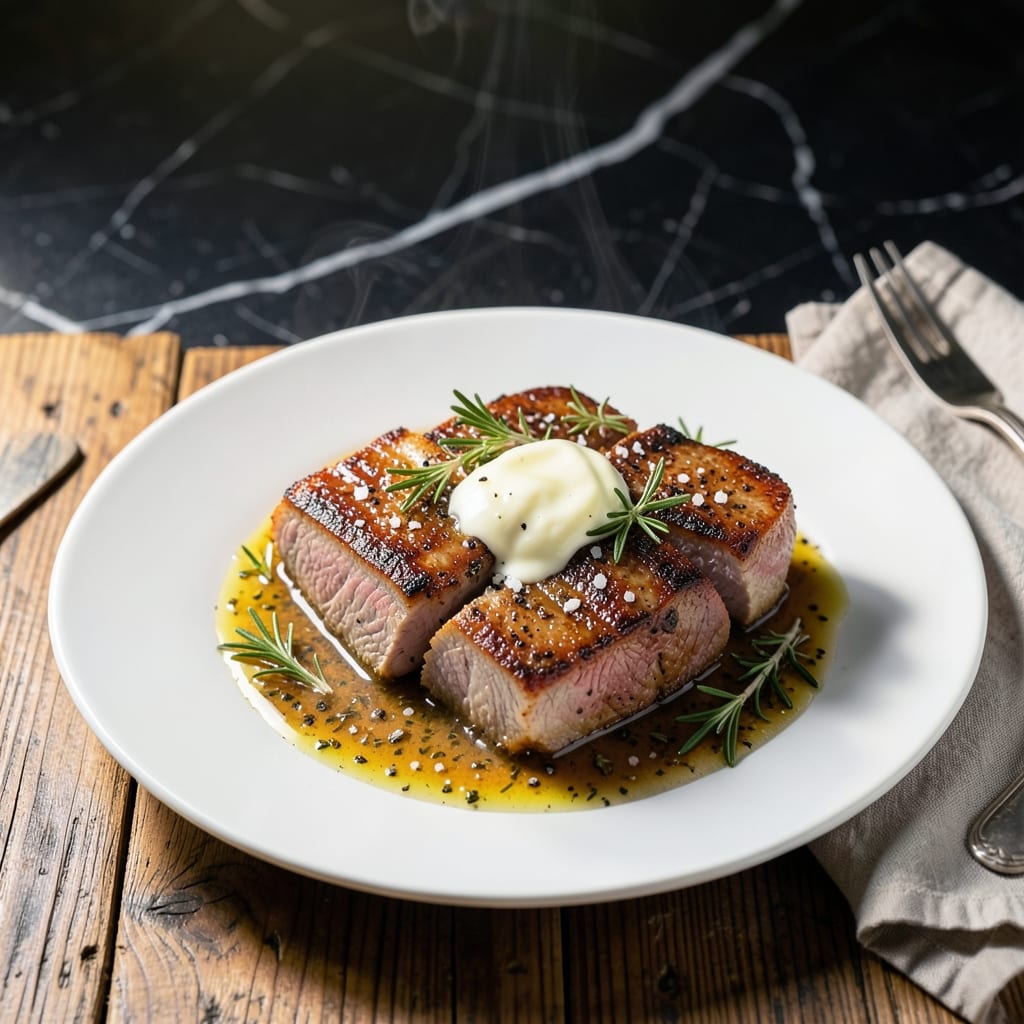
Kurobuta pork chops deserve special treatment, and this method delivers restaurant-quality results at home. The marbleized fat creates unmatched tenderness and flavor, setting these apart from standard cuts.
I developed this technique after testing countless variations—butter-basting with fresh herbs enhances the natural richness without overpowering. A hot pan and precise timing ensure a golden crust while keeping the meat juicy.
The herb crust adds aromatic depth, while the butter baste creates a glossy finish. Each bite offers a perfect balance of crisp exterior and succulent interior, proving why kurobuta is worth the splurge.
Serve with seasonal vegetables for a complete meal that impresses every time. The results speak for themselves.
Ingredients for Kurobuta Pork Chop
Quality ingredients elevate this dish to restaurant-level perfection every time.
| Ingredient | Amount | Notes |
|---|---|---|
| Kurobuta Pork Chops 🥩 | 4 whole | Bone-in, 1 to 1.5 inches thick |
| Kosher Salt 🧂 | 2 tsp | Diamond Crystal preferred |
| Black Pepper 🌶️ | 1 tsp | Freshly ground preferred |
| Unsalted Butter 🧈 | 6 tbsp | European-style for richness |
| Fresh Thyme Sprigs 🌿 | 4 whole | Stems removed, leaves only |
| Fresh Rosemary Sprigs 🍃 | 2 whole | Stems removed, leaves only |
| Garlic Cloves 🧄 | 3 cloves | Smashed, peeled, whole |
| Extra-Virgin Olive Oil 🫒 | 2 tbsp | High smoke point preferred |
| All-Purpose Flour 🌾 | ¼ cup | For light dredging |
| Dijon Mustard 🟡 | 1 tbsp | Smooth, not whole grain |
| Shallot 🧅 | 1 whole | Finely minced for basting |
| Fresh Parsley 🌿 | ¼ cup | Chopped, for garnish |
[recipe_ingredient_scaler]
The pork is non-negotiable here. Kurobuta chops (available at Whole Foods or specialty butchers) deliver the marbling that makes this dish sing. Look for bone-in cuts at least 1 inch thick—thinner ones overcook fast. The butter should be European-style for higher fat content, which browns beautifully and won’t burn. Fresh herbs from a local farmers market add vibrant aroma that dried simply can’t match.
No Kurobuta? Bone-in ribeye pork chops are your next best bet. Fresh out of thyme or rosemary? Substitute with sage or tarragon at equal amounts. If avoiding gluten, swap all-purpose flour for cornstarch or almond flour. The Dijon can be replaced with whole-grain mustard (texture will differ slightly). The shallot adds subtle sweetness—red onion in a pinch works too.
Chops keep in the fridge for 3-4 days—pat them dry before cooking. Fresh herbs last 1 week wrapped in damp paper towels. Butter and olive oil store at room temperature in a cool, dark place. The flour and mustard have a shelf life of 6-12 months unopened.
Why You’ll Love This Recipe
- One Pan Wonder: So simple—just salt, pepper, and a hot pan. The butter and thyme do the rest while I set the table.
- Buttery Richness: Honestly, that first bite with the crispy edge and herby butter pooling on my plate? Worth every calorie.
- Impresses Effortlessly: I serve this for date night or Sunday dinner with equal success. The kurobuta stays juicy no matter what.
- Leftovers? Nope: Between us, there’s never any left. But if there were, it’d make the best sandwich the next day.
Step-by-Step Instructions for Kurobuta Pork Chops
Master these steps for perfectly seared chops with a fragrant herb butter baste.
Step 1: Season and Dredge the Pork Chops
Pat the 4 whole Kurobuta Pork Chops dry with paper towels to ensure a good sear. Season both sides evenly with the 2 tsp Kosher Salt and 1 tsp Black Pepper, pressing the seasoning into the meat so it adheres.
Lightly dredge each chop in the 0.25 cup All-Purpose Flour, shaking off any excess. This creates a delicate crust that browns beautifully. Let the seasoned chops rest at room temperature for 10-15 minutes while you prepare the remaining ingredients.
Step 2: Sear the Chops to Golden Perfection
Heat the 2 tbsp Extra-Virgin Olive Oil in a heavy skillet over medium-high heat until it shimmers. Add the floured chops and cook undisturbed for 4-5 minutes until the underside develops a deep golden crust.
Flip the chops and sear the second side for another 3-4 minutes. The flour coating should be richly browned but not burned. Transfer the chops to a plate and reduce the heat to medium.
Step 3: Create the Herb Butter Baste
Add 4 tbsp Unsalted Butter, the 4 whole Fresh Thyme Sprigs, 2 whole Fresh Rosemary Sprigs, 3 cloves Garlic Cloves, and the 1 whole Shallot to the skillet. Cook for 1-2 minutes, swirling the pan, until the butter melts and the aromatics become fragrant.
Stir in the 1 tbsp Dijon Mustard and the remaining 2 tbsp Unsalted Butter. Tilt the pan slightly and use a spoon to baste the chops with the herb butter continuously for 1-2 minutes until the internal temperature reaches 140°F.
Step 4: Rest and Garnish for Serving
Transfer the chops to a cutting board and tent loosely with foil. Let them rest for 5-10 minutes to allow the juices to redistribute. This ensures each bite is tender and moist.
Spoon any remaining herb butter from the pan over the chops and garnish with the 0.25 cup Fresh Parsley. Serve immediately while the crust is still crisp and the butter is still glossy.
Pro Tips For Making Kurobuta Pork Chop
- Rest the Chops: Pull your kurobuta pork chops out of the fridge 30-45 minutes before cooking—this guarantees even cooking and a better sear. I learned this the hard way after serving dry chops to dinner guests.
- Dry the Surface: Pat the chops very dry with paper towels before seasoning. Sounds weird, but it works: moisture is the enemy of that perfect golden crust.
- Don’t Overcrowd: Cook one chop at a time if your pan isn’t huge. After burning three batches, I finally figured out that steam from crowded pans ruins the crust.
- Baste with Butter: Tilt the pan and spoon that melted butter and thyme over the chops for the last 2 minutes—it adds flavor and a glossy finish without extra effort.
Troubleshooting kurobuta pork chop
Uneven Cooking
Thick Kurobuta chops often cook unevenly if your pan isn’t hot enough. Ensure you hear a loud sizzle when the meat hits the medium-high heat pan. If one side browns faster, rotate the chops 180 degrees halfway through searing. David swears by this trick for perfect crust.
Butter Burning
European butter’s lower water content makes it prone to burning. Add it only after searing the chops and immediately reduce to medium heat. If you see brown flecks forming too quickly, pull the pan off heat for 30 seconds to cool slightly. 🔥
Herb Overpowering
Fresh rosemary can dominate the flavor profile. I bruise the sprigs lightly with the flat of my knife before adding to the butter. This releases the oils without making the dish taste like a pine forest. Remove sprigs before serving.
Dry Meat
Overcooking is the cardinal sin with these premium chops. Use an instant-read thermometer and pull at 140°F—they’ll rise to 145°F while resting. Remember, the marbling in kurobuta means they stay juicy even at perfect doneness.
Flour Burning
That light dredging can burn if left too long. Shake off excess flour before searing and don’t let the chops sit in the pan after browning. Transfer to a plate immediately after both sides are crusty. The residual heat continues cooking.
Resting Skipping
I know it’s tempting to dig in right away, but resting is non-negotiable. Those 5-10 minutes let juices redistribute. Cutting too soon sends all that beautiful moisture onto your cutting board instead of your plate. Trust me on this one.
Nutrition Facts
Frequently Asked Questions
What’s the ideal thickness for these chops?
Look for 1-1.5 inch thick bone-in cuts. Thinner chops overcook quickly, while thicker ones ensure a perfect juicy interior with a crisp crust. This thickness also handles the 4-5 minute sear time beautifully.
Why pull at 140°F instead of 145°F?
The temperature rises 5°F while resting, hitting the safe 145°F. Pulling early prevents overcooking. Kurobuta’s marbling keeps it moist even at perfect doneness.
Can I substitute dried herbs?
Fresh herbs are best for vibrant flavor, but in a pinch, use 1/3 the amount of dried. Add them to the butter off-heat to avoid bitterness. Fresh thyme and rosemary are worth the splurge.
How do I prevent the butter from burning?
Use medium heat and European-style butter. If it browns too fast, briefly lift the pan off heat. The milk solids burn first, so keep an eye on them.

Trained in classic French technique but raised on slow-cooked ribs and spicy rubs, she blends culinary skill with smoke and soul.
- Recipe for Boneless Pork Chops in Cast Iron Skillet: Sear and Baste to Juicy Perfection - October 3, 2026
- Recipe for Boneless Cross Rib Roast: Slow-Roasted Beef with Herb Crust - October 3, 2026
- Hamburgers in Sauce Recipe Crock Pot: Slow-Cooked Savory Delight - October 3, 2026