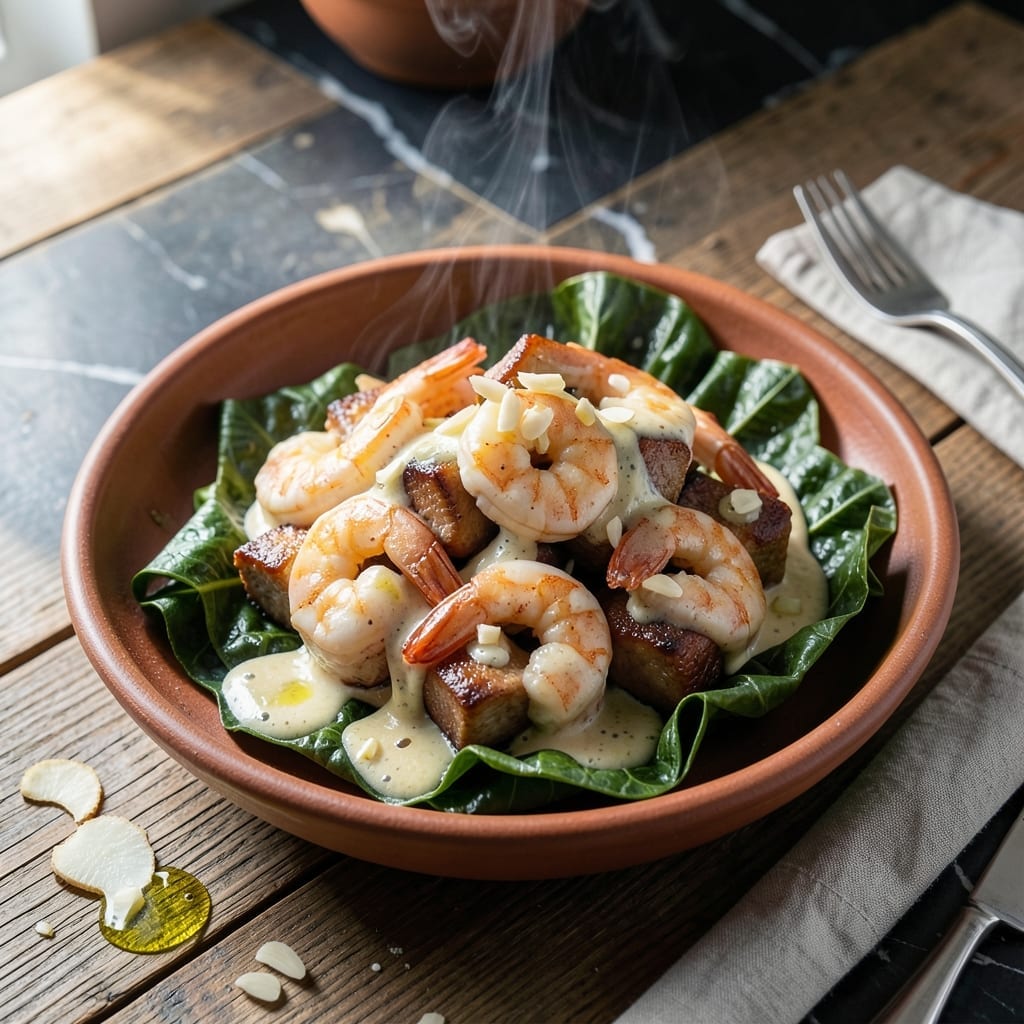
This Filipino stew combines tender pork, plump shrimp, and dried taro leaves in a rich coconut milk base. The dish balances creamy, savory, and slightly spicy flavors with traditional authenticity.
I developed this version after testing multiple techniques to achieve the perfect texture. The pork becomes fall-apart tender while the shrimp adds a delicate sweetness that complements the earthy taro leaves.
What makes this stew special is its layered complexity. The coconut milk creates a velvety sauce that carries the flavors of garlic, ginger, and chili through every bite.
Serve with steamed rice to soak up every bit of the fragrant sauce. This recipe brings genuine Filipino comfort to your table.
Ingredients for Laing Recipe with Pork and Shrimp
Rich coconut milk, tender pork, shrimp, and taro leaves create this comforting stew.
| Ingredient | Amount | Notes |
|---|---|---|
| Pork Shoulder 🥩 | 1 ½ lb | Cut into 1-inch cubes |
| Large Shrimp 🦐 | 12 pieces | Peeled and deveined |
| Dried Taro Leaves 🍃 | 4 cups | Rinsed and drained |
| Coconut Milk 🥥 | 2 cans | Full-fat for creaminess |
| Garlic Cloves 🧄 | 6 cloves | Minced for depth |
| Fresh Ginger 🌿 | 1 tbsp | Finely grated |
| Red Chili Pepper 🌶️ | 2 pieces | Sliced for heat |
| Yellow Onion 🧅 | 1 whole | Thinly sliced |
| Shrimp Paste 🍤 | 1 tbsp | Filipino bagoong preferred |
| Fish Sauce 🐟 | 1 tbsp | For umami depth |
| Ground Black Pepper 🌶️ | 1 tsp | Freshly ground preferred |
| Salt 🧂 | 1 tsp | Adjust to taste |
| Vegetable Oil 🫒 | 2 tbsp | For sautéing aromatics |
[recipe_ingredient_scaler]
The pork shoulder is key here—look for well-marbled pieces at Asian markets or Costco. Dried taro leaves are non-negotiable for authenticity; Filipino grocery stores usually stock them. Coconut milk should be full-fat (the light stuff won’t give that velvety texture). I prefer Thai Kitchen or Aroy-D brands for consistent creaminess without separation.
No shrimp paste? Anchovy paste at half the amount works in a pinch, but bagoong is worth hunting down. Fresh taro leaves can’t be swapped here—dried is what you need. Shrimp can be smaller sizes if that’s what’s available, just adjust cooking time. Need more heat? Add a third chili or a pinch of cayenne. The fish sauce can be soy sauce if avoiding seafood.
This stew tastes even better the next day as flavors meld. Keeps in the fridge for 4-5 days or freezes for 3 months. Store taro leaves in a cool, dry place—they’ll last 6-12 months unopened.
Why You’ll Love This Recipe
- I’ll be real: this dish stretches far—pork shoulder and shrimp make it hearty enough for a big family dinner.
- One Pot Meal: I just dump everything in, let the coconut milk and taro leaves work their magic with the pork and shrimp.
- Rich and Creamy: The garlic and coconut milk blend into this ridiculously good, creamy sauce that coats every bite.
- Feeds a Crowd: I’ll be real: this dish stretches far—pork shoulder and shrimp make it hearty enough for a big family dinner.
Step-by-Step Instructions for Laing With Pork and Shrimp
This method builds layers of flavor and guarantees a creamy, satisfying stew.
Step 1: Sauté Aromatics for a Flavor Base
Heat the 2 tbsp vegetable oil in a large pot over medium heat. Add the yellow onion and cook for 3-4 minutes until it softens and turns translucent. This is your foundation, so don’t rush it.
Next, add the 6 cloves garlic cloves, 1 tbsp fresh ginger, and 2 pieces red chili pepper. Sauté for 1-2 minutes until the garlic is lightly golden and fragrant. Stir constantly to prevent burning—this releases the oils that deepen the dish’s character.
Step 2: Brown the Pork and Shrimp
Increase the heat to medium-high and add the 1.5 lb pork shoulder, cut into 1-inch cubes. Brown it on all sides for 5-6 minutes until the edges are lightly caramelized. This step locks in juices and adds a rich, meaty depth.
Push the pork to one side and add the 12 pieces large shrimp. Cook for 2-3 minutes per side until they turn pink and opaque. Remove the shrimp and set aside—they’ll finish cooking later, and this prevents them from turning rubbery.
Step 3: Build the Stew with Coconut Milk and Seasonings
Pour in the 2 cans coconut milk and stir to deglaze the pot, scraping up any browned bits from the bottom. Add the 1 tbsp shrimp paste, 1 tbsp fish sauce, 1 tsp salt, and 1 tsp ground black pepper. Stir well to dissolve the shrimp paste, which adds a funky, umami-rich base.
Simmer the mixture for 5 minutes over medium-low heat until the coconut milk begins to thicken slightly. This is when the flavors start to meld, so keep an eye on the heat—it should bubble gently, not aggressively.
Step 4: Add Taro Leaves and Finish
Stir in the 4 cups dried taro leaves, ensuring they’re fully submerged in the liquid. Return the shrimp to the pot and simmer for 20-25 minutes until the taro leaves are tender and dark green and the pork is fork-tender.
Taste and adjust the seasoning if needed. The taro leaves should be silky, not gritty, and the sauce should coat the back of a spoon. If it’s too thick, add a splash of water. If it’s too thin, simmer a few minutes longer.
Pro Tips For Making Laing Recipe With Pork And Shrimp
- Parboil the Leaves: Soak dried taro leaves in warm water for 10 minutes, then boil for 5 to soften—they’ll cook faster in the coconut milk and won’t turn chewy. I learned this the hard way after biting into fibrous leaves more than once.
- Sear the Pork First: Brown the pork shoulder in the pot before adding liquids—it adds a deep, meaty flavor to the coconut base that raw pork just can’t. About 3-4 minutes per side on medium-high heat does the trick.
- Skip the Shrimp Overcook: Add the shrimp only in the last 5-7 minutes of simmering, or they’ll turn rubbery. Large shrimp cook fast, and nobody wants chewy seafood in their laing.
- Use Two Cans of Milk: Sounds like a lot, but taro leaves soak up coconut milk like a sponge. My grandmother swore by this, and she was right: one can leaves the dish dry and the leaves undercooked.
Perfect Pairings for This laing recipe with pork and shrimp
Rice Pairings
Steamed jasmine rice is my go-to—its floral aroma and slightly sticky texture soak up the coconut sauce beautifully. For variety, try brown rice for a nutty contrast that holds up well to the rich stew. 🥗
Vegetable Sides
A crisp green papaya salad with lime dressing cuts through the creaminess. I also love steamed bok choy tossed with a little oyster sauce for a quick, complementary side that echoes the Filipino flavors.
Drink Pairings
Calamansi juice is the perfect refreshing counterpart to the rich stew. For beer lovers, a light Filipino lager like San Miguel works wonderfully. I also enjoy a crisp Sauvignon Blanc with its citrus notes. 🍷
Condiments
Serve with patis (Filipino fish sauce) on the side for guests to adjust saltiness. A small dish of sliced siling labuyo (bird’s eye chili) lets everyone control the heat level to their preference.
Dessert Follow-Up
End the meal with mango float (a no-bake Filipino dessert) or halo-halo for a sweet, icy finish. The tropical flavors of mango or coconut in these desserts complement the coconut milk in the stew beautifully.
Nutrition Facts
Frequently Asked Questions
Can I use fresh taro leaves instead of dried?
No, dried taro leaves are essential for authentic texture and safety. Fresh leaves contain calcium oxalate which can be harmful if not prepared properly. Dried leaves are already processed and safe for cooking.
How do I know when the pork is fully cooked?
The pork is done when it reaches an internal temperature of 160°F and easily pulls apart with a fork. In this recipe, it will have simmered for 20-25 minutes in the coconut milk, ensuring tenderness.
Can I make this dish ahead of time?
The flavors deepen when made a day ahead. Store in an airtight container in the fridge for up to 5 days or freeze for 3 months. Reheat gently before serving.
What if I can’t find shrimp paste?
Substitute with 1/2 tbsp anchovy paste or 1 tbsp fish sauce for similar umami depth. While not identical, these alternatives will still provide the salty, savory base the dish needs.

Trained in classic French technique but raised on slow-cooked ribs and spicy rubs, she blends culinary skill with smoke and soul.
- Recipe for Boneless Pork Chops in Cast Iron Skillet: Sear and Baste to Juicy Perfection - October 3, 2026
- Recipe for Boneless Cross Rib Roast: Slow-Roasted Beef with Herb Crust - October 3, 2026
- Hamburgers in Sauce Recipe Crock Pot: Slow-Cooked Savory Delight - October 3, 2026