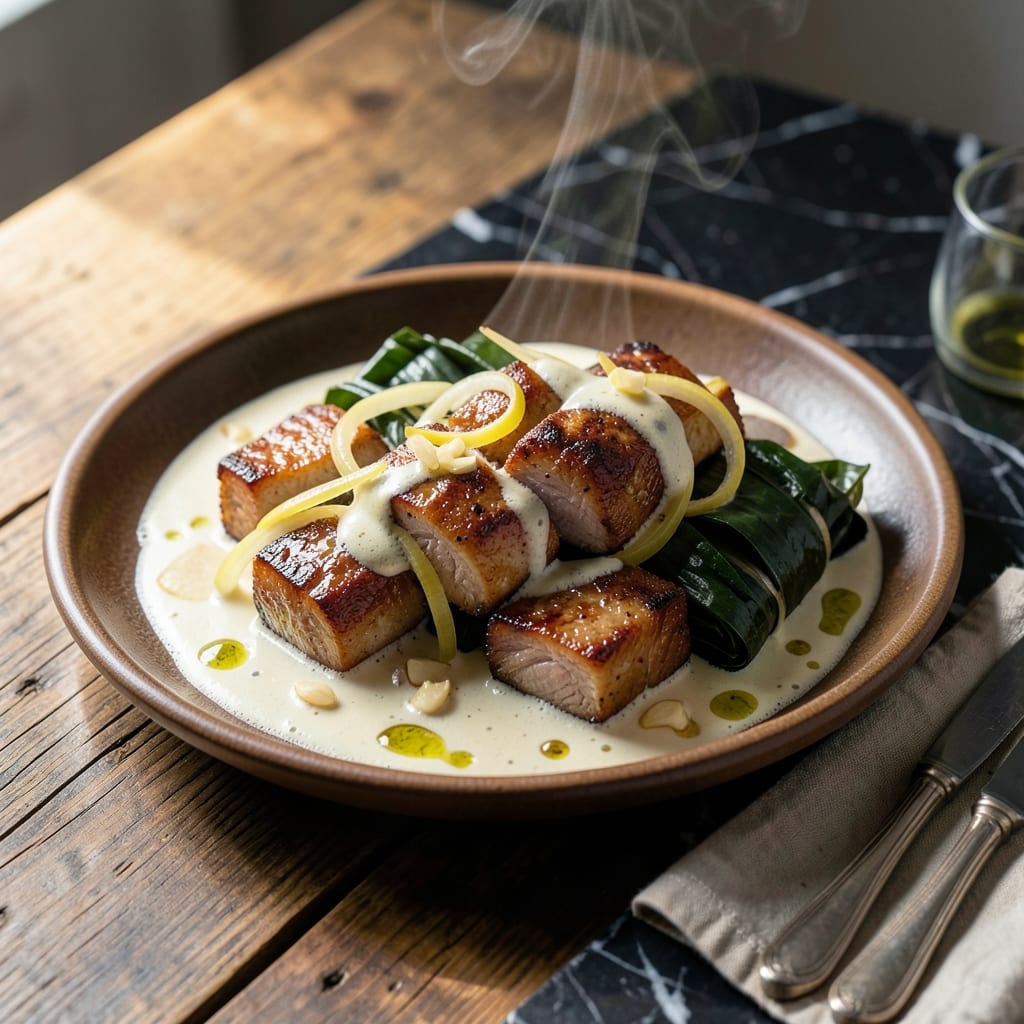
This Filipino coconut milk stew redefines comfort food with its rich, creamy sauce and tender pork belly. The dish balances spicy, savory, and slightly tangy flavors in every bite.
I’ve perfected the method for combining dried taro leaves with slow-cooked pork belly, ensuring the meat becomes fall-apart tender while the leaves absorb the coconut milk’s richness. Traditional techniques make all the difference.
The result is a hearty, aromatic stew where the pork belly melts effortlessly, and the taro leaves soften into a velvety texture. Each spoonful delivers layers of flavor.
Serve this with steamed rice to soak up the sauce. This dish brings a taste of the Philippines to your table with minimal effort.
Ingredients for Laing Recipe with Pork Belly
Rich coconut milk and fall-apart pork belly star in this hearty Filipino stew.
| Ingredient | Amount | Notes |
|---|---|---|
| Pork Belly 🥩 | 1 ½ lb | Cut into 1-inch cubes |
| Dried Taro Leaves 🍃 | 2 cups | Rinsed thoroughly before use |
| Coconut Milk 🥥 | 2 cups | Full-fat for creaminess |
| Garlic Cloves 🧄 | 6 cloves | Minced finely |
| Yellow Onion 🧅 | 1 whole | Diced medium |
| Ginger 🌿 | 1 tbsp | Fresh, grated |
| Red Chili Peppers 🌶️ | 2 whole | Sliced thin (adjust for heat) |
| Shrimp Paste 🦐 | 1 tbsp | Filipino bagoong preferred |
| Fish Sauce 🐟 | 2 tbsp | For umami depth |
| Ground Black Pepper 🌶️ | 1 tsp | Freshly ground |
| Salt 🧂 | 1 tsp | Adjust to taste |
| Vegetable Oil 🫒 | 2 tbsp | For sautéing aromatics |
[recipe_ingredient_scaler]
The pork belly is non-negotiable here. Look for skin-on pieces at Asian markets—they render down beautifully and add that unctuous texture. I always grab mine from Seafood City or the local Filipino grocery (they’ll know what you need for laing). If you’re using pre-cut, check the fat-to-meat ratio—more fat means more flavor. The dried taro leaves might be labeled as ‘gabi’ or ‘taro leaves’ in stores.
No shrimp paste? Soy sauce plus a pinch of sugar can mimic the saltiness, but it won’t be the same. Fresh taro leaves work too (blanch first to remove the calcium oxalate). Short on coconut milk? One can plus one cup water stretches it without losing creaminess. The chili peppers are flexible—use serranos for heat or bell peppers for zero spice (just don’t skip the color).
This stew tastes even better the next day once the flavors meld. Store in the fridge for up to 4 days or freeze for 3 months. Reheat gently on the stove to keep the pork belly tender (microwaves can dry it out).
Why You’ll Love This Recipe
- One Pot Wonder: I just dump everything in and let the coconut milk work its magic with the pork belly.
- Rich and Creamy: The taro leaves soak up the garlic and onion flavors in the most satisfying way.
- Feeds a Crowd: Honestly, I make a big batch and it’s perfect for family dinners or potlucks.
- Budget Stretcher: Pork belly and dried taro leaves are affordable, and this dish feels like a luxury meal.
Step-by-Step Instructions for Laing With Pork Belly
Here’s how I get that fall-off-the-bone tenderness with rich coconut flavor.
Step 1: Sear the Pork Belly Until Browned
Heat the 2 tbsp vegetable oil in a large pot over medium-high heat. Add the 1.5 lb pork belly cubes and sear for 5-7 minutes, turning occasionally, until the pieces are golden brown on all sides.
I don’t crowd the pot—give each piece space so they brown instead of steam. The pork will release its fat, which adds incredible flavor to the dish. When it’s done, the meat should have a deep caramel color and the fat will start to render out.
Step 2: Sauté Aromatics and Shrimp Paste
Remove the pork belly and set aside. In the same pot with the rendered fat, add the 1 whole yellow onion, 6 cloves garlic cloves, 1 tbsp ginger, and 2 whole red chili peppers. Sauté for 3-4 minutes until the onions are translucent.
Push the aromatics to one side and add the 1 tbsp shrimp paste to the empty space. Toast it for 30 seconds until fragrant—this mellows its intensity. Stir everything together, being careful not to let the garlic burn. You’ll smell when it’s ready: the kitchen fills with an irresistible aroma.
Step 3: Simmer Pork Belly in Coconut Milk
Return the pork belly to the pot and pour in the 2 cups coconut milk. Add the 1 tsp salt, 1 tsp ground black pepper, and 2 tbsp fish sauce. Bring to a gentle boil, then reduce heat to low and let it simmer uncovered for 45 minutes.
The coconut milk will reduce slightly and the pork will become incredibly tender. I check occasionally and skim off any excess fat that rises to the surface. The sauce should be thick enough to coat the back of a spoon, but not dry. This slow cooking is what makes the pork belly melt-in-your-mouth tender.
Step 4: Add Taro Leaves and Finish Cooking
Stir in the 2 cups dried taro leaves and simmer for another 15-20 minutes until the leaves are tender and the pork belly is fork-tender. The leaves will soften and absorb the creamy coconut sauce beautifully.
Taste and adjust seasoning—you might want more salt depending on your preference. The taro leaves are done when they’re silky and no longer tough. The pork should practically fall apart when pierced with a fork. This is when you know the dish has reached its peak of tenderness and flavor.
Pro Tips For Making Laing Recipe With Pork Belly
- Soak the Leaves: I learned this the hard way—dried taro leaves need a 10-minute soak in warm water to soften before cooking, or they’ll stay tough and chewy no matter how long they simmer.
- Render the Fat: Start the pork belly in a cold pan to slowly render the fat, then brown it. Skipping this leaves you with greasy, undercooked chunks instead of tender, crisp-edged bites.
- Simmer Low and Slow: After adding coconut milk, keep the heat low to avoid curdling. I used to rush it with high heat and ended up with a separated, oily mess.
- Layer the Flavors: Sauté the garlic and onion until golden before adding anything else—this builds a deep, savory base that makes the whole dish taste richer.
Make-Ahead Tips for This Recipe
Prep Ahead
You can chop all aromatics (6 cloves garlic, 1 onion, 1 tbsp ginger) and slice the 2 chili peppers up to 2 days in advance. Store them in separate airtight containers in the fridge. 💡
Pork Belly Prep
Cut the 1.5 lb pork belly into 1-inch cubes the night before and keep it refrigerated. This saves time on cooking day and lets the meat absorb marinade flavors if you choose to add any.
Partial Cooking
Sear the pork belly and sauté the aromatics as directed, then refrigerate everything in the pot. The next day, simply add the 2 cups coconut milk and continue cooking. This method often yields even more flavorful results.
Taro Leaves Soak
Rinse the 2 cups dried taro leaves thoroughly, then soak them in warm water for 30 minutes to rehydrate slightly. This reduces cooking time later and ensures even tenderness. Drain before using.
Reheating Tips
When ready to serve, reheat gently on the stove over low heat for 15-20 minutes, stirring occasionally. Add a splash of water or coconut milk if the stew is too thick. Avoid high heat to keep the pork belly tender. ❄️
Freezing Instructions
Cool the stew completely before transferring to freezer-safe containers. It freezes well for up to 3 months. Thaw overnight in the fridge before reheating on the stove with a bit of water to restore creaminess.
Nutrition Facts
Frequently Asked Questions
Can I use fresh taro leaves instead of dried?
Yes, but blanch fresh leaves in boiling water for 5 minutes first to remove calcium oxalate. Dried leaves are traditional as they absorb the coconut milk better.
How do I know when the pork belly is done?
It’s ready when it’s fork-tender and easily falls apart. The total simmering time is about 1 hour after adding coconut milk.
Can I make this without shrimp paste?
You can substitute 1 tbsp soy sauce plus a pinch of sugar, but the flavor won’t be identical. Shrimp paste adds essential umami.
How long does leftovers last in the fridge?
Store in an airtight container for up to 4 days. The flavors deepen overnight, making leftovers even more delicious.

Trained in classic French technique but raised on slow-cooked ribs and spicy rubs, she blends culinary skill with smoke and soul.
- Recipe for Boneless Pork Chops in Cast Iron Skillet: Sear and Baste to Juicy Perfection - October 3, 2026
- Recipe for Boneless Cross Rib Roast: Slow-Roasted Beef with Herb Crust - October 3, 2026
- Hamburgers in Sauce Recipe Crock Pot: Slow-Cooked Savory Delight - October 3, 2026