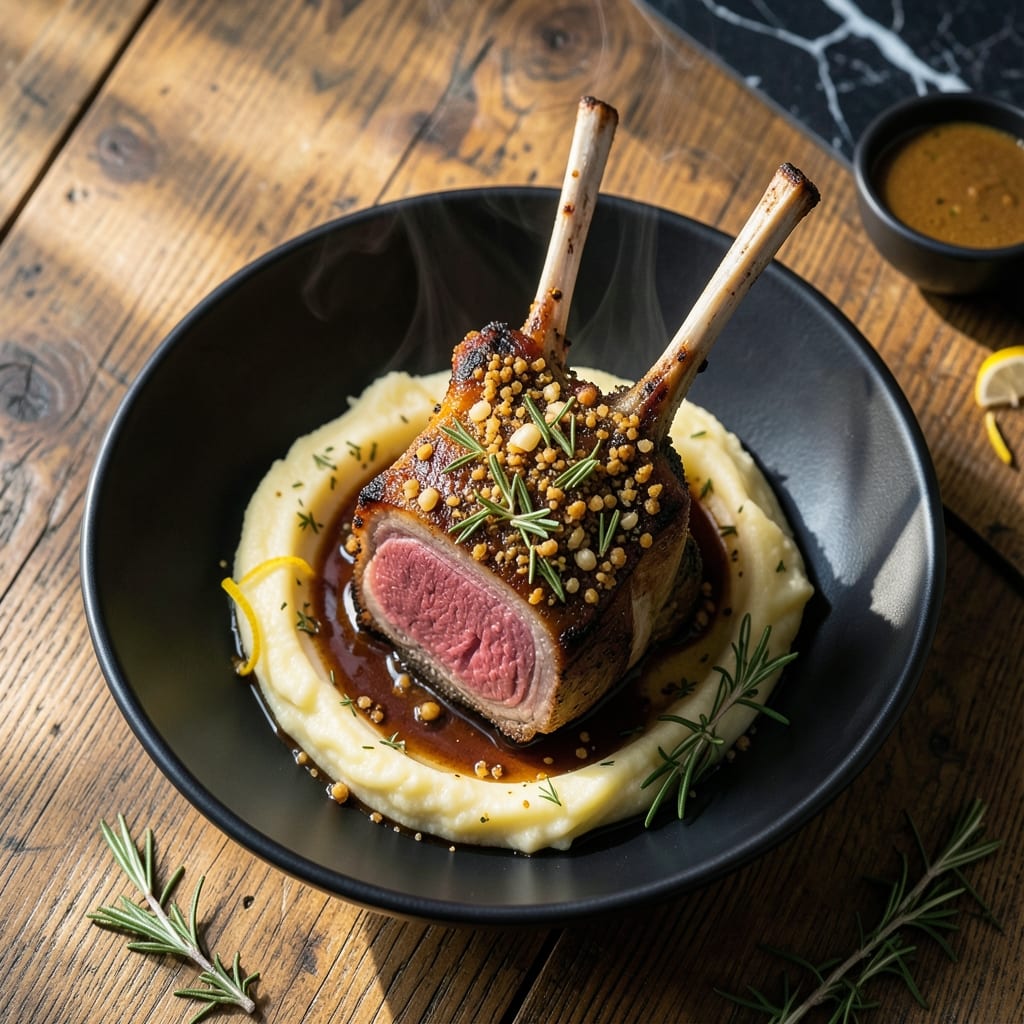
Pan-fried lamb rack is one of those dishes that makes a dinner feel like a special occasion. I’ve tested this method in my tiny Boston kitchen until the technique became foolproof.
The secret is a hot pan and a perfect herb crust that locks in flavor while creating a golden, aromatic seal. A meat thermometer ensures rosy centers every time.
What you get is tender, juicy meat with a crisp, flavorful exterior that looks and tastes restaurant-quality. The herb crust adds layers of depth without overpowering.
Serve with a simple red wine reduction or mint sauce to complement the richness. This is elegance made simple.
Ingredients for Lamb Rack Recipe Pan Fried
Simple ingredients, restaurant-worthy results. That herb crust is everything here.
| Ingredient | Amount | Notes |
|---|---|---|
| Lamb Rack 🐑 | 2 lb | Frenched, 8 ribs total |
| Dijon Mustard 🟡 | 2 tbsp | For herb crust adhesion |
| Fresh Rosemary 🌿 | 2 tbsp | Finely chopped, stems removed |
| Fresh Thyme 🍃 | 2 tbsp | Finely chopped, stems removed |
| Garlic Cloves 🧄 | 4 cloves | Minced for herb crust |
| Breadcrumbs 🍞 | ½ cup | Panko preferred for texture |
| Olive Oil 🫒 | 3 tbsp | Divided for searing and crust |
| Salt 🧂 | 1 tsp | Kosher or sea salt preferred |
| Black Pepper 🌶️ | 1 tsp | Freshly ground for best flavor |
| Butter 🧈 | 2 tbsp | For basting while cooking |
| Red Wine 🍷 | ½ cup | Dry variety for reduction |
| Beef Stock 🥣 | ½ cup | Low-sodium preferred |
| Fresh Mint 🌱 | ¼ cup | Chopped for optional garnish |
[recipe_ingredient_scaler]
The lamb rack needs to be frenched (bones cleaned) for presentation—ask your butcher at Whole Foods or Market Basket to do it for free. Look for vibrant pink color with good marbling. I grab mine from Costco for big gatherings, but local butchers have better quality for small batches. Fresh herbs are non-negotiable here; dried won’t give you that bright, aromatic crust.
No red wine? Beef broth with a splash of balsamic vinegar works in a pinch. Swap rosemary for sage if that’s what’s growing in your garden. The breadcrumbs can be plain or panko (I prefer panko for extra crunch). If you’re out of Dijon, whole-grain mustard adds a nice texture. Skip the mint if it’s not your thing—parsley or cilantro work too.
Lamb rack is best cooked immediately, but you can prep the herb crust mixture 1 day ahead. Leftovers keep in the fridge for 3-4 days—reheat gently to avoid overcooking. The herb crust mixture freezes well for 1 month if you want to make extra.
Why You’ll Love This Recipe
- One Pan Wonder: I love that I just sear the rack in a hot pan and finish it in the oven—no complicated steps, just crispy edges and juicy meat.
- Herb-Crusted Bliss: The Dijon, rosemary, and thyme form this insane crust that’s garlicky, earthy, and just a little sharp.
- Dinner Party Star: Honestly, it looks fancy but takes less effort than roasting a chicken—great for impressing guests without the stress.
- Next-Day Luxury: Leftovers? They make the best sandwiches. Cold lamb with a little mustard on crusty bread is my secret lunch upgrade.
Step-by-Step Instructions for Lamb Rack Pan Fried
Here’s the foolproof method for crispy herb-crusted lamb with perfectly pink centers.
Step 1: Prepare the Herb Crust
In a small bowl, combine the 2 tbsp Dijon Mustard, 2 tbsp Fresh Rosemary, 2 tbsp Fresh Thyme, 4 cloves Garlic Cloves, 0.5 cup Breadcrumbs, and 1 tbsp Olive Oil. Mix until it forms a thick, cohesive paste that holds together when pressed.
This mixture should be chunky but sticky enough to cling to the lamb. I like to let it sit for 5 minutes while I prep the meat—this allows the flavors to meld. The herbs should be finely chopped so they distribute evenly in every bite.
Step 2: Sear the Lamb Rack
Heat 2 tbsp Olive Oil in a large oven-safe skillet over medium-high heat until it shimmers. Pat the 2 lb Lamb Rack dry, then season all sides with the 1 tsp Salt and 1 tsp Black Pepper. Sear the lamb fat-side down first for 3-4 minutes until deep golden brown.
Turn and sear the other sides for 2-3 minutes each, using tongs to hold it steady. You’re building a flavorful crust here, so don’t rush. The meat should sizzle aggressively when it hits the pan—if it’s too quiet, your pan isn’t hot enough.
Step 3: Apply Crust and Roast
Brush the herb crust mixture all over the lamb, pressing it firmly to create an even layer. The Dijon Mustard in the mix will help it adhere to the meat. Add the 2 tbsp Butter to the pan and tilt to baste the lamb as it cooks.
Transfer the skillet to a preheated 400°F oven and roast for 15-20 minutes until the internal temperature reaches 130-135°F for medium-rare. The crust should be golden brown and crisp when done.
Step 4: Make the Pan Sauce
Remove the lamb and let it rest on a cutting board for 10 minutes. Place the skillet back on the stove over medium heat, then add the 0.5 cup Red Wine to deglaze, scraping up all the browned bits with a wooden spoon.
Let the wine reduce by half, then add the 0.5 cup Beef Stock and simmer for 5-7 minutes until it thickens enough to coat the back of a spoon. Strain if you prefer a smoother sauce, then adjust seasoning if needed.
Step 5: Slice and Serve
Slice the lamb between the ribs into individual chops. Fan them out on a platter and spoon the pan sauce over the top. Garnish with the 0.25 cup Fresh Mint for a pop of color and fresh flavor.
The meat should be rosy pink in the center with a crispy, aromatic herb crust. Serve immediately while the crust is still at its crispest and the sauce is hot.
Pro Tips For Making Lamb Rack Recipe Pan Fried
- Sear Hot, Rest Long: Crank your pan to smoking hot before adding the lamb—this gives that deep golden crust. Then let it rest under foil for 8-10 minutes; I learned this the hard way after serving dry lamb to guests.
- Dry the Rack: Pat the lamb rack bone-dry with paper towels before seasoning. Sounds tedious, but it’s the only way to get that perfect sear instead of steamed meat.
- Skip Cold Lamb: Pull the rack out of the fridge 30-40 minutes before cooking. After ruining two racks by throwing them straight into the pan, I finally realized room temp meat cooks more evenly.
- Crush the Garlic: Smash the garlic cloves with the flat of your knife before adding them to the pan—they’ll infuse the oil faster and won’t burn as easily. I was skeptical until I tried it.
Common Mistakes When Making This Dish
Skipping the Dry Pat
I learned the hard way that not patting the Lamb Rack completely dry leads to a steamy pan instead of a good sear. Use paper towels and press firmly—this removes moisture that would otherwise prevent that beautiful golden-brown crust. Trust me, the extra 2 minutes makes all the difference. 💡
Overcrowding the Pan
If your skillet is too small, the temperature drops when you add the meat. Use a 12-inch oven-safe skillet or larger to give the rack space. I tested this in my tiny Boston kitchen with a Lodge cast iron—it worked perfectly. Crowding leads to uneven cooking.
Rushing the Sear
Don’t flip the lamb too soon. It needs 3-4 minutes on the fat side to develop a deep crust. If it sticks when you try to turn it, wait another 30 seconds—it’ll release naturally when ready. Patience here creates that restaurant-quality seal.
Cold Herb Crust
Applying cold herb mixture directly from the fridge can shock the hot meat and prevent adhesion. Let it sit at room temperature for 5-10 minutes before pressing onto the seared lamb. This ensures the Dijon Mustard binds properly to the surface.
Neglecting the Thermometer
Guessing doneness with lamb is risky. Use an instant-read thermometer and aim for 130-135°F for medium-rare. I pull mine at 132°F—it rises to perfect rosy centers while resting. Overcooking turns the meat tough and dry.
Skipping the Rest
Cutting into the lamb immediately causes all the juices to spill out. Always rest for 10 minutes before slicing. I tent mine loosely with foil to keep it warm. This step locks in moisture and makes the herb crust crispier when served. 🔥
Nutrition Facts
Frequently Asked Questions
What’s the best way to season the lamb before cooking?
Pat it completely dry first, then season generously with salt and pepper on all sides. The dry surface ensures a perfect sear, while the seasoning enhances the meat’s natural flavors.
How do I know when the herb crust is properly adhered?
Press the mixture firmly onto the seared lamb—it should stick without falling off. The Dijon mustard in the crust acts as a glue, so let it sit for 5 minutes before pressing.
Can I use a different pan if I don’t have oven-safe?
Transfer the seared lamb to a baking dish instead of the oven. Finish in a preheated 400°F oven for 15-20 minutes, but you’ll miss out on pan basting.
What if my lamb cooks too fast?
If the crust browns too quickly, lower the oven to 375°F and tent with foil. This prevents burning while ensuring the center reaches 130-135°F.

Trained in classic French technique but raised on slow-cooked ribs and spicy rubs, she blends culinary skill with smoke and soul.
- Recipe for Boneless Pork Chops in Cast Iron Skillet: Sear and Baste to Juicy Perfection - October 3, 2026
- Recipe for Boneless Cross Rib Roast: Slow-Roasted Beef with Herb Crust - October 3, 2026
- Hamburgers in Sauce Recipe Crock Pot: Slow-Cooked Savory Delight - October 3, 2026