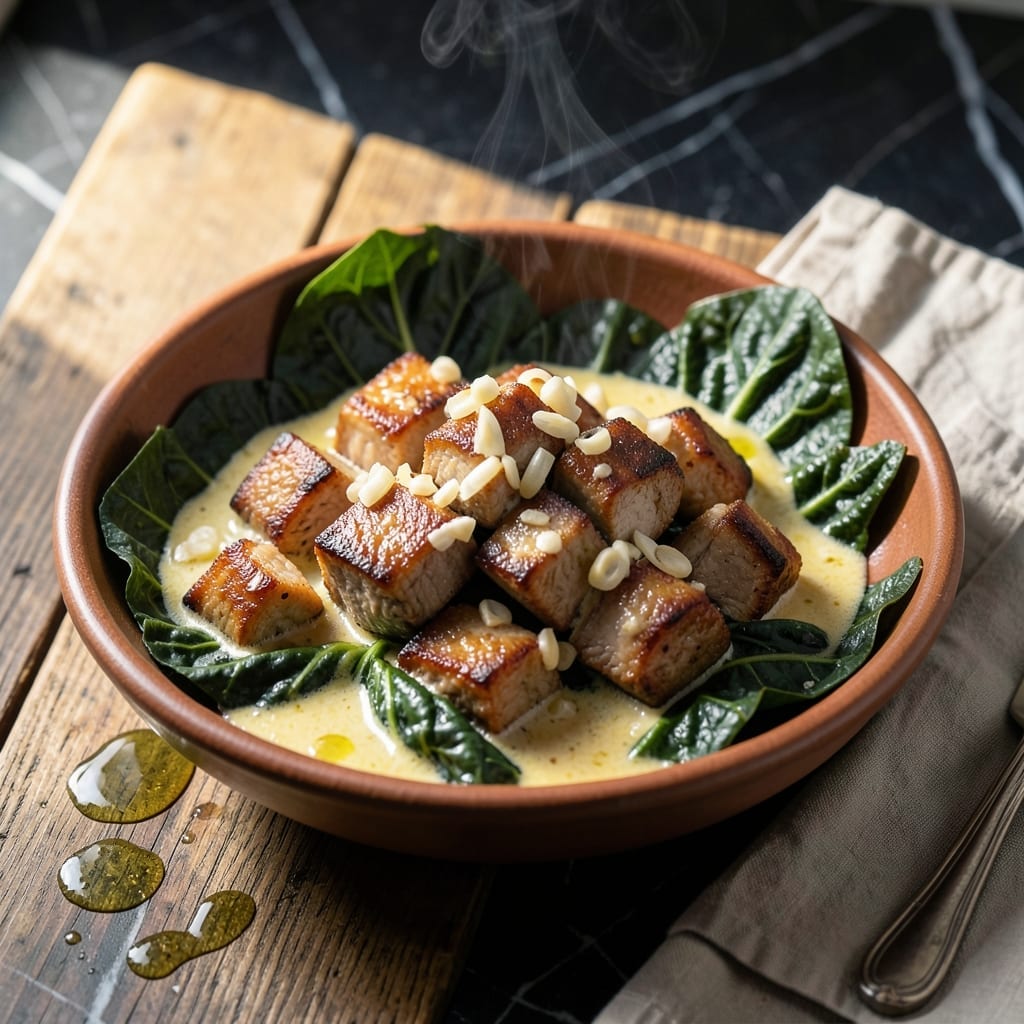
This Filipino classic transforms humble taro leaves into a rich, comforting dish that’s both hearty and deeply flavorful. I’ve tested this method multiple times to perfect the balance between the earthy greens and the creamy coconut milk, with pork adding a satisfying meaty depth.
The secret lies in properly wilting the leaves and simmering them slowly in the coconut mixture. The pork, tender and infused with garlic and ginger, soaks up the vibrant flavors, making every bite complex and rewarding.
What you’ll love most is how the coconut milk mellows the taro’s natural bitterness, creating a velvety sauce that’s irresistible over steamed rice. The aroma alone—garlicky, rich, and slightly nutty—will have everyone gathering around the table.
Serve this at family dinners or casual get-togethers. It’s a dish that feels special but comes together with simple, accessible ingredients.
Ingredients for Laing Recipe with Pork
Rich coconut milk, tender pork, and earthy taro leaves create this deeply comforting dish.
| Ingredient | Amount | Notes |
|---|---|---|
| Taro Leaves 🍃 | 2 lbs | Fresh, thoroughly washed and dried |
| Pork Belly 🥓 | 1 lb | Cut into thin strips, fat-on |
| Coconut Milk 🥥 | 2 cups | Full-fat for creaminess |
| Garlic Cloves 🧄 | 8 cloves | Peeled and minced |
| Ginger Root 🌿 | 1 whole | Peeled and julienned, about 2 inches |
| Onion 🧅 | 1 whole | Medium, thinly sliced |
| Shrimp Paste 🦐 | 2 tbsp | Filipino bagoong, optional for depth |
| Dried Red Chili Peppers 🌶️ | 2 pieces | Whole, seeds removed for milder heat |
| Fish Sauce 🐟 | 2 tbsp | For umami, or substitute soy sauce |
| Salt 🧂 | 1 tsp | Adjust to taste |
| Black Pepper 🌶️ | ½ tsp | Freshly cracked preferred |
| Vegetable Oil 🫒 | 2 tbsp | For sautéing aromatics |
[recipe_ingredient_scaler]
The taro leaves are non-negotiable here—look for vibrant, deep green bunches at Asian markets (Filipino or Vietnamese grocers are reliable). Pork belly is traditional for its fatty richness, but pork shoulder works if you prefer leaner meat. The coconut milk must be full-fat; light versions won’t deliver that velvety texture. Most specialty stores carry fresh taro leaves in the produce section, often near the ginger root.
No shrimp paste? Fish sauce plus a pinch of sugar mimics the fermented depth. For a vegetarian twist, mushroom soy sauce adds umami without animal products. Dried chillies can be swapped for fresh bird’s eye chillies (use 4-5, sliced). If taro leaves are unavailable, spinach or Swiss chard work in a pinch, though the flavor profile shifts slightly. Always taste before final seasoning—salt content varies by brand.
Store fresh taro leaves wrapped in damp paper towels for up to 3 days. The cooked dish keeps beautifully for 4-5 days refrigerated and reheats well. For longer storage, freeze portions in airtight containers for up to 3 months. The flavors deepen overnight, making leftovers even more delicious.
Why You’ll Love This Recipe
- One Pot Wonder: I love how everything—taro leaves, pork belly, and coconut milk—simmers together with barely any active work from me.
- Rich and Creamy: The coconut milk soaks up the garlic and ginger, making the pork belly taste ridiculously good.
- Feeds a Crowd: Honestly, I make a big batch and it’s always the first dish gone at family gatherings.
- Budget Stretcher: Pork belly and taro leaves are affordable, and this recipe fills up the table without emptying my wallet.
Step-by-Step Instructions for Laing With Pork
Master this traditional technique for perfectly balanced flavors and tender taro leaves.
Step 1: Sauté Aromatics to Build the Flavor Base
Heat the 2 tbsp vegetable oil in a large pot over medium heat. Add the 1 whole onion, 8 cloves garlic cloves, and 1 whole ginger root, sautéing for 3-4 minutes until the onions soften and the garlic turns lightly golden.
Add the 1 lb pork belly strips and cook for 5-6 minutes, stirring occasionally, until the edges begin to brown lightly. This renders fat and develops depth. Stir in the 2 tbsp shrimp paste and 2 pieces dried red chili peppers, cooking for 1 minute until fragrant.
Step 2: Wilt the Taro Leaves
Add the 2 lbs taro leaves to the pot, pressing them down with tongs to compact. The leaves will initially overflow, but they wilt quickly. Cover and cook on medium-low heat for 8-10 minutes, stirring every 2 minutes to expose all leaves to the heat.
Watch for the leaves to turn vibrant green and soften significantly. The volume will reduce by half. This step removes the natural astringency of raw taro leaves while infusing them with the aromatic base.
Step 3: Simmer in Coconut Milk Until Tender
Pour in the 2 cups coconut milk, 2 tbsp fish sauce, 1 tsp salt, and 0.5 tsp black pepper. Stir to combine and bring to a gentle simmer. Reduce heat to low and cook uncovered for 25-30 minutes, stirring occasionally.
The sauce should reduce slightly and turn a creamy off-white color. The taro leaves are done when they’re tender to the bite but still hold their shape. The pork should be fully cooked and absorb the coconut flavors.
Step 4: Adjust Seasoning and Rest
Taste and adjust seasoning if needed. The fish sauce and shrimp paste provide saltiness, so add the salt sparingly. Remove the dried red chili peppers before serving if you prefer milder heat.
Let the dish rest off heat for 5-10 minutes to allow the flavors to meld. The sauce will thicken slightly as it cools. Serve warm over steamed rice, ensuring each portion includes both the rich coconut sauce and tender pork.
Pro Tips For Making Laing Recipe With Pork
- Blanch the Leaves: Always blanch taro leaves in boiling water for 2-3 minutes first—this removes the natural itchiness and bitterness. I learned this the hard way after my first batch was way too sharp.
- Render the Pork: Cook the pork belly in its own fat over medium-low heat for 10-12 minutes until crispy. Sounds weird, but it works: the rendered fat adds a rich depth to the coconut milk later.
- Simmer, Don’t Boil: Once the coconut milk goes in, keep it at a gentle simmer—boiling hard will cause the sauce to separate. My grandmother swore by this, and she was right.
- Use Two Cans: For the creamiest laing, use two cans of coconut milk (one for cooking, one for the final simmer). I skip this when I’m lazy, but the dish is noticeably better when I don’t.
Dietary Considerations for This Recipe
Gluten-Free Naturally
This dish is inherently gluten-free, relying on taro leaves, pork, and coconut milk with no wheat-based thickeners. The only potential concern is shrimp paste—some brands contain additives, so check labels for wheat starch or soy sauce. 💡
Dairy-Free and Vegan Adaptations
With no dairy ingredients, this recipe fits dairy-free diets perfectly. For a vegan version, swap pork belly for tofu or mushrooms and replace fish sauce with soy sauce or coconut aminos. The coconut milk base remains unchanged.
Low-Carb and Keto Considerations
Taro leaves are low in carbs, but be mindful of portion sizes. 1 cup serving contains about 10g net carbs. To reduce further, use less coconut milk or opt for coconut cream to increase fat content while lowering carbs.
Allergen Alerts
Watch for seafood allergies—both shrimp paste and fish sauce contain shellfish. For nut allergies, confirm your coconut milk is processed in a nut-free facility. Most brands are safe, but always verify packaging.
Sodium Management
This dish can be high in sodium due to fish sauce and shrimp paste. Reduce by half or substitute with low-sodium soy sauce. Taste as you go—you can always add more salt, but you can’t take it out. 🌱
Pregnancy Note
Taro leaves contain calcium oxalate, which can be problematic in large quantities. Limit to 1 serving per week during pregnancy. Ensure pork is cooked to 145°F internal temperature to avoid any risk of parasites.
Nutrition Facts
Frequently Asked Questions
Can I use a different cut of pork?
Yes! While pork belly is traditional, pork shoulder works well too. It’s leaner but still becomes tender during the 25-30 minutes simmer. Avoid lean cuts like tenderloin as they may dry out.
What if I can’t find fresh taro leaves?
Look for frozen taro leaves in Asian markets, which work just as well. Thaw completely and squeeze out excess water before cooking. In a pinch, spinach can substitute, though the flavor will differ.
How do I reduce the bitterness in taro leaves?
Blanch the leaves in boiling water for 2-3 minutes before cooking, then drain and rinse. This step removes most of the natural bitterness without affecting texture.

Trained in classic French technique but raised on slow-cooked ribs and spicy rubs, she blends culinary skill with smoke and soul.
- Recipe for Boneless Pork Chops in Cast Iron Skillet: Sear and Baste to Juicy Perfection - October 3, 2026
- Recipe for Boneless Cross Rib Roast: Slow-Roasted Beef with Herb Crust - October 3, 2026
- Hamburgers in Sauce Recipe Crock Pot: Slow-Cooked Savory Delight - October 3, 2026