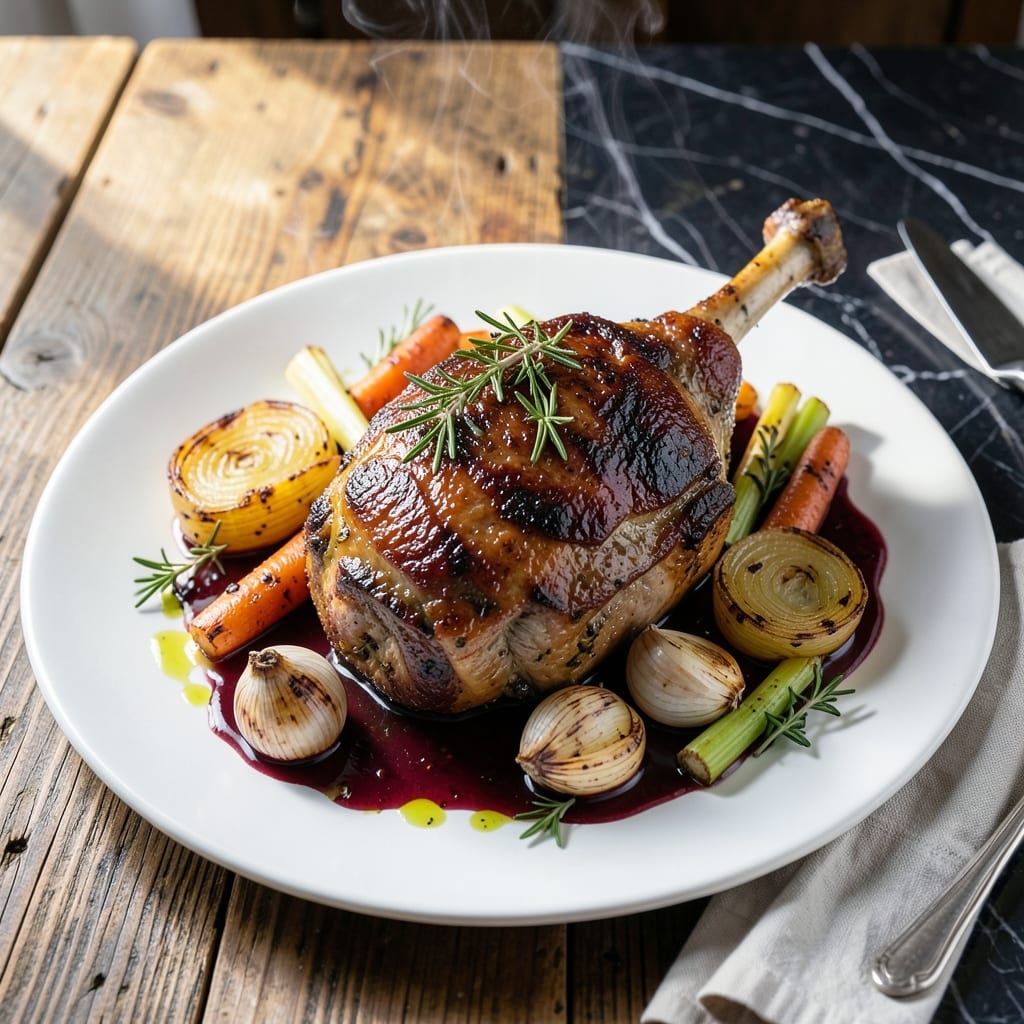
This slow-roasted lamb leg transforms a special occasion into an unforgettable meal. The red wine and herbs infuse the meat with deep, aromatic flavors that develop gradually in the oven.
I’ve tested this method repeatedly to ensure the meat stays tender and juicy, with a crisp exterior. The key is patience—low and slow cooking allows the flavors to meld perfectly.
By the time it’s done, you’ll have fall-off-the-bone tender lamb with a rich, velvety sauce that’s ideal for serving with roasted vegetables or mashed potatoes.
This dish brings elegance to your table without the fuss of complicated techniques.
Ingredients for Lamb Leg Recipe Red Wine
Pantry staples meet a few fresh herbs for this slow-roasted showstopper.
| Ingredient | Amount | Notes |
|---|---|---|
| Bone-In Lamb Leg 🐑 | 5 lb | Trimmed of excess fat |
| Dry Red Wine 🍷 | 2 cups | Bold variety like Cabernet |
| Fresh Rosemary Sprigs 🌿 | 4 whole | Stems removed, roughly chopped |
| Fresh Thyme Sprigs 🍃 | 6 whole | Stems removed, roughly chopped |
| Garlic Cloves 🧄 | 8 cloves | Peeled, smashed |
| Yellow Onion 🧅 | 1 whole | Large, quartered |
| Carrots 🥕 | 3 whole | Peeled, cut into chunks |
| Celery Stalks 🥬 | 3 whole | Cut into large pieces |
| Olive Oil 🫒 | ¼ cup | Extra-virgin for richness |
| Chicken Stock 🥣 | 1 ½ cups | Low-sodium preferred |
| Tomato Paste 🍅 | 2 tbsp | For depth of flavor |
| Kosher Salt 🧂 | 1 ½ tbsp | Diamond Crystal for consistency |
| Black Peppercorns 🌶️ | 1 tbsp | Freshly cracked |
| Unsalted Butter 🧈 | 2 tbsp | For finishing sauce |
[recipe_ingredient_scaler]
The lamb is the star here. Bone-in leg from Whole Foods or Costco has the best marbling and flavor—avoid pre-cut pieces, as they dry out faster. Look for a roast with a thin fat cap (about 1/4 inch). The red wine should be something you’d drink—Cabernet Sauvignon or Merlot work beautifully. I always grab a second bottle for serving with dinner (trust me on this one).
No red wine? Beef broth with a splash of balsamic vinegar mimics the depth. Out of fresh herbs? Dried at one-third the amount works in a pinch, but fresh is worth it here. If you can’t find bone-in lamb leg, bone-in lamb shoulder is a good substitute—just extend the cooking time. The tomato paste can be swapped for sun-dried tomato bits blended with a little water.
Lamb keeps beautifully in the fridge for 3-4 days and freezes for 3 months. Reheat gently to preserve tenderness—microwave works, but oven at 300°F is ideal. The sauce thickens as it cools, so thin with a splash of stock when reheating.
Why You’ll Love This Recipe
- Set It and Forget: I just rub the lamb with garlic, rosemary, and thyme, pour in the red wine, and let the oven do the rest.
- Rich and Deep: The red wine soaks into the lamb, making every bite tender and packed with flavor.
- Sunday Dinner Star: This dish feels special enough for a holiday but honestly works for a cozy weekend meal too.
- Leftovers Win: The flavors taste even better the next day, so I always make extra for sandwiches or stews.
Step-by-Step Instructions for Lamb Leg in Red Wine
This method transforms your leg into a melt-in-your-mouth masterpiece with minimal effort.
Step 1: Prep and Season the Lamb Leg
Pat the bone-in lamb leg dry with paper towels, removing any excess moisture that could interfere with browning. Using a sharp knife, make small incisions all over the surface to help the flavors penetrate deeply.
Rub the meat with the 1.5 tbsp kosher salt and 1 tbsp black peppercorns, pressing the seasoning into every crevice. Then, rub in 0.25 cup olive oil to create a paste that locks in moisture and promotes even browning.
Place the lamb in a large roasting pan and let it sit at room temperature for 30 minutes while you prep the remaining ingredients. This step ensures even cooking from edge to center.
Step 2: Build the Aromatic Base
Scatter the 1 whole yellow onion, 3 whole carrots, 3 whole celery stalks, 8 cloves garlic cloves, 4 whole fresh rosemary sprigs, and 6 whole fresh thyme sprigs around the lamb in the pan. These vegetables will infuse the dish with deep, complex flavors.
Stir the 2 tbsp tomato paste into the 2 cups dry red wine until fully dissolved, then pour this mixture over the lamb and vegetables. The acidity in the wine helps tenderize the meat while adding richness.
Add the 1.5 cups chicken stock to the pan, making sure the liquid comes about halfway up the lamb. This creates a braising environment that keeps the meat juicy and flavorful.
Step 3: Slow-Roast to Perfection
Preheat your oven to 325°F. Once hot, place the roasting pan on the lower middle rack and roast uncovered for 2.5 to 3 hours. Baste the lamb with the pan juices every 45 minutes to ensure it stays moist and develops a rich, caramelized crust.
You’ll know it’s done when the meat pulls away from the bone easily and the internal temperature reaches 145°F for medium-rare. The lamb should be fork-tender, with the aromatics softened and the liquid reduced into a deeply flavored sauce.
Step 4: Rest and Finish with Butter
Carefully transfer the lamb to a cutting board, tent it loosely with foil, and let it rest for 20 minutes. This allows the juices to redistribute, ensuring every slice is succulent and flavorful.
While the lamb rests, skim any excess fat from the pan juices, then place the roasting pan on the stovetop over medium heat. Stir in the 2 tbsp unsalted butter and simmer for 2-3 minutes until the sauce thickens slightly and develops a glossy sheen.
Slice the lamb against the grain into thick pieces and arrange on a platter. Spoon the warm sauce over the top and serve immediately with your favorite sides.
Pro Tips For Making Lamb Leg Recipe Red Wine
- Sear It Hard: Get your pan screaming hot before adding the lamb—this builds a deep brown crust that actually changes the outcome. I learned this the hard way after years of pale, sad-looking roasts.
- Smash the Garlic: Lightly crush the garlic cloves with the side of your knife before adding them—this releases more aroma without burning, and it’s the thing that matters most for flavor infusion.
- Rest the Lamb: Give it a solid 15-20 minutes under foil after roasting, even if you’re starving. Sounds weird, but it works: the juices redistribute, and you won’t lose half the moisture when you carve.
- Use Bold Wine: Skip the cooking wine and go for a full-bodied dry red like Cabernet Sauvignon—it adds depth the dish deserves. After using cheap wine once, I finally figured out why my sauce tasted flat.
Common Mistakes When Making Perfect Results
Skipping the Rest
I can’t stress this enough—never skip resting the lamb after roasting. That 20-minute rest allows juices to redistribute, so slicing too soon results in dry meat. I learned this the hard way with my first Sunday roast for family dinner. 💪
Underseasoning the Meat
With a 5 lb bone-in leg, don’t be shy with salt. Use the full 1.5 tbsp kosher salt and press it into every crevice. The large cut needs bold seasoning to develop that flavorful crust. I always taste the raw meat after seasoning to ensure it’s well coated.
Wrong Oven Temperature
Low and slow is key—325°F is perfect. Higher temps can toughen the meat before it becomes tender. I use an oven thermometer to verify my oven’s accuracy, as many run hotter than their dial indicates.
Not Enough Liquid
Ensure the braising liquid comes halfway up the lamb. If it’s too shallow, the meat dries out. I check halfway through cooking and add ½ cup chicken stock if the pan looks dry. This prevents burning and ensures even cooking.
Skipping the Baste
Baste every 45 minutes with pan juices. This step builds layers of flavor and keeps the exterior moist. I use a large spoon to pour the juices over the lamb, making sure to coat all sides evenly.
Using Poor Wine
If you wouldn’t drink it, don’t cook with it. A bold Cabernet adds depth that cheap wine can’t. I always buy an extra bottle of what I’m serving—it makes a noticeable difference in the sauce’s richness.
Nutrition Facts
Frequently Asked Questions
Can I use a different type of wine?
Yes, but choose a dry, bold variety. A Merlot or Syrah works as well as Cabernet. Avoid sweet wines—they’ll make your sauce cloying instead of rich.
How do I know when it’s done?
Use a meat thermometer for accuracy. The internal temperature should reach 145°F for medium-rare. The meat will also pull away from the bone easily when ready.
Can I make this ahead of time?
Cook and cool the lamb in its juices, then refrigerate for up to 3 days. Gently reheat in the oven at 300°F before serving. The flavors deepen overnight.
What if my sauce is too thin?
Simmer uncovered on the stovetop for 5-10 minutes after removing the lamb. If needed, mix 1 tsp cornstarch with water and stir in for extra thickness.

Trained in classic French technique but raised on slow-cooked ribs and spicy rubs, she blends culinary skill with smoke and soul.
- Recipe for Boneless Pork Chops in Cast Iron Skillet: Sear and Baste to Juicy Perfection - October 3, 2026
- Recipe for Boneless Cross Rib Roast: Slow-Roasted Beef with Herb Crust - October 3, 2026
- Hamburgers in Sauce Recipe Crock Pot: Slow-Cooked Savory Delight - October 3, 2026