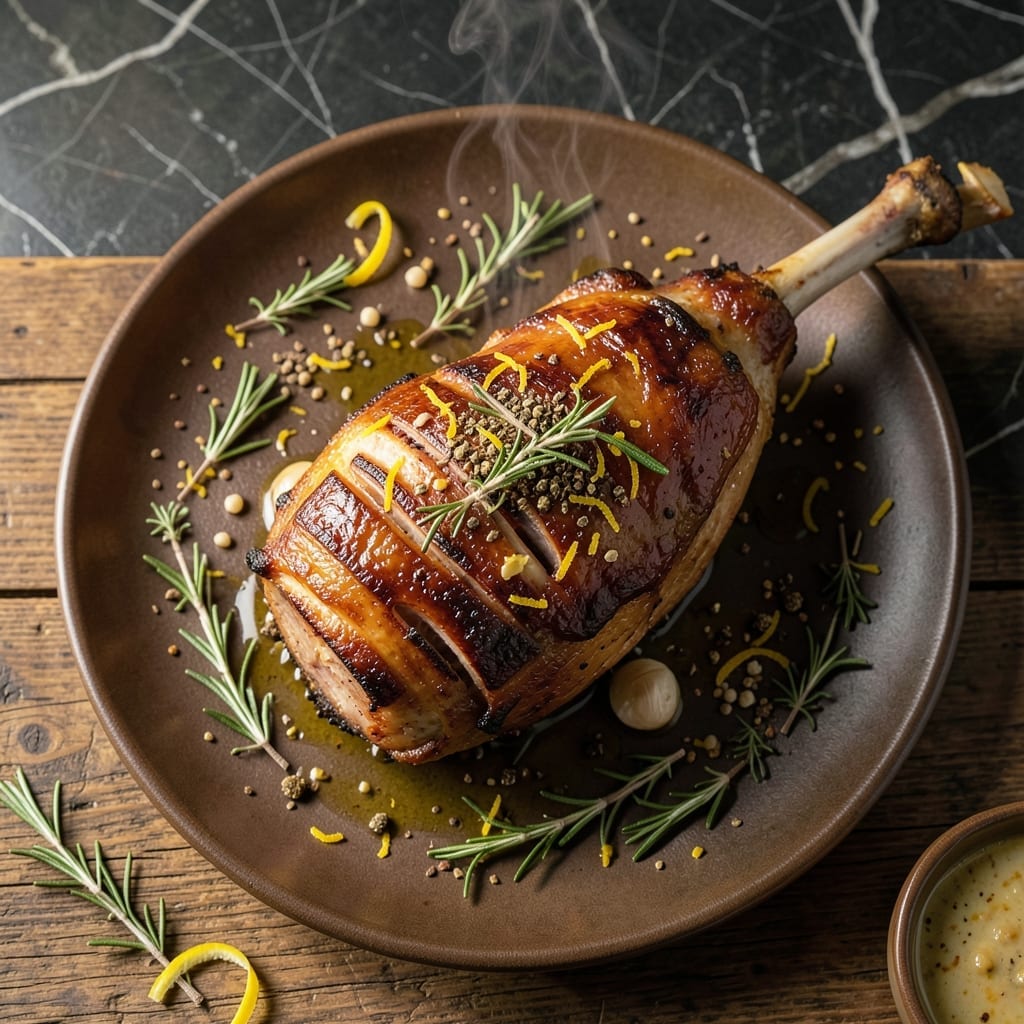
There’s nothing quite like a Greek-style lamb leg roast to transform a Sunday dinner into something extraordinary. This recipe brings the bold flavors of the Mediterranean to your table with minimal effort and maximum impact.
I’ve tested this method in my own kitchen, perfecting the balance of garlic, lemon, and herbs that define authentic Greek cuisine. The result is tender, aromatic meat with a golden crust that’s as impressive as it is delicious.
The secret lies in a long, slow roast that allows the flavors to meld while keeping the lamb juicy and flavorful. A simple herb infusion with rosemary, oregano, and thyme does most of the work for you.
Serve it with roasted potatoes and a fresh salad for a meal that feels like a celebration. This is Greek cooking at its finest.
Ingredients for Lamb Leg Roast Recipe Greek
A few bold Mediterranean ingredients transform this roast into something extraordinary.
| Ingredient | Amount | Notes |
|---|---|---|
| Bone-In Lamb Leg 🐑 | 4 lb | Trimmed of excess fat |
| Garlic Cloves 🧄 | 8 cloves | Minced for marinade |
| Fresh Rosemary 🌿 | 2 tbsp | Chopped, stems removed |
| Dried Oregano 🍃 | 2 tbsp | Mediterranean variety preferred |
| Fresh Thyme 🌿 | 1 tbsp | Leaves stripped from stems |
| Lemon Zest 🍋 | 1 tbsp | From 1 large lemon |
| Lemon Juice 🍋 | ¼ cup | Freshly squeezed |
| Extra-Virgin Olive Oil 🫒 | ½ cup | Divided for marinade and searing |
| Kosher Salt 🧂 | 2 tsp | Diamond Crystal preferred |
| Black Pepper 🌶️ | 1 ½ tsp | Freshly ground |
| Red Wine 🍷 | ½ cup | Dry variety for deglazing |
| Chicken Broth 🥣 | 1 cup | Low-sodium preferred |
[recipe_ingredient_scaler]
The lamb is the star here. Bone-in leg from Whole Foods or a local butcher gives the best flavor—avoid pre-cut pieces if possible. Look for even marbling and a deep red color. I’ve had great luck with New Zealand lamb (milder taste) but domestic works too. Ask the butcher to trim excess fat if you’re not comfortable doing it yourself.
No fresh herbs? Dried at one-third the amount works, but fresh is worth the effort here. Short on rosemary? Substitute half with sage. The red wine adds depth—if you don’t cook with alcohol, substitute beef broth with a splash of balsamic vinegar. Chicken broth can be swapped for vegetable broth if needed. Lemon zest matters more than the juice (that’s where the oils live).
Marinate the lamb overnight if you can—8-12 hours is ideal (but even 2 hours makes a difference). Leftovers keep 4-5 days in the fridge or freeze for 3 months. Reheat gently to avoid drying out that juicy texture.
Why You’ll Love This Recipe
- Set It and Forget: Honestly, just rub the lamb with garlic, rosemary, and oregano, pop it in the oven, and let it do its thing.
- Herb Crust Magic: That combination of fresh rosemary and thyme with the garlic creates this insane crust that’s crispy on the outside, tender inside.
- Feeds a Crowd: I made this for Easter last year and it was the star—great for holidays, Sunday suppers, or when you want to impress without fuss.
- Leftovers for Days: The bone-in leg gives you so much meat that I end up with enough for sandwiches, salads, or even a quick pasta the next night.
Step-by-Step Instructions for Lamb Leg Roast
Here’s the method. Simple, flavorful, and foolproof for a Greek-inspired roast.
Step 1: Prepare the Lamb Leg and Herb Marinade
Pat the 4 lb bone-in lamb leg dry with paper towels to ensure the marinade adheres well. Trim any excess fat if needed. In a small bowl, combine the 8 cloves minced garlic cloves, 2 tbsp fresh rosemary, 2 tbsp dried oregano, 1 tbsp fresh thyme, 1 tbsp lemon zest, 0.25 cup lemon juice, 0.25 cup extra-virgin olive oil, 2 tsp kosher salt, and 1.5 tsp black pepper. Stir until the herbs and spices are evenly distributed.
This marinade infuses the lamb with bright, aromatic Mediterranean flavors. I like to let the lamb sit in this mixture for at least 2 hours (or overnight for maximum flavor penetration), turning it occasionally to ensure even coating.
Step 2: Sear the Lamb for a Flavorful Crust
Preheat your oven to 425°F. Heat the remaining 0.25 cup extra-virgin olive oil in a large, oven-safe roasting pan or Dutch oven over medium-high heat. Remove the lamb from the marinade (reserve the marinade) and pat it dry again. Sear the lamb on all sides for 3-4 minutes per side until deeply browned.
This searing step creates a rich, caramelized crust that locks in juices and adds depth to the final dish. Don’t rush—you want a deep golden-brown color on every surface. If the pan starts to smoke, reduce the heat slightly.
Step 3: Roast the Lamb with Aromatics
Place the seared lamb in the center of the roasting pan. Pour the reserved marinade over the lamb and add the 1 cup chicken broth to the pan. This liquid will create a flavorful base for basting and prevent the bottom from burning.
Transfer the pan to the preheated oven and roast for 1 hour. Then, reduce the oven temperature to 325°F and continue roasting for another 1 to 1.5 hours, basting the lamb every 20 minutes with the pan juices. The lamb is done when an instant-read thermometer inserted into the thickest part reads 135-140°F for medium-rare.
Step 4: Rest and Deglaze for a Rich Pan Sauce
Remove the lamb from the oven and transfer it to a cutting board. Tent it loosely with foil and let it rest for 15-20 minutes before slicing. This resting period allows the juices to redistribute, ensuring a moist and tender roast.
Place the roasting pan on the stovetop over medium heat. Add the 0.5 cup red wine and scrape up all the browned bits from the bottom of the pan with a wooden spoon. Simmer for 3-4 minutes until the liquid reduces slightly and thickens into a rich pan sauce.
Step 5: Slice and Serve
Slice the lamb against the grain into ½-inch thick pieces. Arrange the slices on a platter and spoon the pan sauce over the top. The meat should be tender and juicy with a rosy pink center.
Serve immediately with the pan juices drizzled over the top. This dish pairs beautifully with roasted potatoes or a fresh Greek salad. The combination of garlic, lemon, and herbs gives it that authentic Mediterranean flair.
Pro Tips For Making Lamb Leg Roast Recipe Greek
- Start High, Finish Low: Sear the lamb leg at 450°F for 20 minutes first, then drop to 325°F—this locks in juices while letting the rosemary and garlic work their magic without burning.
- Score the Fat: Cut 1/4-inch slits in the fat cap and stuff garlic cloves and thyme sprigs inside; I learned this the hard way after my first roast tasted bland on the surface.
- Don’t Rush Resting: Let it rest 15-20 minutes under foil after roasting, or all those gorgeous juices will end up on the cutting board instead of in the meat.
- Use Fresh Herbs: Dried oregano works, but fresh rosemary and thyme make a real difference—sounds snobby, but the aroma alone is worth the extra minute of chopping.
Serving Suggestions for Leftovers
Platter Presentation
Arrange the sliced lamb on a warm platter with the ½-inch thick pieces slightly overlapping. Spoon the pan sauce generously over the top and around the edges. I like to garnish with fresh rosemary sprigs and lemon wedges for a pop of color and aroma. 🌿
Family-Style Serving
For a cozy, communal feel, serve the lamb directly from the roasting pan at the table. Let guests help themselves, soaking up the juices with crusty bread or roasted potatoes. This is how my Nonna served it—always a hit.
Greek Salad Pairing
A classic Greek salad with tomatoes, cucumbers, red onion, olives, and feta complements the lamb perfectly. Toss with extra-virgin olive oil and red wine vinegar. The acidity cuts through the richness beautifully.
Warm Pita and Tzatziki
Offer warm pita bread and a bowl of tzatziki sauce on the side. Guests can make mini lamb wraps or use the pita to soak up the pan juices. I love this interactive touch for gatherings.
Roasted Vegetables
Serve with roasted potatoes and carrots tossed in the same herbs used for the lamb. Roast at 400°F for 30-40 minutes until golden. The shared flavors tie the meal together. 💛
Wine Pairing
A medium-bodied Greek red wine like Agiorgitiko or Xinomavro pairs wonderfully. For white wine lovers, a crisp Assyrtiko from Santorini offers a refreshing contrast to the lamb’s richness.
Nutrition Facts
Frequently Asked Questions
What’s the ideal internal temperature for perfect doneness?
For medium-rare, remove from oven at 135-140°F. The temperature will rise to 145°F while resting. Use a meat thermometer for accuracy—this ensures juicy results every time.
Can I use boneless lamb instead of bone-in?
Yes, but reduce cooking time by about 20%. A boneless leg cooks faster since heat penetrates more evenly. Check temperature at 1 hour 15 minutes to avoid overcooking.
How do I prevent the herbs from burning during roasting?
Baste every 20 minutes with pan juices to keep herbs moist. If they darken too quickly, tent the lamb loosely with foil. This protects the crust while locking in flavor.
What’s the best way to reheat leftovers?
Gently warm slices in a 300°F oven with a splash of broth. Cover with foil to retain moisture. Avoid microwaving—it can make the meat tough.

Trained in classic French technique but raised on slow-cooked ribs and spicy rubs, she blends culinary skill with smoke and soul.
- Recipe for Boneless Pork Chops in Cast Iron Skillet: Sear and Baste to Juicy Perfection - October 3, 2026
- Recipe for Boneless Cross Rib Roast: Slow-Roasted Beef with Herb Crust - October 3, 2026
- Hamburgers in Sauce Recipe Crock Pot: Slow-Cooked Savory Delight - October 3, 2026