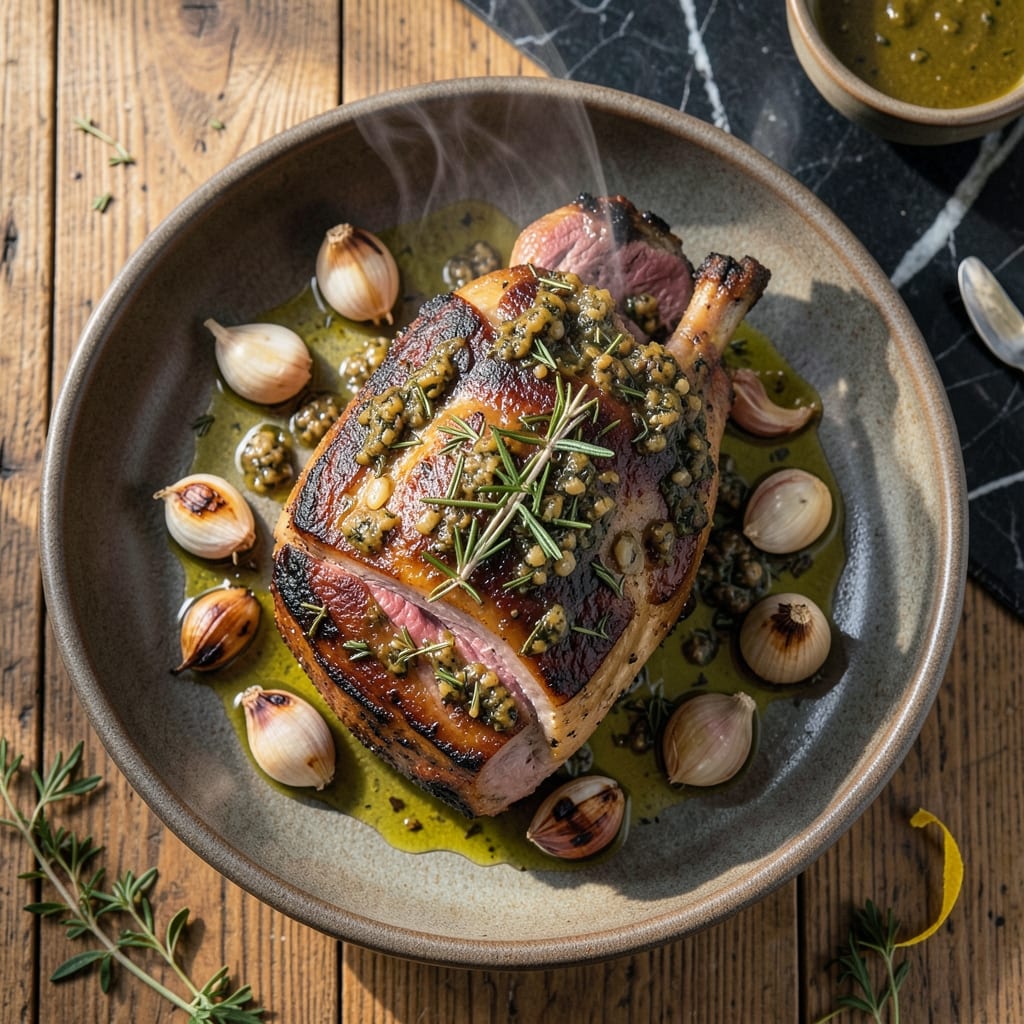
This Kiwi-style lamb leg roast delivers tender, herb-crusted perfection with a method honed through years of home kitchen trials. I developed this approach after studying my grandmother’s intuitive techniques, translating her vague notes into precise steps anyone can follow.
The key lies in a simple herb rub and proper roasting temperature. A blend of fresh rosemary, thyme, and garlic creates a crust that seals in juices while infusing every bite with aromatic flavor. The result is meat that falls off the bone with minimal effort.
What emerges from the oven is a centerpiece worthy of any New Zealand Sunday dinner. The exterior forms a flavorful crust, while the interior stays juicy and succulent. This technique works reliably for gatherings or quiet family meals.
Serve with roasted vegetables to complete the meal. The process is straightforward enough for weeknights but impressive enough for special occasions.
Ingredients for Lamb Leg Roast Recipe Nz
A bone-in leg of lamb and fresh herbs create this Kiwi classic with minimal effort.
| Ingredient | Amount | Notes |
|---|---|---|
| Leg of Lamb 🐑 | 4 lb | Bone-in for best flavor |
| Fresh Rosemary 🌿 | 3 tbsp | Finely chopped, stems removed |
| Fresh Thyme 🍃 | 2 tbsp | Leaves stripped from stems |
| Garlic Cloves 🧄 | 6 cloves | Minced for maximum flavor |
| Extra-Virgin Olive Oil 🫒 | ½ cup | Divided for rub and basting |
| Kosher Salt 🧂 | 1 tbsp | Diamond Crystal preferred |
| Black Pepper 🌶️ | 2 tsp | Freshly ground, coarse |
| Dijon Mustard 🟡 | 2 tbsp | For herb paste binding |
| Red Wine 🍷 | 1 cup | Dry variety for deglazing |
| Chicken Stock 🥣 | 1 cup | Low-sodium preferred |
| Lemon 🍋 | 1 whole | Zested and juiced |
| Potatoes 🥔 | 2 lb | Yukon Gold, peeled and quartered |
| Carrots 🥕 | 4 whole | Peeled and cut into chunks |
[recipe_ingredient_scaler]
The lamb is non-negotiable—bone-in leg gives you the most flavor and juiciness. New Zealand lamb is ideal if you can find it (check Whole Foods or specialty butchers), but any good-quality leg will work. Look for even marbling and a bright pink color. The fresh herbs are equally critical: rosemary and thyme should be vibrant, not wilted or brown.
No fresh herbs? Dried at one-third the amount, but fresh is strongly preferred here. No red wine? Substitute beef stock with a splash of balsamic vinegar for similar depth. For the mustard, whole-grain Dijon adds texture, while smooth works fine too. If avoiding alcohol entirely, additional stock with extra lemon juice provides acidity.
The herb paste can be made 1 day ahead and refrigerated. Roast the lamb immediately after rubbing for best crust formation. Leftovers keep 3-4 days refrigerated but are best served fresh. Reheat gently to avoid drying the meat.
Why You’ll Love This Recipe
- Set and Forget: I rub the lamb with rosemary, thyme, and garlic, pop it in the oven, and walk away—no babysitting required.
- Herb-Crusted Heaven: The olive oil and fresh herbs form a crust so fragrant and crisp, it’s the first thing everyone comments on.
- Sunday or Tuesday: This works just as well for a fancy weekend spread as it does for a midweek dinner with minimal effort.
- Leftovers for Days: One roast feeds my family twice—cold slices in sandwiches are honestly just as good the next day.
Step-by-Step Instructions for Lamb Leg Roast
Master this technique for a perfectly cooked leg of lamb with a fragrant herb crust and tender vegetables.
Step 1: Prepare the Herb Marinade and Coat the Lamb
In a small bowl, combine the 3 tbsp fresh rosemary, 2 tbsp fresh thyme, 6 cloves minced garlic, 2 tbsp Dijon mustard, 1 tbsp kosher salt, 2 tsp black pepper, and 0.5 cup extra-virgin olive oil. Stir until the mixture forms a thick, aromatic paste.
Pat the 4 lb leg of lamb dry with paper towels to ensure the marinade adheres properly. Using your hands, rub the herb mixture evenly over the entire surface of the lamb, pressing firmly to create a thick, even coating. This step infuses the meat with bold flavors and ensures a crispy, golden crust.
Step 2: Sear the Lamb for a Flavorful Crust
Preheat your oven to 325°F. While the oven heats, place a large, oven-safe roasting pan or Dutch oven over medium-high heat on the stovetop. Add the lamb and sear on all sides for 3-4 minutes per side until the exterior is deeply browned and fragrant.
Searing locks in juices and creates a rich, caramelized exterior. You’ll know it’s ready to flip when the lamb releases easily from the pan and a deep golden-brown crust forms. Transfer the lamb to a plate temporarily while you prepare the vegetables.
Step 3: Arrange Vegetables and Begin Roasting
In the same pan, add the 2 lb peeled and quartered potatoes and 4 whole peeled and chunked carrots. Toss them in the remaining oil and pan juices to coat evenly. Place the seared lamb on top of the vegetables, fat-side up.
Pour 1 cup chicken stock and 1 cup red wine into the pan, taking care not to wash off the marinade. The liquid will create a flavorful base for basting and keep the vegetables moist. Cover the pan loosely with foil and transfer to the preheated oven.
Step 4: Roast to Perfection and Baste
Roast the lamb for 2 to 2.5 hours, basting occasionally with the pan juices. After 1.5 hours, remove the foil to allow the lamb to brown further. The lamb is done when an instant-read thermometer inserted into the thickest part reads 135°F for medium-rare or 145°F for medium.
During the last 30 minutes of cooking, add the zest and juice of the 1 whole lemon to the pan for a bright, citrusy finish. The vegetables should be tender and golden, soaking up all the rich, herby flavors from the lamb.
Step 5: Rest and Serve
Once the lamb reaches your desired internal temperature, transfer it to a cutting board, tent loosely with foil, and let it rest for 15-20 minutes. This allows the juices to redistribute, ensuring moist, flavorful meat.
Strain the pan juices into a gravy boat or small saucepan, pressing the vegetables gently to extract their flavors. Slice the lamb against the grain and serve with the roasted potatoes and carrots, drizzled with the rich pan juices. The meat should be tender and succulent, with a fragrant herb crust and perfectly cooked vegetables.
Pro Tips For Making Lamb Leg Roast Recipe Nz
- Preheat the Pan: Start with a screaming hot pan or oven—around 220°C—to get that deep golden crust on the lamb before lowering the temp to 180°C for even cooking.
- Score the Fat: Make shallow cuts in the fat cap every 2-3 cm. I learned this the hard way—it lets the rosemary, thyme, and garlic penetrate deeper and crisp up the fat evenly.
- Don’t Overcrowd: Give the lamb space in the roasting tray so the heat circulates properly. Steer clear of cramming it in with veggies at the start—add them later if you must.
- Rest Before Slicing: Tent the roast with foil and let it rest for 15-20 minutes after cooking. Sounds tedious, but it keeps the juices from running all over the cutting board.
Troubleshooting lamb leg roast recipe nz
Uneven Cooking
If your lamb is cooking unevenly, it’s likely because the bone is affecting heat distribution. To fix, rotate the roast every 45 minutes and shield the thinner parts with foil during the last hour. I learned this trick after serving dry ends at a family dinner. 💡
Dry Meat Issues
Overcooking is the main culprit for dry lamb. Pull it from the oven at 135°F for medium-rare and let it rest for 15-20 minutes. The internal temperature will rise to 140-145°F during resting. Grandmother would say “when it smells done, it probably is.”
Weak Herb Flavor
If the herb crust isn’t pronounced enough, make sure you’re pressing the paste firmly into the meat. Also, sear the lamb 3-4 minutes per side to develop those flavors. I now double the garlic in my herb mix for extra punch.
Soggy Vegetables
Your potatoes and carrots will turn out mushy if they’re sitting in too much liquid. Elevate the lamb on a rack above the vegetables, or arrange them around the edges. Cut larger pieces to ensure they cook through without breaking down. 🥕
Lack of Crust
For a better crust, pat the lamb extremely dry before applying the herb rub. Also, sear it in a hot pan before roasting. The Maillard reaction needs a dry surface. I use paper towels and press hard to remove all moisture.
Pan Juices Too Thin
To thicken your pan juices, remove the lamb and vegetables, then simmer the liquid over medium-high heat for 5-7 minutes. For extra richness, mix in 1 tbsp butter at the end. This creates a beautiful sauce for serving.
Nutrition Facts
Frequently Asked Questions
What oven temperature should I use?
Roast at 325°F for even cooking and a perfect crust. This lower temperature prevents drying while allowing the herb flavors to develop fully.
How long should the lamb rest after roasting?
Let it rest for 15-20 minutes before slicing. This allows juices to redistribute, ensuring moist, tender meat every time.
Can I use dried herbs instead of fresh?
Yes, but use 1/3 the amount since dried herbs are more concentrated. Fresh rosemary and thyme give the best flavor, but dried work in a pinch.
Why are my vegetables mushy?
Too much liquid in the pan can steam them. Elevate the lamb on a rack or arrange veggies around the edges to prevent sogginess.

Trained in classic French technique but raised on slow-cooked ribs and spicy rubs, she blends culinary skill with smoke and soul.
- Recipe for Boneless Pork Chops in Cast Iron Skillet: Sear and Baste to Juicy Perfection - October 3, 2026
- Recipe for Boneless Cross Rib Roast: Slow-Roasted Beef with Herb Crust - October 3, 2026
- Hamburgers in Sauce Recipe Crock Pot: Slow-Cooked Savory Delight - October 3, 2026