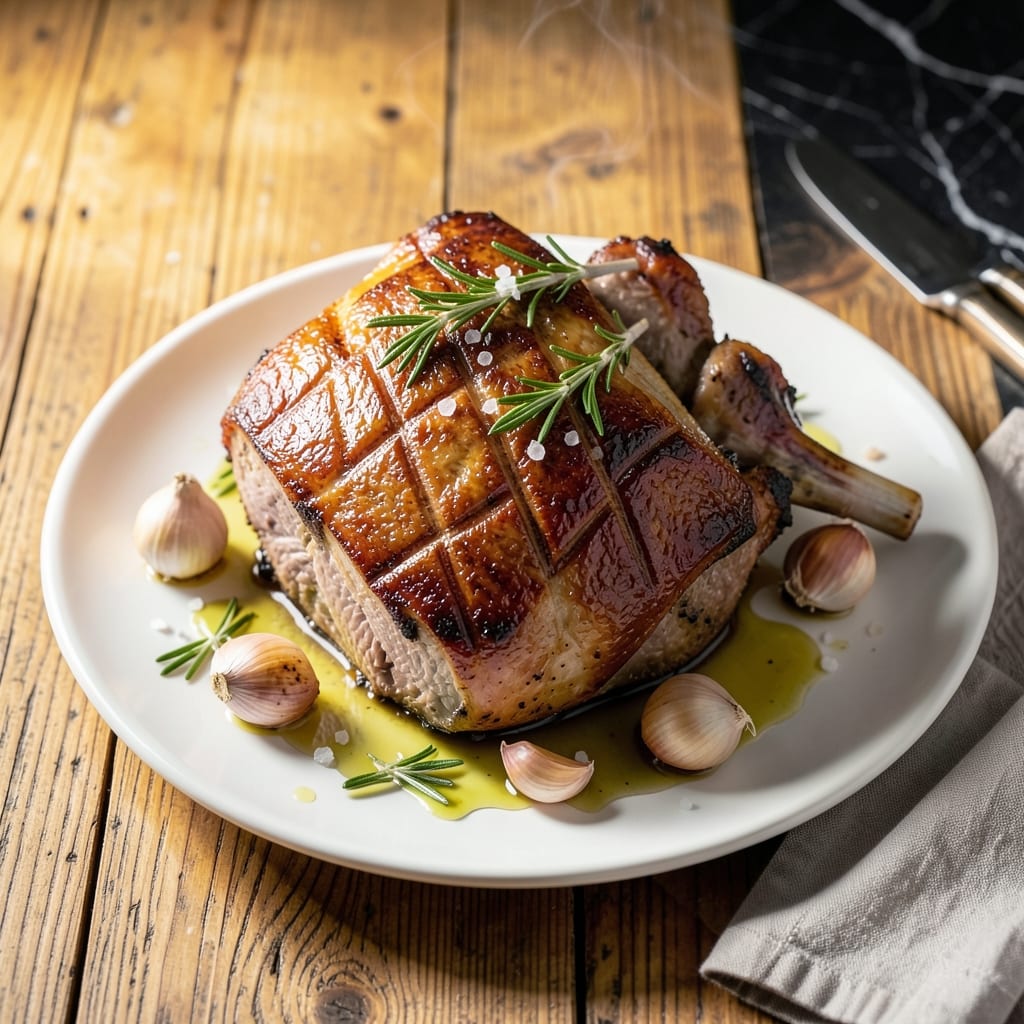
Sunday roast transforms with this garlic and rosemary crust that elevates lamb to centerpiece status. I’ve refined this method to deliver consistent results without restaurant-level effort.
The key is a simple paste of crushed garlic, fresh rosemary, and olive oil rubbed into the meat before roasting. This creates a fragrant, golden crust that locks in juices while infusing every bite with flavor.
You’ll get tender, pink meat with a perfectly seasoned exterior—ideal for gathering the family around the table. The aroma alone signals that Sunday dinner is something special.
Serve with roasted vegetables or mint sauce for a complete meal. This approach makes impressive results achievable in any home kitchen.
Ingredients for Lamb Roast Recipe Australia
Sunday dinner just got an upgrade with this showstopper roast and its fragrant herb crust.
| Ingredient | Amount | Notes |
|---|---|---|
| Bone-In Lamb Leg 🐑 | 4 lb | Or boneless, trimmed of excess fat |
| Fresh Rosemary Sprigs 🌿 | 4 whole | Leaves stripped, finely chopped |
| Garlic Cloves 🧄 | 8 cloves | Peeled and crushed to paste |
| Extra-Virgin Olive Oil 🫒 | ½ cup | Plus extra for greasing |
| Coarse Sea Salt 🧂 | 2 tbsp | Divided for crust and seasoning |
| Freshly Ground Black Pepper 🌶️ | 1 tbsp | Newly cracked for best flavor |
| Dijon Mustard 🟡 | 2 tbsp | For crust binding and tang |
| Red Wine 🍷 | 1 cup | For deglazing pan juices |
| Chicken Stock 🥣 | 1 cup | Low-sodium preferred |
| Unsalted Butter 🧈 | 2 tbsp | For finishing sauce |
| Fresh Mint Leaves 🌿 | ¼ cup | Chopped, for garnish |
| Lemon 🍋 | 1 whole | Zested and juiced |
[recipe_ingredient_scaler]
The lamb is the star—bone-in leg from your butcher or the meat section at Woolworths or Coles works perfectly. Look for even marbling and a bright pink color (the good stuff, not that grayish pre-packaged kind). I always ask for the shank bone to be left on for extra flavor. Rosemary should be fresh—dried just doesn’t cut it here. Grab bunches at the farmers market if you can.
No fresh rosemary? Dried at one-third the amount in a pinch, but fresh is non-negotiable for that crust. Red wine can be swapped for beef stock plus a splash of balsamic. Out of Dijon? Whole-grain mustard works too (trust me on this). If lamb leg feels too big, a shoulder roast works—just adjust cooking time. The garlic paste can be made ahead and stored in the fridge overnight.
Leftovers keep beautifully. Carve and store in the fridge for up to 4 days, or freeze for 3 months. Reheat gently in the oven with a splash of stock to keep it moist. The crust actually gets more flavorful after a day—perfect for Monday night sandwiches.
Why You’ll Love This Recipe
- One Pan Wonder: I just rub the lamb with olive oil, salt, crushed garlic, and rosemary, pop it in the oven, and let it do its thing.
- Sunday Roast Vibes: That crispy rosemary-garlic crust over the juicy meat? Honestly, it’s the reason my family lingers at the table longer.
- Feeds a Crowd: A bone-in leg serves 6-8 easily, so it’s my go-to for birthdays or when the relatives descend unannounced.
- Leftovers Magic: Cold slices in sandwiches or warmed through in pies—between us, I sometimes make extra just for this.
Step-by-Step Instructions for Lamb Roast with Garlic and Rosemary Crust
Here’s the method I’ve perfected for a Sunday showstopper that’s impressive but straightforward.
Step 1: Prepare the Lamb and Create the Herb Crust
Pat the 4 lb Bone-In Lamb Leg dry with paper towels—moisture is the enemy of a good crust. Score the fat cap in a crosshatch pattern, cutting about ¼ inch deep. This helps the crust adhere and allows fat to render out during roasting.
In a bowl, combine the finely chopped leaves from 4 whole Fresh Rosemary Sprigs, the paste from 8 cloves Garlic Cloves, 0.5 cup Extra-Virgin Olive Oil, 2 tbsp Coarse Sea Salt, 1 tbsp Freshly Ground Black Pepper, and 2 tbsp Dijon Mustard. Mix thoroughly to form a thick paste. Rub this mixture all over the lamb, pressing it into every crevice. Real talk: this crust is what makes the dish.
Step 2: Sear and Begin Roasting
Preheat your oven to 450°F. Heat a large oven-safe roasting pan or Dutch oven over medium-high heat. Add the lamb and sear on all sides for 2-3 minutes per side until the crust turns deep golden brown. This step locks in juices and adds depth to the flavor.
Transfer the pan with the lamb directly to the preheated oven. Roast uncovered for 20 minutes at this high temperature to develop a beautiful crust. You’ll start to smell the aroma of garlic and rosemary filling your kitchen—that’s your cue that the crust is forming perfectly.
Step 3: Lower Temperature and Finish Roasting
Reduce the oven temperature to 325°F. Add 1 cup Chicken Stock to the pan to create moisture and prevent the drippings from burning. Cover the pan loosely with foil—this helps the lamb cook evenly without drying out.
Roast for another 1 hour 30 minutes to 2 hours, depending on your desired doneness. For medium-rare, aim for an internal temperature of 135-140°F in the thickest part of the meat. I always start checking at the 1 hour 30 minute mark with a meat thermometer—your oven might run hot or cool.
Step 4: Rest, Make Pan Sauce, and Serve
Transfer the lamb to a cutting board and tent loosely with foil. Let it rest for at least 20 minutes—this is non-negotiable. The juices need time to redistribute, and the temperature will rise another 5-10°F during resting.
While the lamb rests, place the roasting pan on the stovetop over medium heat. Add 1 cup Red Wine and scrape up all the browned bits with a wooden spoon. Simmer for 3-4 minutes until reduced by half. Stir in the zest and juice from 1 whole Lemon and 2 tbsp Unsalted Butter, whisking until the sauce is glossy and slightly thickened. Slice the lamb and serve with the sauce, garnished with 0.25 cup Fresh Mint Leaves.
Pro Tips For Making Lamb Roast Recipe Australia
- Start Hot, Finish Low: Sear the bone-in lamb leg in a screaming hot oven (220°C) for 20 minutes first, then drop to 160°C to finish—this locks in juices while getting that crispy rosemary-garlic crust I spent years trying to perfect.
- Score the Fat: Cut 1cm-deep slits all over the fat cap before rubbing with oil, salt, and crushed garlic-rosemary paste. I learned this the hard way after my first few roasts came out bland because the flavors couldn’t penetrate.
- Don’t Skip Resting: Let it rest under foil for at least 15 minutes after roasting—yes, even if you’re starving. Skip this and all those beautiful juices will end up on your cutting board instead of in the meat.
- Use Coarse Salt: That coarse sea salt isn’t just for texture—it adheres better to the lamb’s surface and creates a crust that fine salt just can’t. My grandmother swore by it, and she was right.
Regional Styles of These Flavors
Classic Australian Style
In Australia, we often use lamb shoulder instead of leg for a more affordable but equally flavorful roast. The shoulder has more connective tissue, which breaks down beautifully during slow roasting. I like to add 1 tbsp honey to the herb crust for a touch of sweetness that balances the garlic.
South Australian Twist
Down in South Australia, many cooks include native pepperberry in their crust for a unique, slightly fruity heat. You can find it at specialty spice shops or online. Just add 1 tsp ground pepperberry to your garlic and rosemary paste. It pairs wonderfully with the mint garnish.
Victorian Sunday Roast
In Victoria, the traditional approach often includes a red wine and rosemary gravy made by deglazing the pan with an entire bottle of Shiraz—not just a cup. Reduce it down with the stock until it coats the back of a spoon. My grandmother would approve of this bold move. 💛
Queensland Tropical
Up north, they sometimes add 1 tbsp grated ginger and 1 tbsp lime zest to the crust for a Bright, tropical twist. The citrus works surprisingly well with the lamb’s richness. Serve with roasted pineapple slices for a true Queensland experience.
Western Australia Herb Blend
In WA, cooks often use a blend of rosemary, thyme, and oregano in equal parts for their crust. This Mediterranean-inspired mix adds complexity. I’ve found that adding 1 tsp dried oregano to your fresh rosemary creates that distinct West Coast flavor profile.
Outback Campfire Style
For a true outback experience, try cooking your lamb in a camp oven over coals. The smoky flavor is incredible. Just maintain a consistent temperature around 325°F and add extra liquid to prevent drying. This method takes me back to family camping trips. 🔥
Nutrition Facts
Frequently Asked Questions
Can I use lamb shoulder instead of leg?
Lamb shoulder works beautifully and is often more affordable. It has more connective tissue, so roast it for an extra 30-45 minutes at 325°F for fall-apart tenderness.
How do I know when it’s perfectly cooked?
Use a meat thermometer—135-140°F for medium-rare. The meat will continue cooking while resting, so pull it out just before reaching your target temp. The juices should run clear when pierced.
What if my crust burns before the meat is done?
If the crust browns too quickly, tent the roast with foil and reduce oven temp to 300°F. This prevents burning while allowing the interior to cook through.
Can I make the herb paste ahead?
Yes! Prepare the garlic-rosemary paste up to 2 days ahead. Store it in an airtight container in the fridge. Let it sit at room temperature for 30 minutes before rubbing on the lamb.

Trained in classic French technique but raised on slow-cooked ribs and spicy rubs, she blends culinary skill with smoke and soul.
- Recipe for Boneless Pork Chops in Cast Iron Skillet: Sear and Baste to Juicy Perfection - October 3, 2026
- Recipe for Boneless Cross Rib Roast: Slow-Roasted Beef with Herb Crust - October 3, 2026
- Hamburgers in Sauce Recipe Crock Pot: Slow-Cooked Savory Delight - October 3, 2026