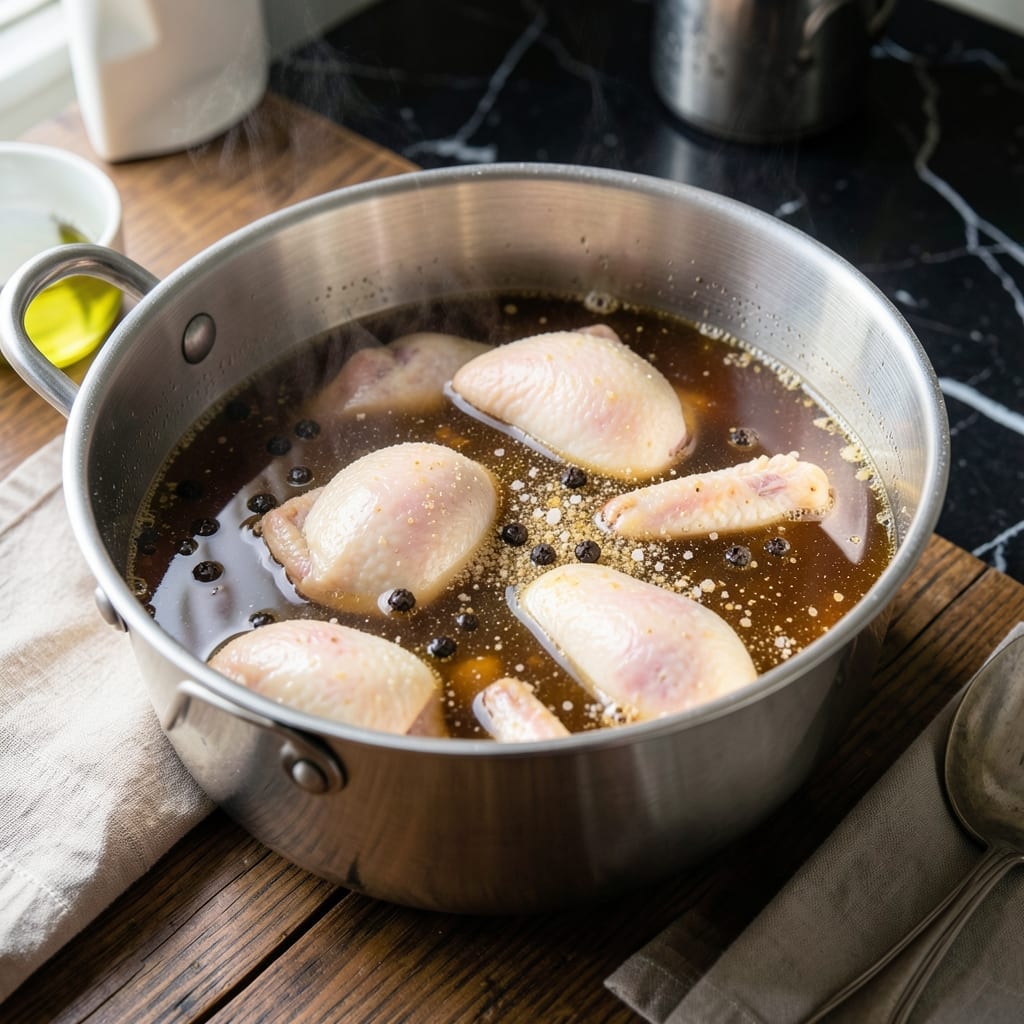
I’ve tested this brining method countless times to achieve that signature crispy, flavorful crust at home. The secret lies in the perfect balance of salt, sugar, and spices that infuse the chicken before frying.
This isn’t just any brine—it’s the foundation for authentic fried chicken with that unmistakable golden, shatteringly crispy exterior. The process transforms ordinary chicken into something extraordinary with minimal effort.
After brining, the chicken develops layers of flavor that standard recipes can’t match. The result is juicy meat encased in a perfectly seasoned crust that stays crispy even after cooling.
Follow these precise steps to recreate that classic taste in your own kitchen. The difference will be immediately noticeable.
Ingredients for Kentucky Fried Chicken Recipe Brine
Pantry staples and a few key spices create that signature flavor and crispy crust.
| Ingredient | Amount | Notes |
|---|---|---|
| Chicken Pieces 🍗 | 3 ½ lb | Bone-in, skin-on thighs and drumsticks |
| Water 💧 | 8 cups | Cold, filtered preferred |
| Kosher Salt 🧂 | ¾ cup | Diamond Crystal brand ideal |
| Granulated Sugar 🍚 | ½ cup | Dissolves easily in brine |
| Black Peppercorns 🌶️ | 2 tbsp | Whole, lightly crushed |
| Garlic Powder 🧄 | 2 tbsp | Not garlic salt |
| Onion Powder 🧅 | 2 tbsp | Freshly ground preferred |
| Paprika 🌶️ | 1 tbsp | Sweet or smoked variety |
| Dried Thyme 🌿 | 1 tbsp | Rubbed between fingers to release oils |
| Dried Oregano 🍃 | 1 tbsp | Mediterranean oregano preferred |
| Celery Salt 🧂 | 1 tbsp | Key for authentic flavor |
| Ground Ginger 🌿 | 1 tsp | Adds depth to brine |
| Cayenne Pepper 🔥 | ½ tsp | Adjust for heat preference |
| Buttermilk 🥛 | 2 cups | For post-brine soak |
[recipe_ingredient_scaler]
The salt is critical here—Diamond Crystal kosher salt dissolves cleanly without over-salting. I grab it in bulk at Costco or the baking aisle of any supermarket. For the chicken, bone-in, skin-on pieces give you the juiciest results (thighs and drumsticks are ideal). Most butchers will cut a whole chicken for you if you ask nicely (or just buy pre-cut pieces). The spices should be fresh—check the expiration date on those dusty jars in your cabinet.
No celery salt? Mix 1 tbsp salt with 1 tsp celery seed. Out of buttermilk? Whole milk with 1 tbsp vinegar or lemon juice works in a pinch. Want more heat? Double the cayenne. The sugar helps with browning, but brown sugar can substitute at a 1:1 ratio. If you’re brining a whole chicken, increase all brine ingredients by 50% to ensure full coverage.
Brined chicken keeps in the fridge for 24-48 hours before cooking (any longer and it gets too salty). The dry spices in the brine? They’ll keep in your pantry for 6-12 months if stored in airtight containers. I always make a double batch of the brine mix—half for now, half for next time (saves measuring).
Why You’ll Love This Recipe
- Set and Forget: I mix the brine in 5 minutes, let the chicken soak overnight, and wake up to flavor that’s already done the work.
- Juicy Every Time: The salt and sugar pull moisture in while the peppercorns add a subtle kick that makes each bite crave-worthy.
- Feeds the Freezer: I double the batch, brine a few extra pieces, and have ready-to-cook chicken for busy weeks.
- Budget Hero: A few dollars worth of salt, sugar, and pepper transforms cheap chicken pieces into restaurant-quality meals.
Step-by-Step Instructions for Kentucky Fried Chicken Brine
Here’s my tested method for achieving that signature crispy, flavorful crust every time.
Step 1: Combine Brine Ingredients and Heat
In a large pot, combine the 8 cups Water with 0.75 cup Kosher Salt and 0.5 cup Granulated Sugar. Stir over medium-high heat just until the salt and sugar dissolve completely—this takes about 2-3 minutes.
You’ll notice the mixture turns slightly cloudy as the salt dissolves. Don’t let it boil; we just need the brine warm enough to dissolve the solids. Remove from heat once fully combined.
Step 2: Toast Spices and Infuse Flavor
Lightly crush the 2 tbsp Black Peppercorns (a mortar and pestle works, or use the bottom of a pan). Add them to the warm brine along with 2 tbsp Garlic Powder, 2 tbsp Onion Powder, 1 tbsp Paprika, 1 tbsp Dried Thyme, and 1 tbsp Dried Oregano.
Rub the 1 tbsp Celery Salt, 1 tsp Ground Ginger, and 0.5 tsp Cayenne Pepper between your fingers as you add them to release their oils. Let the mixture steep for 10 minutes to develop deep, complex flavors.
Step 3: Cool Brine and Submerge Chicken
Place the pot in a sink filled with ice water to cool the brine to room temperature—this takes about 15-20 minutes. It must be completely cool before adding the 3.5 lb Chicken Pieces; hot brine will start cooking the meat and toughen it.
Once cool, submerge the chicken pieces completely in the brine. I use a zip-top bag and place it in a bowl in the fridge to prevent leaks. Refrigerate for 8-12 hours for maximum flavor penetration.
Step 4: Buttermilk Soak for Extra Tenderness
After brining, remove the chicken from the brine and rinse briefly under cold water to remove excess salt. Pat dry with paper towels. Now comes the secret step: soak the chicken in 2 cups Buttermilk for 1-2 hours in the refrigerator.
The buttermilk’s acidity tenderizes the meat further and helps the coating adhere, ensuring that authentic, crispy crust. You’ll see the chicken start to look slightly opaque as the buttermilk works its magic.
Drain the chicken thoroughly before coating—any excess liquid will prevent the coating from sticking properly. Now it’s ready for its crispy transformation.
Pro Tips For Making Kentucky Fried Chicken Recipe Brine
- Brine Overnight: I learned this the hard way—give the chicken at least 12 hours in the brine, or the seasoning won’t penetrate deep enough.
- Use Ice Water: Start with cold water and ice cubes to keep the brine chilled; warm brine makes the chicken soggy and unevenly seasoned.
- Crush Peppercorns: Lightly crush the black peppercorns before adding them—whole ones float and don’t release enough flavor into the brine.
- Rinse and Pat Dry: After brining, rinse the chicken briefly and pat it very dry with paper towels; this guarantees the coating sticks later.
Troubleshooting This Dish
Brine Too Salty
If your brine tastes overly salty, you likely used table salt instead of kosher salt. Table salt is denser, so ½ cup kosher salt equals about ¼ cup table salt. Dilute with 2 cups cold water to balance. Honestly, I’ve made this mistake in my tiny Boston kitchen too. 💡
Chicken Floats in Brine
Use a zip-top bag and squeeze out excess air before sealing. Place the bag in a bowl to keep it submerged. Alternatively, weigh the chicken down with a small plate or clean can. This ensures even flavor distribution throughout all pieces.
Brine Not Cooling Fast
For faster cooling, divide the warm brine into 2 shallow containers instead of one deep pot. Place in an ice bath and stir occasionally. It should reach room temperature in 10-15 minutes. Never add chicken to warm brine—it’ll cook unevenly.
Skin Slipping Off
If the skin detaches during brining, you may have used too much sugar or brined too long. Stick to 12 hours max and ensure your brine stays at 40°F or below. I learned this the hard way during my pot pie disaster days.
Buttermilk Curdling
If your buttermilk looks separated, it’s still fine to use. Stir it well before soaking the chicken. To prevent curdling, keep the buttermilk at 40°F until ready to use. The acidity is what tenderizes the meat, so don’t skip this step. 💪
Uneven Seasoning
Nutrition Facts
Frequently Asked Questions
Why use both salt and sugar in the brine?
The salt enhances flavor and moisture retention while the sugar balances the saltiness and promotes browning. This combo creates that perfect crispy exterior while keeping the meat juicy.
Can I brine for less than 8 hours?
You can brine for as little as 4 hours, but 8-12 hours delivers maximum flavor penetration. Shorter times work in a pinch, but the taste difference is noticeable. Never exceed 12 hours or the meat may become too salty.
What if I don’t have buttermilk?
Mix 2 cups whole milk with 2 tbsp vinegar or lemon juice and let sit for 5 minutes. This creates a perfect substitute that works just as well for tenderizing.
Can I reuse the brine?
Never reuse brine after raw chicken has been in it. The risk of bacterial contamination is too high. Always discard used brine and make a fresh batch for your next cook.

Trained in classic French technique but raised on slow-cooked ribs and spicy rubs, she blends culinary skill with smoke and soul.
- Recipe for Boneless Pork Chops in Cast Iron Skillet: Sear and Baste to Juicy Perfection - October 3, 2026
- Recipe for Boneless Cross Rib Roast: Slow-Roasted Beef with Herb Crust - October 3, 2026
- Hamburgers in Sauce Recipe Crock Pot: Slow-Cooked Savory Delight - October 3, 2026