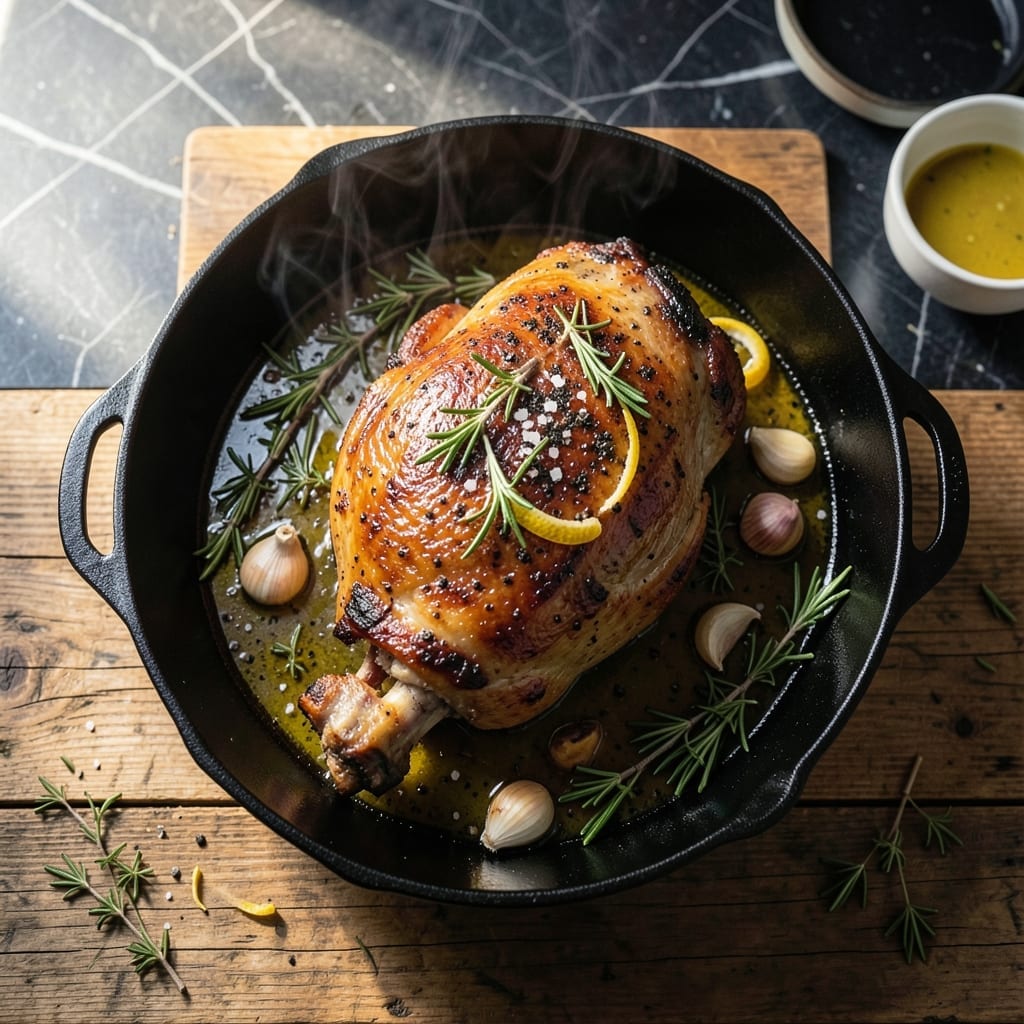
This herb-crusted lamb roast delivers restaurant-quality results with a fragrant blend of garlic and rosemary. The method ensures tender meat with a perfectly browned crust, making it ideal for special occasions.
I’ve refined this approach to balance bold flavors with simplicity. A slow roast at 325°F allows the herbs to infuse deeply while keeping the meat juicy. The garlic-rosemary crust adds an aromatic finish that’s hard to resist.
The final dish is succulent, with a golden exterior and a pink, tender center. It pairs beautifully with roasted vegetables or a smooth red wine reduction for an elevated meal.
Whether for Sunday dinner or a holiday feast, this preparation guarantees a showstopping centerpiece. Here’s how to achieve it.
Ingredients for Lamb Roast Recipe Cooking
Restaurant-quality ingredients for a herb-crusted, garlic-kissed centerpiece that stuns every time.
| Ingredient | Amount | Notes |
|---|---|---|
| Bone-In Lamb Leg Roast 🐑 | 4 lb | Trimmed of excess fat |
| Fresh Rosemary Sprigs 🌿 | 6 whole | Stems removed, finely chopped |
| Garlic Cloves 🧄 | 8 cloves | Peeled and minced |
| Extra-Virgin Olive Oil 🫒 | ¼ cup | Divided for searing and crust |
| Kosher Salt 🧂 | 2 tbsp | Diamond Crystal preferred |
| Black Pepper 🌶️ | 1 ½ tbsp | Freshly ground, coarse |
| Dijon Mustard 🟡 | 2 tbsp | Whole grain variety acceptable |
| Red Wine 🍷 | 1 cup | Dry variety like Cabernet Sauvignon |
| Low-Sodium Beef Broth 🥣 | 1 cup | Or substitute lamb stock |
| Fresh Thyme Sprigs 🍃 | 4 whole | Leaves stripped from stems |
| Unsalted Butter 🧈 | 2 tbsp | Softened to room temperature |
| Shallot 🧅 | 1 whole | Finely minced |
[recipe_ingredient_scaler]
The lamb is paramount here. Source bone-in leg roast from Whole Foods or a trusted butcher—bone-in ensures juiciness and deeper flavor. Look for bright pink meat with firm white fat (not yellow or gray). Rosemary and thyme should be organic when possible; their oils are more potent. For garlic, fresh heads from the produce section beat pre-peeled every time.
No red wine? Additional beef broth with 1 tbsp balsamic vinegar mimics the acidity. Swap lamb stock for beef broth if available—it’s richer. Fresh herbs can’t be beat, but dried at one-third the quantity works (use your palm to crush them, releasing oils). If Dijon seems sharp, whole grain mustard adds texture and mellows the heat.
Bring lamb to room temperature before roasting—this ensures even cooking. Leftovers keep 4-5 days refrigerated in an airtight container, or freeze for 3 months. The herb crust freezes surprisingly well (just thaw overnight before reheating).
Why You’ll Love This Recipe
- Hands-Off Cooking: I just rub the lamb with olive oil, garlic, rosemary, and salt, then let the oven do all the work.
- Unbeatable Flavor: The rosemary and garlic crust forms this incredible, fragrant seal on the lamb that’s honestly hard to beat.
- Feeds a Crowd: One bone-in leg roast and I’ve got enough for Sunday dinner with the whole family, plus leftovers for sandwiches.
- Leftovers for Days: I love having the extra meat for tacos, salads, or just reheated with a little gravy—saves me cooking all week.
Step-by-Step Instructions for Herb-Crusted Lamb Roast
Master this technique for perfectly cooked lamb with a fragrant herb crust every time.
Step 1: Prepare the Herb Crust and Season the Lamb
Finely chop the stems from 6 whole fresh rosemary sprigs and strip leaves from 4 whole fresh thyme sprigs. In a small bowl, combine these with 8 cloves minced garlic, 2 tbsp Dijon mustard, 2 tbsp kosher salt, and 1.5 tbsp black pepper.
Pat the 4 lb bone-in lamb leg roast completely dry with paper towels. This ensures the crust adheres properly. Using a pastry brush, coat the entire surface with 0.25 cup extra-virgin olive oil, then spread the herb mixture evenly over the lamb, pressing firmly to create an even layer that will form a beautiful crust during roasting.
Step 2: Sear the Lamb for Depth of Flavor
Preheat your oven to 325°F. In a large Dutch oven or oven-safe roasting pan, heat 1 tbsp extra-virgin olive oil over medium-high heat until shimmering. Add the lamb and sear for 3-4 minutes per side until deeply browned.
The searing process develops a rich fond in the pan that will become the base for your sauce. You’ll know it’s ready to flip when the crust releases easily from the pan. Don’t rush this step—proper browning is essential for flavor development.
Step 3: Deglaze and Begin Roasting
Transfer the lamb to a plate. Reduce heat to medium and add 1 whole finely minced shallot to the pan. Cook for 1 minute until softened. Pour in 1 cup red wine and scrape up all the browned bits from the bottom of the pan with a wooden spoon.
Let the wine reduce by half, about 3-4 minutes. Return the lamb to the pan, add 1 cup low-sodium beef broth, and place in the preheated oven. The liquid should come about halfway up the lamb—this creates a moist environment for even cooking.
Step 4: Roast to Perfect Doneness
Roast uncovered for 2 to 2.5 hours, basting occasionally with the pan juices. The lamb is done when an instant-read thermometer inserted into the thickest part (avoiding bone) reads 135°F for medium-rare.
During the last 30 minutes of cooking, add 2 tbsp unsalted butter to the pan juices and swirl to melt. This enriches the sauce and adds a beautiful gloss to the finished dish. The crust will be deeply browned and the meat will be tender with a slight pink center.
Step 5: Rest and Serve
Transfer the lamb to a cutting board and tent loosely with foil. Let it rest for 15-20 minutes—this allows the juices to redistribute for maximum moisture and tenderness.
Meanwhile, skim excess fat from the pan juices and simmer over medium heat for 5 minutes to reduce slightly. Slice the lamb against the grain into ½-inch thick slices and serve with the pan sauce spooned over the top. The meat should be rosy pink and juicy, with the herb crust providing a fragrant contrast to the rich lamb flavor.
Pro Tips For Making Lamb Roast Recipe Cooking
- Sear First, Roast Later: I learned this the hard way—always sear the bone-in lamb leg in a screaming hot pan with olive oil before roasting to lock in juices and get that deep brown crust.
- Score the Fat: Use a sharp knife to cut 1/2-inch slits all over the fat cap, then stuff with crushed garlic and rosemary—this makes a real difference in flavor penetration.
- Skip the Cold Lamb: After burning three roasts, I finally figured out to let the lamb sit at room temperature for 45 minutes before cooking, or it cooks unevenly.
- Rest Under Foil: Give it a solid 15-20 minutes under foil after roasting—yes, even if you’re impatient like me—it keeps the meat tender and redistributes the juices.
Dietary Considerations for These Flavors
Gluten-Free Friendly
This recipe is naturally gluten-free with no modifications needed. All ingredients—from the lamb to the herbs and wine—contain no gluten. Just ensure your Dijon mustard is certified gluten-free, as some brands use flour as a thickener. I always check the label to be safe.
Low-Carb Option
With only 3g net carbs per serving, this fits perfectly into keto or low-carb diets. The carbs come primarily from the garlic and shallots. For an even lower count, reduce the shallot to ½ minced or omit entirely—the herb crust will still shine. 💪
Dairy Considerations
The only dairy is 2 tbsp unsalted butter added at the end. For a dairy-free version, substitute with olive oil or a vegan butter alternative. The flavor difference is minimal, and the sauce remains rich and glossy.
Allergen Notes
This dish contains no common allergens like nuts, eggs, or soy. However, always verify your beef broth and red wine for potential additives. I recommend Imagine Foods broth for allergen-free cooking.
Halal/Kosher Adaptations
For religious dietary needs, source lamb certified halal or kosher from specialty butchers. The cooking method remains identical. Ensure your wine is kosher-certified if needed—Bartenura makes excellent options.
Sodium Control
To reduce sodium, use low-sodium beef broth and cut the kosher salt to 1 tbsp. The garlic, rosemary, and thyme provide plenty of flavor without excess salt. Taste before serving and adjust as needed.
Nutrition Facts
Frequently Asked Questions
What’s the ideal internal temperature?
For perfect medium-rare, remove from oven at 135°F. The temperature will rise to 140-145°F during resting. Always use a meat thermometer for accuracy.
Can I use boneless instead of bone-in?
Yes, but reduce cooking time by 20-25%. Bone-in adds flavor and helps maintain moisture. For boneless, check doneness at 1.5 hours instead of 2 hours.
How do I prevent the crust from burning?
Tent loosely with foil if it browns too quickly. Baste occasionally with pan juices. The 325°F oven temperature is low enough to prevent burning while ensuring even cooking.
Should I marinate the lamb first?
Not necessary! The herb crust provides ample flavor. However, for extra tenderness, marinate overnight in olive oil, lemon juice, and herbs. Pat dry before applying the crust.

Trained in classic French technique but raised on slow-cooked ribs and spicy rubs, she blends culinary skill with smoke and soul.
- Recipe for Boneless Pork Chops in Cast Iron Skillet: Sear and Baste to Juicy Perfection - October 3, 2026
- Recipe for Boneless Cross Rib Roast: Slow-Roasted Beef with Herb Crust - October 3, 2026
- Hamburgers in Sauce Recipe Crock Pot: Slow-Cooked Savory Delight - October 3, 2026