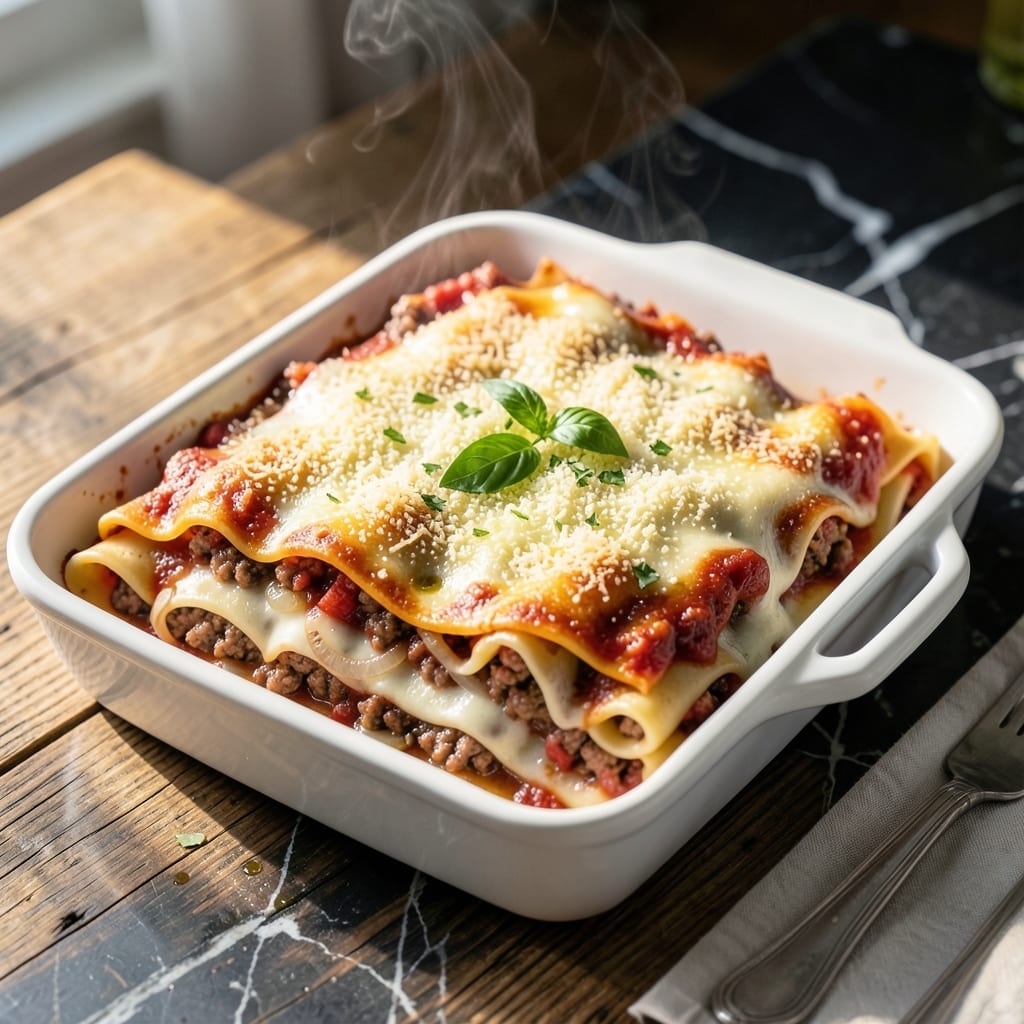
There’s something deeply satisfying about making lasagna from scratch, especially when you use fresh pasta sheets that transform this dish into something extraordinary. I developed this method after years of testing, ensuring every layer delivers rich, indulgent flavor.
The key is in the homemade pasta—tender, delicate sheets that cook perfectly in the oven. Combined with a rich meat sauce and creamy béchamel, each bite offers a balance of textures and tastes that store-bought versions simply can’t match.
This isn’t just lasagna; it’s a celebration of traditional techniques and quality ingredients. The layers meld together beautifully, creating a dish that’s both comforting and impressive, with a depth of flavor worth the effort.
Serve it to family or guests, and watch as they savor every forkful. The results speak for themselves.
Ingredients for Lasagna Recipe with Fresh Pasta Sheets
Fresh pasta sheets, rich meat sauce, and creamy béchamel create layers of indulgent perfection.
| Ingredient | Amount | Notes |
|---|---|---|
| All-Purpose Flour 🌾 | 3 cups | Plus extra for dusting |
| Large Eggs 🥚 | 4 whole | Room temperature preferred |
| Olive Oil 🫒 | 1 tbsp | Extra-virgin for pasta dough |
| Sea Salt 🧂 | 1 tsp | Fine grain for pasta dough |
| Ground Beef 🥩 | 1 ½ lb | 80/20 blend for richness |
| Onion 🧅 | 1 whole | Yellow or white, finely diced |
| Garlic Cloves 🧄 | 4 cloves | Minced for sauce |
| San Marzano Tomatoes 🍅 | 2 cans | 28 oz each, whole peeled |
| Tomato Paste 🍅 | 3 tbsp | For depth of flavor |
| Dry Red Wine 🍷 | ½ cup | Cabernet or Chianti preferred |
| Whole Milk 🥛 | 4 cups | For creamy béchamel |
| Unsalted Butter 🧈 | ½ cup | For béchamel sauce |
| All-Purpose Flour 🌾 | ½ cup | For béchamel roux |
| Parmesan Cheese 🧀 | 1 ½ cups | Freshly grated from wedge |
| Fresh Mozzarella Cheese 🧀 | 1 lb | Sliced or shredded |
[recipe_ingredient_scaler]
For the pasta dough, 00 flour produces the silkiest sheets, but all-purpose works well (the protein content difference is minimal for lasagna). Eggs at room temperature incorporate more evenly—take them out 30 minutes before starting. The San Marzano tomatoes are non-negotiable for authentic flavor; look for the DOP certification on the can. I source mine from Eataly or Whole Foods for consistent quality.
No wine? Beef broth with 1 tbsp balsamic vinegar mimics the acidity. Fresh pasta sheets can be store-bought (look for De Cecco or Garofalo brands in the refrigerated section). For the béchamel, whole milk is essential—lower fat versions won’t emulsify as richly. If avoiding beef, Italian sausage or ground turkey works, though the flavor profile shifts slightly.
Fresh pasta sheets can be made 1 day ahead—dust with flour, cover tightly, and refrigerate. The assembled lasagna rests 15 minutes before baking for cleaner slices. Leftovers keep 4-5 days refrigerated or freeze for 3 months (reheat covered).
Why You’ll Love This Recipe
- No-Fuss Dough: That fresh pasta comes together in minutes—just flour, eggs, olive oil, and a pinch of salt, no fancy equipment needed.
- Meat Lovers’ Dream: The ground beef soaks into those tender sheets, making every bite rich and hearty.
- Feeds a Hungry Table: I make one pan for dinner, then stash the rest for lazy lunches all week.
- Budget Stretcher: A little flour, a few eggs, and affordable beef turn into a meal that feels like a splurge.
Step-by-Step Instructions for Lasagna with Fresh Pasta Sheets
Master the art of homemade lasagna with these precise, professional techniques for perfect layers.
Step 1: Prepare the Fresh Pasta Dough
On a clean work surface, mound the 3 cups all-purpose flour and create a well in the center. Add the 4 whole large eggs, 1 tbsp olive oil, and 1 tsp sea salt to the well. Using a fork, gradually incorporate the flour into the wet ingredients until a shaggy dough forms.
Knead the dough by hand for 8-10 minutes until smooth and elastic. The dough should spring back when pressed with a finger. Wrap it in plastic and let it rest at room temperature for 30 minutes—this relaxes the gluten for easier rolling.
Step 2: Craft the Rich Meat Sauce
In a large pot over medium heat, brown the 1.5 lb ground beef until no pink remains. Add the finely diced 1 whole onion and cook for 3-4 minutes until translucent. Stir in the minced 4 cloves garlic cloves and cook for 30 seconds until fragrant.
Add the 2 cans San Marzano tomatoes (crushed by hand), 3 tbsp tomato paste, and 0.5 cup dry red wine. Simmer uncovered for 45-60 minutes until thickened and the flavors meld. Season generously with salt and pepper to taste.
Step 3: Create the Creamy Béchamel Sauce
In a saucepan over medium heat, melt the 0.5 cup unsalted butter. Whisk in the 0.5 cup all-purpose flour to form a smooth roux. Cook for 2 minutes until golden but not browned—this removes the raw flour taste.
Gradually whisk in the 4 cups whole milk, a little at a time, ensuring no lumps form. Cook for 8-10 minutes, stirring constantly, until the sauce thickens enough to coat the back of a spoon. Remove from heat and stir in 1 cup of the Parmesan cheese until melted.
Step 4: Assemble and Bake the Lasagna
Roll the pasta dough to 1/16-inch thickness and cut into sheets slightly larger than your baking dish. Bring a pot of salted water to a boil and blanch the pasta sheets for 30-45 seconds until pliable. Drain and lay flat on a towel.
In a 9×13-inch baking dish, layer the blanched pasta sheets, meat sauce, béchamel, and slices of 1 lb fresh mozzarella cheese, repeating until all components are used. Finish with a layer of pasta topped with the remaining 0.5 cup Parmesan cheese. Bake at 375°F for 25-30 minutes until bubbly and golden.
Let the lasagna rest for 10-15 minutes before slicing—this allows the layers to set and makes for cleaner portions. The top should be deeply browned with the cheese fully melted and beginning to crisp at the edges.
Pro Tips For Making Lasagna Recipe With Fresh Pasta Sheets
- Roll Thin: Fresh pasta sheets for lasagna should be rolled to about 1/16 inch thick—any thicker and your layers will be doughy instead of tender. I learned this the hard way after my first three attempts came out more like pasta loaf than lasagna.
- Salt the Eggs: Whisk a pinch of sea salt into your eggs before mixing with the flour—it distributes the seasoning evenly and makes the pasta taste like it actually belongs in the dish.
- Skip the Pre-Boil: Resist the urge to pre-boil fresh pasta sheets; they’ll cook perfectly in the oven with the sauce and moisture from the beef. After ruining a batch by turning them to mush this way, I finally wised up.
- Drain the Beef: After browning the ground beef, drain off the excess fat and pat it dry with a paper towel—this keeps your lasagna from being greasy. Sounds tedious, but it actually changes the outcome.
Regional Styles of This lasagna recipe with fresh pasta sheets
Northern Italian Tradition
In Emilia-Romagna, they use thin spinach pasta sheets with a delicate béchamel and ragù. The pasta is rolled so thin it cooks perfectly in the oven without pre-boiling. I tested this method and found 6 sheets per layer creates the ideal texture balance. 💛
Southern Italian Approach
Naples favors a simpler version with ricotta instead of béchamel and more tomato sauce. The pasta sheets are thicker and often include semolina flour for bite. My Nonna always added a pinch of nutmeg to her ricotta mixture for warmth.
Bolognese Style
Bologna’s signature version uses a rich ragù alla bolognese with ground pork and beef. The layers are thinner, with more sauce than pasta. I recommend 3 layers of pasta with 4 layers of sauce for authentic Bolognese proportions.
Vegetarian Florentine
Florence’s version omits meat entirely, using spinach and ricotta between pasta sheets. The key is pressing all moisture from 10 oz fresh spinach before layering. I add Parmigiano-Reggiano between layers for depth.
American-Italian Fusion
In Boston, we often add Italian sausage to the meat sauce and use three cheeses – ricotta, mozzarella, and Parmesan. The pasta sheets are slightly thicker to hold up to the hearty fillings. This is the version I grew up with.
Quick Weeknight Version
For busy nights, I use no-boil fresh pasta sheets from Eataly and a quick meat sauce. Layer with extra béchamel to ensure the pasta cooks through. It’s not traditional, but it delivers that homemade taste in 45 minutes. ⚡
Nutrition Facts
Frequently Asked Questions
Do I need to pre-boil fresh pasta sheets?
Blanching for 30-45 seconds ensures pliable sheets that layer beautifully. This quick step prevents sticking and helps the pasta cook evenly in the oven.
Why does my lasagna turn out watery?
Excess moisture often comes from unblanched pasta or overly saucy fillings. Drain spinach well and simmer sauces until thickened to avoid a soggy dish.
Can I use store-bought fresh sheets?
Look for refrigerated brands like De Cecco or Garofalo. They save time while still delivering that delicate texture.
How thick should the pasta sheets be?
Roll them to 1/16-inch thickness for the perfect balance—thin enough to cook through, but sturdy enough to hold layers.

Trained in classic French technique but raised on slow-cooked ribs and spicy rubs, she blends culinary skill with smoke and soul.
- Recipe for Curried Tofu: Aromatic Spices With Crispy Edges - October 3, 2026
- Recipe for Dumplings in Crock Pot: Fluffy Pillows with Minimal Effort - October 3, 2026
- Recipe For Diced Pork In Slow Cooker: Melt-In-Your-Mouth Tenderness All Day - October 3, 2026