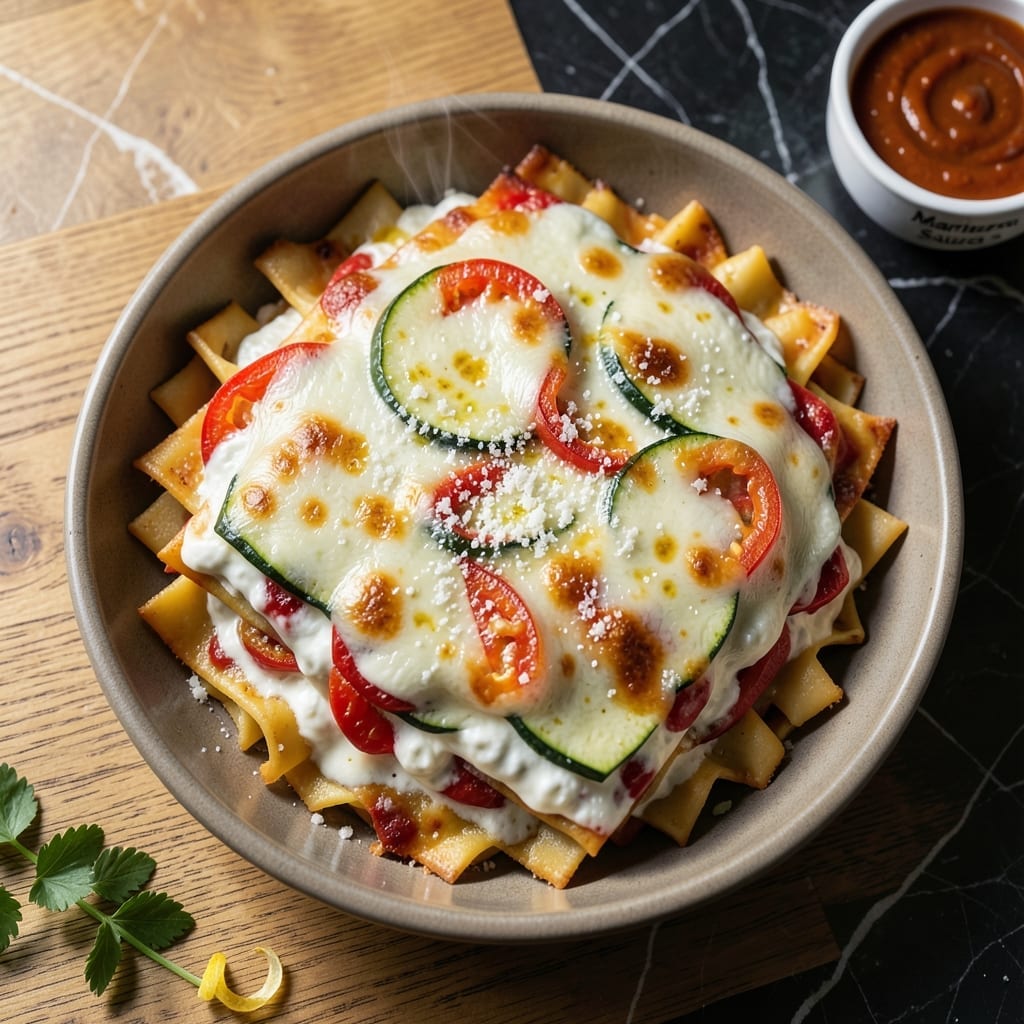
I developed this meatless lasagna after years of perfecting cheese-based dishes in professional kitchens. The layers of creamy ricotta and vegetables create a satisfying depth that rivals any traditional version.
The secret lies in properly seasoning each cheese layer and using fresh vegetables for texture. My professional training taught me that building flavors between each component transforms simple ingredients into something extraordinary.
You’ll achieve perfectly tender noodles, rich cheese layers, and vegetables that maintain their structure. This dish proves that meat isn’t necessary for a hearty, creamy lasagna experience.
Ideal for family dinners or special occasions, this recipe delivers restaurant-quality results at home. The baking process melds all the flavors together beautifully.
Ingredients for Lasagna Recipe with Ricotta Cheese No Meat
Pantry staples and fresh veggies build layers of creamy, meatless lasagna everyone will love.
| Ingredient | Amount | Notes |
|---|---|---|
| Lasagna Noodles 🍝 | 12 pieces | Oven-ready or no-boil preferred |
| Whole Milk Ricotta Cheese 🧀 | 2 cups | Full-fat for creaminess |
| Mozzarella Cheese 🧀 | 3 cups | Shredded, low-moisture preferred |
| Parmesan Cheese 🧀 | 1 cup | Freshly grated from wedge |
| Zucchini 🥒 | 2 whole | Medium-sized, thinly sliced |
| Red Bell Pepper 🌶️ | 1 whole | Seeded, thinly sliced |
| Spinach 🥬 | 5 oz | Fresh, roughly chopped |
| Garlic Cloves 🧄 | 4 cloves | Minced for maximum flavor |
| Marinara Sauce 🍅 | 3 cups | High-quality jarred or homemade |
| Large Egg 🥚 | 1 whole | For binding ricotta mixture |
| Olive Oil 🫒 | 2 tbsp | Extra-virgin for richness |
| Dried Basil 🌿 | 1 tbsp | For seasoning cheese layers |
| Dried Oregano 🍃 | 1 tbsp | For seasoning cheese layers |
| Kosher Salt 🧂 | 1 tsp | Diamond Crystal preferred |
| Ground Black Pepper 🌶️ | ½ tsp | Freshly ground for best flavor |
[recipe_ingredient_scaler]
The ricotta is non-negotiable here. Whole milk only—low-fat turns grainy and loses that luxurious texture. BelGioioso or Calabro brands are my go-to for consistency. Parmesan should be a wedge you grate yourself (pre-shredded has anti-caking agents that make it clump). For the noodles, Barilla oven-ready saves time without sacrificing texture. Fresh spinach works better than frozen (less water to drain).
No mozzarella? Fontina or provolone melt beautifully as substitutes. Short on time? Skip slicing the zucchini—use pre-cut from Trader Joe’s (they’re surprisingly fresh). The egg in the ricotta mixture can be omitted, but it helps bind everything. For extra depth, add one-third cup grated Pecorino Romano to the cheese mix. Marinara from a jar? Rao’s or Victoria are chef-approved.
Assemble and bake right away, or cover and refrigerate for up to 24 hours before baking. Leftovers keep 4-5 days in the fridge, freezes beautifully for 3 months. Reheat covered with foil to prevent drying out (add a splash of water on top).
Why You’ll Love This Recipe
- No-Boil Noodles: I skip the pre-cooking step entirely—just layer the dry noodles with ricotta and let the oven do the work.
- Creamy Dreamy: The whole milk ricotta mixed with mozzarella and parmesan creates this rich, velvety texture that’s honestly hard to resist.
- Feeds a Crowd: Between us, this dish disappears fast at potlucks, and it’s just as good reheated the next day for lunch.
- Budget Stretcher: Zucchini bulks it up without breaking the bank, and a little cheese goes a long way for maximum flavor.
Step-by-Step Instructions for Lasagna With Ricotta Cheese and Vegetables
Here’s the method for building those perfect creamy layers without any meat.
Step 1: Prepare the Vegetable Filling
Heat the 2 tbsp olive oil in a large skillet over medium heat until shimmering. Add the minced 4 cloves garlic cloves and sauté for 30 seconds until fragrant but not browned. This builds the aromatic base for your filling.
Add the thinly sliced 2 whole zucchini and thinly sliced 1 whole red bell pepper to the skillet. Cook for 5-6 minutes, stirring occasionally, until the vegetables soften but retain a slight bite. Stir in the roughly chopped 5 oz spinach and cook for another 2 minutes until wilted. Season with 1 tsp kosher salt and 0.5 tsp ground black pepper.
Step 2: Mix the Ricotta Cheese Layer
In a medium bowl, combine the 2 cups whole milk ricotta cheese, 1 whole large egg, 1 tbsp dried basil, and 1 tbsp dried oregano. Mix well until fully incorporated. The egg binds everything together, while the herbs add depth to the creamy layer.
Stir in ½ cup of the 1 cup parmesan cheese, reserving the rest for topping. This creates a rich, spreadable mixture that will form the heart of your lasagna. The texture should be thick but still easy to spread—if it seems too stiff, a splash of water will loosen it.
Step 3: Assemble the Layers
Spread 1 cup of the 3 cups marinara sauce on the bottom of a 9×13-inch baking dish. Arrange 4 of the 12 pieces lasagna noodles on top, slightly overlapping if needed. Spoon half of the ricotta mixture over the noodles and spread evenly. Top with half of the cooked vegetables and 1 cup of the 3 cups mozzarella cheese.
Repeat the layers: another 1 cup marinara sauce, remaining 4 lasagna noodles, remaining ricotta mixture, remaining vegetables, and 1 cup mozzarella cheese. Finish with the last 4 lasagna noodles, remaining 1 cup marinara sauce, and the remaining ½ cup parmesan cheese and 1 cup mozzarella cheese.
Step 4: Bake to Creamy Perfection
Cover the dish tightly with foil and bake at 375°F for 25 minutes. This initial covered bake allows the noodles to soften and absorb the flavors without drying out. Remove the foil and bake for another 20-25 minutes until the top is golden brown and bubbly.
Let the lasagna rest for 10-15 minutes before slicing. This resting period is crucial—it allows the layers to set so you get clean, neat slices instead of a runny mess. The creamy ricotta should be perfectly set, and the cheeses melted into a gooey, stretchy delight.
Pro Tips For Making Lasagna Recipe With Ricotta Cheese No Meat
- Salt the Zucchini: Sprinkle sliced zucchini with salt and let it sit for 10 minutes before layering—this draws out excess water so your lasagna doesn’t turn soggy. I learned this the hard way after my first few batches were swimming in liquid.
- Use Full-Fat Ricotta: Skip the low-fat version; whole milk ricotta gives the creamy texture this dish needs. The extra richness balances the acidity of the tomato and zucchini without making it heavy.
- Cover Then Uncover: Bake covered with foil for the first 30 minutes, then remove it to let the cheese brown. This prevents the top from drying out while ensuring the noodles cook through—no crunchy edges or mushy centers.
- Grate Your Own Parmesan: Pre-shredded Parmesan has anti-caking agents that make it melt unevenly. Grate a block yourself for a smoother, more flavorful layer that actually binds the lasagna together.
Troubleshooting lasagna recipe with ricotta cheese no meat
Watery Ricotta Fix
If your ricotta mixture appears watery after mixing, drain it in a fine-mesh strainer over a bowl for 10-15 minutes before combining with other ingredients. I learned this trick from Nana Mae—she always said BelGioioso whole milk ricotta works best without draining. 💡
Soggy Noodles Problem
Using too much sauce or not draining vegetables causes this. Sauté spinach until fully wilted, then squeeze out excess liquid with a clean towel. Use exactly 3 cups marinara sauce—no more. Barilla oven-ready noodles absorb perfectly when layered with properly prepped fillings.
Uneven Baking
Rotate your dish 180 degrees halfway through baking. My Austin kitchen has hot spots, so I always check at the 25-minute mark when removing the foil. If the center isn’t bubbling after 45 minutes total, tent with foil and bake 5-10 more minutes. 🔥
Cheese Not Melting
Pre-shredded mozzarella often contains anti-caking agents that prevent smooth melting. Always buy block mozzarella and shred it yourself. For extra gooeyness, mix in ¼ cup shredded fontina with your mozzarella layers.
Dry Top Layer
Sprinkle the final cheese layer with 1-2 tbsp water before baking. This creates steam that helps melt the top evenly. I also brush the foil with olive oil before covering to prevent sticking during the initial bake.
Vegetable Texture Issues
For firmer veggies, roast your zucchini and bell pepper at 400°F for 10 minutes before layering. Emma prefers this method—it removes excess moisture while intensifying the flavors. Just cool completely before assembling.
Nutrition Facts
Frequently Asked Questions
Can I use cottage cheese instead of ricotta?
Yes, but blend it first for a smoother texture. Cottage cheese is tangier, so add 1 tbsp sugar to balance. The lasagna will still bake beautifully at 375°F.
How can I make this ahead of time?
Assemble completely, cover tightly, and refrigerate for up to 24 hours. Add 5-10 minutes to baking time if cold. This works perfectly with oven-ready noodles.
What if my lasagna is too dry after baking?
Cover with foil and return to the oven with ¼ cup water added to the dish. Bake at 350°F for 10 minutes to restore moisture.
Can I add other vegetables?
Try sliced mushrooms or eggplant. Sauté them first to remove excess moisture. Each layer should have a similar thickness.

Trained in classic French technique but raised on slow-cooked ribs and spicy rubs, she blends culinary skill with smoke and soul.
- Recipe for Boneless Pork Chops in Cast Iron Skillet: Sear and Baste to Juicy Perfection - October 3, 2026
- Recipe for Boneless Cross Rib Roast: Slow-Roasted Beef with Herb Crust - October 3, 2026
- Hamburgers in Sauce Recipe Crock Pot: Slow-Cooked Savory Delight - October 3, 2026