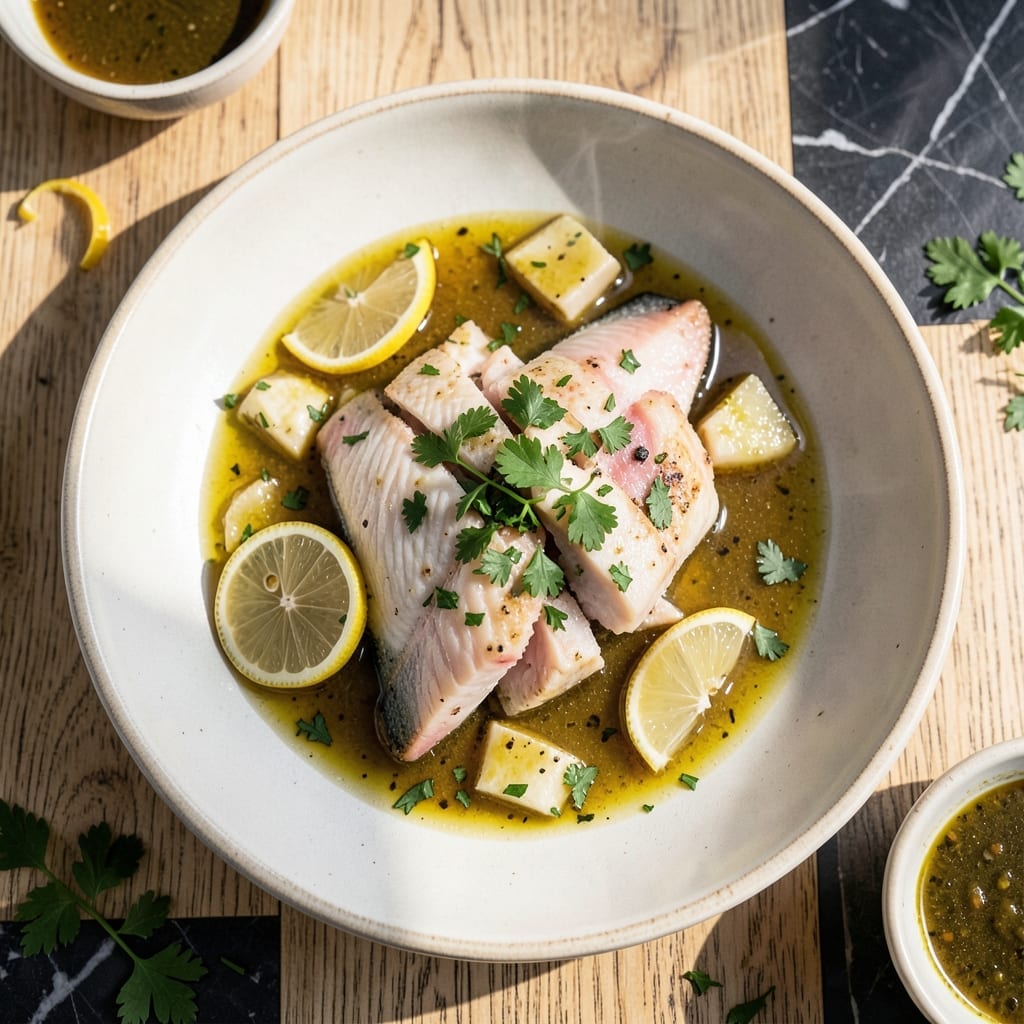
Don’t let last night’s halibut go to waste—this recipe transforms it into a flaky, restaurant-worthy dish in under 20 minutes. I developed this method after one too many leftover fillets lost their appeal.
The key is gentle heat and a bright, complementary sauce that enhances without overpowering. A quick pan-sear revives the fish’s texture while keeping it tender, and a lemon-herb butter ties everything together seamlessly.
You’ll end up with moist, delicate fish that tastes intentional, not reheated. The sauce adds just enough richness to elevate the halibut without masking its natural flavor.
Perfect for a light lunch or a quick weeknight dinner. Here’s how to reinvent your leftovers.
Ingredients for Leftover Halibut
Transform yesterday’s fish with pantry staples and fresh herbs. Ready in minutes.
| Ingredient | Amount | Notes |
|---|---|---|
| Cooked Halibut Fillets 🐟 | 1 ½ lb | Leftover, flaked into chunks |
| Unsalted Butter 🧈 | ½ cup | Divided for cooking and sauce |
| Extra-Virgin Olive Oil 🫒 | 2 tbsp | For pan-searing fish |
| Garlic Cloves 🧄 | 3 cloves | Minced for sauce |
| Fresh Lemon Juice 🍋 | 3 tbsp | Plus zest for brightness |
| Fresh Parsley 🌿 | ¼ cup | Chopped, for garnish |
| Fresh Dill 🌿 | 2 tbsp | Chopped, for herb butter |
| Shallot 🧅 | 1 whole | Finely diced for sauce |
| Dry White Wine 🍷 | ¼ cup | Optional for deglazing |
| All-Purpose Flour 🌾 | 2 tbsp | Light dusting for texture |
| Kosher Salt 🧂 | ¾ tsp | Plus more to taste |
| Freshly Ground Black Pepper 🌶️ | ½ tsp | Plus more to taste |
| Heavy Cream 🥛 | ¼ cup | Optional for richer sauce |
[recipe_ingredient_scaler]
The halibut needs to be gently flaked—don’t overwork it or it’ll turn mushy. Costco’s frozen halibut works great if you’re starting fresh, but this recipe is all about leftovers. Look for fillets that still have some moisture (not dried out). The butter should be high-quality since it’s carrying a lot of flavor here. I usually grab Plugrá or Kerrygold for that rich, creamy base.
No white wine? Chicken or vegetable broth with a splash of lemon works fine. Fresh herbs are ideal, but dried at half the amount will do in a pinch. If you’re out of shallots, red onion (soaked in cold water for 10 minutes) is a decent sub. The flour is just for a light coating—cornstarch works too if that’s what you’ve got. Skip the cream? The sauce will still be delicious, just less decadent.
Leftovers keep for 2 days max—halibut’s delicate and dries out fast. Store the sauce separately if you can. Reheat gently over low heat (don’t nuke it). The herb butter freezes well for 1 month, so make extra if you love the flavor.
Why You’ll Love This Recipe
- 5-Minute Meal: I just flake the cooked halibut, warm it in butter and olive oil, and dinner’s done before the oven even preheats.
- Garlic-Lemon Magic: The sizzle of garlic in butter with that bright splash of lemon turns yesterday’s fish into something I crave today.
- Weeknight Rescue: It’s my Tuesday lifeline—fancy enough for guests, humble enough for solo leftovers.
- Zero Waste: I hate tossing good fish, and this turns every last bite into a meal that feels brand new.
Step-by-Step Instructions for Leftover Halibut Reinvention
Here’s how to transform last night’s fish into something even more delicious and impressive.
Step 1: Flake and Season the Halibut
Gently break the cooked halibut fillets into 1-inch chunks with your fingers, preserving those beautiful flakes. I avoid using a fork—it can mash the delicate fish.Transfer the flaked halibut to a bowl and lightly season with 0.75 tsp kosher salt and 0.5 tsp freshly ground black pepper.
Here’s the thing—leftover halibut can dry out if overhandled. Work quickly and keep the pieces as large as possible. The natural flakiness of the fish will guide your hands. Set this aside while you build the sauce base—this prevents overmixing.
Step 2: Create the Aromatic Base
Heat 2 tbsp extra-virgin olive oil in a large skillet over medium heat until it shimmers. Add the finely diced shallot and cook for 2-3 minutes until translucent and soft, stirring frequently. Don’t let it brown—you want sweetness, not bitterness.
Add the minced garlic cloves and cook for 30 seconds until just fragrant. I like to press the garlic with the flat of my knife before mincing—it releases more of those essential oils. Sprinkle in the 2 tbsp all-purpose flour and stir constantly for 1 minute to cook out the raw taste.
Step 3: Deglaze and Build the Sauce
Pour in the 0.25 cup dry white wine and scrape up all those browned bits from the bottom of the pan with a wooden spoon. This is where the magic happens—those fond bits are pure flavor. Let the wine simmer for 2-3 minutes until reduced by half.
Reduce heat to low and whisk in 0.5 cup unsalted butter, 1 piece at a time, until fully melted and emulsified. This creates a velvety base that will cling beautifully to the halibut. Stir in the 3 tbsp fresh lemon juice and let it simmer for 1 minute to mellow the acidity slightly.
Step 4: Finish with Cream and Herbs
For extra richness, stir in the 0.25 cup heavy cream and let it warm through for 1-2 minutes. I know it seems decadent, but this is what transforms your leftover fish into a restaurant-worthy dish. The sauce should coat the back of a spoon at this point.
Remove from heat and stir in the 2 tbsp chopped fresh dill. Taste and adjust seasoning if needed—remember, the halibut is already seasoned. The dill adds that bright, fresh note that pairs perfectly with the delicate fish. Let the sauce sit for 1 minute to allow the flavors to meld.
Step 5: Gently Fold in Halibut and Serve
Add the flaked halibut to the sauce and fold gently with a spatula until just coated. You want to preserve those beautiful chunks, not break them up further. Heat through for 1-2 minutes over low heat—just until the fish is warmed, not cooked further.
Transfer to serving plates and garnish with the 0.25 cup chopped fresh parsley. Serve immediately while the sauce is still creamy and the fish is at its peak tenderness. Each bite should deliver that perfect flakiness with a luxurious, herb-infused sauce that makes you forget this started as leftovers.
Pro Tips For Making Leftover Halibut
- Warm the Halibut Slowly: Reheat the fillets on low-medium heat in a skillet with olive oil to prevent them from drying out—I learned this the hard way after turning my first batch into rubber.
- Mince the Garlic Fine: Finely minced garlic distributes better in the butter and oil, giving every bite that rich, aromatic flavor without overpowering chunks.
- Skip the High Heat: Resist the urge to blast the heat; halibut is delicate and will break apart or turn tough if cooked too aggressively, even when reheating.
- Squeeze Lemon Last: Add the fresh lemon juice just before serving to keep the flavor bright and sharp—it loses its punch if cooked too long.
Common Mistakes When Making Perfect Results
Overcooking the Fish
Halibut is delicate and dries out quickly with too much heat. When reheating, use low to medium-low heat and pull it off as soon as it’s warmed through—usually just 1-2 minutes. I learned this the hard way after turning many a leftover fillet into rubber. 💡
Skipping the Prep
Don’t toss cold halibut straight into a hot pan. Let it sit at room temperature for 10-15 minutes first. This ensures even heating and prevents that dreaded tough exterior with cold center. Also, pat it dry with a paper towel to avoid steaming.
Heavy Sauce Overload
Halibut’s mild flavor can be overwhelmed by heavy sauces. Use a light hand with the lemon-herb butter—just enough to coat, not drown. I aim for about 2-3 tbsp per serving. The fish should remain the star of the show.
Wrong Pan Choice
Nonstick pans are your friend here. Halibut’s delicate texture sticks to stainless steel, even with oil. Use a well-seasoned nonstick skillet or cast iron. Also, don’t overcrowd the pan—give each piece space to heat evenly.
Neglecting Freshness
Leftover halibut is only good for 2 days max in the fridge. If it smells off or feels slimy, toss it. I’ve tested this recipe with fish stored 24-48 hours—any longer and the texture suffers. Freshness is non-negotiable. ❄️
Rushing the Rest
After cooking, let the fish rest for 2-3 minutes before serving. This allows the juices to redistribute. I notice the difference every time—rushed fish loses moisture, while rested fish stays tender and flavorful.
Nutrition Facts
Frequently Asked Questions
Can I use frozen halibut instead?
Thaw it completely in the fridge overnight first. Pat it very dry before using to prevent excess moisture. The texture will be slightly different but still works well.
How do I store the leftovers?
Keep in an airtight container for up to 2 days. Store sauce separately if possible. Reheat gently on low heat to preserve moisture.
What can I serve with this dish?
Pairs well with roasted veggies or a fresh salad. A side of crusty bread is perfect for soaking up the sauce.
Can I make this sauce ahead?
The herb butter can be made 1 day ahead and chilled. Warm it gently when ready to use. Avoid reheating the full dish together.

Trained in classic French technique but raised on slow-cooked ribs and spicy rubs, she blends culinary skill with smoke and soul.
- Recipe for Boneless Pork Chops in Cast Iron Skillet: Sear and Baste to Juicy Perfection - October 3, 2026
- Recipe for Boneless Cross Rib Roast: Slow-Roasted Beef with Herb Crust - October 3, 2026
- Hamburgers in Sauce Recipe Crock Pot: Slow-Cooked Savory Delight - October 3, 2026