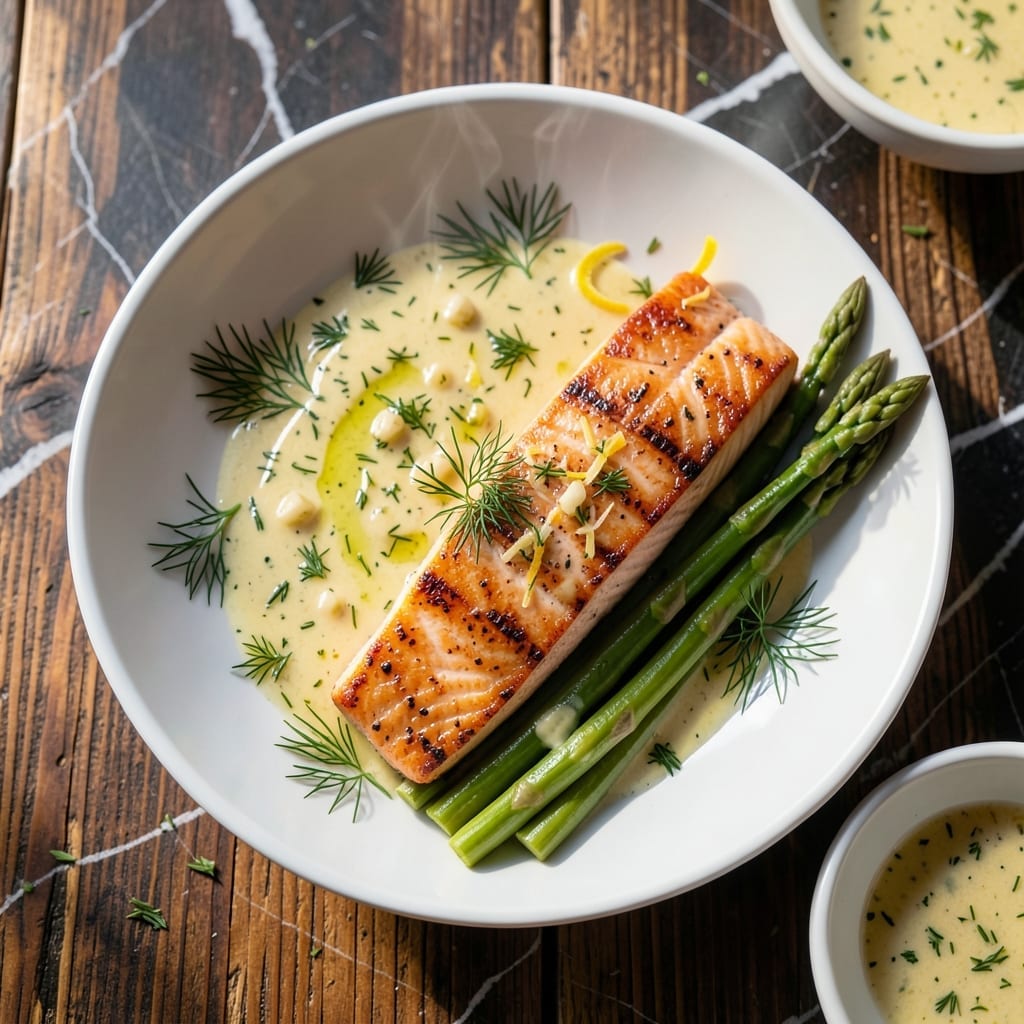
This bright lemon dill sauce transforms simple salmon into a restaurant-quality dish. The emulsion combines fresh citrus with aromatic herbs for a perfectly balanced finish.
Use it as a drizzle, dip, or marinade—its versatility makes it a kitchen staple. Store in an airtight container in the fridge for up to 5 days.
Ingredients for Lemon Dill Sauce Recipe for Salmon
Nine ingredients create this vibrant lemon dill emulsion for salmon. Bright, balanced, and restaurant-quality.
| Ingredient | Amount | Notes |
|---|---|---|
| Fresh Dill 🌿 | ¼ cup | Finely chopped, stems removed |
| Fresh Lemon Juice 🍋 | ¼ cup | About 2-3 large lemons |
| Lemon Zest 🍋 | 1 tbsp | Finely grated from 1 lemon |
| Dijon Mustard 🟡 | 1 tbsp | Smooth variety preferred |
| Extra-Virgin Olive Oil 🫒 | ½ cup | High-quality, fruity finish |
| Garlic Cloves 🧄 | 2 cloves | Minced finely |
| Honey 🍯 | 1 tbsp | Or sub maple syrup for vegan |
| Sea Salt 🧂 | ½ tsp | Fine grain, adjust to taste |
| Freshly Ground Black Pepper 🌶️ | ¼ tsp | Or to taste |
[recipe_ingredient_scaler]
The dill must be fresh—dried just won’t deliver the same aromatic punch. Look for bright green, feathery fronds without wilting at Whole Foods or your local farmers market. The lemons should feel heavy for their size, a sign of high juice content. Meyer lemons add a sweeter note if you can find them in season. For the olive oil, splurge on a California or Italian extra-virgin with a peppery finish.
Out of fresh dill? Fresh tarragon at half the amount works in a pinch, though the flavor profile shifts slightly. No Dijon? Whole-grain mustard adds texture but keeps the tang. Swap honey for agave or maple syrup if avoiding refined sugar. The garlic can be granulated at one-third the amount (fresh is always better). For a creamier sauce, fold in 2 tbsp Greek yogurt at the end.
This emulsion holds for 5 days refrigerated in an airtight container. The flavors deepen overnight, so make it ahead. If separating occurs, just whisk vigorously to re-emulsify. Not suitable for freezing—the texture breaks down. Always bring to room temperature before serving for best consistency.
Why You’ll Love This Recipe
- Five Minute Whisk: I just dump everything in a bowl—dill, lemon, mustard—and whisk. No cooking, no fuss.
- Bright & Zesty: That pop of fresh lemon zest with the dill? It cuts through the richness of salmon like a dream.
- Meals for Days: I make a double batch and drizzle it over grains, roasted veggies, even sandwiches later in the week.
- Pantry Staples: Honestly, I always have olive oil, lemon, and mustard on hand—this sauce costs me almost nothing extra.
Step-by-Step Instructions for Lemon Dill Sauce
This emulsion technique creates a stable, vibrant sauce that perfectly complements salmon.
Step 1: Prepare the Aromatic Base
Finely mince the 2 cloves Garlic Cloves until it reaches a near-paste consistency. In a medium bowl, combine this with the 1 tbsp Dijon Mustard, 1 tbsp Honey, 0.5 tsp Sea Salt, and 0.25 tsp Freshly Ground Black Pepper.
The mustard acts as your emulsifier, while the honey balances the acidity. I whisk these together aggressively for 30 seconds until the mixture becomes smooth and slightly thickened—this creates the foundation for a stable emulsion.
Step 2: Incorporate Citrus Elements
Add the 0.25 cup Fresh Lemon Juice and 1 tbsp Lemon Zest to the bowl. The zest contains essential oils that provide a more complex citrus flavor than juice alone. Whisk again for 20-30 seconds until fully integrated.
Here’s the thing—fresh lemon juice can vary in acidity. Taste at this stage and adjust the Sea Salt if needed, but remember the sauce will mellow as the Extra-Virgin Olive Oil is added. The mixture should taste bright but not harshly acidic.
Step 3: Create the Emulsion
Begin adding the 0.5 cup Extra-Virgin Olive Oil in a thin, steady stream while whisking constantly. Start with just 1 tablespoon at a time to establish the emulsion. You’ll notice the mixture begin to thicken and lighten in color as it comes together.
Once the initial emulsion forms, you can add the remaining oil in a slightly faster but still controlled stream. The key is maintaining constant motion—this forces the oil to disperse into tiny droplets throughout the water-based ingredients, creating that signature creamy texture. If it starts to separate, stop adding oil and whisk vigorously until recombined.
Step 4: Finish with Fresh Herb
Finely chop the 0.25 cup Fresh Dill, removing any thick stems. I like to chop it just before adding to preserve its vibrant green color and delicate flavor. Fold the dill into the completed emulsion gently with a spatula to avoid breaking the sauce.
The sauce should now have a luscious, creamy consistency that coats the back of a spoon. At this point, taste and adjust seasoning one final time. The Fresh Dill adds a bright, grassy note that pairs beautifully with salmon’s richness. Use immediately for best flavor and texture, as the emulsion is most stable when fresh.
Pro Tips For Making Lemon Dill Sauce Recipe For Salmon
- Whisk Last: Combine the olive oil and lemon juice first, then whisk in the mustard and dill at the end to keep the herbs vibrant and the emulsion tight.
- Zest Before Juicing: Always zest the lemon before cutting it open—it’s nearly impossible to do after, and you’ll waste half the flavor.
- Skip Dried Dill: Fresh dill loses its punch fast, and the dried stuff just doesn’t cut it in this sauce; use 1.5x the amount if you must, but it won’t be the same.
- Rest the Sauce: Let it sit for 10 minutes before serving so the flavors meld—this is when the dill and lemon really start to sing.
Common Mistakes When Making Great lemon dill sauce recipe for salmon
🔥 Overcooking the Sauce
Heating the lemon dill sauce too long can cause the dairy (like Greek yogurt or mayo) to curdle, leaving a lumpy, separated mess. The delicate herbs also lose their freshness if exposed to high heat for too long.
Fix: Warm the sauce gently over low heat or temper it by slowly mixing in warm liquid. Remove from heat as soon as it’s smooth and slightly thickened.
🍳 Skimping on Fresh Ingredients
Using dried dill or bottled lemon juice can make your sauce taste flat and dull. Fresh dill and freshly squeezed lemon juice are key to achieving that bright, vibrant flavor that pairs perfectly with salmon.
Fix: Always use fresh dill and real lemon juice. If fresh herbs aren’t available, reduce the amount of dried dill by half, as its flavor is more concentrated.
🎯 Over-Salting the Mixture
Salmon itself is often seasoned, and adding too much salt to the sauce can make the dish overwhelmingly salty. This is especially true if you’re using ingredients like capers or feta, which are already salty.
Fix: Start with a small amount of salt, taste as you go, and adjust gradually. Balance the flavors with a squeeze of lemon or a pinch of sugar if needed.
⏰ Rushing the Resting Time
Lemon dill sauce needs time for the flavors to meld together. If you serve it immediately after mixing, the herbs and citrus won’t have infused the base properly, resulting in a disjointed taste.
Fix: Let the sauce sit for at least 15-20 minutes at room temperature or refrigerate it for an hour before serving to allow the flavors to develop fully.
Nutrition Facts

Trained in classic French technique but raised on slow-cooked ribs and spicy rubs, she blends culinary skill with smoke and soul.
- Recipe for Boneless Pork Chops in Cast Iron Skillet: Sear and Baste to Juicy Perfection - October 3, 2026
- Recipe for Boneless Cross Rib Roast: Slow-Roasted Beef with Herb Crust - October 3, 2026
- Hamburgers in Sauce Recipe Crock Pot: Slow-Cooked Savory Delight - October 3, 2026