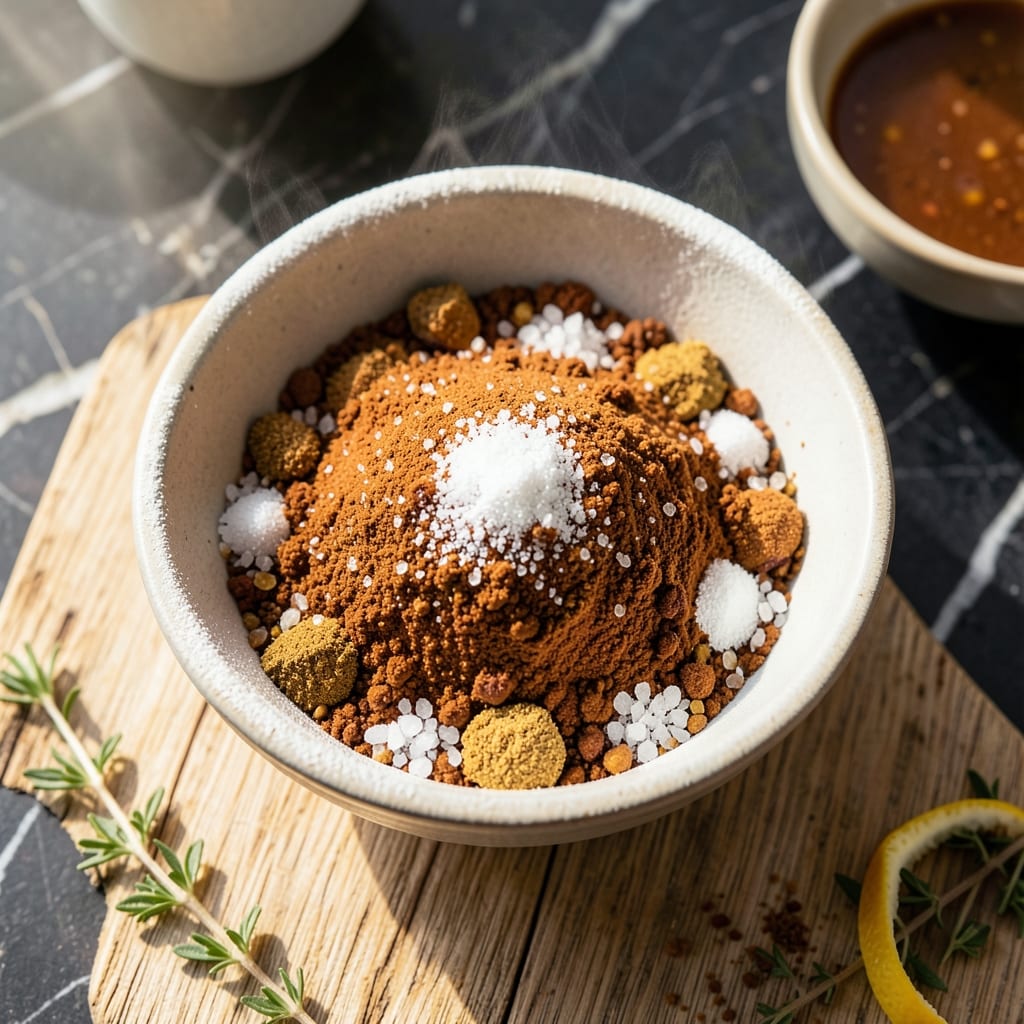
This vibrant seasoning captures the unique flavor of Hawaii in a simple dry blend. I’ve tested multiple ratios to perfect the balance of sweet, salty, and tangy notes that make li hing powder so addictive.
The mix comes together with just a few pantry staples, creating that signature salmon pink color and bold taste. It’s incredibly versatile—sprinkle it on fresh fruit, rim cocktail glasses, or use it to season nuts and snacks.
Store this blend in an airtight container to maintain its potency. The flavors intensify over time, making it even better after a week or two.
Once you try this homemade version, you’ll never go back to store-bought. The difference in freshness and depth of flavor is undeniable.
Ingredients for Li Hing Powder
Seven simple ingredients create that signature Hawaiian tangy-sweet kick you crave.
| Ingredient | Amount | Notes |
|---|---|---|
| Dried Plum Powder 🟣 | ½ cup | Finely ground, unsweetened |
| Granulated Sugar 🍚 | ¼ cup | White or raw cane |
| Sea Salt 🧂 | 2 tbsp | Fine grain preferred |
| Citric Acid 🍋 | 1 tsp | Powdered form essential |
| Five-Spice Powder 🌿 | 1 tsp | Traditional Chinese blend |
| Cornstarch 🌾 | 1 tbsp | Prevents clumping in storage |
| Red Food Coloring 🎨 | ¼ tsp | Optional for vibrant pink hue |
[recipe_ingredient_scaler]
The dried plum powder is non-negotiable—look for it at Asian markets or online at Amazon. I get mine from the bulk section at H Mart when I can. The citric acid gives that sharp tang, so don’t skip it. Pacific Natural Foods sells it in small jars, or grab it from the canning aisle. The sugar balances the salt, so use fine grain (it dissolves better).
No dried plum powder? Dried apricot powder at one-third more quantity gets you close but won’t be the same. Short on five-spice? Substitute equal parts cinnamon and star anise. Want it sweeter? Add 1 extra tbsp sugar. The food coloring is purely for that salmon pink look—skip it if you prefer natural (the mix will be light tan).
Glass jar, cool dark place, done. Keeps fresh for 6-12 months. The flavors actually get better after 1-2 weeks—worth the wait. Don’t forget to stir before using, as the sugar can settle.
Why You’ll Love This Recipe
- Five-Minute Mix: I just stir together the dried plum powder, sugar, and spices—no cooking, no fuss.
- Addictive Tang: That salty-sweet punch with a hint of five-spice keeps me reaching for more.
- Endless Uses: I sprinkle it on fruit, rim cocktails, even dust popcorn. Honestly, it’s my new secret weapon.
- Pantry Staple: One batch lasts months, and the ingredients cost pennies compared to store-bought.
Step-by-Step Instructions for Li Hing Powder
This method ensures perfect texture and flavor every time you make this tangy seasoning.
Step 1: Combine Dry Base Ingredients
In a medium mixing bowl, add the 0.5 cup Dried Plum Powder and 0.25 cup Granulated Sugar. I like to sift these through my fingers to break up any lumps in the dried plum powder. This ensures a smooth, consistent texture in the final blend.
Whisk the two together vigorously for about 30 seconds until they’re fully integrated. You’ll notice the mixture lighten slightly in color as the sugar distributes evenly through the plum powder. The sugar helps balance the intense tang of the dried plum.
Step 2: Add Salty and Spiced Elements
Now add the 2 tbsp Sea Salt and 1 tsp Five-Spice Powder to your plum-sugar mixture. The sea salt provides that essential salty contrast that makes this seasoning so addictive on fruits and snacks.
The five-spice powder adds depth with its warm, aromatic notes. Use a fork or small whisk to combine thoroughly, making sure the darker spices don’t clump together. You should see the mixture take on a more complex, speckled appearance.
At this point, give it a taste – you’ll notice how the sweet, salty, and spiced flavors are starting to develop that signature li hing profile.
Step 3: Incorporate Acid and Thickener
Measure in the 1 tsp Citric Acid and 1 tbsp Cornstarch. The citric acid is what gives this seasoning its distinctive tangy punch that makes your lips pucker in the best way.
The cornstarch serves a dual purpose: it prevents clumping during storage and helps the seasoning adhere better to fruits or other treats. Mix these in completely – the citric acid should disappear into the blend, and the cornstarch will make the mixture look slightly paler.
Step 4: Add Color and Finalize
For that iconic pink hue, add the 0.25 tsp Red Food Coloring. This is optional but traditional for li hing powder. Start with less – you can always add more to reach your preferred shade of salmon pink.
Use a spoon or spatula to fold the coloring in thoroughly. The mixture should take on a uniform pink color after about 1 minute of mixing. If you notice any streaks, keep mixing until they disappear completely.
Your homemade li hing powder is now ready. The texture should be fine and powdery, with no visible clumps or separate ingredients. Store in an airtight container and it’ll keep for weeks, ready to transform fresh fruit into a Hawaiian-style treat.
Pro Tips For Making Li Hing Powder
- Grind Plums Fine: Pulse the dried plum powder until it’s as fine as the sugar—coarser bits make the texture uneven. I learned this the hard way after finding chewy specks in my first batch.
- Balance the Tart: Add citric acid in tiny increments, tasting as you go—about 1/8 teaspoon at a time. Too much and it’ll overpower the five-spice; too little and the plum loses its zing.
- Skip the Clumps: Sift the sugar and salt together before mixing to break up any lumps. Sounds tedious, but it prevents those annoying little white flecks in the final powder.
- Rest Overnight: Let the mixed powder sit in an airtight container for 12-24 hours before using. The flavors meld better—yes, even if you’re impatient like me.
Perfect Pairings for li hing powder
Fruit Pairings
This seasoning transforms fresh fruit into Hawaiian-style treats. I love it on pineapple wedges—the tang cuts through the sweetness beautifully. Mango slices also work wonderfully, especially when slightly underripe for extra tartness. 🥭
Snack Upgrades
Sprinkle on roasted macadamia nuts for a crunchy, salty-sweet snack that’s pure island vibes. It’s also incredible on popcorn—toss while warm so the seasoning sticks. I discovered this trick at a Honolulu street market.
For a fun twist, rim your cocktail glasses with it—margaritas or mai tais take on an exciting new dimension.
Dessert Applications
Try dusting it over vanilla ice cream or yogurt parfaits for a sweet-tangy kick. I’ve even mixed it into shortbread cookie dough before baking—just 1 tsp per batch adds that signature flavor. ✨
Savory Uses
Don’t limit yourself to sweets! A light dusting on grilled shrimp or seared ahi tuna creates an amazing contrast. The salt and tang perfectly complement seafood’s natural richness.
Nutrition Facts
Frequently Asked Questions
Can I make this without dried plum powder?
Dried apricot powder can substitute, but use 1/3 more as it’s less potent. This changes the flavor slightly, but still creates a tangy-sweet seasoning. The authentic taste comes from plum, so expect a milder result.
Why is citric acid important?
It delivers that signature lip-puckering tang. Without it, your blend will taste flat. 1 tsp is perfect—too much makes it sour.Find it in canning sections or Asian markets.
How long does homemade li hing powder last?
Stored in an airtight container in a cool, dark place, it stays fresh for 6-12 months. The flavors actually improve after 1-2 weeks as they meld together.

Trained in classic French technique but raised on slow-cooked ribs and spicy rubs, she blends culinary skill with smoke and soul.
- Recipe for Boneless Pork Chops in Cast Iron Skillet: Sear and Baste to Juicy Perfection - October 3, 2026
- Recipe for Boneless Cross Rib Roast: Slow-Roasted Beef with Herb Crust - October 3, 2026
- Hamburgers in Sauce Recipe Crock Pot: Slow-Cooked Savory Delight - October 3, 2026