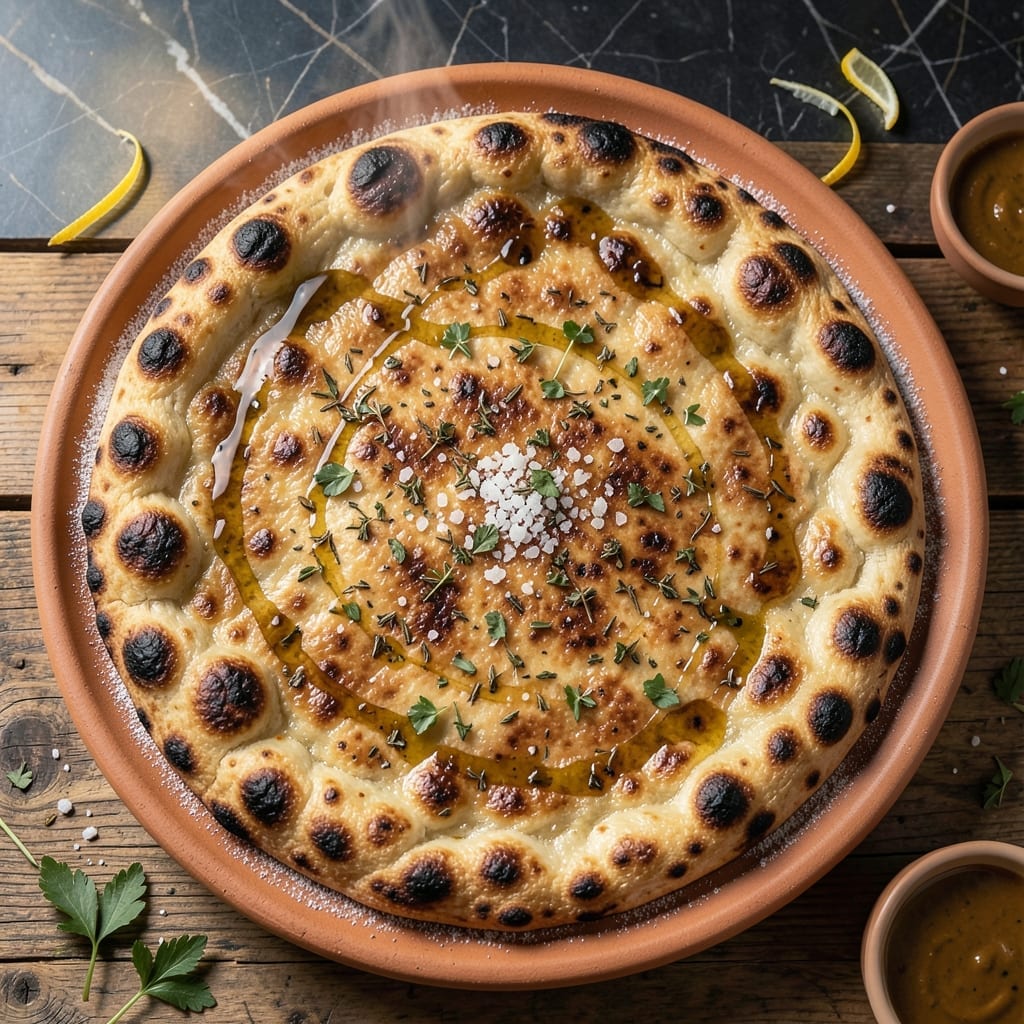
This no-yeast flatbread delivers crisp edges and a chewy center with minimal effort. I developed this technique after years of experimenting with quick breads for busy service nights.
The batter comes together in minutes, requiring no rising time. A hot pan transforms the simple mixture into golden, blistered flatbreads that puff slightly as they cook.
Each piece emerges with a satisfying snap from the crust and a soft, stretchy interior. The lack of yeast means you can have fresh bread on the table faster than ordering takeout.
Perfect for scooping dips, wrapping sandwiches, or serving alongside stews. This method redefines what flatbread can be without traditional dough.
Ingredients for Liquid Flatbread
Simple pantry staples transform into crisp, chewy flatbread with no yeast required.
| Ingredient | Amount | Notes |
|---|---|---|
| All-Purpose Flour 🌾 | 2 cups | Sifted for even texture |
| Water 💧 | 1 ¼ cups | Warm, about 110°F |
| Olive Oil 🫒 | 2 tbsp | Extra-virgin for flavor |
| Salt 🧂 | 1 tsp | Fine sea salt preferred |
| Baking Powder 🧪 | 1 tsp | Ensures slight puff |
| Sugar 🍚 | 1 tsp | Balances saltiness |
| Plain Yogurt 🥛 | ¼ cup | Full-fat for richness |
| Fresh Cilantro 🌿 | ¼ cup | Chopped, for garnish |
| Garlic Powder 🧄 | ½ tsp | Adds subtle depth |
| Ground Cumin 🌿 | ¼ tsp | Optional, for warmth |
[recipe_ingredient_scaler]
The flour is the foundation here. King Arthur all-purpose is my go-to for consistent results, but any reliable brand works. Warm water activates the baking powder—110°F is ideal (think bathwater temperature). The olive oil adds richness and helps create those coveted blisters. Extra-virgin is worth the splurge for better flavor, though any neutral oil will do in a pinch.
No yogurt? Buttermilk or sour cream at half the amount keeps the tang. Skip the cumin if you prefer a neutral taste. The cilantro can be swapped for fresh parsley or dill depending on what you’re serving. For gluten-free, a 1:1 blend works, but the texture won’t be as stretchy. The baking powder is non-negotiable—don’t omit it or the flatbread won’t puff.
The batter keeps in the fridge for 24 hours (stir before using). Cooked flatbreads stay fresh wrapped in a towel for 1-2 days or freeze for 1 month. Reheat in a dry pan to restore crispness. Best served warm, straight from the skillet.
Why You’ll Love This Recipe
- Five-Minute Mix: I stir flour, water, olive oil, and a pinch of salt and baking powder, then pour—no rolling, no resting, just cook.
- Crisp Yet Tender: That hot pan coaxes a blistered surface and a soft, pillowy center from the same simple batter.
- Breakfast to Midnight Snack: I’ve served it with jam at dawn and with hummus at midnight—honestly, it fits every hour in between.
- Pocket-Friendly Staple: Flour and water cost pennies, and a single batch feeds us for days without turning stale.
Step-by-Step Instructions for Liquid Flatbread
This no-yeast method delivers a perfectly crisp, chewy flatbread with minimal effort.
Step 1: Combine Dry Ingredients for Even Distribution
In a large mixing bowl, whisk together the 2 cups All-Purpose Flour, 1 tsp Baking Powder, 1 tsp Salt, 1 tsp Sugar, 0.5 tsp Garlic Powder, and 0.25 tsp Ground Cumin until fully incorporated. Sifting the flour first ensures a smooth, lump-free base for your batter.
The baking powder provides the leavening necessary for a slight puff, while the sugar balances the saltiness and enhances browning. The garlic powder and cumin add subtle depth to the flavor profile, complementing the flatbread’s crisp texture.
Step 2: Incorporate Wet Ingredients for a Smooth Batter
In a separate bowl, combine the 1.25 cups Water, 2 tbsp Olive Oil, and 0.25 cup Plain Yogurt. Whisk until the mixture is smooth and the yogurt is fully dissolved. The warm water helps activate the baking powder, while the yogurt adds richness and tenderness.
Gradually pour the wet mixture into the dry ingredients, stirring continuously with a wooden spoon or silicone spatula. Mix just until the batter comes together—it should be thin and pourable, similar to pancake batter. Avoid overmixing, as this can develop gluten and result in a tougher flatbread.
Step 3: Heat the Pan and Cook the Flatbread
Place a non-stick or cast-iron skillet over medium-high heat and allow it to preheat for 2-3 minutes. The pan is ready when a drop of water sizzles and evaporates immediately upon contact. Lightly grease the pan with a paper towel dipped in a small amount of olive oil if needed.
Ladle a portion of the batter (about ¼ cup) into the center of the pan, quickly swirling the pan to spread the batter into a thin, even layer. Cook for 2-3 minutes until the surface is covered with bubbles and the edges appear dry and slightly golden.
Step 4: Flip and Finish Cooking
Carefully flip the flatbread using a thin spatula, pressing down gently to ensure full contact with the pan. Cook for an additional 1-2 minutes until the underside is golden brown with charred spots in places. The flatbread should be crisp on the outside while remaining soft and chewy inside.
If the flatbread browns too quickly, reduce the heat slightly to medium to prevent burning. Keep a close eye on it—flatbreads cook fast, and the difference between perfectly crisp and overdone is just seconds.
Step 5: Garnish and Serve Immediately
Transfer the cooked flatbread to a plate and brush the top lightly with a bit of olive oil for extra shine and flavor. Sprinkle with the 0.25 cup Fresh Cilantro, chopping it just before use to preserve its bright, fresh flavor.
Serve the flatbread warm, as it’s best enjoyed fresh from the pan. Stack the finished flatbreads and cover them with a clean kitchen towel to keep them warm and soft if you’re making a batch. These pair wonderfully with dips, curries, or as a wrap for grilled meats and vegetables.
Pro Tips For Making Liquid Flatbread
- Rest the Batter: After mixing, let the batter sit for 10-15 minutes—this gives the flour time to absorb the water fully and the baking powder a chance to start working. I learned this the hard way when my first few flatbreads came out dense and gummy.
- Heat the Pan First: Crank your skillet to medium-high and let it get screaming hot before adding the batter. Sounds obvious, but I used to rush this step and ended up with pale, rubbery flatbreads instead of golden, blistered ones.
- Skip the Overmixing: Stir just until the batter comes together—lumps are fine. After burning three batches, I finally figured out that overmixing develops gluten, which makes the flatbreads tough instead of tender.
- Use Room Temp Water: Cold water straight from the tap can shock the batter and slow down the baking powder’s reaction. My grandmother swore by this, and she was right: room temp water makes for a more consistent rise and texture.
Serving Suggestions for This Recipe
Dip Pairings
These flatbreads are perfect for scooping up hummus or baba ganoush. I love the contrast of the crisp edges with creamy dips. Try my go-to: 2 tbsp tahini mixed with 1 tbsp lemon juice and a pinch of salt for a quick dip. 💫
Wrap Ideas
Use them as a base for grilled chicken wraps or falafel pitas. The chewy center holds fillings beautifully without tearing. I add sliced cucumbers, shredded lettuce, and a drizzle of garlic sauce for a fresh take.
Side Dish Pairings
Serve alongside Moroccan tagines or Indian curries to soak up rich sauces. The neutral flavor lets bold spices shine. I often pair with lentil soup for a light, satisfying meal.
Breakfast Twist
Top with scrambled eggs, crumbled feta, and sliced avocado for a quick breakfast. The flatbread’s texture holds up to hearty toppings. A sprinkle of red pepper flakes adds a nice kick.
For a sweeter option, drizzle with honey and a pinch of sea salt. ✨
Nutrition Facts
Frequently Asked Questions
Can I use a different flour?
Yes! Whole wheat or bread flour works, but the texture will be denser. For gluten-free, try a 1:1 blend. The batter may need extra 1-2 tbsp water to reach the right consistency.
Why is my batter too thick?
Add warm water 1 tbsp at a time until it reaches a thin, pourable consistency like pancake batter. Overmixing can also cause thickness, so stir just until combined.
How do I store leftovers?
Stack cooled flatbreads with parchment between layers in an airtight container. They keep for 1-2 days at room temperature or 1 month frozen. Reheat in a dry pan to crisp.

Trained in classic French technique but raised on slow-cooked ribs and spicy rubs, she blends culinary skill with smoke and soul.
- Recipe for Boneless Pork Chops in Cast Iron Skillet: Sear and Baste to Juicy Perfection - October 3, 2026
- Recipe for Boneless Cross Rib Roast: Slow-Roasted Beef with Herb Crust - October 3, 2026
- Hamburgers in Sauce Recipe Crock Pot: Slow-Cooked Savory Delight - October 3, 2026