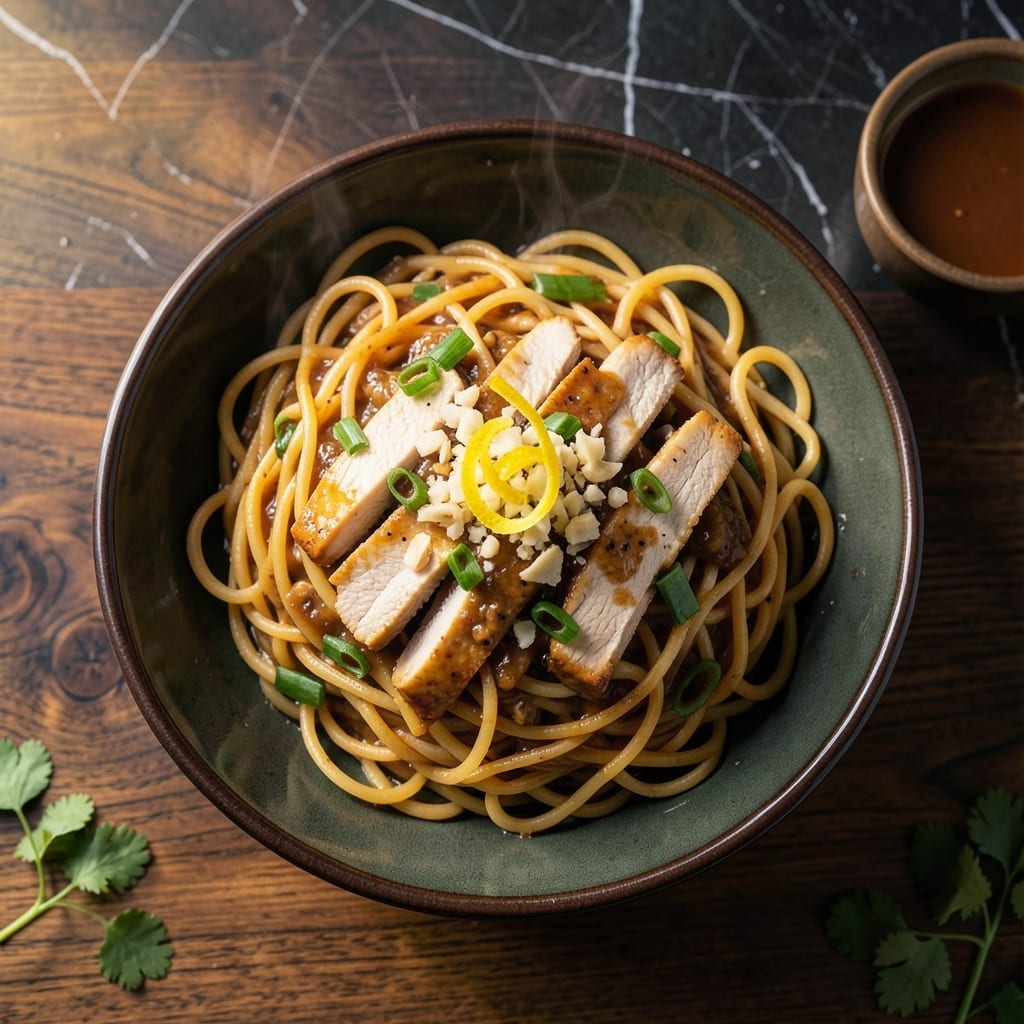
This approach brings authentic Chinese takeout flavor to your kitchen using an unexpected pantry staple. Spaghetti noodles absorb the savory lo mein sauce just as effectively as traditional wheat noodles, creating a dish that’s both familiar and exciting.
The technique relies on high-heat cooking to achieve that signature wok-tossed texture. A simple sauce of soy sauce, oyster sauce, and sesame oil coats the noodles, while fresh vegetables and your choice of protein complete the dish in under 30 minutes.
What emerges is a perfectly balanced plate with tender noodles, crisp-tender vegetables, and a glossy, flavorful sauce. The spaghetti maintains its structure while soaking up all the delicious seasonings, proving that great lo mein doesn’t require specialty ingredients.
This method delivers restaurant-quality results with ingredients you likely already have on hand. The process is straightforward yet yields impressive, consistent outcomes every time.
Ingredients for Lo Mein Recipe with Spaghetti Noodles
Transform everyday pasta into restaurant-style lo mein with these flavor-packed ingredients.
| Ingredient | Amount | Notes |
|---|---|---|
| Spaghetti Noodles 🍝 | 12 oz | Uncooked, standard thickness |
| Soy Sauce 🫒 | ⅓ cup | Low-sodium preferred for control |
| Oyster Sauce 🍲 | 3 tbsp | Essential for authentic flavor |
| Sesame Oil 🫒 | 1 tbsp | Toasted variety for depth |
| Garlic Cloves 🧄 | 4 cloves | Minced finely for even distribution |
| Fresh Ginger 🌿 | 1 tbsp | Peeled and grated |
| Chicken Breast 🍗 | 1 lb | Boneless, skinless, thinly sliced |
| Bell Pepper 🌶️ | 1 whole | Thinly sliced, any color |
| Carrots 🥕 | 2 whole | Julienned for quick cooking |
| Green Onions 🧅 | 4 whole | Sliced, white and green parts separated |
| Cornstarch 🌾 | 1 tbsp | For thickening sauce |
| Vegetable Oil 🫒 | 2 tbsp | High smoke point for stir-frying |
| Brown Sugar 🍚 | 1 tbsp | Balances savory elements |
| Rice Vinegar 🍶 | 1 tbsp | Adds subtle tang |
| Red Pepper Flakes 🔥 | ½ tsp | Adjust to heat preference |
[recipe_ingredient_scaler]
The sauce base is critical here. Oyster sauce and soy sauce must be high-quality—Kikkoman soy sauce and Lee Kum Kee oyster sauce are reliable brands found at any Asian grocery store or well-stocked supermarket. Sesame oil loses potency over time, so replace it if it smells dull. Fresh ginger and garlic are non-negotiable; pre-minced versions lack the necessary brightness for this dish.
For a vegetarian version, swap chicken for extra-firm tofu or shitake mushrooms. No oyster sauce? Hoisin sauce at half the amount works in a pinch. Bell peppers and carrots can be replaced with broccoli florets or snap peas. If avoiding gluten, use tamari instead of soy sauce and rice noodles instead of spaghetti.
Cooked lo mein keeps beautifully in the fridge for 4-5 days. Store in airtight containers—glass is ideal to prevent absorbing odors. Reheat in a dry skillet over medium heat to restore texture, adding a splash of water if needed. Freezes well for up to 3 months (thaw overnight before reheating).
Why You’ll Love This Recipe
- Pantry Hero: I always have spaghetti and soy sauce on hand, so this comes together without a special grocery trip.
- Umami Bomb: The oyster sauce and sesame oil create that deep, savory flavor I crave from takeout.
- Weeknight MVP: Honestly, it’s my go-to for busy evenings—ready before the kids finish arguing over who gets the last chicken nugget.
- Leftover Luxe: The flavors taste even better the next day, and the spaghetti holds up perfectly in the fridge for lunches.
Step-by-Step Instructions for Lo Mein With Spaghetti Noodles
Master the wok-tossed technique that delivers authentic takeout flavor with simple ingredients.
Step 1: Prepare and Marinate the Chicken
Begin by slicing the 1 lb Chicken Breast into thin strips against the grain. This ensures tenderness and quick, even cooking. In a bowl, combine the chicken with 1 tbsp Cornstarch, 1 tbsp Soy Sauce, and 1 tbsp Rice Vinegar. Mix well to coat each piece evenly.
The cornstarch creates a velvety texture and helps the chicken retain moisture during stir-frying. Let it marinate for 15 minutes at room temperature while you prepare the remaining ingredients. This step is non-negotiable for maximum flavor penetration.
Step 2: Cook the Spaghetti Noodles Al Dente
Bring a large pot of salted water to a rolling boil. Add the 12 oz Spaghetti Noodles and cook for 1 minute less than the package instructions for al dente. You want them slightly undercooked because they’ll finish in the wok.
Drain immediately and rinse under cold water to stop the cooking process. Toss with 1 tbsp Sesame Oil to prevent sticking and add a layer of toasted flavor. The noodles should be firm but pliable—this prevents them from turning mushy when stir-fried later.
Step 3: Stir-Fry the Vegetables and Chicken
Heat 1 tbsp Vegetable Oil in a wok or large skillet over high heat until shimmering. Add the marinated chicken in a single layer and cook undisturbed for 2-3 minutes until the edges turn opaque white. Flip and cook for another 1-2 minutes until fully cooked through. Remove the chicken and set aside.
In the same pan, add the remaining 1 tbsp Vegetable Oil. Stir-fry the 4 cloves Garlic Cloves, 1 tbsp Fresh Ginger, 1 whole Bell Pepper, and 2 whole Carrots for 3-4 minutes until the vegetables soften slightly but retain a crisp bite. The garlic and ginger should be fragrant but not browned.
Step 4: Combine and Finish with Sauce
Return the chicken to the wok along with the cooked spaghetti noodles. Pour in the remaining 0.33 cup Soy Sauce, 3 tbsp Oyster Sauce, 1 tbsp Brown Sugar, and 0.5 tsp Red Pepper Flakes. Toss everything vigorously with tongs for 2-3 minutes until the noodles are evenly coated and the sauce thickens slightly.
The oyster sauce adds depth and umami, while the brown sugar balances the saltiness. Keep the heat high and stir constantly to prevent sticking. The lo mein is ready when the noodles are tender and the sauce clings to each strand, creating a glossy, aromatic finish.
Garnish with the 4 whole Green Onions and serve immediately while hot. Each bite should deliver a perfect balance of savory, sweet, and slightly spicy flavors.
Pro Tips For Making Lo Mein Recipe With Spaghetti Noodles
- Parboil Spaghetti First: Cook the spaghetti 2 minutes shy of al dente, then finish in the wok with your sauces—this prevents mushy noodles while letting them soak up the soy and oyster flavors.
- Bloom the Garlic: Slice the garlic thin and cook it in the sesame oil for just 30 seconds until fragrant but not brown—I learned this the hard way after burning three batches.
- Skip the Over-Saucing: Use 1 tablespoon soy sauce and 1 teaspoon oyster sauce per serving max, or your lo mein will taste like a salty swamp instead of a balanced dish.
- Toss While Hot: Hit the drained spaghetti with the sauce mixture immediately while it’s steaming, so the noodles absorb every bit of flavor—sounds simple, but it actually changes the outcome.
Storing and Reheating This Dish
Refrigerator Storage
Let your lo mein cool completely before transferring to airtight containers. I prefer glass containers to prevent absorbing odors. Store in the fridge at 40°F or below for up to 4-5 days. The flavors actually deepen overnight. ❄️
Freezer Storage
For longer storage, freeze in quart-sized freezer bags with excess air removed. Lay flat to save space and freeze for up to 3 months. Portion into individual servings for easy grab-and-go meals later.
Stovetop Reheating
My preferred method uses a dry skillet over medium heat. Add the lo mein with a splash of water, cover, and heat for 3-4 minutes. Stir occasionally to prevent sticking. This restores the wok-tossed texture beautifully. 🔥
Microwave Reheating
For quick meals, microwave covered with a damp paper towel on 70% power. Heat in 1-minute intervals, stirring between each, until reaching 165°F. Add a few drops of water if it appears dry.
Reviving Texture
If your noodles seem dry after storage, toss with a little sesame oil or soy sauce before reheating. This refreshes the sauce’s glossy finish and enhances flavor. The spaghetti noodles should bounce back to life.
Nutrition Facts
Frequently Asked Questions
Can I use whole wheat spaghetti instead?
Yes, but cook it 2 minutes less than package directions. Whole wheat can turn mushy faster. The nuttier flavor pairs well with the savory sauce.
Why do we undercook the noodles first?
They finish cooking in the wok with the sauce. This prevents soggy noodles and ensures they absorb all the flavors while maintaining a perfect texture.
What if my sauce is too thin?
Mix 1 tsp Cornstarch with 1 tbsp water and stir into the wok. Cook for 1-2 minutes until thickened. Avoid over-thickening as it will continue to reduce.
Can I make this vegetarian?
Swap chicken for extra-firm tofu or mushrooms. Use vegan oyster sauce (available at Asian markets) to keep the authentic flavor profile.

Trained in classic French technique but raised on slow-cooked ribs and spicy rubs, she blends culinary skill with smoke and soul.
- Recipe for Boneless Pork Chops in Cast Iron Skillet: Sear and Baste to Juicy Perfection - October 3, 2026
- Recipe for Boneless Cross Rib Roast: Slow-Roasted Beef with Herb Crust - October 3, 2026
- Hamburgers in Sauce Recipe Crock Pot: Slow-Cooked Savory Delight - October 3, 2026