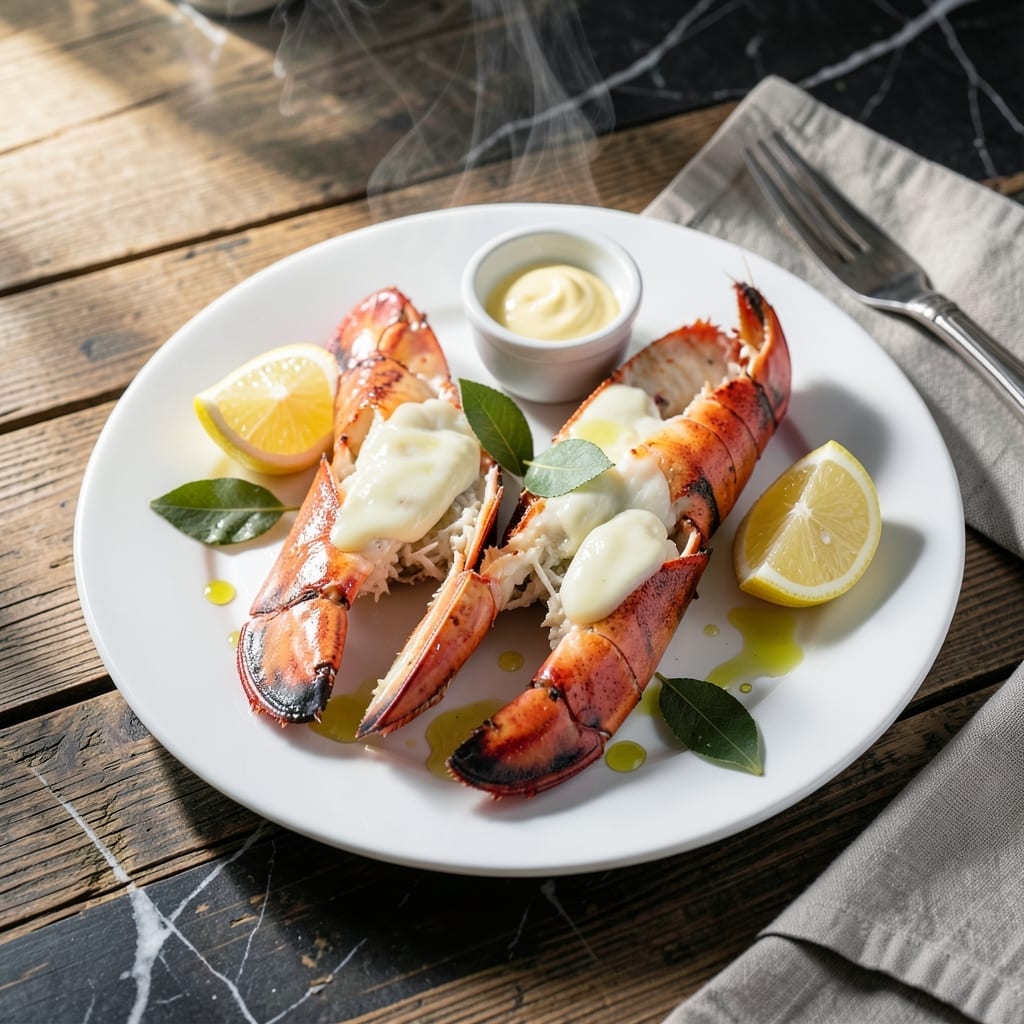
Achieving restaurant-quality lobster tail at home is simpler than most assume. This boiled method delivers tender, sweet meat that falls away from the shell with minimal effort.
The process requires precise timing and a few key techniques. Boiling preserves the natural flavor while ensuring the lobster cooks evenly throughout. The result is consistently perfect, never rubbery or overdone.
With just water, salt, and lobster tails, you can create a dish worthy of a special occasion. The meat emerges juicy and flavorful, ready for butter or your favorite sauce.
Serve immediately for the best texture and taste. The simplicity of this approach makes it accessible for any home cook.
Ingredients for Lobster Tail Recipe Boiled
Fresh lobster tails and a few pantry staples bring this elegant dish to life.
| Ingredient | Amount | Notes |
|---|---|---|
| Lobster Tails 🦞 | 4 whole | Fresh or thawed, 6-8 oz each |
| Water 💧 | 8 cups | Enough to fully submerge tails |
| Kosher Salt 🧂 | ¼ cup | Diamond Crystal preferred |
| Bay Leaves 🌿 | 2 whole | For aromatic depth |
| Lemon 🍋 | 1 whole | Cut in half for brightness |
| Unsalted Butter 🧈 | ½ cup | Melted, for serving |
| Fresh Parsley 🌿 | ¼ cup | Chopped, for garnish |
| Garlic Cloves 🧄 | 2 cloves | Minced, optional for butter |
| Black Peppercorns 🌶️ | 1 tsp | Whole or cracked |
| Old Bay Seasoning 🌶️ | 1 tsp | Optional for extra flavor |
[recipe_ingredient_scaler]
The lobster tails are the star here. Fresh is ideal—look for firm, translucent flesh with no fishy odor at Whole Foods or a trusted seafood counter. Frozen works (thaw overnight in the fridge), but avoid pre-cooked tails—they turn rubbery. Size matters: 6-8 oz tails cook evenly and fit in most pots. For a splurge, Maine lobster tails have the sweetest meat.
No bay leaves? A few sprigs of fresh thyme or a pinch of dried tarragon work. Out of Old Bay? Skip it—salt and pepper are enough. The lemon can be swapped for white wine vinegar (1 tbsp) if that’s what’s open. For the butter, European-style (higher fat) gives a richer dip, but any unsalted kind melts beautifully.
Lobster tails are best cooked fresh, but you can par-cook them 1 day ahead. Refrigerate in their shells, then finish boiling just before serving. Leftover meat? Store in an airtight container for 2-3 days—great for salads or sandwiches.
Why You’ll Love This Recipe
- One Pot Wonder: I just boil the tails with salt, bay leaves, and lemon—no fancy techniques, no mess.
- Buttery Sweetness: The lobster soaks up the lemon and bay flavor, making every bite rich and tender.
- Date Night Ready: I serve this for anniversaries or when I want to feel fancy without the restaurant markup.
- Leftovers Luxe: Honestly, the cold lobster next day in a salad or roll is almost better than fresh.
Step-by-Step Instructions for Boiled Lobster Tail
This method delivers perfectly tender, sweet lobster every time with minimal effort.
Step 1: Prepare the Lobster Tails
If using frozen lobster tails, thaw them completely in the refrigerator overnight. I’ve found that rushing this step with warm water leads to uneven cooking and rubbery texture. Once thawed, use kitchen shears to carefully cut through the top shell lengthwise, stopping just before the tail fin.
Gently pull the shell apart just enough to expose the meat, then lift the meat out slightly, leaving it attached at the base. This butterflying technique allows the lobster to cook evenly while making it easier to serve and enjoy. Rinse the tails under cold water to remove any shell fragments.
Step 2: Create the Aromatic Boiling Liquid
In a large stockpot, combine the 8 cups water, 0.25 cup kosher salt, 2 whole bay leaves, and 1 tsp black peppercorns. Add the 1 whole lemon, cut in half, squeezing the juice into the water before adding the halves themselves. If you like extra flavor, stir in the 1 tsp Old Bay seasoning at this stage.
Bring the mixture to a rolling boil over high heat. The salt should dissolve completely, and the water will take on a fragrant, citrusy aroma. This isn’t just seasoning—it’s what infuses the lobster with complex flavor as it cooks. The water should taste briny, like the ocean, to properly season the meat.
Step 3: Cook the Lobster Tails to Perfection
Once the water is at a full boil, carefully add the prepared lobster tails, ensuring they’re fully submerged. Reduce the heat to medium-low to maintain a gentle but steady simmer. For 6-8 oz tails, cook for 1 minute per ounce, which typically means 6-8 minutes total.
The lobster is done when the meat turns opaque white and the internal temperature reaches 140°F when checked with an instant-read thermometer. The shell will turn a vibrant red-orange, and the meat will pull away slightly from the shell. Be careful not to overcook—lobster meat becomes tough and rubbery very quickly once it passes the ideal temperature.
Step 4: Prepare the Garlic Butter and Serve
While the lobster cooks, melt the 0.5 cup unsalted butter in a small saucepan over low heat. If using, add the 2 cloves garlic cloves, minced, and cook for 1-2 minutes until fragrant but not browned. The butter should be warm and infused with garlic aroma without any bitterness.
Once the lobster tails are cooked, use tongs to transfer them to a serving platter. Spoon some of the warm garlic butter over each tail, allowing it to soak into the meat. Garnish with 0.25 cup fresh parsley, chopped, for a pop of color and freshness. Serve immediately with the remaining butter on the side for dipping.
Pro Tips For Making Lobster Tail Recipe Boiled
- Use Enough Water: Fill the pot so the lobster tails are fully submerged—I learned this the hard way after my first batch cooked unevenly because they were half-exposed.
- Salt Like the Sea: Add about 1/4 cup kosher salt per gallon of water; it should taste like ocean water. Sounds like a lot, but it actually changes the outcome.
- Watch the Clock: Boil for exactly 1 minute per ounce of tail weight, no more. After overcooking a few tails, I finally figured out timing is the thing that matters most.
- Shock Immediately: Plunge the tails into ice water right after boiling to stop the cooking—your future self will thank you when they stay tender instead of rubbery.
Troubleshooting lobster tail recipe boiled
Tough or Rubbery Meat
Overcooking is the most common culprit—lobster meat becomes tough at 145°F+. Pull tails at exactly 140°F internal temp and rest for 2 minutes. I use a ThermoWorks instant-read thermometer for precision. 🌡️
Tail Curling
This happens when tails aren’t fully submerged. Use a pot large enough to cover them completely, or weigh them down with a heatproof plate. Also, ensure your water is at a full boil before adding the lobster.
Bland Flavor
Your boiling water must taste like the ocean. Use the full ¼ cup kosher salt—it’s not excessive. Add Old Bay or extra lemon halves for more depth. I find Diamond Crystal salt dissolves most evenly.
Shell Sticking to Meat
Butterflying the tails properly prevents this. Cut the shell lengthwise, then gently lift the meat while keeping it attached at the base. Rinse under cold water to remove any shell fragments that could cause sticking.
Uneven Cooking
Different sized tails need different times. For 6-8 oz tails, cook 1 minute per ounce. Larger tails may need up to 12 minutes. Always check the thickest part with your thermometer.
Cloudy Butter
This occurs when melting over too-high heat. Use low heat and remove from the stove just as the butter finishes melting. For garlic butter, add minced cloves after removing from heat to prevent browning. 💡
Nutrition Facts
Frequently Asked Questions
How do I know when the tails are done?
The meat should turn opaque white with an internal temperature of 140°F. The shell will brighten to red-orange. Overcooking makes meat rubbery, so check at 6-8 minutes for 6-8 oz tails.
Can I boil frozen tails without thawing?
No, always thaw first for even cooking. Rushing with warm water creates uneven texture. Thaw overnight in the fridge for best results.
Why is my lobster meat tough?
It was likely overcooked. Pull tails at exactly 140°F and let rest for 2 minutes before serving. Use a thermometer for precision.
How much salt should I use in the water?
Use ¼ cup kosher salt per 8 cups water. The water should taste briny like the ocean to properly season the meat.

Trained in classic French technique but raised on slow-cooked ribs and spicy rubs, she blends culinary skill with smoke and soul.
- Recipe for Boneless Pork Chops in Cast Iron Skillet: Sear and Baste to Juicy Perfection - October 3, 2026
- Recipe for Boneless Cross Rib Roast: Slow-Roasted Beef with Herb Crust - October 3, 2026
- Hamburgers in Sauce Recipe Crock Pot: Slow-Cooked Savory Delight - October 3, 2026