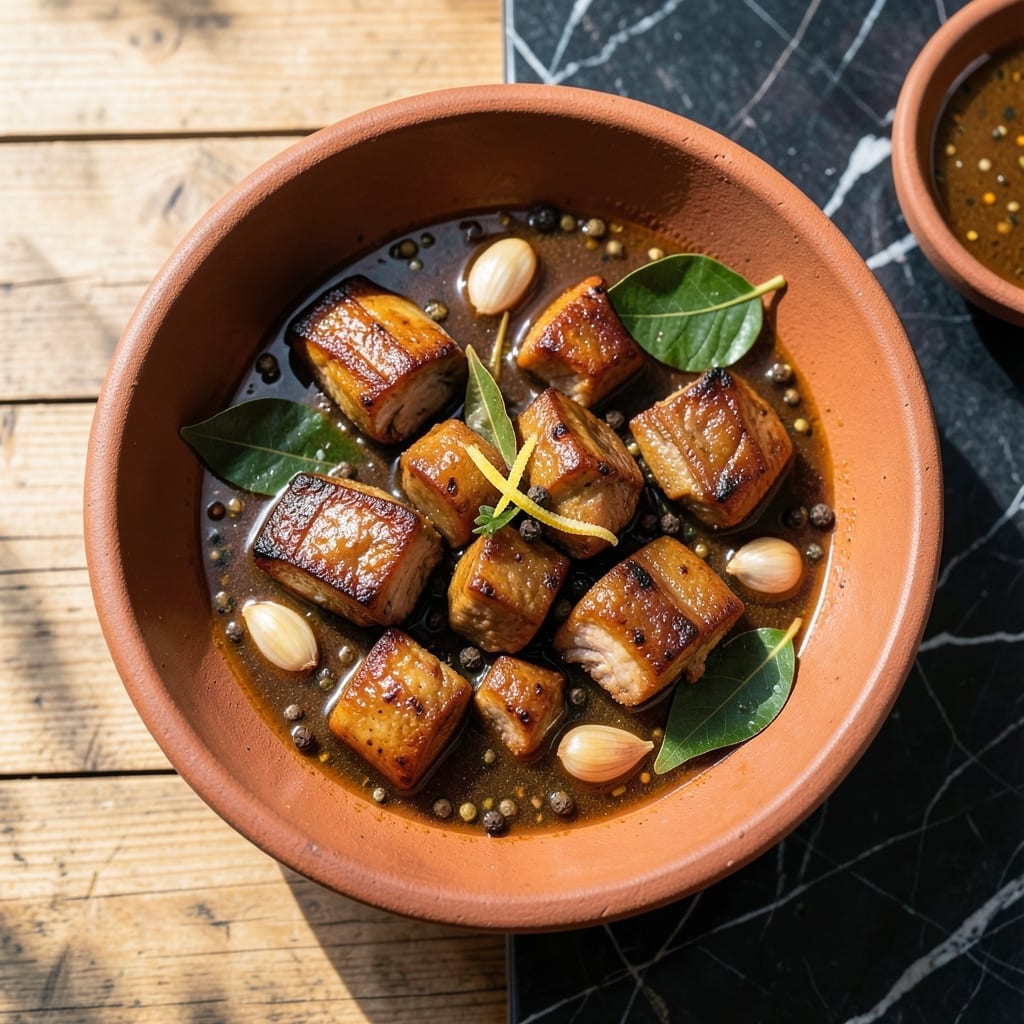
This adobo-style pork brings bold Filipino flavors to your table with minimal effort. The tangy vinegar and garlic marinade transforms tough cuts into tender, deeply seasoned meat.
I perfected this method after studying my grandmother’s vague notes, learning that time does most of the work. A 30-minute marinade is enough to infuse every bite with rich, garlicky taste.
The result is juicy pork with a caramelized exterior, balanced by the bright acidity of vinegar. It’s a foolproof dish that feels special but fits into any weeknight.
Serve it over steamed rice to soak up every drop of the savory sauce. This is comfort food with layers of flavor, ready when you are.
Ingredients for Marinated Pork Recipe Filipino
Bold Filipino flavors start with these pantry staples and a few fresh touches.
| Ingredient | Amount | Notes |
|---|---|---|
| Pork Shoulder 🥩 | 2 lb | Cut into 1-inch cubes, bone-in preferred |
| White Vinegar 💧 | ¾ cup | Cane or distilled white vinegar |
| Soy Sauce 🫒 | ½ cup | Regular or low-sodium works |
| Garlic Cloves 🧄 | 12 cloves | Peeled and crushed |
| Bay Leaves 🍃 | 3 whole | Dried, for depth |
| Black Peppercorns 🌶️ | 1 tsp | Whole, lightly crushed |
| Brown Sugar 🍚 | 2 tbsp | Light or dark variety |
| Water 💧 | ½ cup | To balance the marinade |
| Vegetable Oil 🫒 | 2 tbsp | For searing pork |
| Salt 🧂 | 1 tsp | Kosher or sea salt |
| Green Onions 🧅 | 4 whole | Sliced, for garnish |
| Steamed Rice 🍚 | 2 cups | Cooked, for serving |
[recipe_ingredient_scaler]
The pork is everything here. Pork shoulder (also called pork butt) has the fat and connective tissue that turns buttery after marinating and cooking. Look for pieces with good marbling at Costco or your local butcher—avoid lean cuts like tenderloin, which dry out. The vinegar is non-negotiable: cane vinegar is traditional, but any white vinegar will work in a pinch.
No soy sauce? Coconut aminos work in a 1:1 swap (though it’s sweeter). Fresh garlic is key, but jarred minced garlic in a pinch if you’re desperate. Bay leaves can be skipped, but they add complexity—dried or fresh both work. For extra tang, add a splash of calamansi juice if you can find it at an Asian market.
The marinade keeps in the fridge for up to 3 days—perfect for prepping ahead. Cooked pork stays juicy for 3-4 days in the fridge or freezes for 3 months. Reheat gently to keep it tender (microwave works, but stovetop is better).
Why You’ll Love This Recipe
- Minimal Chopping Required: I just toss pork shoulder with crushed garlic, bay leaves, and a quick mix of soy sauce and vinegar—no fancy knife skills needed.
- That Garlic-Vinegar Punch: The marinade of white vinegar, soy sauce, and garlic gives it that tangy, savory depth that’s pure Filipino comfort in every bite.
- Feeds a Crowd: Honestly, this works for lazy Sundays or feeding unexpected guests—pork shoulder stretches far and tastes even better the next day.
- Budget-Friendly Protein: Pork shoulder is affordable, and the marinade uses pantry staples. I’ll be real: it’s my go-to when I need a flavorful meal without overspending.
Step-by-Step Instructions for Adobo-Style Pork
Here’s the foolproof method I use for tender, tangy pork with that signature Filipino adobo flavor.
Step 1: Create the Marinade
In a large bowl, combine the 0.75 cup white vinegar, 0.5 cup soy sauce, 12 cloves garlic cloves, 3 whole bay leaves, 1 tsp black peppercorns, 2 tbsp brown sugar, and 0.5 cup water. Stir until the brown sugar dissolves completely.
I always crush the garlic cloves slightly before adding them—this releases more flavor into the marinade. The bay leaves and black peppercorns add depth, so don’t skip them. Let the mixture sit for 5 minutes to allow the flavors to meld before adding the pork.
Step 2: Marinate the Pork
Add the 2 lb pork shoulder to the marinade, ensuring all pieces are fully submerged. Cover the bowl and refrigerate for at least 1 hour, but I prefer 4 hours or overnight for maximum flavor penetration.
The longer you marinate, the more tender and flavorful the pork will be. I like to give the bowl a quick stir halfway through the marinating time to redistribute the flavors. The pork shoulder should look slightly discolored from the soy sauce when it’s ready to cook.
Step 3: Sear and Braise the Pork
Heat the 2 tbsp vegetable oil in a large pot over medium-high heat. Remove the pork from the marinade (reserve the marinade) and pat it dry with paper towels. Sear the pork in batches for 2-3 minutes per side until golden brown.
Don’t crowd the pot—this prevents steaming and ensures a good sear. Once all the pork is browned, return it to the pot and pour in the reserved marinade. Add the 1 tsp salt, then bring the liquid to a boil.
Step 4: Simmer Until Tender
Reduce the heat to low, cover the pot, and let the pork simmer for 45-60 minutes, stirring occasionally. You’ll know it’s done when the pork is fork-tender and the sauce has thickened slightly.
If the sauce reduces too much before the pork is tender, add a splash of water to keep it from drying out. The pork shoulder should easily pull apart with a fork when it’s ready. Taste the sauce and adjust the seasoning if needed.
Step 5: Garnish and Serve
Once the pork is tender, remove the bay leaves and discard them. Slice the 4 whole green onions and sprinkle them over the pork as a fresh garnish. The green onions add a nice pop of color and a mild onion flavor.
Serve the pork hot with the 2 cups steamed rice, spooning the rich, tangy sauce over both. The sauce should be glossy and coat the pork generously. This dish tastes even better the next day, as the flavors continue to develop.
Pro Tips For Making Marinated Pork Recipe Filipino
- Marinate Overnight: I learned this the hard way—pork shoulder needs at least 4 hours in the vinegar, soy, and garlic mix, but 8-12 hours actually changes the outcome. The flavors penetrate deep, and the meat stays juicy when cooked.
- Crush the Garlic: Skip mincing and go for crushed garlic cloves instead. It releases more oils into the marinade, and you get little bursts of flavor in every bite.
- Simmer, Don’t Boil: After browning the pork, keep the heat low when adding the marinade and bay leaves. Boiling toughens the meat, but a gentle simmer for 40-45 minutes guarantees tender, fall-apart pieces.
- Use Fresh Bay Leaves: Sounds weird, but it works: dried bay leaves can be bitter if overcooked. Fresh ones (or even just 2-3 dried ones removed early) give a cleaner, more aromatic taste to the dish.
Storing and Reheating marinated pork recipe filipino
Refrigerator Storage
Let the pork cool to room temperature first, then transfer to airtight containers with some sauce. It keeps beautifully in the fridge for 3-4 days. I find the flavors deepen overnight, making leftovers even more delicious. ❄️
Freezer Storage
For longer storage, freeze in portion-sized containers for up to 3 months. I recommend glass containers for best results, as they prevent freezer odors from seeping in. Leave ½ inch headspace to allow for expansion.
Stovetop Reheating
My preferred method: gently reheat in a pot over medium-low heat with 2 tbsp water to prevent drying. Stir occasionally until warmed through, about 8-10 minutes. This keeps the pork moist and tender. 🔥
Microwave Reheating
For quick meals, microwave individual portions covered with a damp paper towel. Use 50% power in 1-minute intervals, stirring between each, until reaching 165°F. The sauce may thicken—just stir in a splash of water.
Serving Leftovers
Reheated pork tastes great over fresh steamed rice. Garnish with fresh green onions to brighten the dish. I often add a fried egg on top for extra richness.
Nutrition Facts
Frequently Asked Questions
Can I use a different cut of pork?
Pork shoulder works best, but pork belly adds extra richness. Avoid lean cuts like tenderloin—they dry out. For quick cooking, try pork loin with 30 minutes marinating.
Why does the vinegar taste so strong at first?
The acidity mellows during cooking. If too sharp, add 1 tsp sugar to balance. Never skip vinegar—it’s key for authentic adobo flavor and tenderizing.
Can I make this in a slow cooker?
Yes! Sear pork first, then cook on low for 6-8 hours or high for 4 hours. Add ¼ cup water if sauce reduces too much.

Trained in classic French technique but raised on slow-cooked ribs and spicy rubs, she blends culinary skill with smoke and soul.
- Sanjeev Kapoor Egg Biryani Recipe: Fragrant Spiced Rice With Boiled Eggs - October 3, 2026
- Recipe for French Pork Spread Gorton: Savory Gallic Flavors in a Spreadable Delight - October 3, 2026
- Recipe for Pan Fried: Golden Crust with Savory Depth - October 3, 2026