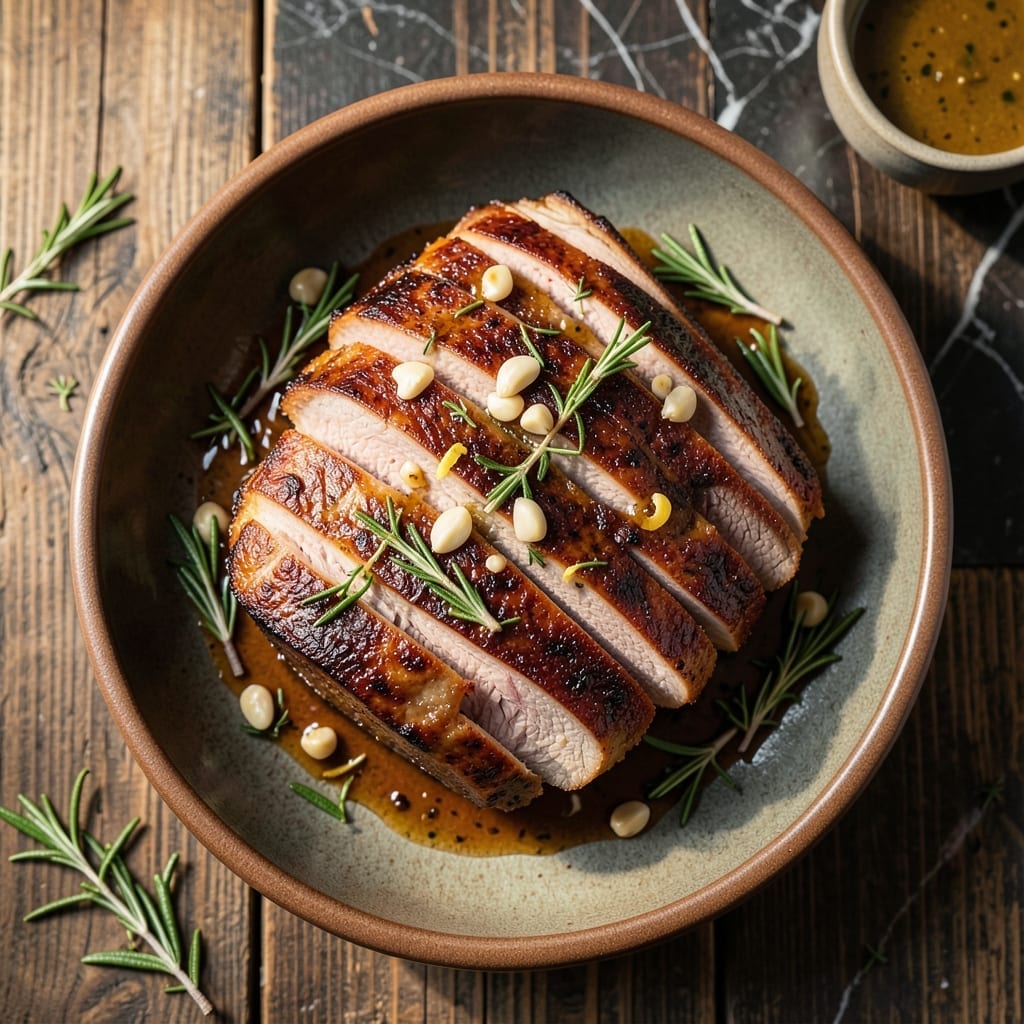
My grandmother never measured anything by cups or spoons—she used her hands and experience. This recipe captures her intuition for a perfectly cooked loin roast, adapted for today’s home kitchens.
An herb-crusted exterior forms a flavorful seal that locks in juices. The oven does most of the work, transforming a simple cut into a centerpiece worthy of Sunday dinner. No special equipment needed, just time and attention to detail.
What emerges is tender, evenly cooked meat with a golden crust. The herbs create an aromatic barrier that enhances the natural flavors without overpowering them. Every slice reveals the care put into its preparation.
Serve with roasted vegetables or mashed potatoes to complete the meal. The method is reliable, the results impressive.
Ingredients for Loin Roast Recipe Oven
Transform a simple pork loin into a Sunday dinner centerpiece with these herbs and spices.
| Ingredient | Amount | Notes |
|---|---|---|
| Pork Loin Roast 🥩 | 3 lb | Boneless, trimmed of excess fat |
| Fresh Rosemary 🌿 | 2 tbsp | Finely chopped, stems removed |
| Fresh Thyme 🍃 | 2 tbsp | Finely chopped, stems removed |
| Garlic Cloves 🧄 | 6 cloves | Minced for crust |
| Olive Oil 🫒 | 3 tbsp | Extra-virgin for richness |
| Dijon Mustard 🟡 | 2 tbsp | Smooth, not whole grain |
| Kosher Salt 🧂 | 1 ½ tsp | Diamond Crystal preferred |
| Black Pepper 🌶️ | 1 tsp | Freshly ground for best flavor |
| Dried Sage 🌿 | 1 tsp | Rubbed between fingers to release oils |
| Red Wine Vinegar 🍷 | 1 tbsp | For brightness in crust |
| Butter 🧈 | 2 tbsp | Unsalted, softened for basting |
| Onion 🧅 | 1 whole | Yellow or white, quartered |
[recipe_ingredient_scaler]
The pork quality is non-negotiable. Look for a boneless loin roast with even marbling—avoid anything with excessive fat caps. Whole Foods or your local butcher will have the best selection. The roast should feel firm to the touch, not mushy. I prefer 3-4 lb roasts for even cooking and leftovers. Ask them to trim the silver skin if it’s still attached—saves you time at home.
No fresh herbs? Dried at one-third the amount works in a pinch, but fresh delivers that aromatic punch grandmother relied on. Short on Dijon? Whole grain mustard adds texture but slightly different flavor. The vinegar can be apple cider or white wine if that’s what’s in the pantry. For a richer crust, swap half the olive oil for melted butter in the herb mixture.
The roast can rest at room temperature for 1 hour before cooking—this ensures even donning of the crust. Leftovers keep beautifully for 4-5 days in the fridge, perfect for sandwiches. The herb mixture can be prepped a day ahead—store it in the fridge in a sealed container.
Why You’ll Love This Recipe
- Set and Forget: Honestly, I just rub the pork with olive oil, herbs, and garlic, then let the oven do the work.
- Herb Crust Perfection: That combination of rosemary, thyme, and garlic creates a crust so flavorful I don’t even need sauce.
- Sunday or Tuesday: I’ve served this for holiday dinners and weeknight meals—it’s that adaptable.
- Leftovers for Days: One roast feeds us for two meals, and the leftovers make killer sandwiches.
Step-by-Step Instructions for Herb-Crusted Pork Loin Roast
Here’s the method I use to achieve a perfectly browned crust and juicy interior every time.
Step 1: Prepare the Herb Crust
In a small bowl, combine the 2 tbsp fresh rosemary, 2 tbsp fresh thyme, 6 cloves minced garlic, 3 tbsp olive oil, 2 tbsp Dijon mustard, 1.5 tsp kosher salt, 1 tsp black pepper, 1 tsp dried sage, and 1 tbsp red wine vinegar.
Mix until it forms a thick paste. I rub the dried sage between my fingers first to release its oils, which enhances the flavor. This herb mixture will create a fragrant crust that locks in moisture while adding depth to the pork.
Step 2: Coat and Sear the Roast
Pat the 3 lb pork loin roast dry with paper towels to ensure the crust adheres properly. Rub the herb paste evenly over the entire surface of the roast, pressing it in so it forms a thick, even layer.
Heat a large oven-safe skillet or roasting pan over medium-high heat. Add the 2 tbsp butter and let it melt. Sear the roast on all sides for 2-3 minutes per side until golden brown. This step develops a rich, flavorful crust and enhances the overall depth of the dish.
Step 3: Roast in the Oven
Preheat your oven to 375°F. Place the quartered 1 whole onion in the bottom of the pan around the roast. This adds natural sweetness and aroma as it cooks.
Transfer the pan to the oven and roast for 45-60 minutes, or until the internal temperature reaches 145°F. I check the temperature with a meat thermometer inserted into the thickest part of the roast. The onions should be tender and lightly caramelized by this point.
Step 4: Rest and Serve
Remove the roast from the oven and transfer it to a cutting board. Tent it loosely with foil and let it rest for 10-15 minutes. This resting period allows the juices to redistribute, ensuring every slice is moist and flavorful.
Slice the roast against the grain into ½-inch thick pieces. The crust should be deeply browned and aromatic, while the inside remains tender and juicy. Serve immediately with the caramelized onions for a complete, elegant meal.
Pro Tips For Making Loin Roast Recipe Oven
- Sear First, Then Roast: I learned this the hard way—starting with a hot sear in a skillet for 2-3 minutes per side gives that golden crust before the oven finish. Sounds like extra work, but it locks in way more flavor.
- Score the Fat: Cut shallow slits in the fat cap about 1/4-inch deep before seasoning. This isn’t just for looks; it helps the rosemary, thyme, and garlic penetrate deeper as it roasts.
- Pull at 145°F: Resist the urge to wait for 160°F on the thermometer—the pork loin keeps cooking as it rests, and you’ll end up with dry meat. 145°F is perfect, then tent it with foil for 10 minutes.
- Smash the Garlic: Instead of mincing, just smash the cloves with the side of your knife and leave them whole under the herbs. It infuses the roast with mellow garlic flavor without the risk of burning bits.
Health Benefits of This Recipe
Lean Protein Power
A 3 lb pork loin roast packs about 50g of protein per serving with just 6g of fat when trimmed properly. This makes it an excellent choice for muscle maintenance without excess saturated fat. I love how it fuels without weighing you down. 💪
B Vitamin Boost
Pork is naturally rich in thiamine (B1), riboflavin (B2), and niacin (B3), which help convert food into energy. A single serving delivers about 30% of your daily B vitamin needs, keeping you energized throughout the day.
Iron and Zinc
This cut provides heme iron, which your body absorbs more easily than plant-based iron. It also contains zinc, crucial for immune function. The 3 lb roast gives you about 15% of your daily iron and 20% of zinc per serving.
Low Sodium Option
When you control the seasoning, you can keep sodium in check. Using kosher salt and fresh herbs lets you limit added sodium while maximizing flavor. I season lightly and adjust at the table if needed.
Essential Amino Acids
Pork loin contains all nine essential amino acids your body can’t produce. These building blocks support everything from tissue repair to hormone production. A 4 oz serving provides a complete protein profile. 🌟
Easy Digestion
Lean cuts like loin roast are gentler on digestion compared to fattier meats. The herb crust aids digestion too—rosemary and thyme have natural digestive properties. Grandmother always said good food should nourish, not burden.
Nutrition Facts
Frequently Asked Questions
What internal temperature should I aim for?
Use a meat thermometer to check for 145°F in the thickest part. This ensures perfectly tender, juicy meat without overcooking.
Can I use dried herbs instead of fresh?
Yes! Use 1/3 the amount of dried herbs. They’ll be more concentrated but still deliver great flavor.
How long should the roast rest before slicing?
Let it rest for 10-15 minutes under foil. This keeps the juices inside for moist, flavorful slices.
Why sear the meat first?
Searing creates a rich crust and deepens the flavor. Do it for 2-3 minutes per side on medium-high heat.

Trained in classic French technique but raised on slow-cooked ribs and spicy rubs, she blends culinary skill with smoke and soul.
- Recipe for Boneless Pork Chops in Cast Iron Skillet: Sear and Baste to Juicy Perfection - October 3, 2026
- Recipe for Boneless Cross Rib Roast: Slow-Roasted Beef with Herb Crust - October 3, 2026
- Hamburgers in Sauce Recipe Crock Pot: Slow-Cooked Savory Delight - October 3, 2026