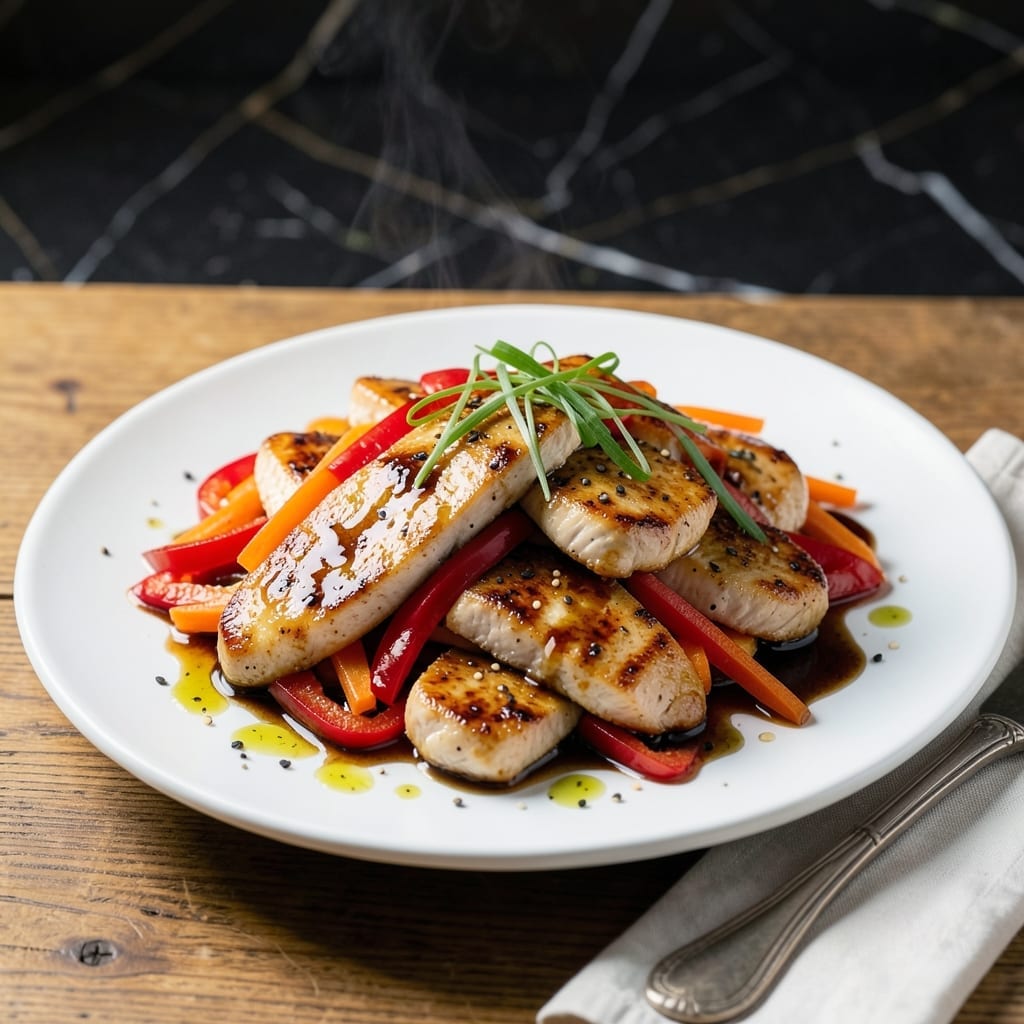
This stir fry delivers bold flavor without the guilt. I developed this method after realizing most takeout versions were loaded with hidden fats.
The key is using minimal oil and letting the wok do the work at high heat. Lean chicken breast and plenty of colorful vegetables create a balanced, satisfying dish.
You’ll achieve tender chicken and crisp-tender vegetables coated in a light, savory sauce that clings to every bite. It’s proof that healthy doesn’t mean bland.
Ready in 20 minutes, this recipe makes weeknight cooking effortless. The results taste anything but low fat.
Ingredients for Low Fat Chicken Stir Fry Recipe with Vegetables
Lean protein, vibrant vegetables, and a light sauce create this flavorful wok-tossed dish.
| Ingredient | Amount | Notes |
|---|---|---|
| Boneless Skinless Chicken Breast 🍗 | 1 ½ lb | Cut into thin strips |
| Soy Sauce 🫒 | 3 tbsp | Low-sodium preferred |
| Rice Vinegar 🍶 | 1 tbsp | For tangy brightness |
| Sesame Oil 🫒 | 1 tsp | Toasted variety for depth |
| Cornstarch 🌾 | 1 tbsp | For sauce thickening |
| Garlic Cloves 🧄 | 3 cloves | Minced finely |
| Fresh Ginger Root 🌿 | 1 tbsp | Peeled and grated |
| Red Bell Pepper 🌶️ | 1 whole | Thinly sliced |
| Broccoli Florets 🥦 | 3 cups | Cut into bite-sized pieces |
| Carrots 🥕 | 2 whole | Julienned or thinly sliced |
| Snap Peas 🌱 | 1 cup | Trimmed and halved |
| Green Onions 🧅 | ½ cup | Sliced for garnish |
| Water 💧 | ½ cup | For sauce consistency |
| Kosher Salt 🧂 | ½ tsp | Adjust to taste |
| Black Pepper 🌶️ | ¼ tsp | Freshly ground |
[recipe_ingredient_scaler]
The chicken breast is the foundation—opt for air-chilled, hormone-free from Whole Foods or Trader Joe’s. The vegetables should be crisp; organic bell peppers and broccoli crowns from your local farmers market offer superior texture. Fresh ginger and garlic are non-negotiable for authentic flavor. Avoid pre-minced versions, which lack potency. A well-seasoned carbon steel wok ensures even cooking with minimal oil.
Substitute chicken thighs if you prefer darker meat (adjust cooking time accordingly). Tamari instead of soy sauce works for gluten-free needs. No rice vinegar? Apple cider vinegar at half the amount provides similar acidity. Frozen vegetables can be used in a pinch, but fresh delivers the best crisp-tender result. For extra heat, add red pepper flakes or sriracha to the sauce.
Store raw chicken in the coldest part of your fridge for up to 2 days. Prepped vegetables keep 3-4 days in airtight containers. Leftovers reheat well, maintaining texture for 3-4 days. The sauce components can be mixed ahead, but add cornstarch slurry just before cooking to prevent separation.
Why You’ll Love This Recipe
- One Pan Dinner: I toss everything together in a single skillet—the chicken, veggies, and that glossy soy-sesame sauce. Cleanup? Almost non-existent.
- Umami Bomb: The combo of soy sauce and rice vinegar hits that sweet-salty spot, while sesame oil adds a nutty depth that makes me sneak bites straight from the pan.
- Meal Prep Hero: I make a big batch on Sunday and it reheats beautifully for lunches all week. The cornstarch keeps the chicken tender, not rubbery.
- Budget Friendly: Boneless chicken breast stretches far, and I can use whatever veggies are on sale. Honestly, it’s cheaper than takeout and twice as satisfying.
Step-by-Step Instructions for Chicken Stir Fry With Vegetables
Master the wok technique with precise timing and layering for optimal texture and flavor development.
Step 1: Prepare the Chicken and Marinade
Cut the 1.5 lb Boneless Skinless Chicken Breast into thin, uniform strips, about ¼-inch thick. This ensures even cooking and maximum surface area for the marinade to penetrate.
In a bowl, combine the chicken with 3 tbsp Soy Sauce, 1 tbsp Rice Vinegar, 1 tsp Sesame Oil, 1 tbsp Cornstarch, 0.5 tsp Kosher Salt, and 0.25 tsp Black Pepper. The cornstarch creates a velvety texture while the vinegar tenderizes the meat.
Let it marinate at room temperature for 15 minutes. This short marinade time is sufficient for flavor absorption without making the chicken mushy.
Step 2: Prep and Organize the Vegetables
Thinly slice the 1 whole Red Bell Pepper into strips. Julienne or thinly slice the 2 whole Carrots, trim and halve the 1 cup Snap Peas, and ensure the 3 cups Broccoli Florets are bite-sized. Slice the 0.5 cup Green Onions for garnish.
Mince the 3 cloves Garlic Cloves finely and peel and grate the 1 tbsp Fresh Ginger Root. Keep all vegetables and aromatics in separate piles near your cooking station for efficient stir-frying.
This mise en place approach prevents burning or overcooking as you work quickly over high heat.
Step 3: Stir-Fry the Chicken to Golden Perfection
Heat a large wok or skillet over high heat until smoking hot. Add 1 tablespoon of neutral oil (not listed but implied for cooking) and swirl to coat. Working in batches if necessary, add the chicken in a single layer and cook undisturbed for 2-3 minutes until the bottoms are golden brown.
Stir-fry for another 2-3 minutes until the chicken is cooked through and no longer pink. Remove to a plate and set aside. The chicken should be just cooked at this stage—it will finish cooking when combined with the vegetables.
Real talk: Overcrowding the pan steams the chicken instead of searing it, so don’t skip the batches if needed.
Step 4: Cook the Vegetables and Aromatics
In the same hot pan, add the minced garlic and grated ginger. Stir constantly for 30 seconds until fragrant but not browned—burnt garlic turns bitter. Immediately add the red bell pepper, carrots, and broccoli florets.
Stir-fry for 3-4 minutes until the vegetables are tender-crisp and the broccoli turns a vibrant green. Add the snap peas and cook for an additional 1 minute—they should remain bright and slightly crunchy.
This staged cooking ensures each vegetable maintains its distinct texture and color.
Step 5: Combine and Finish with Sauce
Return the chicken to the pan along with any accumulated juices. Pour in the 0.5 cup Water and stir well. The liquid will deglaze the pan, lifting any browned bits, and create a light sauce that coats everything evenly.
Cook for 1-2 minutes until the sauce thickens slightly and everything is heated through. The cornstarch in the chicken marinade will help bind the sauce without needing additional thickeners.
Garnish with the sliced green onions and serve immediately over steamed rice or noodles. The dish should glisten with sauce, with vegetables that still have a satisfying bite.
Pro Tips For Making Low Fat Chicken Stir Fry Recipe With Vegetables
- Pre-cook the Chicken: Sear the chicken first in a nonstick pan with just a teaspoon of oil, then set aside. I learned this the hard way—tossing raw chicken with veggies steams everything instead of stir-frying.
- Velvet the Chicken: Toss the chicken pieces with 1 teaspoon cornstarch before cooking. Sounds weird, but it works: keeps the lean breast meat juicy even with minimal oil.
- Skip the Overcrowding: Cook in batches if needed—packing the pan drops the temperature and turns your stir-fry into a sad, soggy mess. After burning three batches, I finally figured out patience pays off.
- Finish with Vinegar: Add the rice vinegar at the very end, off the heat. My grandmother swore by this, and she was right: it keeps the bright, tangy flavor from cooking off.
Storing and Reheating This low fat chicken stir fry recipe with vegetables
Refrigerator Storage
Let your stir fry cool for no more than 2 hours before transferring to airtight containers. I use glass Pyrex with snap-on lids from my local Boston grocery store. Store at 40°F or below for up to 4 days. The flavors meld beautifully overnight. ❄️
Freezer Storage
This dish freezes well for up to 3 months without texture loss. I recommend quart-size freezer bags—they stack efficiently in my tiny triple-decker freezer. Leave 1 inch headspace for expansion and squeeze out excess air to prevent freezer burn.
Stovetop Reheating
My preferred method for maintaining texture. Heat in a nonstick skillet over medium heat with 2 tbsp water for 5-7 minutes. Stir occasionally to prevent sticking. The vegetables will stay crisp-tender this way. 🔥
Microwave Reheating
For quick lunches, microwave individual portions covered with a damp paper towel. Heat on 70% power for 2-3 minutes, stir, then continue in 30-second intervals until 165°F. Add a splash of water if it looks dry.
Sauce Refresh
If the sauce thickens too much during storage, stir in 1-2 tbsp water or low-sodium chicken broth while reheating. This restores the perfect consistency. I always keep Trader Joe’s broth on hand for exactly this purpose.
Nutrition Facts
Frequently Asked Questions
Can I use chicken thighs instead of breast?
Yes, but remove visible skin and fat first. Thighs stay juicier but add 50-60 calories per serving. Cook 1-2 minutes longer to reach 165°F.
How do I keep vegetables crisp?
Cut uniformly and stir-fry in batches. Overcrowding steams them. Add delicate veggies like snap peas last.
What if my sauce is too thin?
Mix 1 tsp cornstarch with 1 tbsp cold water, then stir into simmering sauce. It thickens in 30-60 seconds.
Can I make this ahead?
Prep ingredients the night before but cook just before serving. Sauce may separate if stored mixed with raw chicken.

Trained in classic French technique but raised on slow-cooked ribs and spicy rubs, she blends culinary skill with smoke and soul.
- Recipe for Boneless Pork Chops in Cast Iron Skillet: Sear and Baste to Juicy Perfection - October 3, 2026
- Recipe for Boneless Cross Rib Roast: Slow-Roasted Beef with Herb Crust - October 3, 2026
- Hamburgers in Sauce Recipe Crock Pot: Slow-Cooked Savory Delight - October 3, 2026