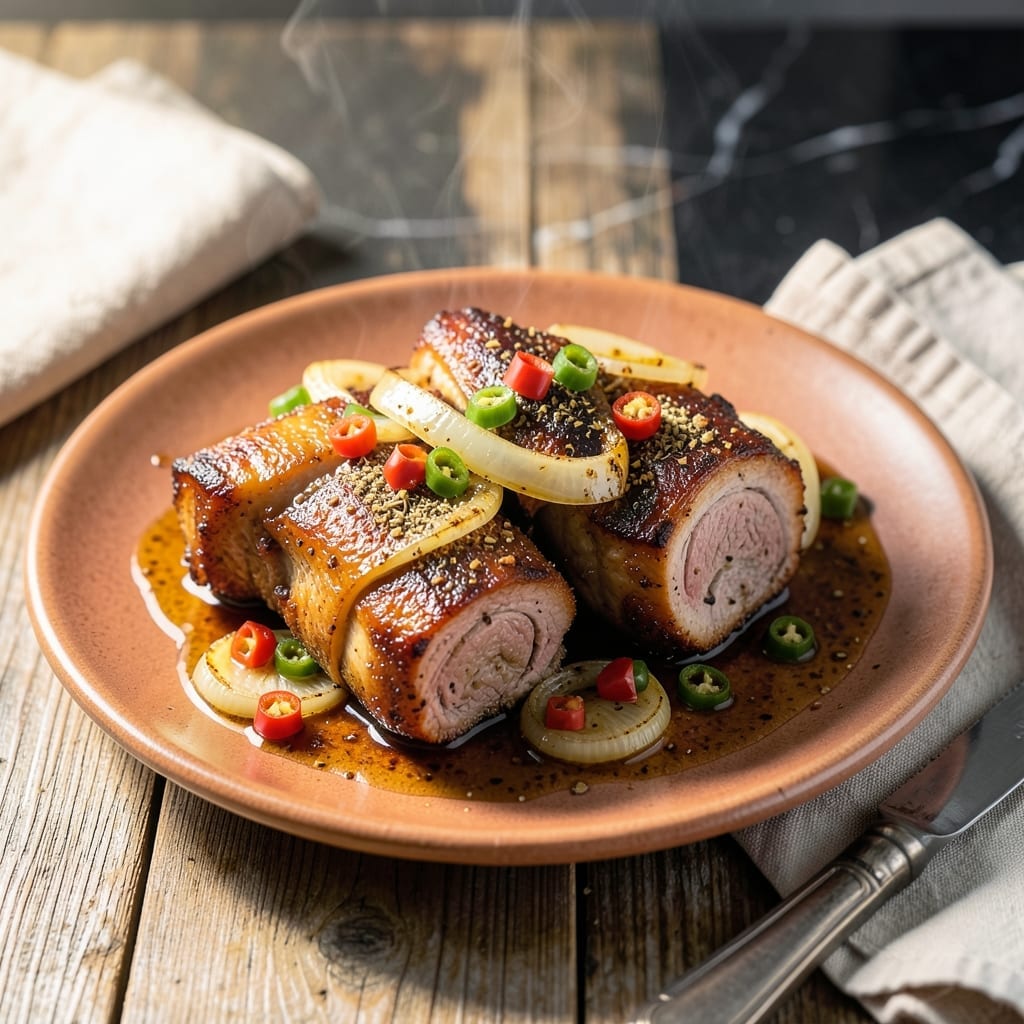
This recipe captures the essence of traditional Mexican carnitas with a crispy finish that’s hard to resist. Slow-cooked pork develops deep, layered flavors that define authentic street-style dishes.
I’ve tested countless methods to achieve that perfect balance of tenderness and crispy edges. The key lies in the slow simmer followed by a final sear to create those coveted golden bits.
The result is fall-apart tender pork with a caramelized exterior, ready to serve in tacos, burritos, or over rice. Every bite delivers rich, spiced goodness that feels like a celebration.
This method stays true to Mexican tradition while ensuring foolproof results in any home kitchen. Here’s how to make it.
Ingredients for Mexican Recipe Pork
Authentic carnitas start with quality pork and a handful of well-chosen spices for bold flavor.
| Ingredient | Amount | Notes |
|---|---|---|
| Pork Shoulder 🐖 | 3 lb | Boneless, cut into 2-inch chunks |
| Lard 🧈 | ½ cup | Or substitute vegetable shortening |
| Kosher Salt 🧂 | 1 tbsp | Diamond Crystal preferred |
| Brown Sugar 🍚 | 2 tbsp | Light or dark variety |
| Ground Cumin 🌿 | 1 tbsp | Freshly toasted and ground |
| Dried Oregano 🍃 | 1 tbsp | Mexican oregano preferred |
| Ground Black Pepper 🌶️ | 2 tsp | Freshly cracked for best flavor |
| Garlic Cloves 🧄 | 8 cloves | Minced for even distribution |
| Cinnamon Stick 🌰 | 1 whole | Optional for depth of flavor |
| Bay Leaves 🍁 | 2 whole | Dried for aromatic base |
| Orange Juice 🍊 | ¾ cup | Freshly squeezed preferred |
| White Vinegar 💧 | 2 tbsp | For balancing richness |
| Chicken Stock 🍲 | 1 cup | Low-sodium preferred |
| Yellow Onion 🧅 | 1 whole | Medium-sized, roughly chopped |
| Jalapeño Pepper 🌶️ | 1 whole | Seeds removed, finely diced |
[recipe_ingredient_scaler]
Pork shoulder is non-negotiable for authentic carnitas—look for well-marbled cuts at your butcher or Costco for the best value. The fat renders down during cooking, creating that signature crispy exterior. Diamond Crystal kosher salt offers the cleanest flavor without bitterness. For the lard, if unavailable, leaf lard from a trusted butcher provides superior texture to vegetable shortening substitutes.
Need to swap the lard? Vegetable shortening works in a pinch, though the flavor won’t be as rich. Out of Mexican oregano? Regular oregano at 1.5 times the amount is acceptable. For a deeper citrus note, add lime zest along with the orange juice. The cinnamon stick seems subtle but adds essential warmth—don’t skip it unless absolutely necessary.
Cooked carnitas keep wonderfully—store in the fridge for up to 4 days or freeze for 3 months. Reheat in a dry skillet to restore that crispy texture. The rendered fat can be strained and saved for future batches (it’s liquid gold for flavor).
Why You’ll Love This Recipe
- Set It & Forget: I toss the pork shoulder with lard, salt, brown sugar, and cumin, then let the oven do the work.
- Sweet & Smoky: That brown sugar caramelizes while the cumin adds a warm, earthy depth I can’t get enough of.
- Feeds a Crowd: Between us, this pork shoulder stretches for tacos, burritos, or nachos all week long.
- Budget Winner: Honestly, pork shoulder is cheap, and this recipe turns it into something crave-worthy.
Step-by-Step Instructions for Slow-Spiced Carnitas With Crispy Bits
Master the technique for fall-apart tender pork with perfectly caramelized, crispy edges.
Step 1: Season and Sear the Pork Shoulder
Pat the 3 lb Pork Shoulder chunks dry with paper towels to ensure proper browning. In a large, heavy pot, heat the 0.5 cup Lard over medium-high heat until shimmering.
Working in batches if necessary, sear the pork on all sides until deep golden brown and a crust forms, about 5-7 minutes per batch. This step builds flavor and renders some fat, so resist the urge to stir too often—let it develop that rich, mahogany color.
Step 2: Build the Aromatic Braising Liquid
To the same pot, add the roughly chopped yellow onion and finely diced jalapeño pepper. Sauté for 3-4 minutes until the onion softens and the jalapeño fragrant.
Stir in the 1 tbsp Kosher Salt, 2 tbsp Brown Sugar, 1 tbsp Ground Cumin, 1 tbsp Dried Oregano, and 2 tsp Ground Black Pepper. Add the 8 cloves Garlic Cloves, 1 whole Cinnamon Stick, and 2 whole Bay Leaves, toasting for 30 seconds until aromatic.
Pour in the 0.75 cup Orange Juice, 2 tbsp White Vinegar, and 1 cup Chicken Stock, scraping the browned bits from the bottom. These bits dissolve into the liquid, adding depth to the final dish.
Step 3: Braise Until Fork-Tender
Return all the pork to the pot, ensuring it’s mostly submerged in the liquid. Bring to a gentle simmer, then reduce heat to low. Cover and braise for 2 to 2.5 hours, stirring occasionally, until the pork shreds easily with a fork.
Check the pork halfway through—if the liquid reduces too much, add a splash of water to keep it at a gentle simmer. The pork is done when it pulls apart with minimal resistance and the cinnamon stick and bay leaves have infused their warm, earthy notes into the meat.
Step 4: Crisp the Carnitas to Perfection
Using a slotted spoon, transfer the pork to a large skillet, leaving most of the braising liquid behind. Increase heat to medium-high and cook, stirring occasionally, for 10-12 minutes until the edges turn deep golden and crispy.
Press the pork with a spatula to break it into smaller pieces, allowing more surface area to crisp. Drizzle a little of the reserved braising liquid over the pork as it cooks—this keeps it moist while encouraging caramelization. The result should be tender inside with a satisfying crunch on the outside.
Pro Tips For Making Mexican Recipe Pork
- Low and Slow: Cook the pork shoulder at 275°F for at least 6 hours—any hotter and the lard won’t render properly, leaving the meat tough instead of fall-apart tender.
- Dry the Pork: Pat the pork shoulder completely dry before seasoning; even a little moisture prevents the brown sugar and salt from forming that sticky, caramelized crust.
- Don’t Skip the Lard: I learned this the hard way—substituting oil for lard changes the flavor entirely. The lard adds a richness that’s non-negotiable for authentic Mexican pork.
- Bloom the Cumin: Toast the ground cumin in the lard for 30 seconds before adding the pork—it wakes up the flavor and makes a real difference in the final dish.
Pro Cooking Tips for This Recipe
Low and Slow Wins
Patience is everything with carnitas. I braise mine at low heat for the full 2.5 hours to let the spices deeply penetrate the meat. Grandma always said “if you can rush it, you’re doing it wrong.”
Crispy Secret
For those perfect crispy bits, spread the pork in a single layer in your skillet. I use my cast iron for this—it retains heat beautifully. Press down occasionally with a spatula to create more crispy surface area.
Liquid Gold
Don’t discard that braising liquid! I strain and save it in a jar. It’s packed with flavor for reheating leftovers or making quick sauces. Just skim off excess fat first.
Fat Matters
If you can’t find lard, use leaf lard from a butcher—it has better flavor than vegetable shortening. The fat is what gives carnitas that signature richness and mouthfeel.
Spice Check
Taste your braising liquid before adding the pork. I often add an extra pinch of Diamond Crystal salt or brown sugar to balance the flavors. The spices should taste vibrant, not flat. 💡
Rest Before Serving
After crisping, let the carnitas rest for 5-10 minutes off heat. This lets the juices redistribute so every bite stays moist and flavorful, not just the first few.
Nutrition Facts
Frequently Asked Questions
What cut of pork works best for carnitas?
Pork shoulder is ideal for its marbling and fat content. The fat renders down during cooking, creating that signature crispy exterior. Avoid lean cuts like tenderloin—they’ll dry out.
Can I make this in a slow cooker?
Yes! Brown the pork first, then transfer to a slow cooker with all ingredients. Cook on low for 6-8 hours before crisping in a skillet. The flavor develops beautifully with the long cook time.
How do I store and reheat leftovers?
Store in an airtight container in the fridge for up to 4 days or freeze for 3 months. Reheat in a dry skillet over medium-high heat to restore crispiness.
Can I skip the lard?
You can substitute vegetable shortening, but the flavor won’t be as rich. For best results, use leaf lard from a butcher—it adds authentic depth that’s hard to replicate.

Trained in classic French technique but raised on slow-cooked ribs and spicy rubs, she blends culinary skill with smoke and soul.
- Recipe for Boneless Pork Chops in Cast Iron Skillet: Sear and Baste to Juicy Perfection - October 3, 2026
- Recipe for Boneless Cross Rib Roast: Slow-Roasted Beef with Herb Crust - October 3, 2026
- Hamburgers in Sauce Recipe Crock Pot: Slow-Cooked Savory Delight - October 3, 2026