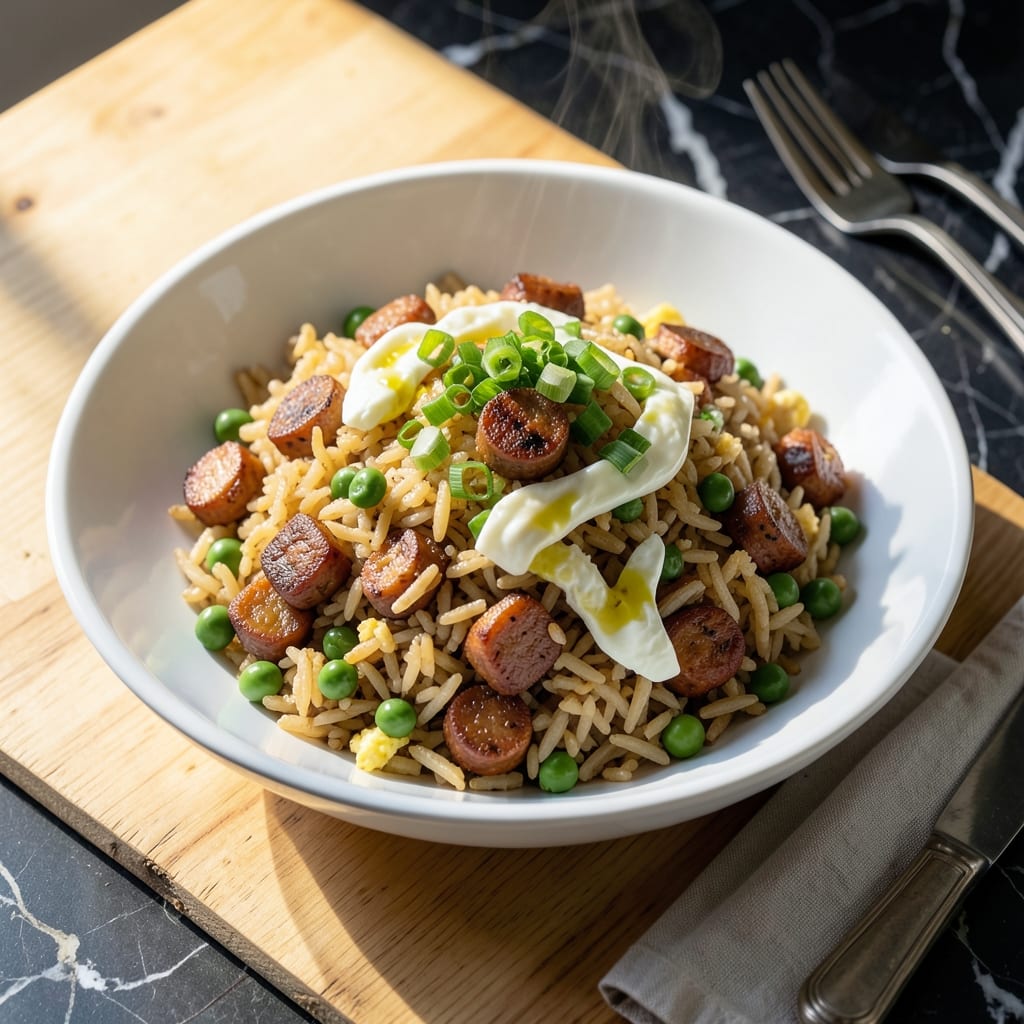
This dish brings together the rich, slightly sweet flavors of Chinese lup cheong sausage with the vibrant, tropical notes of Hawaiian cuisine. I developed this recipe to bridge two culinary traditions, creating something comforting yet exciting.
The key is using day-old rice for that perfect texture, while diced lup cheong adds its signature savory-sweet depth. Fresh ingredients like green onions and peas keep it light and colorful, balancing the sausage’s boldness.
What results is a fried rice that’s aromatic, satisfying, and packed with layers of flavor. Each bite delivers tender rice, crisp lup cheong, and a hint of island flair that makes it unforgettable.
Serve it as a main or alongside your favorite protein for a meal that feels special without the fuss.
Ingredients for Lup Cheong Fried Rice Recipe Hawaii
Pantry staples meet Hawaiian flair and Chinese sausage for a dish that’s big on flavor.
| Ingredient | Amount | Notes |
|---|---|---|
| Day-Old Cooked Rice 🍚 | 4 cups | Jasmine or long-grain preferred |
| Lup Cheong Sausage 🌭 | 4 pieces | Chinese sweet sausage, diced |
| Green Onions 🧅 | 4 whole | Thinly sliced, white and green parts |
| Frozen Peas 🌱 | ¾ cup | Thawed, or fresh if available |
| Large Eggs 🥚 | 2 whole | Lightly beaten for scrambling |
| Garlic Cloves 🧄 | 3 cloves | Minced for maximum flavor |
| Soy Sauce 🫒 | 2 tbsp | Low-sodium if preferred |
| Oyster Sauce 🫒 | 1 tbsp | Optional but recommended |
| Sesame Oil 🫒 | 1 tsp | For finishing aroma |
| Vegetable Oil 🫒 | 2 tbsp | High smoke point for frying |
| Salt 🧂 | ½ tsp | Adjust to taste after cooking |
| Black Pepper 🌶️ | ¼ tsp | Freshly ground if possible |
| Pineapple Chunks 🍍 | ½ cup | Fresh or canned, for tropical flair |
| Macadamia Nuts 🌰 | ¼ cup | Chopped, for Hawaiian crunch |
[recipe_ingredient_scaler]
The lup cheong is non-negotiable here—look for it at Asian markets or the international aisle at Safeway. Brands like Kam Yen Jan are reliable. Day-old rice is key (fresh gets mushy), and jasmine rice gives that authentic texture. For the pineapple, fresh is ideal but canned in juice (not syrup) works in a pinch. Macadamia nuts add the Hawaiian touch, and Costco has the best prices if you’re stocking up.
No lup cheong? Sweet Italian sausage at half the amount gets you close but less authentic. Out of oyster sauce? Hoisin plus a dash of soy works. Fresh peas instead of frozen? Go for it. The macadamias can be swapped for cashews or pecans—still crunchy and island-appropriate. For a vegetarian twist, skip the sausage and add extra veggies like bell peppers.
Fried rice reheats like a dream—3-4 days in the fridge. The lup cheong freezes well for 3 months, so buy extra. Keep the macadamias in the freezer to prevent them from going rancid. Leftovers taste even better the next day once everything melds (worth the extra minute to make a double batch).
Why You’ll Love This Recipe
- One Pan Wonder: I toss everything—the lup cheong, day-old rice, peas, and eggs—into my wok and it’s done in 15 minutes flat.
- Umami Bomb: That sweet-savory punch from the lup cheong sausage makes every bite ridiculously good, and the green onions add just the right freshness.
- Weeknight Hero: Honestly, it’s my go-to when I need to feed the family fast, and it works for lunchboxes the next day too.
- Budget Friendly: Between us, a little lup cheong goes a long way, and frozen peas keep it cheap without sacrificing flavor.
Step-by-Step Instructions for Lup Cheong Fried Rice
Here’s how I make this island-inspired fried rice with perfect texture every time.
Step 1: Prep and Sear the Lup Cheong Sausage
Dice the 4 pieces Lup Cheong Sausage into small, even pieces. Heat 1 tablespoon of the vegetable oil in a wok or large skillet over medium-high heat until shimmering. Add the diced sausage and cook for 3-4 minutes, stirring occasionally.
You’ll know it’s ready when the pieces are golden brown and slightly crispy at the edges. The sausage will release its sweet, savory fat into the pan—this is the flavor base for your dish. Remove the sausage with a slotted spoon and set aside, but leave that flavorful oil in the pan.
Step 2: Scramble the Eggs and Aromatics
In the same pan, add the remaining 1 tablespoon vegetable oil. Pour in the 2 whole Large Eggs and scramble quickly with a spatula until just set but still slightly soft. This should take about 1-2 minutes—you want soft curds, not dry eggs.
Add the 3 cloves Garlic Cloves and the white parts of the 4 whole Green Onions. Stir-fry for 30 seconds until the garlic is fragrant but not browned. Then add the 0.75 cup Frozen Peas and cook for another 1-2 minutes until they’re heated through and bright green.
Step 3: Combine Rice and Seasonings
Increase heat to high and add all 4 cups Day-Old Cooked Rice, pressing down with your spatula to break up any clumps. Stir-fry for 2-3 minutes until the rice is hot and starts to crisp slightly in spots.
Return the cooked lup cheong to the pan. Drizzle in the 2 tbsp Soy Sauce, 1 tbsp Oyster Sauce, 0.5 tsp Salt, and 0.25 tsp Black Pepper. Toss everything together for 1-2 minutes until the rice is evenly coated and the liquid has mostly been absorbed.
Step 4: Finish with Tropical Flavors
Remove the pan from heat. Stir in the 0.5 cup Pineapple Chunks and 0.25 cup Macadamia Nuts. The residual heat will warm them through without making the pineapple mushy. Drizzle the 1 tsp Sesame Oil over the top and toss one final time.
Garnish with the remaining green onion tops. The pineapple adds a bright, sweet contrast to the savory rice, while the macadamia nuts give that signature Hawaiian crunch. Serve immediately while hot—the textures are best right out of the pan.
Pro Tips For Making Lup Cheong Fried Rice Recipe Hawaii
- Chill the Rice: Use day-old rice straight from the fridge—it’s drier and fries up fluffier. I learned this the hard way after ending up with mushy grains more than once.
- Slice Thin, Fry Slow: Cut the lup cheong into thin coins so it crisps evenly. Cook it first on medium heat until the edges curl slightly—this builds flavor before the rice goes in.
- Skip Thawing Peas: Toss frozen peas in directly—they’ll heat through in seconds without turning to mush. Sounds weird, but it works.
- Scramble Eggs Separately: Beat the eggs with a pinch of salt and cook them first, then set aside. Adding them back in at the end keeps the texture soft and distinct, not rubbery.
Regional Styles of lup cheong fried rice recipe hawaii
Hawaii Style
The islands add pineapple chunks and macadamia nuts for tropical sweetness and crunch. I love how the juicy fruit balances the salty lup cheong while the nuts add a buttery finish that feels distinctly Hawaiian. 🌺
Chinese Tradition
In Cantonese homes, lup cheong fried rice often includes diced char siu and shitake mushrooms for extra umami depth. The sausage is always the star, but these additions create a more complex flavor profile that’s deeply comforting.
Thai Influence
For a Thai twist, add 1 tbsp fish sauce and 1 chopped Thai chili while stir-frying. The fish sauce amplifies the savory notes while the chili adds a subtle kick that pairs beautifully with the sweet sausage.
Japanese Adaptation
Japanese versions often include beni shoga (red pickled ginger) and a drizzle of okonomiyaki sauce at the end. The ginger cuts through the richness, while the tangy-sweet sauce complements the lup cheong perfectly.
Filipino Fusion
Filipino cooks might add 1/2 cup diced longanisa alongside the lup cheong for double the sausage flavor. The slightly sour notes of Filipino sausage create an interesting contrast with the Chinese variety.
Singapore Style
In Singapore, this dish often gets a 1 tsp sambal oelek kick and finishes with fried shallots on top. The spicy-sweet combination with crispy shallots takes this fried rice to another level of flavor complexity.
Nutrition Facts
Frequently Asked Questions
Can I use fresh rice instead of day-old?
Not recommended. Fresh rice contains too much moisture, which will make your fried rice mushy instead of fluffy. Always use day-old cooked rice that’s been refrigerated overnight for best texture.
What can I substitute for lup cheong?
In a pinch, use sweet Italian sausage at half the quantity, though the flavor won’t be identical. For a vegetarian option, try firm tofu marinated in soy sauce and a touch of sugar.
Can I make this ahead of time?
Yes! Fried rice actually tastes better the next day as flavors meld. Store in an airtight container in the fridge for up to 3-4 days. Reheat in a skillet over medium heat with a splash of water.
Why add pineapple to fried rice?
The pineapple adds a bright, sweet contrast to the savory lup cheong. It’s a classic Hawaiian touch that balances the dish’s rich flavors. Use fresh or canned in juice (not syrup) for best results.

Trained in classic French technique but raised on slow-cooked ribs and spicy rubs, she blends culinary skill with smoke and soul.
- Recipe for Boneless Pork Chops in Cast Iron Skillet: Sear and Baste to Juicy Perfection - October 3, 2026
- Recipe for Boneless Cross Rib Roast: Slow-Roasted Beef with Herb Crust - October 3, 2026
- Hamburgers in Sauce Recipe Crock Pot: Slow-Cooked Savory Delight - October 3, 2026