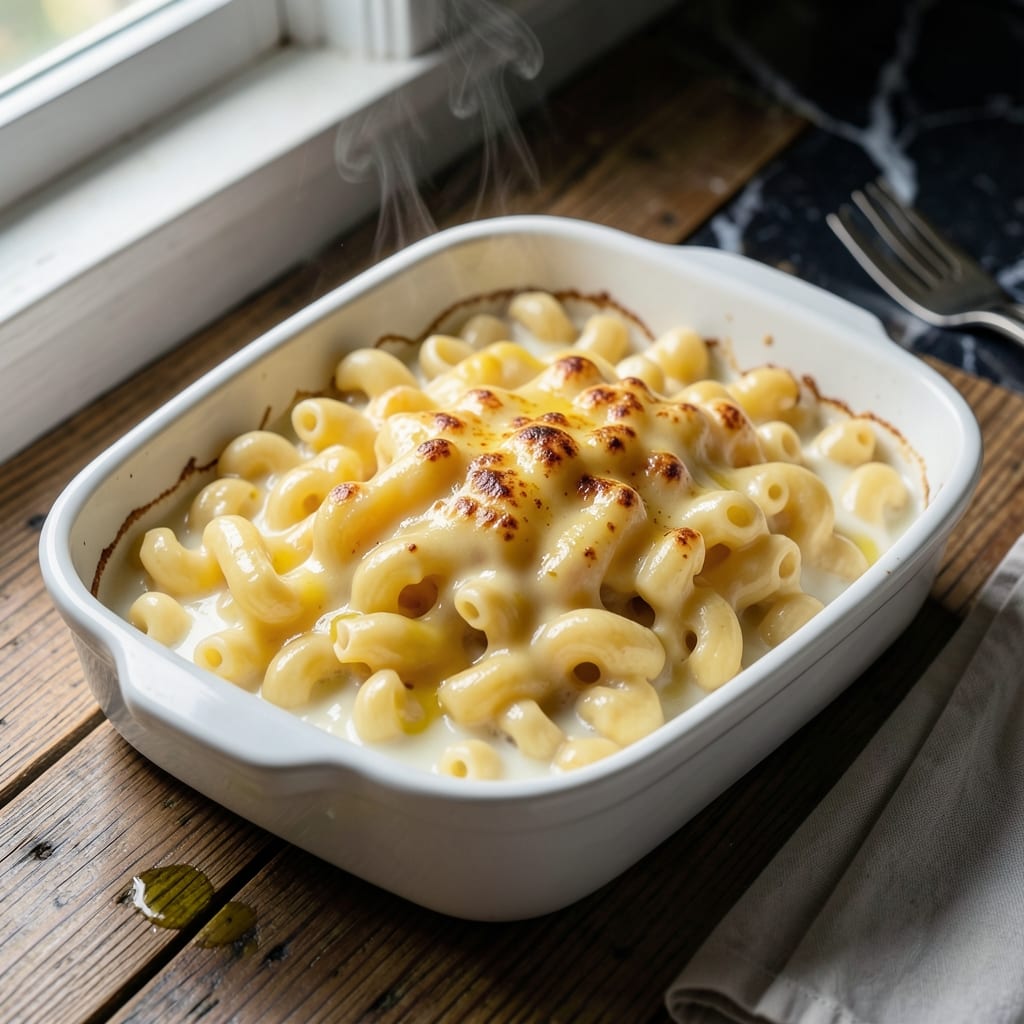
Some recipes prove that less truly is more, and this mac and cheese is the perfect example. With just three simple ingredients, it delivers ultra creamy results that rival any elaborate version.
I developed this method after years of testing, discovering that the simplest approach often yields the best texture. The key lies in the cooking technique rather than a long list of ingredients.
What emerges is a dish with a velvety sauce that clings to every noodle, proving that you don’t need flour or milk to achieve richness. The pasta absorbs the cheese beautifully, creating a smooth, luxurious consistency.
This recipe redefines comfort food by focusing on quality over quantity. The result is consistently creamy and satisfying every time.
Ingredients for Mac and Cheese Recipe 3 Ingredients
Three pantry staples create this ultra creamy comfort classic with minimal effort.
| Ingredient | Amount | Notes |
|---|---|---|
| Elbow Macaroni 🍝 | 8 oz | Dry, uncooked pasta |
| Sharp Cheddar Cheese 🧀 | 2 cups | Freshly grated from block |
| Whole Milk 🥛 | 1 ½ cups | Full-fat for creaminess |
[recipe_ingredient_scaler]
The cheese quality is non-negotiable here. Sharp cheddar from a block melts smoothly without the anti-caking agents found in pre-shredded varieties. Cabot or Tillamook are excellent choices for consistent results. The pasta shape matters too—elbow macaroni holds the sauce perfectly, but cavatappi or shells work as well. Avoid pre-shredded cheese (it contains cellulose that prevents smooth melting).
Need a swap? American cheese at half the amount adds extra creaminess (use it in combination with cheddar). For a lighter version, 2% milk works though the sauce won’t be quite as rich. Want more depth? Add a pinch of sodium citrate (available at Modernist Pantry) for an ultra-smooth emulsion. The milk can be warmed slightly to help the cheese melt faster.
This keeps beautifully for 3-4 days in the fridge—reheat gently with a splash of milk to restore creaminess. Freezes for up to 2 months, though the texture may separate slightly upon thawing. Best served fresh, but leftovers make a great base for cheesy bread pudding.
Why You’ll Love This Recipe
- One pot wonder: I just boil the pasta, add milk and cheese, and it’s done—no extra pans or fancy steps.
- Sharp cheddar magic: That tangy sharp cheddar melts into this ridiculously creamy sauce that clings to every elbow.
- Weeknight savior: Between us, this is my go-to for busy Tuesdays when I need dinner on the table in 20 minutes flat.
- Budget friendly: A pound of pasta, a block of cheese, and milk that’s already in my fridge—feeds four for under ten bucks.
Step-by-Step Instructions for 3 Ingredient Mac and Cheese
This streamlined method guarantees silky cheese sauce with almost no effort on your part.
Step 1: Cook the Elbow Macaroni to Al Dente
Bring a large pot of salted water to a rolling boil. Add the 8 oz Elbow Macaroni and cook according to package directions, stirring occasionally, until al dente—about 1 minute less than the suggested time.
This slightly undercooked pasta will finish in the hot cheese sauce, absorbing moisture without turning mushy. Drain immediately in a colander but don’t rinse—you need the surface starch for the sauce to cling properly.
Step 2: Heat the Whole Milk Gently
In the same pot, pour in the 1.5 cups Whole Milk and warm over medium heat until steaming but not boiling. You’ll see tiny bubbles forming at the edges and a slight shimmer on the surface.
Heating the milk prevents the cheese from seizing up when added, creating that ultra-creamy texture promised. Watch carefully—milk can scorch quickly if left unattended at higher temperatures.
Step 3: Melt the Sharp Cheddar Cheese Slowly
Reduce heat to low and add the 2 cups Sharp Cheddar Cheese a handful at a time, whisking constantly. Freshly grated from block melts smoother than pre-shredded, which contains anti-caking agents.
Continue whisking until each addition is fully melted before adding more. The sauce will transform from thin to velvety as the cheese emulsifies with the milk. This gradual process is non-negotiable for avoiding graininess.
Step 4: Combine and Finish the Dish
Return the drained macaroni to the pot with the cheese sauce. Stir gently but thoroughly for 30-60 seconds until every piece is evenly coated. The residual heat will soften the pasta to perfect tenderness.
If the mixture seems too thick, add a splash of warm milk to loosen it. The sauce should cling to the noodles with a glossy sheen, not pool at the bottom. Serve immediately while hot—the sauce will thicken as it cools.
Pro Tips For Making Mac And Cheese Recipe 3 Ingredients
- Undercook the Pasta: Boil the elbow macaroni for 1-2 minutes less than package instructions—it’ll finish cooking in the milk and cheese, preventing a mushy final dish.
- Grate the Cheddar: Pre-shredded cheese has anti-caking agents that make the sauce grainy; freshly grated sharp cheddar melts smoother and tastes richer.
- Warm the Milk: Cold milk can make the cheese clump; heating it gently in the pan first (or microwaving for 30 seconds) ensures a silky sauce.
- Stir Off Heat: Once the cheese is added, remove the pan from heat and stir until melted—this prevents the dairy from separating or turning oily.
Wine and Beer Pairings for This Recipe
Crisp White Wines
A dry Sauvignon Blanc from New Zealand cuts through the richness beautifully with its citrusy acidity. I also love a Pinot Grigio from Italy—its light body won’t overpower the creamy cheese sauce. Serve chilled at 45-50°F for best results. 🍷
Light Beers
A crisp Pilsner like Stella Artois offers a clean, refreshing contrast to the dish’s creaminess. For craft beer lovers, a Witbier with its subtle citrus and spice notes complements the cheese perfectly. Avoid hoppy IPAs—they’ll clash with the richness.
Medium-Bodied Reds
If you prefer red, go for a light-bodied Pinot Noir from Oregon. Its bright acidity and red fruit flavors balance the dish without overwhelming it. Beaujolais is another great option with its fresh, fruity profile. Serve slightly chilled at 55°F. 💛
Non-Alcoholic Options
For a non-alcoholic pairing, try a sparkling apple cider—its effervescence cleanses your palate. I also enjoy a creamy root beer for a nostalgic touch. Both options enhance the dish without competing with its flavors.
Nutrition Facts
Frequently Asked Questions
Can I use pre-shredded cheese?
It’s not ideal. Pre-shredded cheese contains cellulose to prevent clumping, which can make your sauce grainy. For the smoothest texture, always grate your own sharp cheddar from a block.
Why cook pasta al dente?
The pasta finishes cooking in the hot cheese sauce, absorbing moisture without turning mushy. Cooking it 1 minute less than package directions ensures perfect tenderness in the final dish.
Can I add extra ingredients?
Try adding cooked bacon, sautéed onions, or a pinch of mustard powder for extra flavor. Just keep the base recipe simple for that ultra-creamy texture.
How do I reheat leftovers?
Gently warm in a saucepan with a splash of milk over low heat, stirring frequently. This restores the creamy consistency without breaking the sauce.

Trained in classic French technique but raised on slow-cooked ribs and spicy rubs, she blends culinary skill with smoke and soul.
- Recipe for Boneless Pork Chops in Cast Iron Skillet: Sear and Baste to Juicy Perfection - October 3, 2026
- Recipe for Boneless Cross Rib Roast: Slow-Roasted Beef with Herb Crust - October 3, 2026
- Hamburgers in Sauce Recipe Crock Pot: Slow-Cooked Savory Delight - October 3, 2026