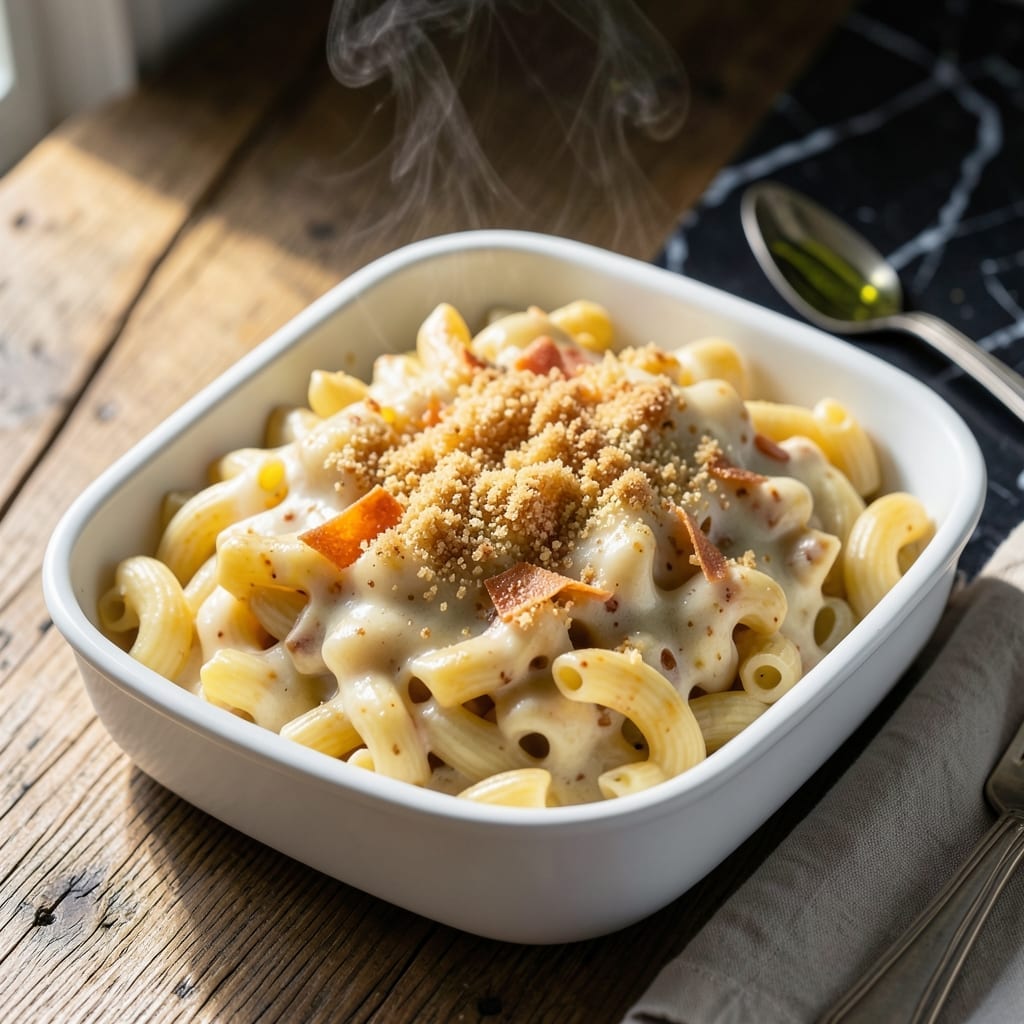
This stovetop macaroni and cheese delivers ultra-velvety decadence without the oven. The secret is a precise technique that creates a sauce so smooth it clings perfectly to every noodle.
With just 20 minutes and simple ingredients, you’ll achieve restaurant-quality creaminess that beats any boxed version. The result is rich, comforting, and impossible to resist.
Ingredients for Macaroni and Cheese Recipe Cream
Twelve ingredients transform into ultra-velvety stovetop decadence with restaurant-quality creaminess.
| Ingredient | Amount | Notes |
|---|---|---|
| Elbow Macaroni 🍝 | 12 oz | Al dente for best texture |
| Whole Milk 🥛 | 2 cups | Full-fat for creaminess |
| Unsalted Butter 🧈 | 4 tbsp | Divided for roux and topping |
| All-Purpose Flour 🌾 | 3 tbsp | For thickening the sauce |
| Sharp Cheddar Cheese 🧀 | 2 cups | Freshly grated from block |
| Gruyère Cheese 🧀 | 1 cup | Freshly grated for depth |
| Parmesan Cheese 🧀 | ½ cup | Freshly grated for umami |
| Dijon Mustard 🟡 | 1 tsp | For subtle tang and emulsification |
| Garlic Powder 🧄 | ½ tsp | For savory depth |
| Onion Powder 🧅 | ½ tsp | For aromatic base |
| Kosher Salt 🧂 | 1 tsp | Diamond Crystal preferred |
| Ground White Pepper 🌶️ | ¼ tsp | For clean, mild heat |
| Nutmeg 🌰 | 0.125 tsp | Freshly grated for warmth |
| Heavy Cream 🥛 | ½ cup | For ultra-velvety texture |
[recipe_ingredient_scaler]
The cheeses are non-negotiable for that signature velvety texture. Sharp cheddar from a block (pre-shredded has anti-caking agents that disrupt smoothness) and Gruyère provide depth, while Parmesan adds umami. Source from Whole Foods or a local cheese monger for optimal quality. The milk should be whole for richness—2% won’t deliver the same decadence. Heavy cream deepens the sauce’s luxurious mouthfeel.
Substituting cheeses? Fontina or Monterey Jack can replace Gruyère at a 1:1 ratio. For a tangier profile, swap half the cheddar for pepper jack. No heavy cream? Use full-fat Greek yogurt (stirred until smooth) or evaporated milk. The Dijon mustard is subtle but essential—yellow mustard lacks the depth. If you must skip it, add a pinch more salt and white pepper.
Leftover mac and cheese keeps 3-4 days in the fridge, though it thickens as it cools. Reheat with a splash of milk to restore creaminess. Freeze for up to 2 months in airtight containers. For best results, undercook the pasta slightly if planning to freeze, as it’ll finish cooking during reheating.
Why You’ll Love This Recipe
- One Pot Wonder: I love that I only need a single pot—boil the pasta, make the roux, melt the cheese, done.
- Sharp Bite Satisfaction: That sharp cheddar gives it a bold, tangy kick that’s way better than the boxed stuff.
- Feeds a Crowd: I made this for a potluck and the pan was scraped clean—kids and adults alike went back for seconds.
- Budget Stretcher: Honestly, elbow macaroni and block cheddar cost pennies but taste like a million bucks.
Step-by-Step Instructions for Macaroni and Cheese
Master the technique for stovetop macaroni and cheese that delivers unmatched creaminess every time.
Step 1: Cook the Elbow Macaroni to Al Dente Perfection
Bring a large pot of generously salted water to a rolling boil. Add the 12 oz Elbow Macaroni and cook according to package directions for al dente, subtracting 1 minute from the suggested time. You want the pasta slightly underdone as it will finish cooking in the sauce.
Stir occasionally to prevent sticking, and begin testing for doneness at the 7-minute mark. The pasta should have a slight bite to it when tasted. Drain the macaroni in a colander and set aside, but do not rinse—you want to preserve the surface starch for better sauce adhesion.
Step 2: Create a Velvety Roux Base for the Cheese Sauce
In a large, heavy-bottomed saucepan, melt 4 tbsp Unsalted Butter over medium heat. Once the butter has fully melted and begins to foam slightly, add the 3 tbsp All-Purpose Flour all at once. Whisk continuously for 1-2 minutes until the mixture turns a light golden color and emits a nutty aroma.
This roux serves as the foundation for your sauce. Cooking it until golden (not brown) removes the raw flour taste while developing enough depth to complement the cheeses. The mixture should resemble wet sand and bubble gently as it cooks.
Step 3: Build the Ultra-Creamy Cheese Sauce
Gradually whisk in the 2 cups Whole Milk and 0.5 cup Heavy Cream, a little at a time, ensuring each addition is fully incorporated before adding more. This slow addition prevents lumps from forming. Bring the mixture to a gentle simmer over medium heat, stirring constantly.
Once simmering, add the 1 tsp Dijon Mustard, 0.5 tsp Garlic Powder, 0.5 tsp Onion Powder, 1 tsp Kosher Salt, 0.25 tsp Ground White Pepper, and 0.125 tsp Nutmeg. Stir well to distribute the seasonings evenly. The sauce will begin to thicken noticeably as it simmers for 2-3 minutes.
Step 4: Incorporate the Cheeses for Maximum Creaminess
Reduce the heat to low and add the cheeses in stages: first the 2 cups Sharp Cheddar Cheese, stirring until fully melted and smooth. Then add the 1 cup Gruyère Cheese, followed by the 0.5 cup Parmesan Cheese. Each addition should be fully melted before adding the next.
Stir constantly in a figure-eight motion to create a silky, homogeneous sauce. The mixture should coat the back of a spoon and drip slowly when lifted. If the sauce becomes too thick, add a splash of the reserved pasta water to achieve the desired consistency.
Step 5: Combine Pasta and Sauce for the Final Touch
Add the drained Elbow Macaroni to the cheese sauce and fold gently with a silicone spatula until every piece is evenly coated. Cook over low heat for an additional 1-2 minutes, stirring frequently, to allow the pasta to absorb some of the sauce and finish cooking.
Taste and adjust seasoning if needed, though the cheeses should provide ample saltiness. The final dish should have a glossy, velvety sauce that clings to the pasta. Serve immediately while hot, as the sauce will thicken slightly upon standing.
Pro Tips For Making Macaroni And Cheese Recipe Cream
- Cook Pasta Al Dente: Boil the elbow macaroni for 1-2 minutes less than the package says—I learned this the hard way after ending up with mushy noodles in my first three batches.
- Grate Your Own Cheese: Skip the pre-shredded stuff; it’s coated in anti-caking agents that make the sauce grainy. Sharp cheddar grated fresh melts smoothly and actually changes the outcome.
- Temper the Milk: Warm the whole milk slightly before adding it to the roux—cold milk makes the sauce seize up. I was skeptical until I tried it, and now it’s non-negotiable.
- Add Cheese Off Heat: Stir in the shredded cheddar after removing the pot from the burner. High heat turns the sauce stringy, and nobody wants that.
Health Benefits of This Dish
Calcium Powerhouse
The blend of sharp cheddar, Gruyère, and Parmesan provides a serious calcium boost—about 600mg per serving. This supports bone health and muscle function, making this dish surprisingly nutritious for its decadent reputation. 💪
Protein Rich
With 20g of protein per serving from the cheese and milk, this meal helps build and repair tissues. The combination of dairy proteins gives you all nine essential amino acids your body needs.
Energy Boost
The heavy cream and whole milk provide healthy fats that sustain energy levels. These fats also help your body absorb the fat-soluble vitamins A and D naturally present in the dairy ingredients.
B Vitamin Source
Dairy is rich in B vitamins, particularly B12 and riboflavin. These support metabolism and red blood cell production. Just one serving covers about 20% of your daily B12 needs.
Comfort with Benefits
While indulgent, the Dijon mustard adds a subtle tang that can aid digestion. I love that this dish satisfies cravings while delivering actual nutritional value. 💛
Phosphorus for Teeth
The cheese combination provides 400mg of phosphorus per serving, working alongside calcium to maintain strong teeth and bones. It’s a delicious way to support dental health.
Nutrition Facts
Frequently Asked Questions
Can I use pre-shredded cheese?
No, pre-shredded cheese contains anti-caking agents that prevent smooth melting. Always grate from a block for the creamiest texture.
How do I prevent a grainy sauce?
Cook the roux until golden, add milk slowly, and keep heat at medium. Never boil the sauce—this can cause the proteins to separate and create graininess.
Can I make this ahead of time?
Yes, but the sauce thickens as it cools. Store in the fridge for up to 3 days and reheat with a splash of milk to restore creaminess.
What pasta shapes work best?
Elbow macaroni is classic, but cavatappi or shells also hold sauce well. Avoid long pasta like spaghetti, as the sauce won’t cling properly.

Trained in classic French technique but raised on slow-cooked ribs and spicy rubs, she blends culinary skill with smoke and soul.
- Recipe for Boneless Pork Chops in Cast Iron Skillet: Sear and Baste to Juicy Perfection - October 3, 2026
- Recipe for Boneless Cross Rib Roast: Slow-Roasted Beef with Herb Crust - October 3, 2026
- Hamburgers in Sauce Recipe Crock Pot: Slow-Cooked Savory Delight - October 3, 2026