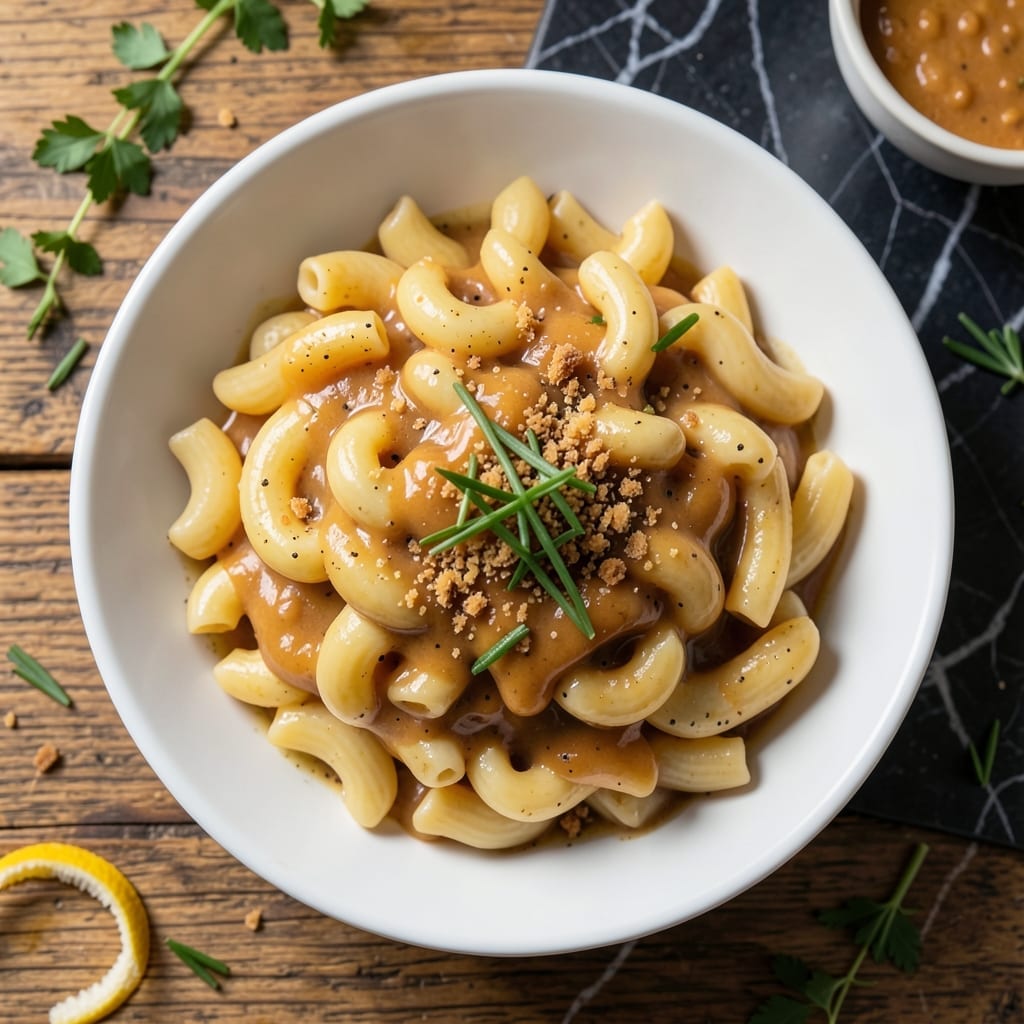
I learned this stovetop method from my grandmother’s handwritten cards—no flour, no roux, just pure creamy comfort. The secret is in the cheese selection and timing.
This approach eliminates the need for flour by using cornstarch as a thickener, creating a velvety sauce that clings to every noodle. The result is rich, smooth, and perfectly balanced.
What you get is macaroni and cheese that’s impossibly creamy without any gummy texture. The sauce coats the pasta evenly, with no floury aftertaste.
Ready in under 30 minutes, this proves you don’t need complicated techniques for restaurant-quality results at home.
Ingredients for Macaroni and Cheese Recipe Without Flour
Pantry basics plus a few cheeses make this creamy stovetop classic come alive.
| Ingredient | Amount | Notes |
|---|---|---|
| Elbow Macaroni 🍝 | 12 oz | Or any short pasta shape |
| Whole Milk 🥛 | 3 cups | Full-fat for creaminess |
| Sharp Cheddar Cheese 🧀 | 2 cups | Freshly grated from block |
| Gruyère Cheese 🧀 | 1 cup | Freshly grated preferred |
| Cornstarch 🌾 | 2 tbsp | For thickening sauce |
| Unsalted Butter 🧈 | 3 tbsp | Divided for sauce and topping |
| Dijon Mustard 🟡 | 1 tsp | Adds depth of flavor |
| Garlic Powder 🧄 | ½ tsp | Enhances cheesy flavor |
| Onion Powder 🧅 | ½ tsp | Balances richness |
| Salt 🧂 | ½ tsp | Adjust to taste |
| Ground Black Pepper 🌶️ | ¼ tsp | Freshly ground preferred |
| Parmesan Cheese 🧀 | ½ cup | Freshly grated for topping |
[recipe_ingredient_scaler]
The cheese selection is everything here. Sharp cheddar gives that classic mac and cheese flavor, while Gruyère adds a nutty depth (look for it at Whole Foods or specialty cheese counters). Always buy blocks and grate yourself—pre-shredded has anti-caking agents that make the sauce grainy. The cornstarch is your thickener, so don’t skip it or substitute flour (that’s the whole point!).
No Gruyère? Fontina or Monterey Jack melt beautifully. Swap Dijon for yellow mustard in a pinch—less complex but still good. The milk can be 2% in an emergency (whole is ideal). If you’re worried about the sauce breaking, take the milk off heat before adding cheese. And yes, you can add a pinch of smoked paprika (worth the extra minute).
Best eaten fresh, but leftovers keep 3-4 days in the fridge. Reheat gently with a splash of milk to restore creaminess. Doesn’t freeze well (sauce separates), but you can prep the dry ingredients ahead (don’t mix until ready to cook).
Why You’ll Love This Recipe
- No Fuss Roux: I skip the flour entirely and use cornstarch to thicken the sauce—no whisking lumps, just smooth, creamy perfection every time.
- Sharp & Nutty: The combo of sharp cheddar and Gruyère gives it this deep, rich flavor that’s way better than the boxed stuff.
- Weeknight Hero: It’s my go-to for busy evenings—elbow macaroni cooks fast, and the cheese melts while I set the table.
- Reheats Like a Dream: Leftovers stay creamy, not gluey, so I can make a big batch and enjoy it for lunch the next day.
Step-by-Step Instructions for Macaroni and Cheese Without Flour
This stovetop method delivers velvety texture without a single gram of flour.
Step 1: Cook the Elbow Macaroni to Al Dente
Bring a large pot of salted water to a rolling boil. Add the 12 oz Elbow Macaroni and cook for 1 minute less than the package instructions suggest. You want it slightly underdone because it will finish cooking in the creamy sauce later.
Drain the pasta in a colander but don’t rinse it—the surface starch helps the sauce cling beautifully. I always reserve ½ cup of the starchy cooking water just in case I need to adjust the sauce consistency later.
Step 2: Create the Cornstarch Slurry Base
In a small bowl, whisk together the 2 tbsp Cornstarch with ¼ cup of the 3 cups Whole Milk until completely smooth. This slurry is your flour-free thickening agent that creates that luscious, velvety texture.
In a large saucepan, melt 2 tbsp of the 3 tbsp Unsalted Butter over medium heat. The butter should foam but not brown. Then pour in the remaining 2¾ cups Whole Milk, stirring constantly to prevent scorching.
Step 3: Build the Creamy Cheese Sauce
As the milk mixture begins to steam, slowly whisk in the cornstarch slurry. Continue whisking constantly for 3-4 minutes until the mixture thickens enough to coat the back of a spoon. This is your béchamel base without a single speck of flour.
Reduce heat to low and add the 1 tsp Dijon Mustard, 0.5 tsp Garlic Powder, 0.5 tsp Onion Powder, 0.5 tsp Salt, and 0.25 tsp Ground Black Pepper. Stir for 30 seconds to let the flavors bloom.
Now comes the magic: gradually add the 2 cups Sharp Cheddar Cheese and 1 cup Gruyère Cheese, stirring constantly until each addition is completely melted and smooth. The sauce should be glossy and thick enough to leave a clear path when you run a spoon through it.
Step 4: Combine Pasta and Sauce to Perfection
Add the drained elbow macaroni to the cheese sauce and fold gently to coat every piece evenly. If the sauce seems too thick, add a splash of the reserved pasta water 1 tablespoon at a time until it reaches your desired creaminess.
Cook over low heat for 2-3 minutes, stirring constantly, until the pasta is heated through and the sauce clings perfectly to each piece. This final cooking step allows the pasta to absorb some of the sauce, creating that ideal mac and cheese consistency.
Step 5: Finish with Buttery Breadcrumbs and Serve
For a final touch, melt the remaining 1 tbsp Unsalted Butter in a small pan over medium heat. Add 0.5 cup Parmesan Cheese and stir until combined. Spoon this buttery mixture over the macaroni and cheese before serving.
Serve immediately while the sauce is at its creamiest. The combination of sharp cheddar, nutty gruyère, and parmesan creates a depth of flavor that’s rich but balanced. Each bite should be velvety smooth with a perfect cheesy pull as you lift your fork.
Pro Tips For Making Macaroni And Cheese Recipe Without Flour
- Pre-cook the pasta: Boil the elbow macaroni for 1-2 minutes less than package instructions—it’ll finish cooking in the cheese sauce and soak up more flavor.
- Use room temp milk: I learned this the hard way—cold milk can make the sauce seize up when mixed with the cornstarch, so let it sit out for 10 minutes first.
- Shred your own cheese: Pre-shredded cheese has anti-caking agents that make the sauce grainy; take the extra 5 minutes to grate the sharp cheddar and Gruyère yourself.
- Bloom the cornstarch: Mix the cornstarch with a splash of cold milk before adding it to the warm milk—this prevents lumps and guarantees a silky sauce every time.
Pro Cooking Tips for Perfect Results
Cheese Selection Matters
Always grate your own sharp cheddar and Gruyère from blocks—pre-shredded contains anti-caking agents that make the sauce grainy. I learned this the hard way after ruining a batch with bagged cheese. The fresh stuff melts into that perfect velvety texture. 🧀
Perfect Slurry Technique
Whisk the 2 tbsp cornstarch with cold ¼ cup milk until completely smooth before adding to hot milk. This prevents lumps and ensures even thickening. My grandmother’s cards just said “mix well”—took me years to figure out the cold liquid trick.
Low and Slow Melting
Keep the heat on low when adding cheese and stir constantly. Adding cheese to boiling milk causes it to separate. I ruined my first three batches by rushing this step—patience creates that restaurant-quality creaminess.
Pasta Water Secret
Reserve ½ cup starchy pasta water before draining. The starch helps the sauce cling to the noodles. If your sauce seems thick, add pasta water 1 tbsp at a time until it reaches the perfect consistency.
Avoid Overcooking Pasta
Cook the elbow macaroni for 1 minute less than package instructions. It finishes cooking in the sauce, preventing mushy noodles. This was the first tip I decoded from my grandmother’s vague “cook until al dente” note. 💡
Final Creamy Touch
After combining pasta and sauce, cook together for 2-3 minutes on low heat. This final step allows the pasta to absorb the sauce, creating that ideal creamy texture that coats every bite perfectly.
Nutrition Facts
Frequently Asked Questions
What can I use instead of cornstarch?
Arrowroot powder works as a 1:1 substitute. Avoid potato starch—it creates a gummy texture.
Why does my sauce turn grainy?
Pre-shredded cheese contains anti-caking agents. Always grate fresh from blocks for that smooth melt.
Can I make this ahead of time?
Prepare dry ingredients in advance but don’t mix until ready to cook. Reheat leftovers with a splash of milk.
How do I fix sauce that’s too thick?
Add reserved pasta water 1 tablespoon at a time while stirring over low heat.

Trained in classic French technique but raised on slow-cooked ribs and spicy rubs, she blends culinary skill with smoke and soul.
- Recipe for Boneless Pork Chops in Cast Iron Skillet: Sear and Baste to Juicy Perfection - October 3, 2026
- Recipe for Boneless Cross Rib Roast: Slow-Roasted Beef with Herb Crust - October 3, 2026
- Hamburgers in Sauce Recipe Crock Pot: Slow-Cooked Savory Delight - October 3, 2026