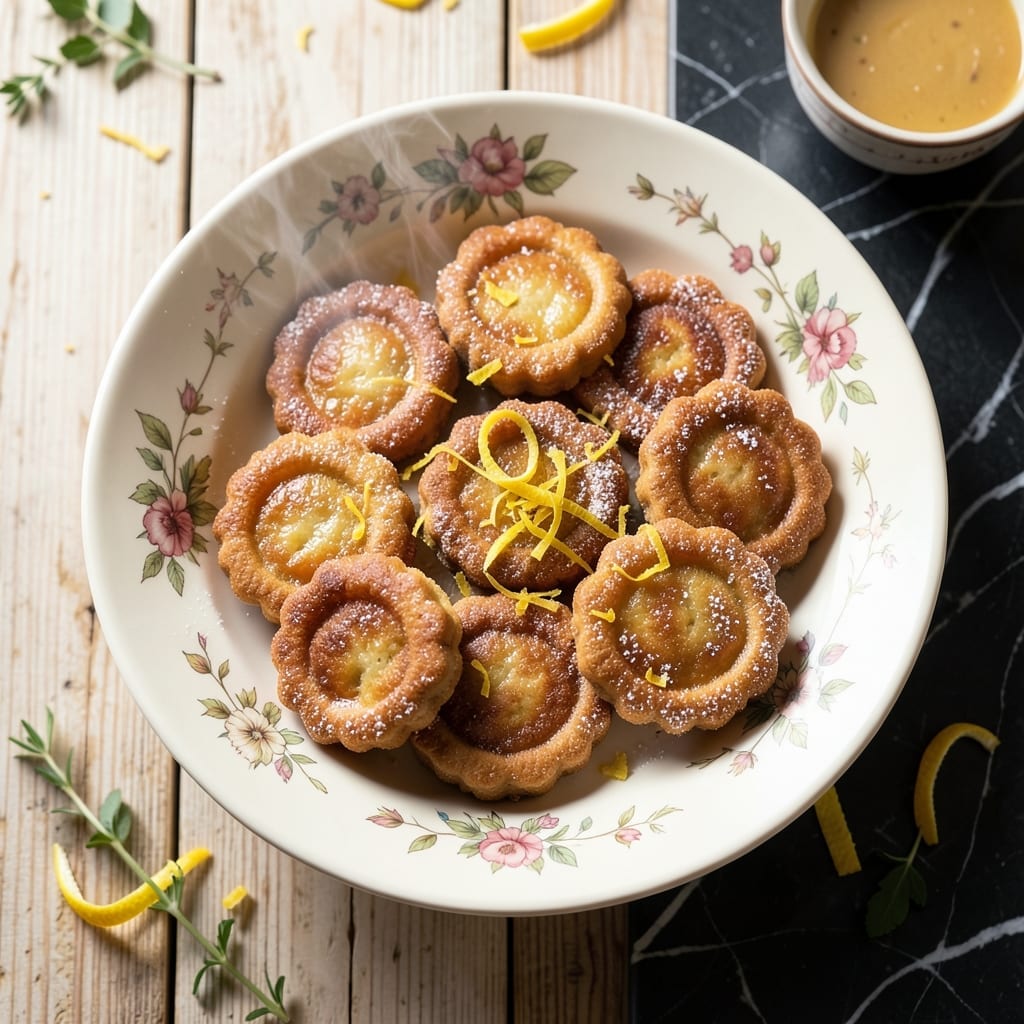
There’s a reason French patisseries display madeleines with pride—their delicate shell shape and tender crumb represent the essence of classic baking at its finest. I’ve refined this method to capture that signature lightness with just the right hint of citrus brightness.
The secret lies in properly creaming the butter and sugar, then folding in the flour gently to maintain air in the batter. A brief chilling period ensures the distinctive hump forms during baking, creating that unmistakable madeleine profile.
You’ll achieve golden, buttery shells with a soft, cake-like interior and a subtle lemon zest aroma that lingers. The recipe stays true to tradition while remaining accessible for home bakers.
Perfect with tea or as an elegant dessert, these shells deliver classic French patisserie quality from your own kitchen.
Ingredients for Madeleine Recipe Mary Berry
Nine ingredients transform into delicate, buttery French shells with bright citrus notes.
| Ingredient | Amount | Notes |
|---|---|---|
| All-Purpose Flour 🌾 | 1 cup | Plus extra for dusting molds |
| Granulated Sugar 🍚 | ⅔ cup | Fine white sugar preferred |
| Large Eggs 🥚 | 2 whole | Room temperature essential |
| Unsalted Butter 🧈 | ½ cup | Melted and cooled slightly |
| Baking Powder 🧂 | 1 tsp | Ensures proper rise |
| Lemon Zest 🍋 | 1 tbsp | Finely grated fresh |
| Vanilla Extract 🌿 | 1 tsp | Pure extract recommended |
| Salt 🧂 | 0.125 tsp | Fine sea salt |
| Powdered Sugar 🍚 | ¼ cup | For dusting finished madeleines |
[recipe_ingredient_scaler]
The butter quality is paramount here. Use a high-fat European-style butter like Plugrá or Kerrygold for superior flavor and texture. The flour should be all-purpose—no need for cake flour. King Arthur or Gold Medal are reliable brands. Room temperature eggs are non-negotiable (they emulsify better with the sugar), so plan ahead and pull them from the fridge 30 minutes before starting.
No lemon? Lime or orange zest works beautifully (use the same amount). If you’re out of vanilla extract, almond extract at half the quantity adds a nice depth. For a richer flavor, brown the butter before cooling—just be sure it’s completely cool before mixing. The baking powder must be fresh; test it by dropping a pinch in hot water—it should bubble vigorously.
The batter keeps in the fridge for 12 hours, which actually improves the hump formation. Baked madeleines are best the day they’re made but keep in an airtight container at room temperature for 2-3 days. Freeze the batter in portions for up to 1 month (thaw overnight in the fridge before baking).
Why You’ll Love This Recipe
- One-Bowl Wonder: I just dump flour, sugar, eggs, butter and baking powder in one bowl, whisk and done—no fuss, no extra dishes.
- Buttery Heaven: That rich, golden brown butter taste with the light, airy crumb? Honestly, it’s the little things that make these irresistible.
- Tea Time Hero: I pull these out for afternoon tea, and suddenly I look like I’ve spent hours baking when it took me 15 minutes.
- Keeps Like a Dream: They stay fresh in a tin for days, so I can bake a batch on Sunday and still have that soft, buttery bite midweek.
Step-by-Step Instructions for Classic French Madeleines
Master this classic technique for perfectly shaped, tender madeleines with a delicate citrus note.
Step 1: Whisk Eggs and Granulated Sugar to Ribbon Stage
In a medium bowl, combine the 2 whole large eggs and 0.66 cup granulated sugar. Using a handheld mixer or whisk, beat vigorously for 5-7 minutes until the mixture triples in volume and becomes pale, thick, and ribbony.
This step is crucial—you want the mixture to hold a trail for 5-10 seconds when the whisk is lifted. The room temperature eggs ensure maximum volume. Don’t rush this; under-whipping will result in dense, flat madeleines.
Step 2: Fold in Dry Ingredients and Flavorings
Sift the 1 cup all-purpose flour and 1 tsp baking powder together into the egg mixture. Gently fold with a spatula until just combined—overmixing develops gluten, leading to tough madeleines.
Add the 1 tbsp lemon zest, 1 tsp vanilla extract, and 0.125 tsp salt, folding again until evenly distributed. The citrus oils in the zest will perfume the batter beautifully.
Step 3: Incorporate Melted Butter and Rest
Slowly drizzle the 0.5 cup unsalted butter (melted and cooled slightly) around the edge of the bowl while gently folding. The butter should be warm but not hot—hot butter will cook the eggs and deflate your carefully whipped mixture.
Cover the bowl and refrigerate the batter for at least 1 hour (or up to 12 hours). This rest period hydrates the flour, relaxes the gluten, and ensures the characteristic hump forms during baking.
Step 4: Bake in Prepared Molds
Preheat the oven to 375°F. Lightly brush the madeleine molds with melted butter, then dust with all-purpose flour, tapping out any excess. This prevents sticking and promotes even browning.
Spoon 1 tablespoon of batter into each mold—don’t overfill. Bake for 8-10 minutes until the edges are golden brown and the centers spring back when gently pressed. The hump should form naturally during baking.
Step 5: Cool and Finish with Powdered Sugar
Immediately tap the pan on a counter to loosen the madeleines, then transfer them to a wire rack to cool. They’ll firm up as they cool but are best served slightly warm.
Once cooled, dust lightly with 0.25 cup powdered sugar using a fine-mesh sieve. Serve with the humped side up for the classic presentation. These are delicate, so handle them gently.
Pro Tips For Making Madeleine Recipe Mary Berry
- Chill the Batter: I learned this the hard way—let the batter rest in the fridge for at least 2 hours, or overnight if you can. It thickens the mixture and gives those classic humps.
- Brown the Butter: Sounds weird, but it works: melt the unsalted butter until it turns golden brown and nutty, then cool before mixing. The flavor is deeper and richer.
- Don’t Overfill Molds: Resist the urge to fill the madeleine molds more than ¾ full—any more and they’ll spill over, losing that delicate shell shape.
- Tap the Pan: After piping the batter into the molds, give the pan a sharp tap on the counter. It removes air bubbles and helps the humps form evenly.
Creative Variations of madeleine recipe mary berry
Brown Butter Madeleines
For a deeper, nutty flavor, brown the 0.5 cup unsalted butter before cooling and adding to the batter. Cook it over medium heat until it turns golden brown and smells toasty—about 5-7 minutes. This small change adds incredible richness. 🔥
Honey and Lavender
Replace the granulated sugar with ½ cup honey and add 1 tsp culinary lavender to the dry ingredients. The floral notes pair beautifully with the citrus. I love this variation for spring gatherings.
Chocolate-Dipped Shells
Once cooled, dip the shell side of each madeleine into melted dark chocolate (I use Ghirardelli 60%). Sprinkle with crushed pistachios or sea salt for extra flair. These look stunning on a dessert platter.
Almond Flour Twist
Substitute ¼ cup of the all-purpose flour with almond flour for a subtly nutty taste and slightly denser texture. This also makes them naturally gluten-reduced. Just be sure to sift it well to avoid clumps.
Citrus Glaze
Instead of powdered sugar, drizzle a simple glaze made with ½ cup powdered sugar and 1-2 tbsp fresh lemon juice. Add a pinch of zest for extra brightness. The glaze sets in about 10 minutes. ✨
Espresso Infusion
Add 1 tsp instant espresso powder to the dry ingredients for a mocha-like depth. This pairs wonderfully with the butter and citrus. I discovered this variation during a cozy winter afternoon.
Nutrition Facts
Frequently Asked Questions
Why do my madeleines not have the classic hump?
Under-whipped eggs or skipping the chilling step causes flat shells. Beat eggs and sugar until ribbon-stage for 5-7 minutes, then rest the batter for at least 1 hour before baking.
Can I use a muffin tin instead of a madeleine pan?
Not recommended. The shell shape requires the specific molds. A muffin tin won’t create the proper shape or texture. Invest in a nonstick madeleine pan for best results.
How do I prevent madeleines from sticking to the pan?
Brush molds with melted butter, then dust with flour. Tap out excess flour before adding batter. This ensures clean release and even browning.
Can I make the batter ahead of time?
Yes! The batter improves with chilling for up to 12 hours. Store covered in the fridge, then bake as usual. This enhances flavor and hump formation.

Trained in classic French technique but raised on slow-cooked ribs and spicy rubs, she blends culinary skill with smoke and soul.
- Meatloaf Recipe 1 Lb Beef: Secret Ingredient for Moist Results - September 24, 2026
- Minute Steak Recipe Kosher: Quick Pan-Seared Tenderness - September 24, 2026
- Japanese Milk Bread Recipe Tangzhong: Ultra Soft Cloud-Like Texture - September 24, 2026