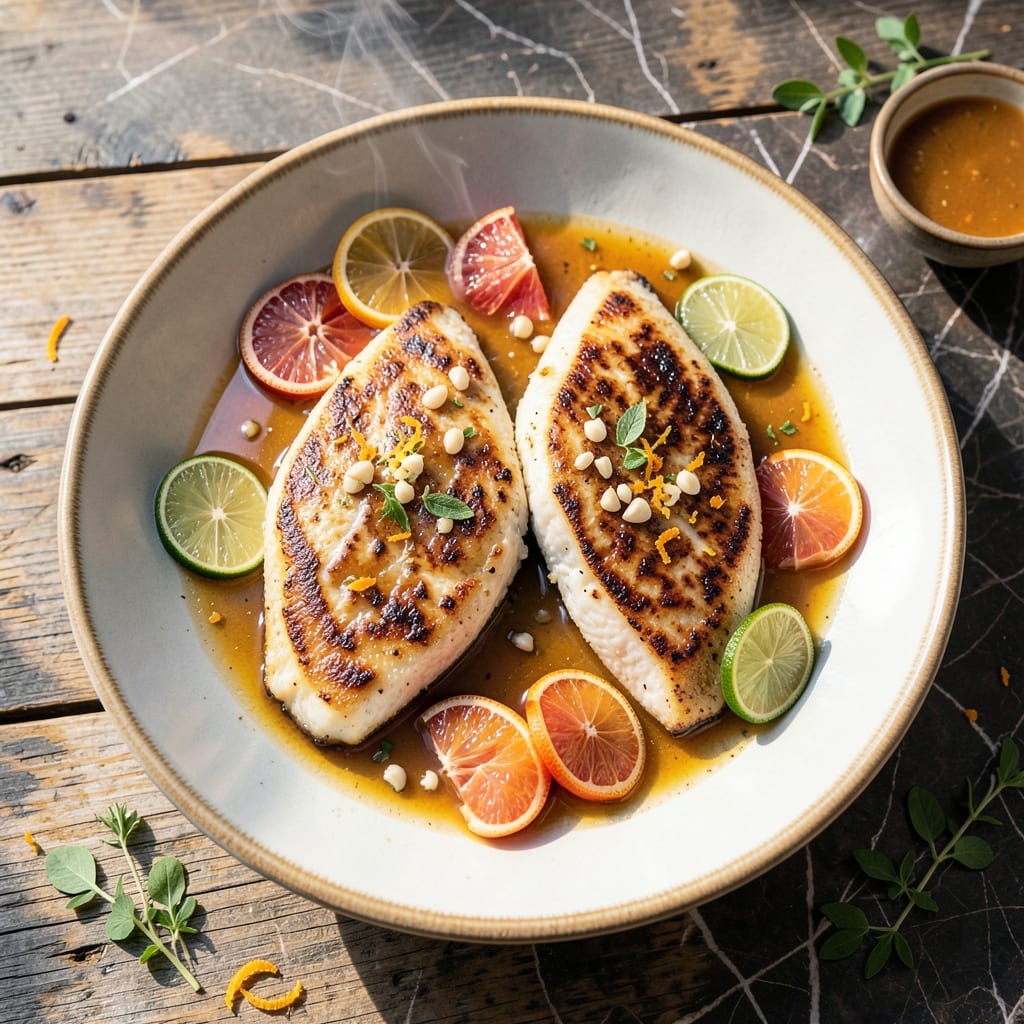
This broiled mahi mahi delivers perfectly flaky results with minimal effort. The high, dry heat of the broiler creates a beautiful caramelization while keeping the fish moist and tender inside.
A zesty citrus glaze adds bright, tangy notes that complement the mild sweetness of mahi mahi. The acidity also helps balance the richness of the fish, creating a harmonious flavor profile.
The broiling method is both quick and foolproof, cooking the fish through in under 10 minutes. This technique works particularly well for thick cuts of mahi mahi, ensuring even cooking without drying out the flesh.
Serve this dish with roasted vegetables or a fresh salad for a complete meal. The glaze pairs especially well with asparagus or green beans, creating a cohesive dining experience.
Ingredients for Mahi Mahi Recipe Broiled
Fresh citrus, bold glaze, and perfectly flaky fish come together effortlessly in this dish.
| Ingredient | Amount | Notes |
|---|---|---|
| Mahi Mahi Fillets 🐟 | 1 ½ lb | Skin-on or skinless, about 1-inch thick |
| Orange Juice 🍊 | ½ cup | Freshly squeezed preferred |
| Lemon Juice 🍋 | 2 tbsp | Freshly squeezed |
| Lime Juice 🍈 | 1 tbsp | Freshly squeezed |
| Honey 🍯 | 2 tbsp | Or sub maple syrup for vegan |
| Minced Garlic 🧄 | 2 cloves | Freshly minced |
| Dijon Mustard 🟡 | 1 tbsp | Smooth, not whole grain |
| Olive Oil 🫒 | 2 tbsp | Extra-virgin preferred |
| Salt 🧂 | ¾ tsp | Kosher or sea salt |
| Black Pepper 🌶️ | ½ tsp | Freshly ground |
| Zest of 1 Orange 🍊 | 1 whole | Finely grated |
| Zest of 1 Lime 🍈 | 1 whole | Finely grated |
| Fresh Cilantro 🌿 | ¼ cup | Chopped, for garnish |
| Red Pepper Flakes 🌶️ | ¼ tsp | Optional for heat |
[recipe_ingredient_scaler]
The mahi mahi quality is paramount. Look for fillets with a vibrant, moist appearance—dull or dry flesh indicates age. Whole Foods and Trader Joe’s typically carry excellent frozen options (thaw overnight in the fridge). For fresh, ask your fishmonger for sushi-grade if you plan to sear it rare. The citrus zest adds depth, so use organic citrus whenever possible to avoid pesticide residue on the peels.
No fresh citrus? Bottled juice works at half the amount (it’s more concentrated), though the zest is harder to replace. Agave or maple syrup can sub for honey. Missing Dijon? Whole-grain mustard at equal amounts adds texture. For a spicier glaze, increase the red pepper flakes to ½ tsp. The fish can also be swapped for halibut or swordfish, though cooking times may vary slightly.
The glaze keeps in the fridge for up to 5 days—store it separately if prepping ahead. Fresh mahi mahi is best cooked within 1-2 days of purchase. Leftovers (if there are any) hold for 3 days refrigerated, but the fish is best enjoyed fresh out of the broiler.
Why You’ll Love This Recipe
- Ready in Minutes: I just toss the mahi mahi with orange, lemon, lime juice and honey, then broil—no fancy prep.
- Citrus Sweetness: The mix of orange, lemon, lime and honey gives it this bright, tangy-sweet flavor that’s ridiculous.
- Weeknight Hero: It’s my go-to for busy evenings when I need something fast but still feel like I’m treating myself.
- Leftovers? Yes Please: Honestly, it tastes even better the next day in a salad or wrapped in a tortilla.
Step-by-Step Instructions for Broiled Mahi Mahi
Master the broiling technique and achieve perfectly flaky fish with a vibrant citrus glaze every time.
Step 1: Prepare the Zesty Citrus Glaze
In a medium bowl, whisk together the 0.5 cup Orange Juice, 2 tbsp Lemon Juice, 1 tbsp Lime Juice, 2 tbsp Honey, 2 cloves Minced Garlic, 1 tbsp Dijon Mustard, 2 tbsp Olive Oil, 0.75 tsp Salt, 0.5 tsp Black Pepper, Zest of 1 Orange, and Zest of 1 Lime.
Whisk vigorously for 30-45 seconds until the mixture is fully emulsified and the honey has dissolved completely. The glaze should thicken slightly as you whisk. Taste and adjust seasoning with a pinch more salt if needed, but remember the fish itself will add natural flavor.
Here’s the thing—this glaze isn’t just for flavor. The acidity from the citrus juices helps break down proteins in the fish, while the honey and oil create a beautiful caramelized crust under the broiler. Set the glaze aside while you prepare the fish.
Step 2: Season and Prep the Mahi Mahi Fillets
Pat the 1.5 lb Mahi Mahi Fillets completely dry with paper towels. This is critical—moisture prevents proper browning and can cause the fish to steam instead of broil. I like to press gently on the fillets to remove every bit of moisture from the surface.
Lightly score the top of each fillet with a sharp knife, making shallow cuts about ½ inch apart. This helps the glaze penetrate deeper and creates more surface area for caramelization. Don’t cut too deep—just enough to break the surface tension of the meat.
Place the fillets on a rimmed baking sheet lined with foil for easy cleanup. The sheet should be large enough to hold all fillets with at least 1 inch of space between them for even cooking.
Step 3: Broil to Flaky Perfection
Position your oven rack 6-8 inches from the broiler element and preheat the broiler on high. While the broiler heats, brush the fillets generously with about half of the citrus glaze, making sure to get some into those shallow cuts you made.
Place the baking sheet under the broiler and cook for 6-8 minutes until the fish flakes easily with a fork and the tops are golden brown with slightly charred edges. Don’t walk away—the sugar in the honey can burn quickly under direct heat.
For even cooking, rotate the baking sheet 180 degrees halfway through the cooking time. The fish is done when it reaches an internal temperature of 145°F and the thickest part flakes apart when tested with a fork.
Step 4: Finish and Serve Immediately
Remove the fish from the oven and brush with the remaining glaze. Sprinkle evenly with the 0.25 cup Fresh Cilantro and 0.25 tsp Red Pepper Flakes if using. The residual heat from the fish will slightly wilt the cilantro and mellow the red pepper flakes.
Let the fish rest for 2-3 minutes before serving. This brief rest allows the juices to redistribute throughout the fillets, ensuring that first bite is as moist and flavorful as the last. Serve immediately while hot—the contrast of the warm, flaky fish with the bright citrus glaze is what makes this dish special.
Pro Tips For Making Mahi Mahi Recipe Broiled
- Preheat the Broiler: Crank your broiler to high and let it heat for at least 10 minutes—I learned this the hard way after serving undercooked mahi mahi more than once.
- Pat the Fillets: Blot the mahi mahi dry with paper towels before marinating, or the citrus-honey glaze won’t stick properly and you’ll end up with steamed fish.
- Watch the Clock: Broil for 4-5 minutes per side max; mahi mahi goes from perfect to rubbery faster than you’d think, especially with the sugar in honey.
- Use Fresh Citrus: Bottled juice works in a pinch, but fresh-squeezed orange, lemon, and lime juice actually changes the outcome—brighter flavor, no bitter aftertaste.
Storing and Reheating This mahi mahi recipe broiled
Refrigerator Storage
Let the broiled mahi mahi cool for no more than 2 hours before transferring to an airtight container. Store in the fridge at 40°F or below for up to 3 days. The citrus glaze actually helps preserve the fish’s moisture during storage. ❄️
Freezer Storage
For longer storage, wrap individual fillets tightly in plastic wrap, then place in a freezer-safe bag. This double protection prevents freezer burn. The fish will maintain quality for up to 3 months at 0°F or below.
Reheating in Oven
Preheat your oven to 300°F and place the fish on a baking sheet. Cover with foil to retain moisture and heat for 10-12 minutes until the internal temperature reaches 145°F. This gentle method prevents drying out. 🔥
Microwave Reheating
For quick meals, place a fillet on a microwave-safe plate and cover with a damp paper towel. Heat on 50% power for 1-2 minutes, checking frequently. The damp towel adds steam to keep the fish moist.
Glaze Storage
Store any leftover citrus glaze in a separate airtight container in the fridge for up to 5 days. It’s perfect for brushing on grilled vegetables or other seafood dishes. The flavors deepen over time.
Nutrition Facts
Frequently Asked Questions
How do I know when the fish is done?
Look for 145°F internal temperature and flesh that flakes easily with a fork. The top should be golden brown with slightly charred edges.
Can I use frozen mahi mahi?
Yes! Thaw overnight in the fridge, then pat completely dry before cooking. Never broil frozen fish directly—it will cook unevenly.
What if my glaze burns under the broiler?
Watch closely after 5 minutes. If burning, move the rack down or switch to bake at 400°F to finish cooking.
Can I make the glaze ahead?
The citrus glaze keeps for 5 days refrigerated in an airtight container. The flavors actually intensify over time.

Trained in classic French technique but raised on slow-cooked ribs and spicy rubs, she blends culinary skill with smoke and soul.
- Recipe for Boneless Pork Chops in Cast Iron Skillet: Sear and Baste to Juicy Perfection - October 3, 2026
- Recipe for Boneless Cross Rib Roast: Slow-Roasted Beef with Herb Crust - October 3, 2026
- Hamburgers in Sauce Recipe Crock Pot: Slow-Cooked Savory Delight - October 3, 2026