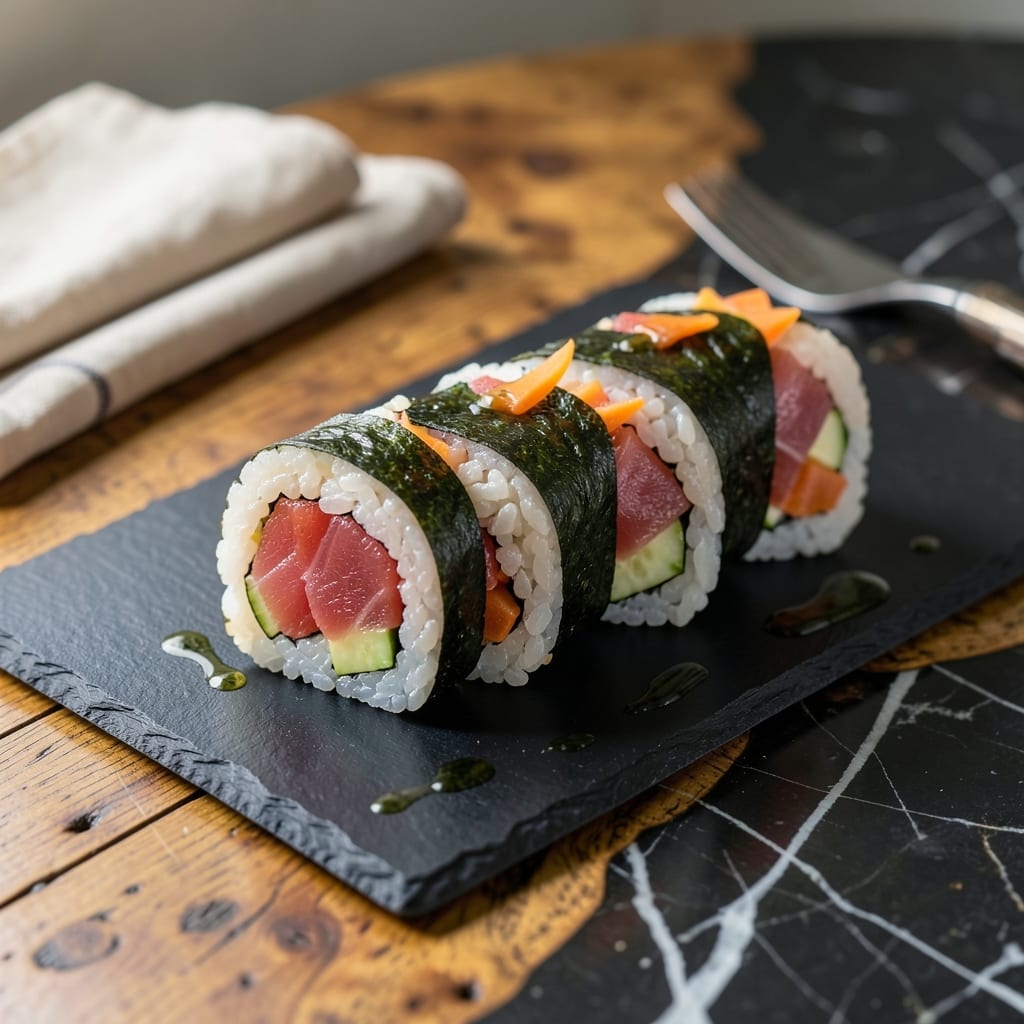
This recipe brings a taste of Hawaii to classic Japanese maki rolls with fresh, tropical ingredients.
I’ve refined this method to balance traditional sushi techniques with island-inspired flavors. The key is using ripe, local produce to complement the delicate rice and nori. You’ll find it just as satisfying as any restaurant version.
What sets this apart is the combination of classic sushi elements with Hawaiian flair. The result is a roll that’s vibrant, flavorful, and perfect for sharing.
Ready to roll? Let’s get started with this fusion of tradition and tropical charm.
Ingredients for Maki Sushi Recipe Hawaii
Rice, nori, and tropical fillings create these fusion rolls with authentic technique and island flair.
| Ingredient | Amount | Notes |
|---|---|---|
| Sushi Rice 🍚 | 2 cups | Short-grain, rinsed thoroughly |
| Rice Vinegar 💧 | ¼ cup | Seasoned or unseasoned |
| Granulated Sugar 🍚 | 1 tbsp | Dissolved in vinegar |
| Salt 🧂 | 1 tsp | Fine sea salt preferred |
| Nori Sheets 🌊 | 4 sheets | Full-size, toasted seaweed |
| Fresh Ahi Tuna 🐟 | ½ lb | Sushi-grade, cubed |
| Ripe Mango 🥭 | 1 whole | Peeled, julienned |
| Cucumber 🥒 | ½ whole | English, seeded, julienned |
| Avocado 🥑 | 1 whole | Ripe, sliced into strips |
| Green Onions 🧅 | 2 whole | Thinly sliced for garnish |
| Pickled Ginger 🌸 | ¼ cup | For serving |
| Soy Sauce 🫙 | ¼ cup | Low-sodium for dipping |
| Wasabi 🌿 | 1 tbsp | Prepared, for serving |
| Sesame Seeds 🌰 | 1 tbsp | Toasted, for garnish |
[recipe_ingredient_scaler]
The rice is the foundation—short-grain sushi rice from Japanese markets or the Asian aisle at Whole Foods delivers the right texture. For the ahi, sushi-grade tuna is non-negotiable; Hawaiian fish markets or reputable seafood counters at Safeway are reliable sources. Nori should be crisp and vibrant green—avoid any with dull color or moisture. The mango and avocado must be perfectly ripe (firm but yields to gentle pressure) for clean slicing.
No ahi? Fresh salmon or yellowtail work beautifully. Mango out of season? Pineapple or strawberries add a similar sweetness. For the rice vinegar, Marukan or Kikkoman brands are widely available. If you can’t find English cucumbers, regular cucumbers work (just remove all seeds). The pickled ginger can be substituted with quick-pickled radishes (thinly slice, soak in rice vinegar with sugar for 30 minutes).
Assemble rolls within 2 hours of prepping fillings to prevent browning (especially avocado). Store leftover rolls wrapped in damp paper towels then plastic wrap for up to 24 hours—best eaten fresh. Sushi rice keeps 1 day refrigerated, but is best used immediately after cooking.
Why You’ll Love This Recipe
- No-Cook Rice: I love that the sushi rice just needs a quick season with rice vinegar, sugar, and salt—no complicated cooking steps, just mix and roll.
- Sweet-Savory Balance: The rice vinegar and sugar combo gives that signature Hawaiian touch, bright and slightly sweet with every bite of the nori-wrapped rice.
- Party-Ready Rolls: I can prep a big batch ahead, slice just before serving, and watch them disappear at gatherings or casual dinners.
- Budget Stretch: Honestly, a bag of rice and a few nori sheets go a long way—feeds my family for days without breaking the bank.
Step-by-Step Instructions for Maki Sushi Hawaii
Master the technique and you’ll create perfectly balanced rolls with authentic texture and tropical flair.
Step 1: Prepare the Seasoned Sushi Rice
Rinse the 2 cups sushi rice under cold water until the water runs clear, then cook according to package instructions. While the rice is still hot, gently fold in a mixture of 0.25 cup rice vinegar, 1 tbsp granulated sugar, and 1 tsp salt using a cutting motion with a rice paddle.
The rice should be glossy and slightly sticky but not mushy. Cover with a damp towel to maintain moisture while you prepare the other components. This seasoning mixture gives the rice its characteristic sweet-tart flavor that defines proper sushi.
Step 2: Prepare the Tropical and Fresh Fillings
Cube the 0.5 lb fresh ahi tuna into ½-inch pieces using a sharp knife. The cubes should be uniform for even distribution in each roll. Peel and julienne the 1 whole ripe mango into thin strips, about 2 inches long.
Seed and julienne the 0.5 whole cucumber into similar strips. Slice the 1 whole avocado into thin lengths just before assembling the rolls to prevent browning. Thinly slice the 2 whole green onions for garnish. Keep all prepared ingredients covered and chilled until ready to use.
Step 3: Assemble the Hawaii Maki Rolls
Place a sheet of nori shiny-side down on a bamboo rolling mat. With wet hands to prevent sticking, spread about ½ cup of the seasoned rice evenly over the nori, leaving a 1-inch border at the top. Press gently to create an even layer without compacting the rice.
Arrange a line of tuna cubes, mango, cucumber, and avocado strips horizontally across the rice, about 1 inch from the bottom edge. The filling should be centered and not too thick, or the roll won’t seal properly. Lift the edge of the mat closest to you and roll tightly away from you, pressing gently as you go.
Step 4: Slice and Serve with Traditional Accompaniments
Using a sharp, damp knife, slice each roll into 6-8 even pieces with a single, clean motion. Wipe the knife between cuts to ensure clean edges. Arrange the pieces on a serving platter with the cut sides facing up to showcase the colorful filling.
Serve immediately with 0.25 cup soy sauce for dipping, 1 tbsp wasabi, and 0.25 cup pickled ginger on the side. Sprinkle with 1 tbsp sesame seeds and the sliced green onions for added texture and visual appeal. The rolls should hold their shape but yield easily when bitten into.
Pro Tips For Making Maki Sushi Recipe Hawaii
- Rinse the Rice: Wash sushi rice until the water runs clear—about 4-5 rinses. I learned this the hard way after my first few batches turned out gummy from residual starch.
- Warm the Vinegar: Dissolve sugar and salt in warm rice vinegar before mixing into cooked rice. Sounds tedious, but it prevents those pesky undissolved grains from ruining the texture.
- Keep Rice Moist: Cover rice with a damp towel while prepping fillings to prevent drying out. After my third batch turned crusty, I finally started doing this religiously.
- Toast Nori Briefly: Pass nori sheets quickly over a low flame for 2-3 seconds to crisp them up. Makes a real difference in roll structure—I was skeptical until I tried it.
Make-Ahead Tips for This Recipe
Prep Fillings Ahead
Cube the 0.5 lb ahi tuna and julienne the mango, cucumber, and avocado up to 4 hours before assembling. Store them in separate airtight containers in the fridge. I keep a damp paper towel over the avocado to prevent browning. 💡
Rice Preparation
Cook and season the 2 cups sushi rice the day of serving, as it’s best used fresh. However, you can rinse and measure it the night before. The rice should be at room temperature when you start rolling.
Nori and Garnishes
Keep the nori sheets in their original package until ready to use—they absorb moisture quickly. Toast the 1 tbsp sesame seeds and slice the green onions up to 24 hours ahead. Store them in small containers at room temperature.
Assemble in Batches
If serving a crowd, prep all fillings first, then roll the sushi in 2-3 batches. This keeps the ingredients fresh and manageable. I use a damp towel to cover finished rolls while I work.
Storage Before Serving
Once rolled, keep the maki covered with a damp cloth for up to 2 hours before slicing. Avoid refrigerating assembled rolls, as the rice hardens. Slice just before serving for the best texture.
For leftovers, wrap tightly in plastic and refrigerate for up to 24 hours. Reheat is not recommended—serve cold. 🌟
Nutrition Facts
Frequently Asked Questions
What makes Hawaiian maki different from traditional sushi?
It incorporates tropical ingredients like mango and ahi tuna for a sweet, fresh twist. The fusion of Japanese technique with island flavors creates a unique taste profile that’s both familiar and exciting.
Can I use frozen fish for this recipe?
No, always use sushi-grade fresh fish to ensure safety and quality. Freezing can alter texture and may not be safe for raw consumption unless specifically labeled for sushi.
How do I keep the rolls from falling apart?
Use a sharp, damp knife to slice and press gently while rolling. Ensure the rice layer is even and not too thick, and don’t overfill with ingredients.
What’s the best way to store leftovers?
Wrap tightly in plastic and refrigerate for up to 24 hours. Avoid reheating—serve cold. The texture is best when eaten fresh, so plan accordingly.

Trained in classic French technique but raised on slow-cooked ribs and spicy rubs, she blends culinary skill with smoke and soul.
- Recipe for Boneless Pork Chops in Cast Iron Skillet: Sear and Baste to Juicy Perfection - October 3, 2026
- Recipe for Boneless Cross Rib Roast: Slow-Roasted Beef with Herb Crust - October 3, 2026
- Hamburgers in Sauce Recipe Crock Pot: Slow-Cooked Savory Delight - October 3, 2026