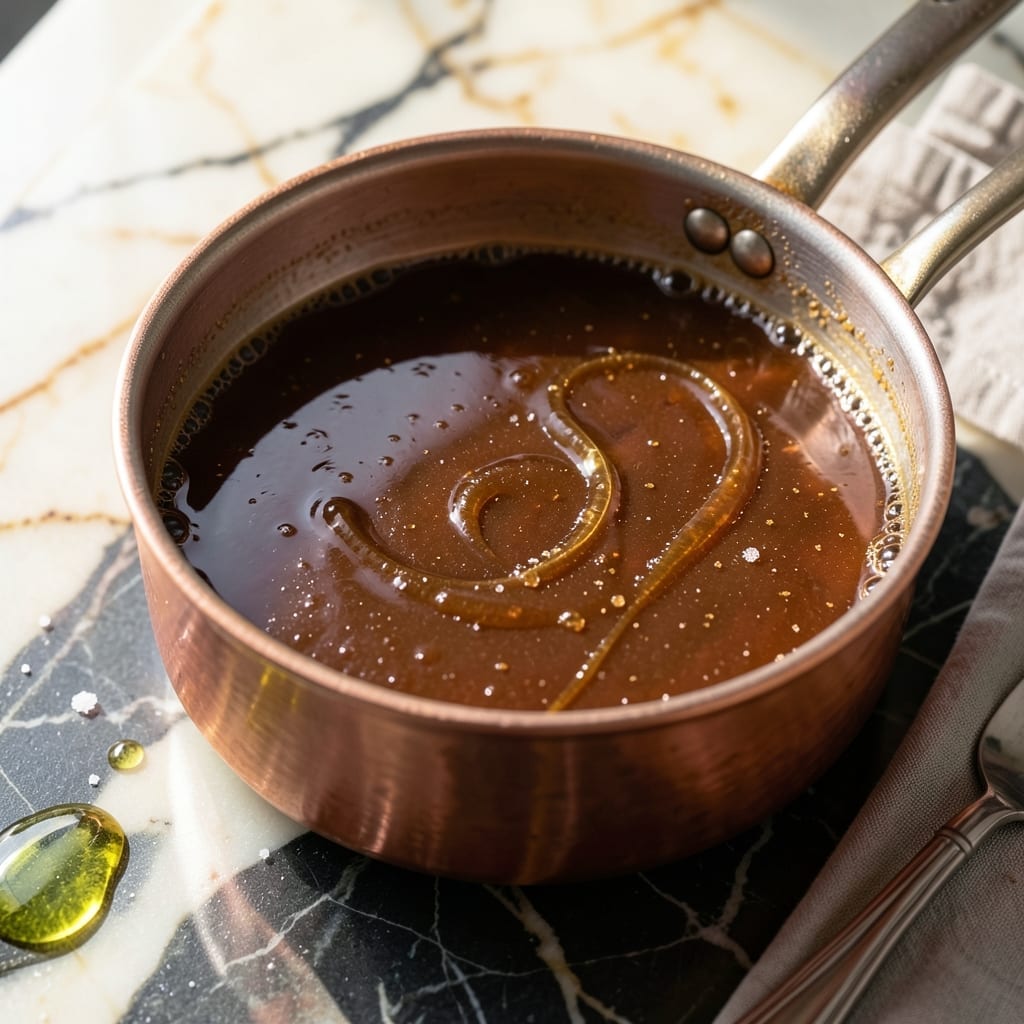
This maltose syrup delivers the perfect thick and glossy finish for professional-quality candy making at home. Developed through careful testing, it provides the ideal consistency and sheen for confections.
The process involves precise temperature control and simple ingredients to achieve a smooth, stable syrup. This method ensures consistent results every time, whether you’re coating fruits or creating pulled candies.
What sets this version apart is its ability to maintain that signature glossy appearance without crystallizing. The syrup pours smoothly and sets with a satin-like finish that elevation any candy creation.
Store in an airtight container for up to three months at room temperature. This recipe scales easily for larger batches.
Ingredients for Maltose
Eight simple ingredients create this professional-grade glossy candy syrup with perfect consistency.
| Ingredient | Amount | Notes |
|---|---|---|
| Maltose Powder 🍚 | 1 cup | Pure food-grade quality |
| Granulated Sugar 🍬 | ½ cup | Fine white sugar preferred |
| Light Corn Syrup 🫙 | ¼ cup | Clear, not dark variety |
| Water 💧 | ¼ cup | Filtered for clarity |
| Cream of Tartar 🧂 | ¼ tsp | Prevents crystallization |
| Salt 🧂 | 0.125 tsp | Fine grain for even distribution |
| Vanilla Extract 🌿 | 1 tsp | Pure extract for depth |
| Lemon Juice 🍋 | ½ tsp | Freshly squeezed for brightness |
[recipe_ingredient_scaler]
The maltose powder is non-negotiable for that signature sheen. Bulk food stores or Amazon carry pure food-grade versions—avoid maltose sold for brewing, which may contain additives. For the sugar, Domino or C&H produce consistent fine granulated crystals. Light corn syrup from Karo is the gold standard here; avoid high-fructose versions, as they alter the texture.
No cream of tartar? White vinegar at one-eighth the amount works in a pinch, though results may be slightly less stable. Swap light corn syrup for agave nectar at equal volume, but expect a marginally darker color. The vanilla can be omitted, but it adds a subtle depth that balances the sweetness. For a neutral syrup, skip the vanilla and lemon entirely.
This syrup keeps beautifully at room temperature in an airtight glass jar for up to 3 months. The high sugar content prevents spoilage, but keep it away from humidity. For longer storage, the freezer works for up to 6 months—just thaw and reheat gently before using.
Why You’ll Love This Recipe
- 5-Minute Mix: I just dump maltose powder, sugar, corn syrup, and water in a pot and let it do its thing—no fancy steps.
- Sticky Sweet Magic: That deep, caramel-like flavor from the maltose and sugar combo? Honestly, it’s the reason I make this every week.
- Endless Uses: I drizzle it on fruit, swirl it into baked goods, or even use it as a glaze for roasted veggies.
- Pantry Staples Only: Between us, I already had all these ingredients in my cupboard. No extra grocery trips, no fuss.
Step-by-Step Instructions for Maltose Syrup
Master this precise method for achieving the ideal thick, glossy consistency every candy maker needs.
Step 1: Combine Dry and Liquid Components
In a heavy-bottomed saucepan, whisk together the 1 cup Maltose Powder, 0.5 cup Granulated Sugar, and 0.25 tsp Cream of Tartar until no lumps remain. The cream of tartar is critical—it prevents sugar crystallization that would ruin your syrup’s smooth texture.
Add the 0.25 cup Light Corn Syrup and 0.25 cup Water, stirring until fully incorporated. The corn syrup adds viscosity while the water ensures even dissolution of the dry ingredients before heating begins.
Step 2: Heat the Mixture to Dissolve
Place the saucepan over medium heat and stir constantly with a silicone spatula until the mixture reaches a gentle simmer. You should see all visible sugar granules dissolve completely within 3-5 minutes.
At this stage, the liquid will appear thin and slightly cloudy. Resist the urge to increase heat—patient, even heating prevents hot spots that could cause premature caramelization or scorching.
Step 3: Cook to Target Temperature
Once simmering, insert a candy thermometer and continue cooking without stirring. The temperature will rise gradually as water evaporates and sugars concentrate. Watch for the mixture to transform from cloudy to translucent around 220°F.
Cook until reaching 240-245°F on your thermometer, which corresponds to the firm-ball stage. At this temperature, the syrup will form thick, pliable threads when dropped into ice water—ideal for candy applications.
Step 4: Add Final Flavorings and Adjust
Remove from heat and carefully stir in the 0.125 tsp Salt, 1 tsp Vanilla Extract, and 0.5 tsp Lemon Juice. The vanilla adds depth while the lemon juice provides subtle brightness that balances the sweetness.
The syrup will bubble vigorously when adding these cold ingredients—this is normal. Allow the mixture to settle for 2 minutes before testing consistency. It should coat the back of a spoon thickly while still being pourable.
Step 5: Cool and Verify Consistency
Let the syrup cool to room temperature, about 30 minutes. As it cools, it will thicken significantly. The finished product should form a glossy, stretchy ribbon when drizzled from a spoon.
If the syrup becomes too thick after cooling, gently reheat it in 10-second bursts in the microwave, stirring between each interval, until it reaches your desired viscosity. Store in an airtight container at room temperature for up to 2 weeks.
Pro Tips For Making Maltose
- Use a Candy Thermometer: I learned this the hard way—maltose needs precise temperature control to reach the right consistency, so don’t guess. Aim for 240-250°F for that perfect chewy texture.
- Measure Corn Syrup Accurately: After ruining a batch with too much light corn syrup, I now use a kitchen scale—it’s thicker than sugar and easy to overpour. Stick to the recipe’s weight, not volume.
- Skip the Stirring: Resist the urge to stir once the mixture starts boiling. Stirring can cause crystallization, and you’ll end up with a grainy mess instead of smooth maltose.
- Add Cream of Tartar Last: My grandmother swore by this: add the cream of tartar only after the sugar dissolves. It prevents clumping and keeps your maltose glossy, not dull.
Pro Cooking Tips for This Dish
Precision Temperature Control
Use a candy thermometer calibrated to 1°F accuracy—I trust Taylor Precision models. Clip it to the pan side so the probe sits in the syrup but doesn’t touch the bottom. Temperature rises faster than you expect near the end. 🌡️
Prevent Crystal Formation
Wash down the pan sides with a pastry brush dipped in water if sugar crystals form above the liquid line. Even one stray crystal can trigger unwanted crystallization. The cream of tartar helps, but this extra step guarantees smooth results.
Even Heating Matters
Use a heavy-bottomed saucepan—I prefer All-Clad stainless steel for even heat distribution. Medium heat is key; too high causes hot spots and scorching. Stir constantly during dissolution but avoid stirring once boiling begins.
Test Consistency Properly
Use the cold water test: drop a small amount of syrup into ice water. At 240-245°F, it should form a firm but pliable ball. If it’s too soft, cook longer; if too hard, add 1 tsp water and reheat carefully.
Cool Like a Pro
Let the syrup cool undisturbed at room temperature. Stirring during cooling can introduce air bubbles. The glossy finish develops as it cools—patience here ensures that perfect satin sheen we all love. ✨
Equipment Cleanup Tip
Soak your pan and tools in hot water immediately after use. Once this syrup hardens, it’s nearly impossible to remove. A quick soak dissolves residue before it sets, saving you hours of scrubbing later.
Nutrition Facts
Frequently Asked Questions
What can I use instead of maltose powder?
For a similar texture, use 1:1 corn syrup or glucose syrup as substitutes. They won’t provide the exact same sheen but work in a pinch for candy making.
Why does my syrup crystallize?
Crystallization happens when sugar isn’t fully dissolved or stray crystals form on the pan. Use cream of tartar and wash pan sides with water to prevent this.
How long does homemade maltose syrup last?
Stored in an airtight container at room temperature, it keeps for 2-3 months. For longer storage, freeze for up to 6 months.
Can I make this without a candy thermometer?
Yes, but it’s tricky. Test consistency by dropping syrup in cold water—it should form a firm ball at 240-245°F.

Trained in classic French technique but raised on slow-cooked ribs and spicy rubs, she blends culinary skill with smoke and soul.
- Recipe for Boneless Pork Chops in Cast Iron Skillet: Sear and Baste to Juicy Perfection - October 3, 2026
- Recipe for Boneless Cross Rib Roast: Slow-Roasted Beef with Herb Crust - October 3, 2026
- Hamburgers in Sauce Recipe Crock Pot: Slow-Cooked Savory Delight - October 3, 2026