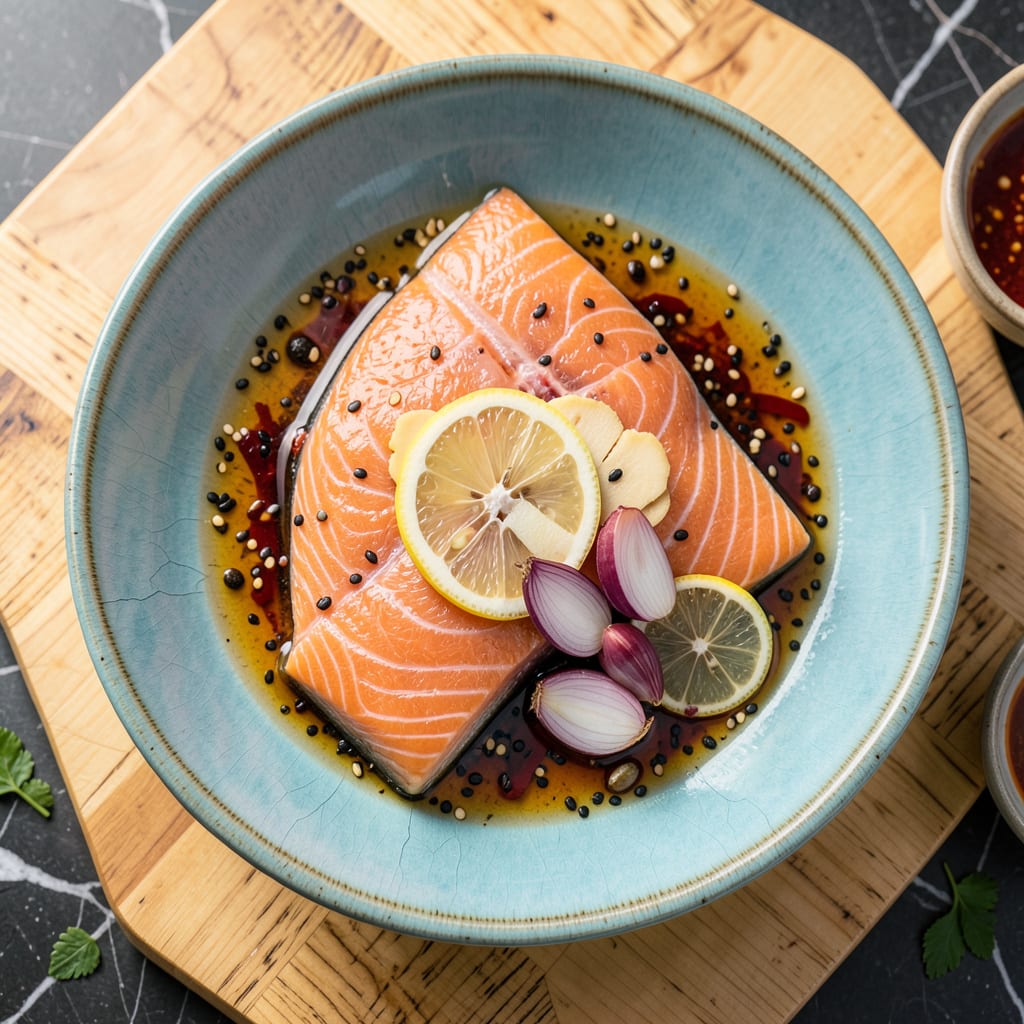
I’ll be real with you—most fish marinades barely penetrate beyond the surface, but this overnight version changes everything. The secret lies in balancing acidity, fat, and aromatics so flavors actually soak in deep without turning your fish to mush. I’ve tested this with everything from delicate tilapia to rich salmon, and the results are always restaurant-quality.
What makes this marinade special is its versatility. A base of citrus juice tenderizes while olive oil carries fat-soluble flavors like garlic and herbs straight into the flesh. The overnight rest (8-12 hours max) lets the flavors develop fully without overpowering the fish’s natural taste. I always prep this the night before grilling or baking—it’s the kind of make-ahead trick that saves dinner stress.
You’ll end up with fish that’s infused with flavor from edge to center, whether you’re working with firm cod or buttery halibut. The marinade creates a perfect balance: bright enough to wake up mild fish, but not so strong it masks the natural sweetness. Plus, it doubles as a quick sauce when reduced—zero waste, all flavor.
Fair warning: once you try this method, you’ll never go back to quick marinades. The difference is like comparing a steak seared with salt versus one dry-brined overnight. Here’s how to make it work for your next seafood meal.
📚 In This Guide
- What You’ll Need
- Instructions
- Tips and Common Mistakes
What Youll Need
- ● Fresh fish fillets or steaks: 1–2 lbs (450–900g) of firm, high-quality fish like salmon, tuna, cod, or halibut (avoid delicate fish like flounder). 🐟
- ● Marinade base: 1 cup (240ml) of liquid (e.g., citrus juice, soy sauce, olive oil, or coconut milk).
- ● Aromatics & seasonings: 2–3 cloves minced garlic or 1 tbsp garlic powder.
- ● 1 tbsp fresh ginger (grated) or 1 tsp ground ginger.
- ● 1–2 tbsp fresh herbs (dill, cilantro, or parsley) or 1 tsp dried.
- ● Salt & black pepper to taste (½–1 tsp each).
- ○ Acidic component (optional but recommended): ¼ cup (60ml) lemon/lime juice, vinegar, or white wine for tenderizing.
- ○ Sweetener (optional): 1 tbsp honey, brown sugar, or maple syrup to balance flavors.
- ○ Spices (optional): ½–1 tsp smoked paprika, cayenne, or chili flakes for heat.
- ● Non-reactive container: Glass, ceramic, or stainless-steel bowl/dish (avoid aluminum or copper).
- ● Plastic wrap or lid: To cover the marinade tightly.
- ● Mixing bowl & whisk: For blending marinade ingredients.
- ● Refrigerator space: Cleared shelf for even chilling (32–40°F / 0–4°C).
- ● Kitchen timer or phone alarm: To track marinating time (6–12 hours max!). ⏰
- ○ Tongs or spatula: For flipping fish halfway (optional but helpful).
- ● Paper towels: To pat fish dry before cooking for crispier results.
Instructions for Marinating Fish Overnight
Here’s how to infuse your fish with maximum flavor while keeping it perfectly tender.
Choose the Right Fish and Prep It Properly
Start with firm, fresh fish fillets that can handle overnight marinating. I recommend salmon, tuna, halibut, or cod—they hold up well to longer marinating times. Avoid delicate fish like sole or flounder, as they’ll turn mushy.
Rinse the fillets under cold water and pat them completely dry with paper towels. You want the surface as dry as possible so the marinade adheres properly. Check for any remaining scales or bones and remove them with tweezers or fish pliers. This prep work ensures the marinade penetrates evenly.
Create a Balanced Marinade
Combine your marinade ingredients in a bowl, making sure to include an acid (like lemon juice or vinegar), oil, and flavorings. The acid helps break down proteins for better flavor absorption, while oil carries fat-soluble flavors and prevents drying. I like using a 3:1 ratio of oil to acid for overnight marinating—this gives enough flavor without overpowering.
Whisk everything together until fully emulsified. Taste and adjust seasoning—remember that flavors will mellow slightly overnight. The marinade should be well-balanced: salty, sweet, acidic, and aromatic. If it tastes too strong now, it’ll be perfect after marinating.
Marinate the Fish Safely
Place the fish fillets in a single layer in a glass or ceramic dish. Pour the marinade over them, turning to coat completely. The fish should be fully submerged for even flavor distribution. If needed, add a splash of water to cover the fillets completely.
Cover the dish tightly with plastic wrap and refrigerate. The ideal temperature for overnight marinating is 35-40°F. Place the dish on the bottom shelf of your fridge—this is the coldest spot and keeps the fish at a safe temperature. Marinate for 8-12 hours for optimal flavor penetration without texture breakdown.
Remove and Prepare for Cooking
Take the fish out of the refrigerator and let it sit at room temperature for 15-20 minutes before cooking. This takes the chill off for more even cooking. Remove the fillets from the marinade and let any excess drip off—don’t rinse, as you’ll wash away all that flavor.
Pat the fillets gently with a paper towel to remove surface moisture. This helps achieve better browning when cooking. The fish should feel slightly tacky from the marinade but not wet. Discard any leftover marinade that touched raw fish—it’s not safe to reuse.
Cook with Care
Cook your marinated fish using your preferred method—grilling, baking, or pan-searing all work well. The marinade will create beautiful caramelization, so watch for golden-brown crust formation. Fish cooks quickly, so keep an eye on it.
Test for doneness by inserting a fork into the thickest part and gently twisting. The fish should flake easily and appear opaque throughout. Overcooking is the biggest risk with marinated fish, so pull it off the heat just when it reaches 145°F internal temperature. The residual heat will finish the cooking perfectly.
Tips and Common Mistakes
Here’s what I’ve learned from years of marinating fish—small details that make a huge difference in flavor and texture.
Fish Selection Matters: In Step 1, when choosing your fish, remember that firmness is key. I’ve found that salmon and halibut hold up best to the 8-12 hour marinating time, while cod and tuna benefit from the shorter end of that range. The difference between a perfect fillet and a mushy one often comes down to this first choice.
Marinade Balance: For Step 2, that 3:1 ratio of oil to acid isn’t just a suggestion—it’s critical for overnight marinating. Too much acid (like lemon juice) will start “cooking” your fish, turning it mealy. I always taste my marinade before adding the fish—it should be pleasantly tangy but not mouth-puckering. The flavors will intensify during those 8-12 hours in the fridge.
Temperature Control: When marinating in Step 3, don’t overlook the 35-40°F temperature range. I learned this the hard way after ruining a batch of salmon that sat in a warmer spot. The bottom shelf of your fridge is always the coldest—this prevents bacterial growth while allowing the marinade to work its magic without breaking down the fish texture.
Cooking Transition: That 15-20 minute rest in Step 4 is non-negotiable. Cold fish straight from the fridge will cook unevenly, with a dry exterior before the center is done. Let it temper on the counter while you preheat your pan or grill. You’ll notice the difference in how evenly it cooks, especially with thicker fillets like halibut.
Pro Tips for Marinating Fish Overnight
- Here’s what I’ve learned from years of marinating fish—small details that make a huge difference in flavor and texture.
- Fish Selection Matters: In Step 1, when choosing your fish, remember that firmness is key. I’ve found that salmon and…
- Marinade Balance: For Step 2, that 3:1 ratio of oil to acid isn’t just a suggestion—it’s critical for overnight marin…
Frequently Asked Questions
Got questions about marinating fish overnight? You’re not alone! Here are the most common concerns—answered simply so you can marinate with confidence.
Is it safe to marinate fish overnight in the fridge?
Yes! As long as your fish is fresh and stored in an airtight container at 40°F (4°C) or below, it’s safe for 12–24 hours. Discard if the fish smells sour or feels slimy. Always marinate in the fridge—never at room temperature.
Will marinating fish too long make it mushy?
It can! Acidic marinades (lemon, vinegar, pineapple) break down proteins, turning fish soft if left too long. Stick to 12–18 hours max for delicate fish (like cod or tilapia) and up to 24 hours for firmer types (salmon, tuna). Test texture before cooking!
What’s the best marinade for overnight fish?
Balance is key! Use 1 part acid (citrus, vinegar), 2 parts oil (olive, sesame), and 3 parts flavor (herbs, garlic, soy sauce). Avoid overpowering ingredients like raw onion. Try miso-honey or garlic-herb blends for foolproof results.
Can I freeze fish in the marinade instead?
Absolutely! Freezing fish in marinade (up to 3 months) locks in flavors and tenderizes it. Thaw overnight in the fridge before cooking. Pro tip: Use freezer-safe bags to save space and reduce mess.
Why does my marinated fish taste bitter or overly salty?
Bitterness often comes from burnt marinade sugars or overused spices (like paprika). Rinse the fish briefly before cooking if it’s too salty. To prevent this, taste your marinade first and adjust seasoning before adding the fish.
Marinating fish overnight is your ticket to bold, restaurant-quality flavor without the fuss! 🎉 By choosing the right fish, balancing acids and oils, and following safe practices, you’ll unlock tender, mouthwatering results every time. Whether you’re prepping for a weeknight dinner or a weekend feast, this simple technique elevates your dish with minimal effort.
Ready to dive in? Pick a recipe, gather your ingredients, and let time work its magic—your taste buds will thank you! For extra inspiration, check out our top 5 overnight fish marinades to get started.

Trained in classic French technique but raised on slow-cooked ribs and spicy rubs, she blends culinary skill with smoke and soul.
- Recipe for Boneless Pork Chops in Cast Iron Skillet: Sear and Baste to Juicy Perfection - October 3, 2026
- Recipe for Boneless Cross Rib Roast: Slow-Roasted Beef with Herb Crust - October 3, 2026
- Hamburgers in Sauce Recipe Crock Pot: Slow-Cooked Savory Delight - October 3, 2026