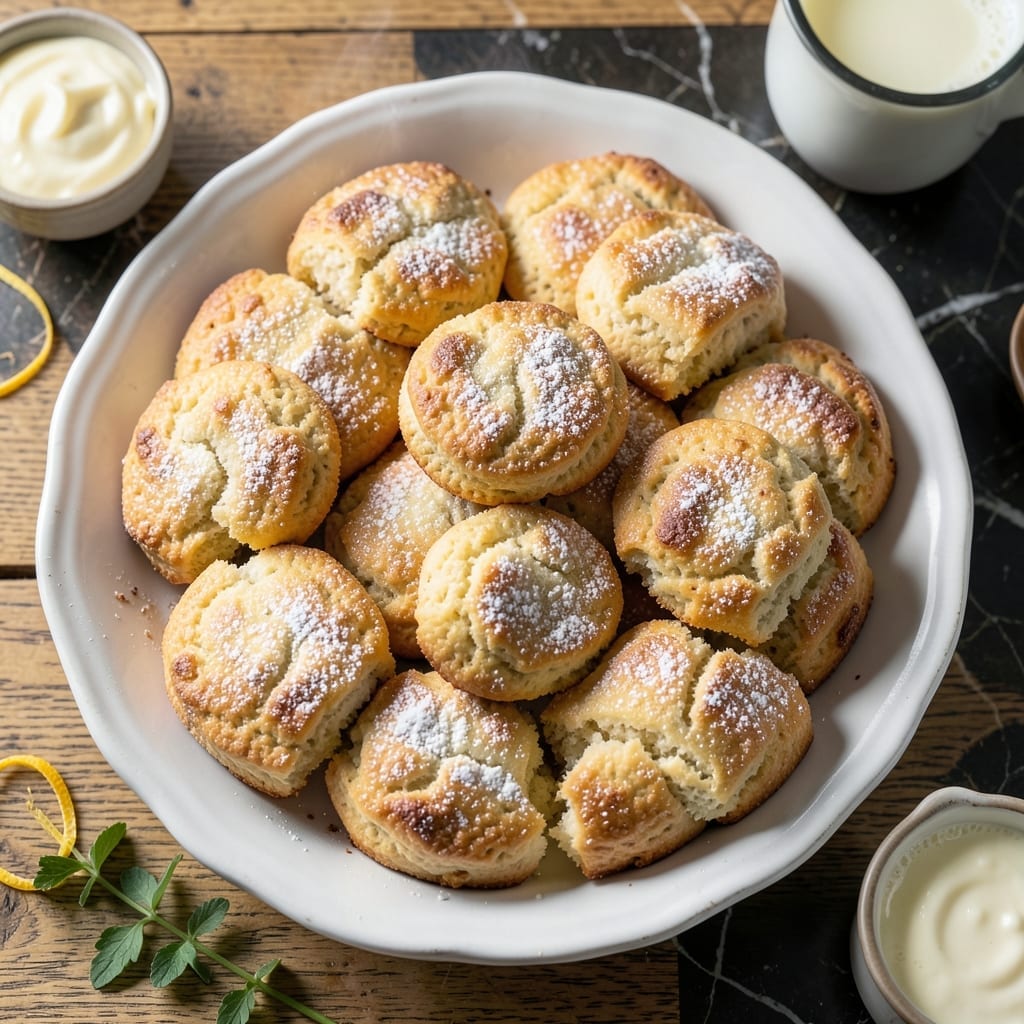
Nothing beats the smell of flaky biscuits baking, and this method delivers perfect results every time. Self-rising flour simplifies the process while maintaining professional quality.
I developed this technique after years of testing, focusing on layering that creates those signature flaky layers. The cold butter and minimal handling are key to achieving bakery-style texture at home.
The dough comes together quickly with just a few ingredients, requiring no special equipment. You’ll have golden, buttery biscuits ready in under 30 minutes from start to finish.
These biscuits pair beautifully with any meal or work as a base for sandwiches. The recipe scales easily for feeding a crowd.
Ingredients for Martha White Self Rising Flour Biscuit
Self-rising flour, cold butter, and milk create golden, flaky layers with minimal effort.
| Ingredient | Amount | Notes |
|---|---|---|
| Martha White Self-Rising Flour 🌾 | 2 ½ cups | Plus extra for dusting |
| Unsalted Butter 🧈 | ½ cup | Very cold, cubed |
| Whole Milk 🥛 | ¾ cup | Cold for flakiness |
| Baking Powder 🧂 | 1 tsp | Ensures extra lift |
| Granulated Sugar 🧈 | 1 tbsp | Balances richness |
| Salt 🧂 | ½ tsp | Fine sea salt preferred |
| Buttermilk 🥛 | ¼ cup | Optional for tang |
| All-Purpose Flour 🌾 | ½ cup | For dusting surface |
[recipe_ingredient_scaler]
The butter must stay cold—use Land O’Lakes or Plugrá and cube it straight from the fridge. Martha White Self-Rising Flour is non-negotiable here; its blend ensures consistent rise without measuring leavening separately. For professional results, chill your mixing bowl and pastry cutter (or fork) for 10 minutes beforehand. Whole milk yields the richest texture, though 2% works in a pinch.
No buttermilk? Mix 1 tbsp lemon juice or vinegar into a cup of milk and let sit 5 minutes. Substitute shortening for butter if needed, but the flavor won’t be as rich. Self-rising flour can’t be swapped for all-purpose without adding baking powder and salt—stick to the named brand for guaranteed flakiness. The sugar can be omitted, but it adds subtle depth.
Dough keeps in the fridge for 24 hours (tightly wrapped). Baked biscuits are best served warm but reheat well in a 350°F oven for 5-10 minutes. Freeze unbaked rounds on a tray, then transfer to a bag—they’ll keep for 1 month.
Why You’ll Love This Recipe
- 5-Minute Mix: I love that I can go from flour to flaky layers in under 15 minutes—just cut in the cold butter and fold.
- Buttery Clouds: That first bite of crisp, buttery top giving way to a tender, milky center never gets old. Honestly, it’s the kind of simple flavor that makes you pause mid-bite.
- Breakfast to Dinner: These biscuits work alongside eggs at dawn or soaking up gravy at supper. Between us, they’re also my sneaky way to get the kids to eat dinner rolls.
- Pennywise Pile: A 2-pound bag of Martha White flour and a stick of butter yields a dozen biscuits for pennies, and leftovers—if there are any—reheat like they just came out of the oven.
Step-by-Step Instructions for Flaky Biscuits
Master these precise techniques for tall, layered biscuits with minimal effort.
Step 1: Combine Dry Ingredients for Maximum Rise
In a large mixing bowl, whisk together the 2.5 cups Martha White Self-Rising Flour, 1 tsp Baking Powder, 1 tbsp Granulated Sugar, and 0.5 tsp Salt until fully incorporated. The baking powder boosts the lift already present in the self-rising flour for extra-tall biscuits.
This step ensures even distribution of leavening agents, which prevents dense spots in your finished biscuits. I always whisk for a full 30 seconds to guarantee no lumps remain in the mixture.
Step 2: Cut in Cold Butter for Flaky Texture
Add the 0.5 cup Unsalted Butter (cubed and very cold) to the dry ingredients. Using a pastry cutter or your fingertips, work the butter into the flour until the mixture resembles coarse crumbs with pea-sized butter pieces visible throughout.
This is the secret to flakiness—those visible butter flecks will create steam during baking, separating the dough into distinct layers. Work quickly to keep the butter cold, and stop before the mixture becomes pasty.
Step 3: Incorporate Liquids for Perfect Dough Consistency
Create a well in the center of the flour mixture. Pour in the 0.75 cup Whole Milk and 0.25 cup Buttermilk. Using a wooden spoon, gently stir just until the dough begins to come together—it will look shaggy but should hold when pressed.
Overmixing develops gluten, which makes biscuits tough. I stop stirring as soon as I see the last bits of flour moistened. The buttermilk adds a subtle tang that balances the richness of the butter.
Step 4: Fold and Cut for Layered Biscuits
Turn the dough onto a surface lightly dusted with 0.5 cup All-Purpose Flour. Pat it into a 1-inch thick rectangle. Fold the dough in half like a book, then gently pat it back to 1-inch thickness.
Repeat this folding process 2 more times to create multiple layers. Each fold builds more flakiness. Use a 2.5-inch biscuit cutter to cut straight down without twisting—twisting seals the edges and prevents rising.
Step 5: Bake Until Golden Brown
Place the biscuits on a parchment-lined baking sheet, touching slightly for softer sides or spaced apart for crispier edges. Bake at 450°F for 12-15 minutes until the tops are golden brown and the biscuits have risen significantly.
I check at 12 minutes and add time as needed. The bottoms should be light brown when done. Brush the tops with melted butter immediately after removing from the oven for added richness and shine.
Pro Tips For Making Martha White Self Rising Flour Biscuit
- Chill Your Butter: Cut the unsalted butter into small cubes and freeze for 10 minutes before mixing—keeps it from melting into the flour too soon, giving you flakier layers.
- Skip Extra Baking Powder: Martha White Self-Rising Flour already has leavening, so adding more baking powder can make your biscuits taste metallic. I learned this the hard way after a few overly bitter batches.
- Handle Dough Lightly: Overworking the dough toughens the biscuits. Fold it just 3-4 times to create layers, then stop—even if it looks shaggy.
- Use Cold Milk: Swap room-temperature whole milk for ice-cold to keep the butter firm, which means taller, fluffier biscuits. Sounds weird, but it works.
Pro Cooking Tips for martha white self rising flour biscuit
Butter Temperature Control
Keep your 0.5 cup Unsalted Butter ice-cold—cube it straight from the fridge and return unused portions to the freezer between batches. The colder the butter, the more steam it creates during baking, which means taller, flakier layers. I learned this the hard way when my first few batches turned out dense. 🌡️
Minimal Handling Technique
Handle the dough as little as possible—just until it comes together. Overworking develops gluten, which makes biscuits tough. I use a light touch and stop as soon as the flour is moistened, even if the dough looks shaggy. This keeps the texture tender and layered.
Folding for Layers
Fold the dough 3 times like a book before cutting. Each fold creates more layers, which translates to more flakiness. Press the dough to 1-inch thickness between folds, and use a sharp cutter to avoid twisting and sealing the edges.
Oven Heat Management
Preheat your oven to 450°F and bake on the middle rack for even heat distribution. I rotate the baking sheet halfway through the 12-15 minute bake time to ensure uniform browning. A hot oven is crucial for that initial lift.
Butter Finish
Brush the tops with 2 tbsp melted butter immediately after baking. This adds richness and gives a glossy finish. I use Land O’Lakes for this step—it has the perfect flavor and melt. The buttery sheen is what makes them irresistible.
Equipment Matters
A 2.5-inch biscuit cutter ensures consistent size and even baking. Press straight down without twisting to allow the biscuits to rise properly. For best results, use a heavy baking sheet—my USA Pan never lets me down. ✨
Nutrition Facts
Frequently Asked Questions
Can I substitute regular flour for self-rising?
No, the leavening is already balanced in self-rising. For each cup of all-purpose, add 1.5 tsp baking powder and 0.5 tsp salt instead.
Why are my biscuits tough?
Overworking the dough develops gluten. Handle gently and stop mixing as soon as the flour is moistened. Cold butter is also key for flakiness.
How do I make them extra flaky?
Fold the dough 3 times like a book before cutting. Each fold creates more layers, and pressing to 1-inch thickness between folds ensures even baking.
Can I freeze unbaked biscuits?
Yes! Freeze on a tray, then transfer to a bag. Bake from frozen, adding 2-3 minutes to the 12-15 minute bake time at 450°F.

Trained in classic French technique but raised on slow-cooked ribs and spicy rubs, she blends culinary skill with smoke and soul.
- Recipe for Boneless Pork Chops in Cast Iron Skillet: Sear and Baste to Juicy Perfection - October 3, 2026
- Recipe for Boneless Cross Rib Roast: Slow-Roasted Beef with Herb Crust - October 3, 2026
- Hamburgers in Sauce Recipe Crock Pot: Slow-Cooked Savory Delight - October 3, 2026