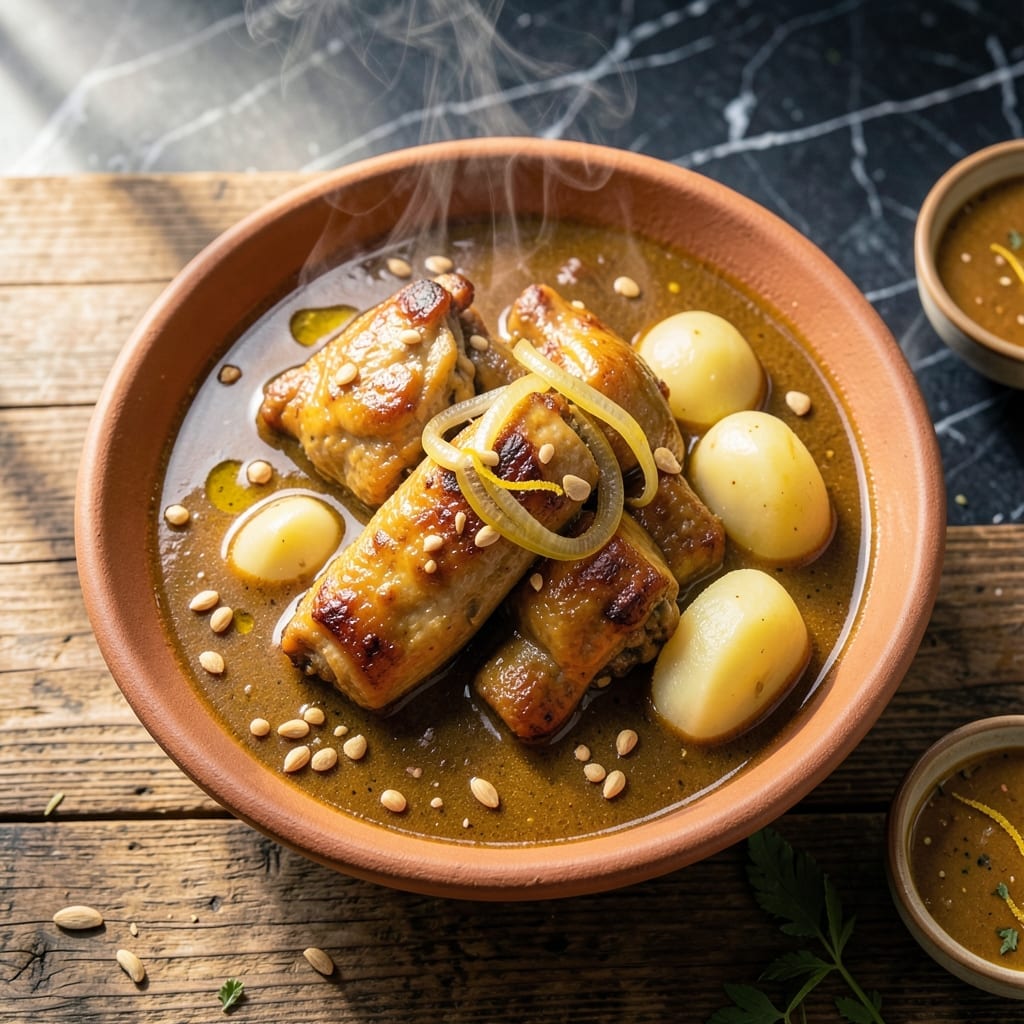
This recipe captures the authentic richness of Thai massaman curry with minimal effort. The paste provides deep, complex flavors that develop beautifully with slow cooking.
Tender potatoes and peanuts soak up the fragrant sauce, creating a dish that’s both comforting and restaurant-quality. The balance of sweet, spicy, and savory makes this curry unforgettable.
Ingredients for Massaman Curry Recipe Using Paste
Authentic Thai flavors start with these carefully selected ingredients for a rich, fragrant curry.
| Ingredient | Amount | Notes |
|---|---|---|
| Massaman Curry Paste 🌶️ | 4 tbsp | Thai brand preferred for authenticity |
| Coconut Milk 🥥 | 2 cups | Full-fat for creaminess |
| Boneless Chicken Thighs 🍗 | 1 ½ lb | Skinless, cut into bite-sized pieces |
| Yukon Gold Potatoes 🥔 | 2 whole | Peeled and cubed |
| Roasted Peanuts 🥜 | ½ cup | Unsalted, roughly chopped |
| Red Onion 🧅 | 1 whole | Thinly sliced |
| Garlic Cloves 🧄 | 4 cloves | Minced for depth of flavor |
| Fresh Ginger 🌿 | 1 tbsp | Peeled and grated |
| Fish Sauce 🐟 | 2 tbsp | Thai brand for authentic taste |
| Brown Sugar 🍚 | 1 tbsp | Light or dark for balancing sweetness |
| Lime Juice 🍋 | 2 tbsp | Freshly squeezed for brightness |
| Cilantro 🌿 | ¼ cup | Fresh, chopped for garnish |
| Vegetable Oil 🫒 | 2 tbsp | Neutral oil for sautéing |
| Chicken Broth 🍲 | 1 cup | Low-sodium preferred |
[recipe_ingredient_scaler]
The curry paste is non-negotiable for authenticity. Maesri or Mae Ploy brands are widely available at Asian grocery stores or the international aisle of larger supermarkets. Look for pastes without added preservatives—freshness matters more than you’d expect. Full-fat coconut milk is essential here; Thai Kitchen or Aroy-D are reliable choices that deliver the right creaminess without separating.
No chicken thighs? Tofu or beef works beautifully—just adjust cooking time (tofu needs less, beef needs more). Short on peanuts? Cashews or almonds add a similar crunch. Fish sauce can be swapped for soy sauce in a pinch (though the flavor profile changes). Brown sugar can be replaced with palm sugar for a more traditional touch, but keep the amount the same.
Leftovers taste even better the next day. Store in an airtight container in the fridge for up to 4 days, or freeze for 3 months. The flavors deepen with time, making this perfect for meal prep.
Why You’ll Love This Recipe
- One-Pot Wonder: I love how everything—chicken, potatoes, even the peanuts—simmers together in one pan with minimal cleanup.
- Flavor Bomb: The Massaman paste and coconut milk create this rich, slightly sweet depth that makes every bite irresistible.
- Feeds a Crowd: Honestly, it’s my go-to for dinner parties because it stretches easily and tastes even better the next day.
Step-by-Step Instructions for Massaman Curry Using Paste
This method ensures authentic Thai flavors with rich, complex layers in every bite.
Step 1: Sauté the Aromatic Base
Heat the 2 tbsp Vegetable Oil in a large pot over medium heat until shimmering. Add the 4 tbsp Massaman Curry Paste and stir constantly for 2-3 minutes until fragrant and slightly darkened—this blooms the spices and builds depth.
Immediately add the thinly sliced 1 whole Red Onion, 4 cloves Garlic Cloves, and 1 tbsp Fresh Ginger. Sauté for 3-4 minutes until the onion softens and becomes translucent. The paste will coat the aromatics, creating a thick, flavorful foundation.
Step 2: Build the Curry Base and Add Chicken
Pour in 1 cup Chicken Broth and stir to deglaze the pot, scraping up any browned bits. Add the 1.5 lb Boneless Chicken Thighs and cook for 5 minutes, stirring occasionally, until the exterior turns opaque and the liquid begins to simmer.
Next, add the 2 whole Yukon Gold Potatoes (peeled and cubed) and stir to combine. The potatoes will absorb the bold flavors as they cook. Simmer for 5 minutes to allow the chicken to begin cooking through and the potatoes to soften slightly.
Step 3: Simmer in Coconut Milk Until Tender
Pour in the 2 cups Coconut Milk, 1 tbsp Brown Sugar, and 2 tbsp Fish Sauce. Stir well to combine, then bring to a gentle simmer. Reduce heat to medium-low and cook uncovered for 20-25 minutes, stirring occasionally.
You’ll know it’s ready when the chicken is fully cooked through and the potatoes are tender when pierced with a fork. The sauce should thicken slightly, coating the back of a spoon with a rich, velvety texture. Avoid boiling vigorously, as this can cause the coconut milk to separate.
Step 4: Finish with Peanuts and Final Seasoning
Stir in the 0.5 cup Roasted Peanuts and cook for an additional 2 minutes to warm through. The peanuts will soften slightly but retain a satisfying crunch. Taste the curry and adjust seasoning if needed—Massaman should balance sweet, savory, and slightly tangy notes.
Remove from heat and stir in the 2 tbsp Lime Juice. The acidity brightens the rich flavors and ties everything together. Let the curry rest for 5 minutes to allow the flavors to meld completely before serving.
Step 5: Garnish and Serve
Sprinkle with the 0.25 cup Cilantro just before serving. The fresh herbs add a vibrant contrast to the deep, earthy flavors of the curry. Serve hot over steamed jasmine rice to soak up the luxurious sauce.
Each serving should feature tender chicken, soft potatoes, and a creamy, peanut-studded sauce with a perfect balance of Thai spices and coconut richness. The dish should be aromatic, with layers of flavor unfolding in every spoonful.
Pro Tips For Making Massaman Curry Recipe Using Paste
- Bloom the Paste: Cook the curry paste in 2 tablespoons of coconut milk for 3-4 minutes until fragrant—this builds the base flavor. I learned this the hard way after my first few attempts tasted flat.
- Cut Potatoes Evenly: Slice Yukon Golds into 1-inch chunks so they cook through in the same 15-20 minutes as the chicken. Sounds obvious, but uneven pieces mean some turn to mush while others stay hard.
- Skip Raw Peanuts: Use already roasted peanuts—raw ones won’t soften properly in the curry and can taste chalky. After burning a batch trying to toast them in the pot, I just buy them pre-roasted now.
- Simmer Low and Slow: Once everything’s in, keep it at a gentle simmer, not a boil, or the coconut milk can separate. My grandmother swore by this, and she was right: patience makes the sauce silky.
Dietary Considerations for These Flavors
Keto-Friendly Options
To make your massaman curry keto-friendly, swap potatoes for cauliflower or turnips. These low-carb alternatives absorb the rich flavors beautifully while keeping your dish aligned with keto guidelines.
Also, use coconut milk in moderation and opt for a sugar-free curry paste to avoid hidden carbs. This way, you can enjoy the creamy, spiced goodness without the guilt.
Gluten-Free
Massaman curry is naturally gluten-free if you use a gluten-free curry paste and avoid soy sauce or other wheat-based additives. Always check labels to ensure no hidden gluten.
For added safety, prepare the dish with fresh, unprocessed ingredients, and avoid cross-contamination in the kitchen.
Allergens
Common allergens in massaman curry include peanuts, coconut, and shellfish (if using shrimp paste in the curry paste). For nut-free versions, substitute peanuts with seeds like sunflower or pumpkin.
If coconut is a concern, use a non-dairy cream alternative like cashew cream, but ensure it’s safe for your dietary needs.
Vegetarian Modifications
To make this dish vegetarian, replace meat with tofu, tempeh, or hearty vegetables like eggplant or mushrooms. These ingredients soak up the curry’s flavors wonderfully.
Ensure your curry paste is free from fish sauce or shrimp paste, opting for a vegetarian-friendly version instead.
Low-Sodium
For a low-sodium version, reduce or omit added salt and use a low-sodium curry paste. Many store-bought pastes contain high levels of sodium, so homemade or specialist brands are ideal.
Boost flavor with fresh herbs, lime juice, or spices instead of salt to keep the dish vibrant and delicious.
Nutrition Facts

Trained in classic French technique but raised on slow-cooked ribs and spicy rubs, she blends culinary skill with smoke and soul.
- Recipe for Boneless Pork Chops in Cast Iron Skillet: Sear and Baste to Juicy Perfection - October 3, 2026
- Recipe for Boneless Cross Rib Roast: Slow-Roasted Beef with Herb Crust - October 3, 2026
- Hamburgers in Sauce Recipe Crock Pot: Slow-Cooked Savory Delight - October 3, 2026