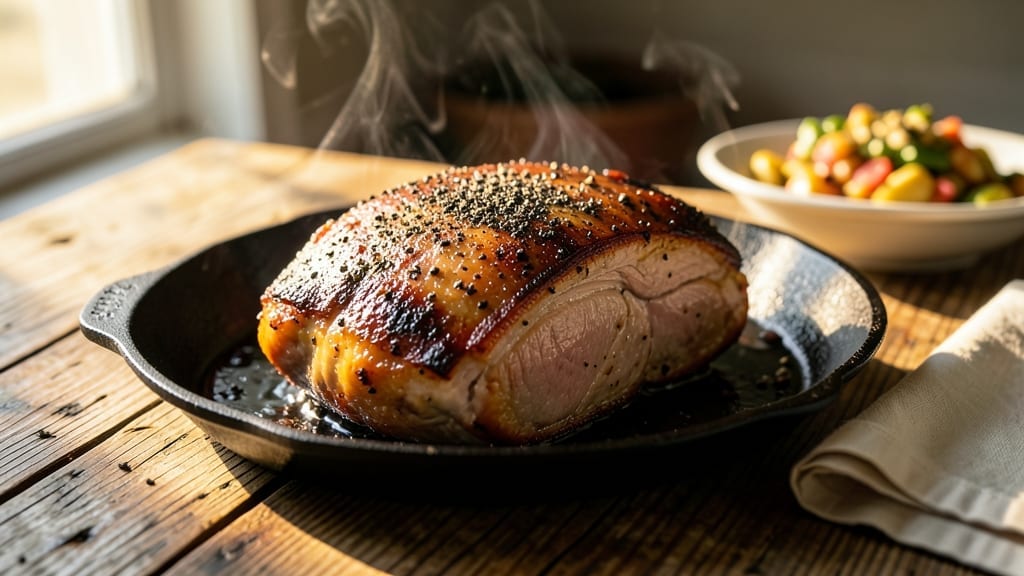
Masterbuilt smokers turn tough pork shoulder into melt-in-your-mouth perfection with just 12 hours of hands-off cooking. This recipe delivers restaurant-quality results using the precise temperature control and wood pellet consistency that makes Masterbuilt the gold standard for pitmasters.
Growing up in small-town Georgia, I learned that slow-smoked pork transforms a simple meal into a family gathering centerpiece.
The secret lies in the 225°F hold temperature and using hickory pellets for that classic smoky depth. A simple dry rub of brown sugar, paprika, and salt creates the perfect bark while keeping the meat tender inside.
My heritage Gloucestershire Old Spots pigs provide the ideal fat-to-lean ratio for this method, though any well-marbled shoulder will work beautifully.
By the time you pull it off the smoker, the pork will have reached 203°F internal temperature, where the collagen breaks down into gelatin for that signature fall-apart texture. The bark will be rich and dark, while the interior remains juicy and flavorful.
This is the kind of pork that disappears from plates at every BBQ competition I’ve judged.
Serve with classic sides like coleslaw and cornbread, or use it as the star of pulled pork sandwiches. The leftovers reheat beautifully, making this a perfect recipe for meal prep or feeding a crowd. Let’s get smoking!
Ingredients for masterbuilt smoker pork shoulder
Pantry staples meet smoker magic for pork shoulder that falls apart at every bite.
| Ingredient | Amount | Notes |
|---|---|---|
| Pork Shoulder (Bone-In) 🥩 | 6 lb | Well-marbled, Gloucestershire Old Spots preferred |
| Yellow Mustard 🍯 | ¼ cup | For initial coating |
| Brown Sugar 🍚 | ½ cup | Light or dark variety |
| Smoked Paprika 🌶️ | 2 tbsp | For deep smoky bark |
| Kosher Salt 🧂 | 1 ½ tbsp | Diamond Crystal preferred |
| Black Peppercorns 🌶️ | 1 ½ tsp | Freshly cracked |
| Garlic Powder 🧄 | 1 tbsp | Not garlic salt |
| Onion Powder 🧅 | 1 tbsp | For balanced flavor |
| Hickory Wood Pellets 🌳 | 2 lb | Masterbuilt brand recommended |
| Apple Wood Pellets 🍎 | 1 lb | Optional for fruitwood depth |
| Butter 🧈 | ½ cup | Unsalted, for finishing |
| Apple Cider Vinegar 🍎 | ¼ cup | For moisture retention |
| Fresh Thyme Sprigs 🌿 | 4 whole | For aromatic depth |
[recipe_ingredient_scaler]
The pork shoulder is non-negotiable here—look for Gloucestershire Old Spots if you can find it, but any well-marbled bone-in cut works. Costco or local butchers often carry the best quality, but the grocery store will do in a pinch. For the wood pellets, Masterbuilt’s hickory is the gold standard, but Traeger or Cookshack brands are solid too. The apple pellets add a subtle fruitiness that pairs beautifully with the hickory’s boldness. If you can’t find apple, cherry works as a close second. Always check your pellets for moisture—they should feel dry and crumbly, not damp.
No smoked paprika? Regular paprika plus a pinch of liquid smoke gets you close, though the flavor won’t be quite the same. Running out of apple cider vinegar? White vinegar or lemon juice works in a bind, but the apple adds a nice tang. Fresh thyme is ideal, but dried thyme at one-third the amount will suffice. For the brown sugar, muscovado adds a deeper molasses flavor if you want to experiment. And trust me on the yellow mustard—it’s the secret to that perfect initial bark before the smoke takes over. Skip it, and you’ll get a less crispy exterior.
This pork reheats like a dream—203°F internal means it’s practically edible straight from the smoker, but it gets even better the next day once the flavors meld. Wrap leftovers tightly in foil and store in the fridge for up to 5 days, or freeze portions for 3 months. The butter and apple cider vinegar mixture can be prepped ahead and stored in the fridge for up to 1 week. For serving, I like to slice it against the grain into 1/2-inch thick pieces—perfect for sandwiches or tacos. The bark will be rich and dark, while the interior stays juicy and tender.
Why You’ll Love This Recipe
- No-Fuss Smoking: Honestly, this recipe is one of those “set it and forget it” wonders. Just coat that pork shoulder with mustard, slather on that rub, and let your Masterbuilt do the heavy lifting. The only real effort is resisting the urge to open the smoker for those first two hours—trust me, that’s the magic.
- Chewy Bark, Creamy Center: That smoked paprika and brown sugar combo gives you a bark so crispy it practically melts in your mouth, while the apple cider vinegar and butter finish keep it juicy enough to make your taste buds do a happy dance. It’s that perfect balance of textures that makes it impossible to stop eating.
- Leftovers That Shine: Between the foil-wrapped resting period and the butter basting, this pork shoulder stays moist for days. I’ve made it for game day, lazy Sunday brunches, and even packed it for work lunches—every bite is just as good the second time around. Plus, freezing portions means you always have a backup for those nights you’re too tired to cook.
- Budget-Friendly Feast: A 6-pound pork shoulder feeds a crowd without breaking the bank, and the ingredients you already have (like that yellow mustard and kosher salt) keep costs low. It’s the kind of dish that makes you feel fancy without spending like it—perfect for when you want to impress but don’t want to stress.
Step-by-step instructions for Masterbuilt smoker pork shoulder
Here’s the method I’ve perfected for achieving fall-apart tenderness every time.
Prepare the Pork Shoulder with Dry Rub and Mustard Coating
Begin by trimming any excess fat from the pork shoulder, leaving about ¼-inch of fat cap intact to protect the meat during smoking. In a small bowl, combine the ½ cup brown sugar, 2 tablespoons smoked paprika, 1½ tablespoons kosher salt, 1½ teaspoons freshly cracked black peppercorns, 1 tablespoon garlic powder, and 1 tablespoon onion powder. Mix thoroughly until you have a fine, even-textured dry rub.
Generously coat the entire surface of the pork shoulder with the ¼ cup yellow mustard, pressing it into all the crevices and cracks. This creates a barrier that helps the rub stick and adds moisture retention. Then, apply the dry rub mixture evenly over the mustard-coated surface, pressing firmly so it adheres well. Place the pork shoulder on a wire rack set over a baking sheet and refrigerate uncovered for at least 1 hour, or up to 12 hours for deeper flavor penetration.
Set Up the Masterbuilt Smoker for Low-and-Slow Cooking
Fill the Masterbuilt smoker with 2 pounds of hickory wood pellets and 1 pound of apple wood pellets. Set the temperature to 225°F and allow it to preheat for at least 30 minutes, or until you see steady, thin blue smoke with no white vapor. This indicates the pellets are burning cleanly and creating the ideal environment for your pork shoulder.
Once the smoker reaches temperature, place the pork shoulder fat-side up on the smoker grate. The fat will render slowly during cooking, basting the meat and contributing to that beautiful bark. Add the 4 fresh thyme sprigs to the smoker’s wood chip tray to infuse the smoke with aromatic depth. Close the lid and resist the temptation to open it during the first 2 hours—each time you peek, you lose heat and moisture.
Smoke Until Probe-Tender with the Texas Crutch Technique
Smoke the pork shoulder undisturbed for 8-10 hours, or until the internal temperature reaches 165-170°F. This is when you’ll hit “the stall”—a period where the temperature plateaus as moisture evaporates from the meat. Here’s where the apple cider vinegar comes into play: mix the ¼ cup apple cider vinegar with ¼ cup apple cider vinegar in a small bowl, then brush this mixture over the pork shoulder every 2 hours during the stall to help break it through.
When the internal temperature hits 195-203°F (and a probe slides in like butter with no resistance), it’s time for the Texas crutch. Wrap the pork shoulder tightly in heavy-duty aluminum foil, ensuring it’s completely sealed. Return it to the smoker and continue cooking until the internal temperature reaches 205°F. This final stage, which typically takes 2-4 hours, ensures maximum tenderness while preserving that beautiful bark.
Rest and Finish with Butter for Maximum Juiciness
Remove the pork shoulder from the smoker and transfer it to a cutting board. Let it rest for at least 1 hour, loosely covered with foil, before attempting to slice. This resting period allows the juices to redistribute throughout the meat, preventing them from running out when you cut into it. Real talk: this is the most important step—don’t rush it.
While the pork shoulder rests, melt the ½ cup butter in a small saucepan over low heat. Once melted, brush this rich butter generously over the surface of the pork shoulder. This final step adds incredible moisture and depth of flavor, transforming your already tender meat into something truly exceptional. Slice against the grain into ½-inch thick pieces and serve immediately with your favorite sides.
Pro Tips For Making Masterbuilt Smoker Pork Shoulder
- Press That Rub Hard: I used to slap the dry rub on and call it good—until I noticed my pork shoulder’s bark kept flaking off during smoking. Press the mix into every crevice, especially around the bone and thickest parts. The mustard layer helps it stick, but you’ve got to work it in like you’re giving the meat a deep-tissue massage. That’s how you get the crust that doesn’t wash away.
- Vinegar Every Two Hours: Skipping the apple cider vinegar spray during the stall is how you end up with dry, tough pork. Mix that ¼ cup vinegar with ¼ cup water right before you need it—no need to store it—and brush it on like you’re sealing the deal. The acid helps break the stall and keeps the bark from getting too hard while the meat finishes. Trust me, your pull-apart texture depends on this.
- Foil Like a Tight Blanket: The Texas crutch is non-negotiable, but I’ve ruined more pork shoulders by wrapping them sloppily. Use heavy-duty foil and crimp every edge like you’re sealing a Thanksgiving turkey. No gaps—this isn’t a suggestion, it’s how you trap steam and finish the meat at 205°F without drying it out. And for the love of smoked meat, don’t peek. The temperature will fluctuate like crazy if you do.
- Crack Those Peppercorns Fresh: Pre-ground black pepper loses its punch fast, but freshly cracked peppercorns add a sharp, bright bite that cuts through the sweetness of the brown sugar. Use a mortar and pestle or a spice grinder—just don’t skip this step. The difference between “good” and “wow” often comes down to this tiny detail, and it takes all of 30 seconds. (Yes, even if you’re impatient like me.)
Serving suggestions for this dish
Classic Southern Sides
No smoked pork shoulder is complete without a trio of Southern classics. My go-to combo is creamy coleslaw with a tangy apple cider vinegar dressing and a side of cornbread—the buttery, slightly sweet texture cuts through the richness perfectly.
I use Pillsbury biscuit mix for the cornbread and add 1 tbsp cornmeal to the batter for extra crunch. The vinegar in both dishes complements the pork beautifully. 🌽
Pulled Pork Sandwiches
For a showstopping main, shred your pork shoulder and pile it onto Texas toast or potato rolls.
I like to add a slather of spicy honey mustard (mix ¼ cup Dijon mustard with ½ cup honey and 1 tsp cayenne) and top with crispy fried onions from Honey Baked Ham for that extra crunch. Wrap them in lettuce leaves for a cooler picnic presentation. 🥪
Pickled Vegetable Pairings
A bright, crunchy pickle spear or quick-pickled red onions (soak ½ cup thinly sliced onions in ½ cup apple cider vinegar with 1 tsp sugar and ½ tsp salt for 30 minutes) adds a refreshing contrast.
I also love serving pickled jalapeños on the side for those who want heat—just 2 tbsp jalapeños sliced, soaked in ½ cup vinegar with 1 tsp salt for 1 hour. 🥒
Mac & Cheese Elevation
For a crowd-pleasing side, make creamy macaroni and cheese with a buttery roux and add shredded pork shoulder to the sauce for extra depth. I stir in ½ cup of the pork’s juices from the smoker for that unmistakable smoky flavor.
Top with crispy fried shallots for texture—just pan-fry ¼ cup sliced shallots in 2 tbsp butter until golden. 🧀
Simple Green Salad
Balance the meal with a simple arugula salad dressed with apple cider vinegar and olive oil. Toss 4 cups baby arugula with 2 tbsp olive oil, 1 tbsp apple cider vinegar, ½ tsp Dijon mustard, and 1 minced garlic clove.
Add ¼ cup candied pecans for crunch—toss ½ cup pecans with 1 tbsp brown sugar and 1 tsp cinnamon, then bake at 350°F for 10 minutes. 🥗
Nutrition facts
Frequently asked questions
Why does this recipe use the Texas Crutch technique?
The Texas Crutch—wrapping the pork in foil after reaching 195-203°F—is a game-changer for tenderness. It traps steam inside, breaking down collagen faster while maintaining that perfect bark. This method ensures your pork reaches 205°F with juicy perfection, especially during the stall phase when progress slows. Trust me, it’s the secret to restaurant-quality results at home!
Can I skip the mustard coating before applying the dry rub?
While possible, the yellow mustard creates a critical barrier that helps the rub adhere and adds moisture retention. Without it, your bark may be less crispy, and the rub could flake off during smoking. If you’re in a pinch, use a thin layer of olive oil instead—just press it in firmly!
How do I know when the pork is truly done?
Use a meat probe to check the internal temperature—aim for 205°F with a pull-apart texture. The probe should slide in like butter with no resistance. If you’re unsure, cut into the thickest part: juices should run clear, not pink. Patience here pays off for melt-in-your-mouth perfection!
What if my smoker runs hotter than 225°F?
Adjust the air intake or reduce pellet flow to maintain 225°F. Most Masterbuilt models have a fan control—lowering it slightly helps regulate temperature. If your smoker consistently runs hot, consider adding a second pellet hopper or using a smoker box for better airflow. Consistency is key!

Trained in classic French technique but raised on slow-cooked ribs and spicy rubs, she blends culinary skill with smoke and soul.
- Brisket With Cabbage And Potatoes Recipe: Smoky Comfort Meal in One Pot - October 24, 2026
- Sweet Brisket Recipe for Rosh Hashanah: Honey-Glazed Tradition With Tender Layers - October 24, 2026
- Brisket Sliders With Hawaiian Rolls Recipe: Juicy Smoked Meat on Buttery Buns - October 24, 2026