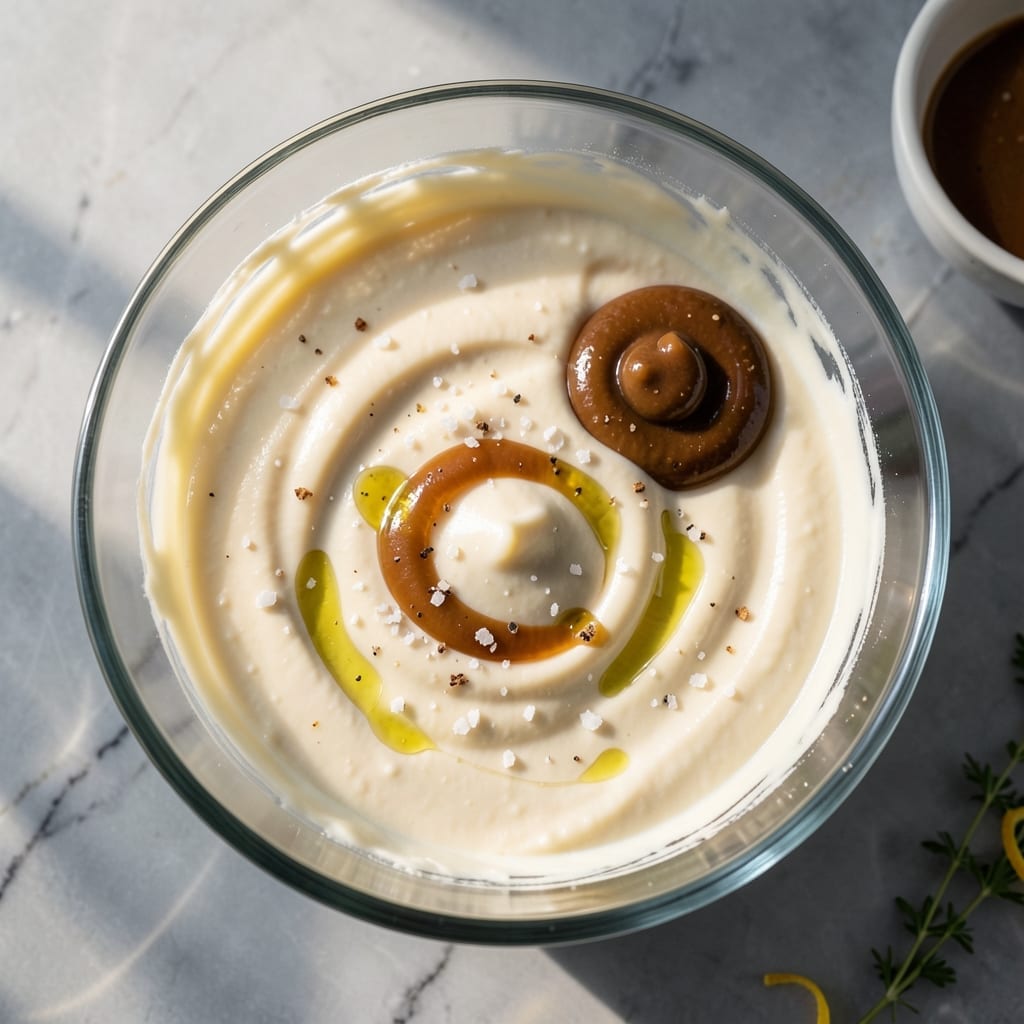
Homemade mayonnaise is a game-changer, and the food processor makes it effortless to achieve a silky, stable emulsion every time.
This method delivers restaurant-quality results with just a few basic ingredients and minimal hands-on time. The key is patience—adding the oil slowly ensures a perfect, creamy texture.
Ingredients for Mayonnaise Recipe Food Processor
Eight ingredients transform into silky, restaurant-quality emulsion with your food processor.
| Ingredient | Amount | Notes |
|---|---|---|
| Large Egg Yolk 🥚 | 1 whole | Room temperature essential |
| Dijon Mustard 🟡 | 1 tbsp | Acts as emulsifier |
| White Wine Vinegar 💧 | 1 tbsp | Or apple cider vinegar |
| Neutral-Flavored Oil 🫒 | 1 ½ cups | Avocado or light olive oil |
| Lemon Juice 🍋 | 1 tbsp | Freshly squeezed preferred |
| Salt 🧂 | ½ tsp | Fine sea salt recommended |
| White Pepper 🌶️ | ¼ tsp | Optional for milder color |
| Sugar 🍚 | ¼ tsp | Balances acidity, optional |
[recipe_ingredient_scaler]
The oil quality is non-negotiable for professional results. Avocado oil or light olive oil (not extra-virgin) ensures neutral flavor. Room temperature ingredients are critical—cold eggs resist emulsification. Whole Foods or Trader Joe’s carry reliable neutral oils if your pantry runs low. Always check expiration dates on oils; rancid oil ruins mayonnaise instantly.
No white wine vinegar? Apple cider or rice vinegar at equal amounts works perfectly. Out of Dijon? Dry mustard powder at one-quarter the amount functions similarly. For a tangier profile, increase lemon juice to 1.5 tbsp. The sugar is optional but recommended—omitting it yields a sharper taste that some prefer.
Fresh mayonnaise keeps 1 week refrigerated in an airtight container. The emulsion may separate slightly over time—simply whisk to restore. For longer storage, freeze in ice cube trays for up to 3 months, thawing only what you need.
Why You’ll Love This Recipe
- Hands-Off Magic: I just toss everything in the food processor and let it do the work—no whisking, no sore arms.
- Tangy Perfection: The Dijon and white wine vinegar give it that sharp, zesty kick I crave in every bite.
- Endless Uses: I slather it on sandwiches, mix it into dressings, or use it as a dip for fries. Honestly, it’s my kitchen MVP.
- Budget-Friendly Staple: A single egg yolk and basic pantry items make a jar of mayo that costs pennies compared to store-bought.
Step-by-Step Instructions for Mayonnaise
This method delivers a perfect emulsion with professional results every time.
Step 1: Combine Base Ingredients in Food Processor
Place the large egg yolk, 1 tbsp Dijon Mustard, 1 tbsp White Wine Vinegar, 0.5 tsp Salt, 0.25 tsp White Pepper, and 0.25 tsp Sugar into the bowl of your food processor. Pulse briefly until the mixture is well combined and uniform in color.
The mustard acts as a natural emulsifier, while the vinegar provides the necessary acidity for both flavor and stability. I always ensure the egg yolk is at room temperature—this is crucial for proper emulsification. The mixture should look slightly thick and pale yellow at this stage.
Step 2: Begin Emulsification with Slow Oil Addition
With the food processor running on low speed, begin adding the 1.5 cups Neutral-Flavored Oil in a very thin, steady stream through the feed tube. This slow incorporation is what creates the stable emulsion that defines a perfect mayonnaise.
You’ll notice the mixture start to thicken almost immediately as the oil is absorbed. If you add the oil too quickly, the emulsion can break, resulting in a separated, greasy mess. Patience here is key—this process should take about 2-3 minutes for the full amount of oil.
Step 3: Incorporate Remaining Liquid Components
Once all the oil has been successfully emulsified into the mixture, stop the processor and add the 1 tbsp Lemon Juice. Pulse a few times to fully incorporate it. The lemon juice adds brightness and helps balance the richness of the oil.
At this point, your mayonnaise should be thick, creamy, and pale in color. If it appears too thick, you can pulse in a teaspoon of water to loosen it slightly. The texture should coat the back of a spoon and hold its shape when dolloped.
Step 4: Adjust Seasoning and Finish
Taste and adjust the seasoning if needed. The acidity should be balanced, with no harsh vinegar or lemon notes. The salt should enhance all the flavors without tasting salty. Remember that flavors will meld slightly as it rests.
Transfer the mayonnaise to an airtight container. It will keep in the refrigerator for up to 1 week. The surface may develop a slight skin as it chills—this is normal. Simply stir it back in before using.
Pro Tips For Making Mayonnaise Recipe Food Processor
- Room Temperature Eggs: Take your egg yolk out 30 minutes before starting—cold yolks resist emulsifying and you’ll fight the processor the whole time.
- Drizzle Slowly: Add the oil in the thinnest possible stream at first, about 1 teaspoon per 10 seconds, or it’ll break before your eyes.
- Skip the Overfill: Never exceed the 1.5 cup mark in a standard food processor—mayo needs room to move or it won’t thicken properly.
- Rescue with Water: If it breaks, add 1 teaspoon of cold water and pulse—it re-emulsifies almost instantly, and I learned this after ruining three batches.
Wine and Beer Pairings for This Recipe
Beer Pairings
Mayonnaise’s creamy richness pairs beautifully with crisp, refreshing beers. A light Pilsner like Stella Artois or Heineken cuts through the fat with its clean, slightly bitter finish. If you prefer something more robust, a Wheat Beer such as Blue Moon adds a citrusy, effervescent contrast that complements dishes featuring your homemade mayo, like sandwiches or fries.
Wine Pairings
For wine lovers, a zesty Sauvignon Blanc—think Kim Crawford or Oyster Bay—brings bright acidity and herbal notes that balance the mayo’s creaminess. If you’re serving mayo-based dips or seafood, a chilled Champagne or Prosecco like La Marca offers a bubbly, crisp finish that cleanses the palate.
Non-Alcoholic Options
Non-alcoholic pairings work just as well! A sparkling Lemonade or Kombucha (try GT’s Synergy) adds a tangy, fizzy lift. For a creamier match, a Vanilla Chai Latte enhances the richness of mayo-based dishes with warm, spiced undertones.
Nutrition Facts

Trained in classic French technique but raised on slow-cooked ribs and spicy rubs, she blends culinary skill with smoke and soul.
- Recipe for Boneless Pork Chops in Cast Iron Skillet: Sear and Baste to Juicy Perfection - October 3, 2026
- Recipe for Boneless Cross Rib Roast: Slow-Roasted Beef with Herb Crust - October 3, 2026
- Hamburgers in Sauce Recipe Crock Pot: Slow-Cooked Savory Delight - October 3, 2026