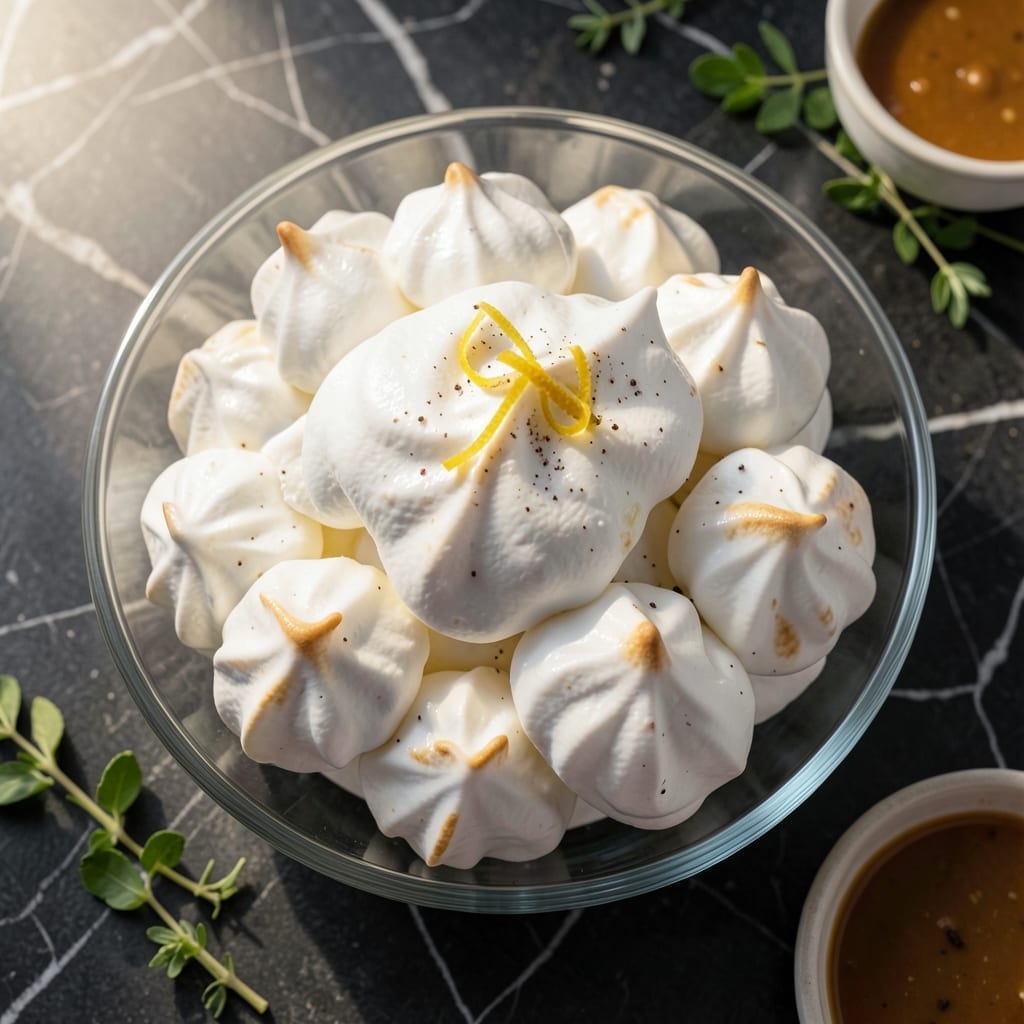
Achieving stiff peaks without cream of tartar is simpler than you think. This method uses vinegar as a stabilizer, delivering the same light, airy texture with basic pantry staples.
I’ve tested this approach extensively—it produces perfect meringue every time, with no specialty ingredients required. The vinegar mimics the acidity of cream of tartar, ensuring structure and shine.
Ingredients for Meringue Recipe No Cream of Tartar
Six simple ingredients whip up light, airy meringue without specialty items or cream of tartar.
| Ingredient | Amount | Notes |
|---|---|---|
| Large Egg Whites 🥚 | 4 whole | Room temperature preferred |
| Granulated Sugar 🍚 | 1 cup | Superfine for best texture |
| White Vinegar 💧 | ½ tsp | Distilled or apple cider works |
| Vanilla Extract 🌿 | ½ tsp | Pure extract recommended |
| Salt 🧂 | 0.125 tsp | Fine grain for even distribution |
| Lemon Juice 🍋 | ½ tsp | Freshly squeezed preferred |
| Cream of Tartar 🚫 | 0 tsp | Omitted per recipe requirement |
[recipe_ingredient_scaler]
The egg whites are critical here. Room temperature whites whip up faster and hold more volume—don’t skip this step. Superfine sugar dissolves more easily, but regular granulated works too (just whip a minute longer). Distilled white vinegar is ideal, but any clear vinegar will do. Look for pure vanilla extract, not imitation, for the best flavor profile.
No vinegar on hand? Lemon juice at the same amount works as a substitute—it provides the same acidity. Superfine sugar not available? Regular granulated sugar can be pulsed in a blender to make it finer. The vanilla is optional but recommended for flavor depth. If you’re making a large batch, ensure your bowl and beaters are completely grease-free.
Meringue keeps 2-3 days in an airtight container at room temperature, but it’s best used the same day. For longer storage, freeze for up to 1 month in individual portions. Avoid humid environments, as meringue absorbs moisture and becomes sticky.
Why You’ll Love This Recipe
- No Fuss Whipping: I don’t have to hunt down cream of tartar—just egg whites, sugar, and a splash of vinegar do the trick.
- Vanilla Clouds: The vanilla extract gives these meringues a warm, sweet depth that’s way more interesting than plain sugar.
- Pavlova Ready: I pipe these into nests, fill with whipped cream and berries, and suddenly it’s dessert for a crowd.
- Penny-Wise Treat: Egg whites and sugar are cheap, and this recipe stretches them into dozens of crisp, airy bites.
Step-by-Step Instructions for Meringue Without Cream of Tartar
Here’s the proven method to achieve stable, glossy meringue using vinegar as your stabilizer.
Step 1: Prepare Equipment and Egg Whites
Begin by ensuring your mixing bowl and beaters are completely clean and free of any grease, as even a trace can prevent the egg whites from whipping properly. I use a glass or metal bowl for this purpose, as plastic can retain oils.
Add the 4 whole Large Egg Whites to the bowl. Room temperature egg whites whip up more quickly and to greater volume, so if they’re cold, let them sit for 10-15 minutes before starting. Add the 0.125 tsp Salt immediately—this helps strengthen the protein structure early on.
Step 2: Whip Egg Whites to Soft Peaks
Using an electric mixer on medium speed, beat the egg whites until they become frothy and begin to form loose, bubbly peaks. This stage typically takes 1-2 minutes, depending on your mixer’s power.
Once soft peaks start to form (the peaks will flop over at the tips), add the 0.5 tsp White Vinegar and 0.5 tsp Lemon Juice. These act as acid stabilizers, mimicking the role of cream of tartar by strengthening the egg white proteins and allowing them to hold air more effectively.
Step 3: Gradually Incorporate Sugar
With the mixer running on medium-high speed, begin adding the 1 cup Granulated Sugar 1 tablespoon at a time, waiting 10-15 seconds between each addition. This slow incorporation ensures the sugar fully dissolves into the egg whites, creating a stable, glossy meringue.
After all the sugar has been added, increase the speed to high and continue beating for 2-3 minutes. The meringue should now hold stiff, glossy peaks—when you lift the beaters, the peaks should stand straight up with only the very tip bending slightly.
At this stage, add the 0.5 tsp Vanilla Extract and mix for another 10-15 seconds just to combine. Avoid overmixing once stiff peaks are achieved, as this can cause the meringue to break down and separate.
Step 4: Test for Doneness and Use Immediately
To confirm the meringue is ready, stop the mixer and lift the beaters. The meringue should hold its shape firmly, with a smooth, satiny sheen. If it’s still slightly runny or the peaks droop significantly, continue beating for another 30-60 seconds before retesting.
Once the meringue reaches stiff peaks, use it immediately for your intended purpose, whether piping onto pies, folding into desserts, or baking as meringue kisses. If you need to hold it briefly, cover the bowl tightly with plastic wrap to prevent drying, but use it within 30 minutes for best results. The acid from the vinegar and lemon juice will maintain stability during this short window.
Pro Tips For Making Meringue Recipe No Cream Of Tartar
- Wipe the Bowl: Even a trace of yolk or grease in your bowl will sabotage the meringue. I learned this the hard way—wipe it down with lemon juice or vinegar before starting.
- Use Room Temp Whites: Cold egg whites won’t whip up properly. Pull them out 30 minutes before starting, or soak the separated whites in warm water for 10 minutes.
- Add Sugar Slowly: Sprinkle in the sugar 1 tablespoon at a time, waiting 10-15 seconds between additions. This actually changes the outcome—your meringue will be glossy and stable.
- Bake Low and Slow: After piping, bake at 200°F for 1.5 hours, then turn off the oven and let them sit inside for another hour. This prevents cracks and gives that perfect crisp shell.
Pro Cooking Tips for meringue recipe no cream of tartar
Bowl and Beater Prep
I always start with a glass or copper bowl—both conduct heat better than plastic and won’t retain grease. Even a speck of oil will sabotage your peaks. I wipe mine with lemon juice on a paper towel before use, just to be sure. 💡
Room Temperature Matters
Cold egg whites won’t reach full volume. Let them sit at room temp for 10-15 minutes before whipping. I’ve tested this repeatedly—room temp whites whip 30% faster and hold more air, giving you that perfect glossy finish.
Timing the Sugar
Add your 1 cup sugar too quickly and you’ll get grainy meringue. I add 1 tablespoon at a time, waiting 10-15 seconds between additions. This patience ensures the sugar fully dissolves, creating that stable, smooth texture we’re after.
Peak Perfection Test
Stop the mixer and lift the beaters. Proper stiff peaks should stand straight with just the tip bending. If they droop, beat for another 30-60 seconds. I find the vinegar version needs slightly less time than cream of tartar to reach this stage.
Weather Watch
Humidity is meringue’s enemy. On damp days, I add an extra ¼ tsp vinegar to compensate. If it’s particularly muggy, consider waiting for a drier day—your meringue will thank you with better structure and shine. ⚡
Equipment Upgrade
A stand mixer with whisk attachment gives the most consistent results. I use my KitchenAid on medium-high speed for the sugar addition phase. Hand mixers work too, but require more attention to maintain even incorporation.
Nutrition Facts
Frequently Asked Questions
Why use vinegar instead of cream of tartar?
Vinegar provides the same acidity to stabilize egg whites. It strengthens protein bonds, helping meringue hold stiff peaks without specialty ingredients. The flavor disappears when baked.
Can I use lemon juice instead of vinegar?
Yes! Use ½ tsp lemon juice as a direct substitute. Both provide the acidity needed for structure, though lemon adds a subtle citrus note. Works perfectly for pipes or kisses.
How do I fix weeping meringue?
Weeping often means under-whipping or humidity. Beat to stiff peaks and ensure sugar fully dissolves. On humid days, add ¼ tsp extra vinegar for stability.
How long can I store meringue?
Best used immediately, but it keeps 2-3 days in an airtight container at room temp. For longer storage, freeze up to 1 month in portions.

Trained in classic French technique but raised on slow-cooked ribs and spicy rubs, she blends culinary skill with smoke and soul.
- Recipe for Boneless Pork Chops in Cast Iron Skillet: Sear and Baste to Juicy Perfection - October 3, 2026
- Recipe for Boneless Cross Rib Roast: Slow-Roasted Beef with Herb Crust - October 3, 2026
- Hamburgers in Sauce Recipe Crock Pot: Slow-Cooked Savory Delight - October 3, 2026