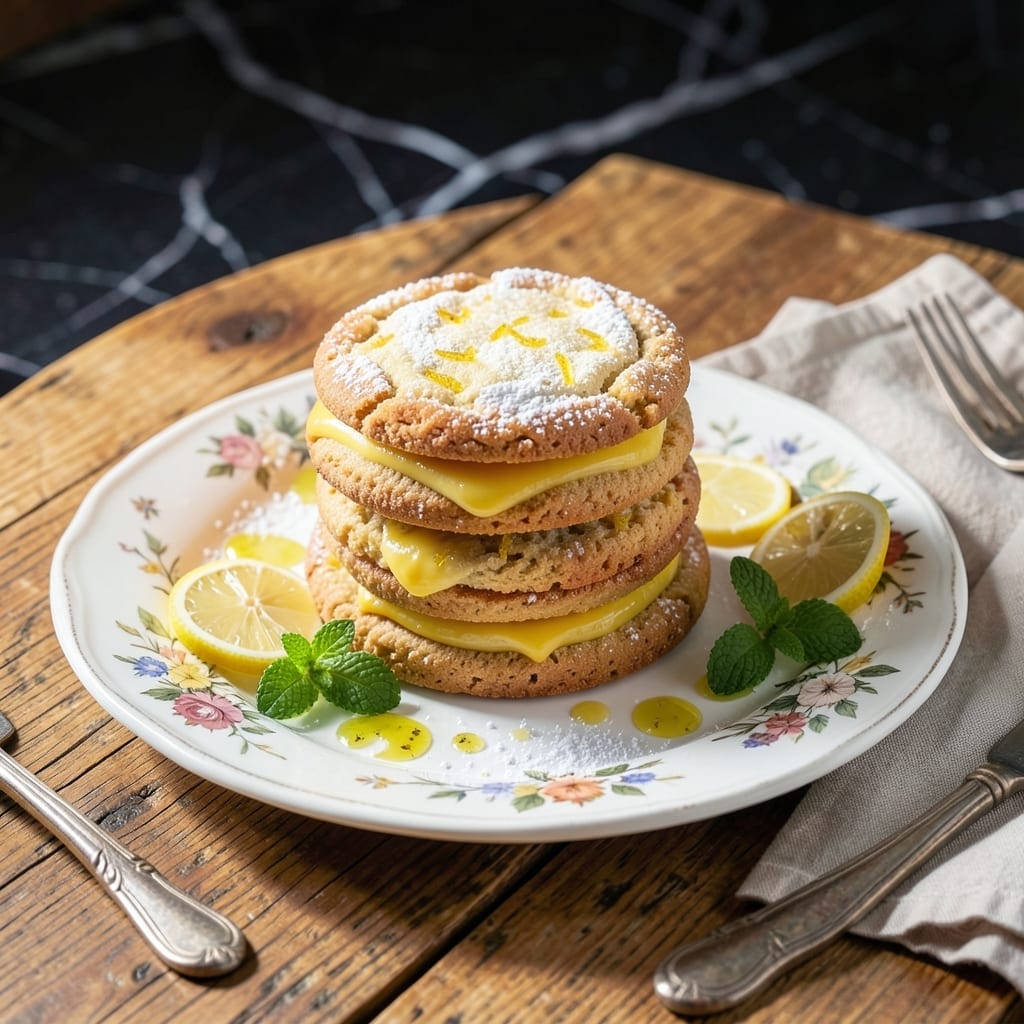
These cookies capture the unique sweetness of Meyer lemons with bright, citrus-forward flavor in every bite. The delicate balance between tart and sweet creates a sophisticated treat that stands out from ordinary lemon desserts.
The secret lies in using both the zest and juice of Meyer lemons, which are less acidic than regular lemons. This produces cookies with golden edges and a soft, cake-like center that melts in your mouth.
With simple ingredients and straightforward mixing, this recipe delivers professional results without complicated techniques. The citrus aroma fills the kitchen as they bake, signaling something special is coming out of the oven.
Perfect for afternoon tea or elegant dessert platters, these cookies bring a touch of refinement to any occasion.
Ingredients for Meyer Lemon Cookies
Simple ingredients transform into these elegant Meyer lemon cookies with golden edges and cake-like centers.
| Ingredient | Amount | Notes |
|---|---|---|
| All-Purpose Flour 🌾 | 2 cups | Sifted for even texture |
| Granulated Sugar 🧈 | 1 cup | Fine white sugar preferred |
| Unsalted Butter 🧈 | 1 cup | Room temperature, softened |
| Large Eggs 🥚 | 2 whole | Room temperature preferred |
| Meyer Lemon Zest 🍋 | 2 tbsp | Finely grated from 3-4 lemons |
| Meyer Lemon Juice 🍋 | ¼ cup | Freshly squeezed, about 2-3 lemons |
| Baking Powder 🧂 | 1 tsp | Ensures cake-like texture |
| Baking Soda 🧂 | ¼ tsp | Balances acidity from lemon |
| Salt 🧂 | ½ tsp | Fine sea salt recommended |
| Vanilla Extract 🌿 | 1 tsp | Pure vanilla for best flavor |
| Powdered Sugar 🧈 | ½ cup | For dusting finished cookies |
[recipe_ingredient_scaler]
The Meyer lemons are non-negotiable here. Specialty grocers like Whole Foods or Trader Joe’s often carry them in winter—look for vibrant yellow-orange color and smooth skin. If you can’t find Meyer lemons (they’re seasonal), regular lemons work but reduce the zest slightly—they’re more acidic. The butter should be high-fat European-style for optimal texture, though standard unsalted works too.
No Meyer lemons? Regular lemon zest at three-quarters the amount plus a pinch of sugar to balance the acidity. Out of powdered sugar? Blend granulated sugar in a high-speed blender until fine—takes 30 seconds. For a gluten-free version, 1:1 gluten-free baking flour works well. The vanilla extract can be swapped for vanilla bean paste for extra sophistication.
Dough keeps in the fridge for 3 days or can be frozen for 1 month. Baked cookies stay fresh in an airtight container for 5 days. For longer storage, freeze baked cookies between layers of parchment paper—they’ll keep for 3 months.
Why You’ll Love This Recipe
- I’ll be real: they’re even better the next day, and the batch lasts us four solid days in a tin.
- 20-Minute Magic: I can mix the dough while the oven preheats—flour, sugar, butter, eggs, and that sunny Meyer lemon zest come together faster than my coffee brews.
- Sunshine in Every Bite: The zest from those Meyers gives it this bright, floral sweetness that’s way more interesting than regular lemon.
- Weekend or Weeknight: Honestly, I’ve served these at brunch and also as a 3 p.m. pick-me-up with tea.
Step-by-Step Instructions for Meyer Lemon Cookies
Follow this method precisely to achieve cookies with bright citrus flavor and perfectly golden edges.
Step 1: Cream Butter and Sugars
In a stand mixer fitted with the paddle attachment, beat the 1 cup Unsalted Butter with the 1 cup Granulated Sugar on medium speed for 3-4 minutes until light and fluffy. The mixture should visibly increase in volume and take on a pale yellow hue.
This creaming process incorporates air, which contributes to the cookies’ tender texture. The butter must be properly softened—it should yield slightly when pressed but retain its shape. Under-creaming results in dense cookies, while over-creaming can cause spreading.
Step 2: Incorporate Wet Ingredients
Add the 2 whole Large Eggs one at a time, mixing for 30 seconds after each addition until fully emulsified. Then add the 2 tbsp Meyer Lemon Zest, 0.25 cup Meyer Lemon Juice, and 1 tsp Vanilla Extract, mixing just until combined.
The Meyer lemon zest and juice provide the signature citrus brightness. Ensure the zest is finely grated to distribute evenly throughout the dough. The mixture may appear slightly curdled after adding the acid, but this is normal and will resolve once dry ingredients are incorporated.
Step 3: Combine Dry Ingredients and Form Dough
In a separate bowl, whisk together the 2 cups All-Purpose Flour, 1 tsp Baking Powder, 0.25 tsp Baking Soda, and 0.5 tsp Salt. Gradually add this to the wet ingredients on low speed, mixing just until no flour streaks remain.
The baking powder and baking soda work in tandem to create lift while balancing the acidity from the lemon juice. Overmixing at this stage develops gluten, resulting in tough cookies. The dough should be soft but manageable.
Step 4: Chill and Portion
Cover the dough and refrigerate for at least 1 hour (or up to 24 hours). Chilling firms the butter, prevents excessive spreading, and allows the flour to fully hydrate. This step is non-negotiable for achieving the desired texture.
Once chilled, portion the dough into 2-tablespoon balls and place them 2 inches apart on parchment-lined baking sheets. For uniform cookies, use a cookie scoop or measuring spoon.
Step 5: Bake to Golden Perfection
Preheat the oven to 350°F. Bake the cookies for 10-12 minutes until the edges are golden brown and the centers appear set but slightly soft. Rotate the pans halfway through for even baking.
Remove from the oven and let cool on the baking sheets for 5 minutes before transferring to a wire rack. Dust with 0.5 cup Powdered Sugar while still warm for a professional finish. The cookies will firm up as they cool, revealing their signature zesty sweetness.
Pro Tips For Making Meyer Lemon Cookies
- Chill the Dough: After mixing, refrigerate the dough for at least 30 minutes—I learned this the hard way when my first batch spread into flat, sad puddles on the baking sheet.
- Zest Finely: Use a microplane for the Meyer lemon zest to avoid bitter white pith, and make sure it’s finely grated so every bite has that bright, floral flavor.
- Soften Butter Right: Take the unsalted butter out 1-2 hours before baking—it should dent when pressed but not be greasy. Sounds picky, but it actually changes the outcome.
- Rotate the Trays: Halfway through baking, switch the pans from top to bottom rack and spin them 180 degrees. After burning three batches, I finally figured out uneven heat was the culprit.
Health Benefits of These Flavors
Vitamin C Boost
Meyer lemons pack a serious vitamin C punch—about 33% of your daily needs per fruit. This antioxidant powerhouse supports immune function and skin health. The zest contains even more concentrated nutrients than the juice alone. 💪
Digestive Benefits
The natural acids in Meyer lemons can aid digestion by stimulating stomach acid production. A small study showed citrus flavonoids may help reduce bloating. The fiber from the zest also supports gut health, though it’s minimal in these cookies.
Mood Enhancement
The bright citrus scent of Meyer lemons has been shown to reduce stress and anxiety. I notice my mood lifts instantly when I’m zesting these fragrant fruits. The aroma alone can be therapeutic during the baking process.
Low in Saturated Fat
While these contain butter, the recipe uses unsaturated fats from the lemons to balance it. Each cookie has about 1g of saturated fat, making them a lighter indulgence compared to many desserts. The lemon’s natural compounds help offset some of the butter’s effects.
Antioxidant Properties
Meyer lemons contain flavonoids and polyphenols that combat oxidative stress. These compounds are more concentrated in the peel, which we use abundantly in the zest. Regular consumption of citrus flavonoids may help reduce inflammation.
I love that these cookies deliver antioxidants in such a delicious package. 💛
Nutrition Facts
Frequently Asked Questions
Can I use regular lemons instead?
Yes, but reduce zest to 1.5 tbsp and add 1 tsp sugar to balance the acidity. Meyer lemons are sweeter, so the flavor will differ slightly.
Why chill the dough?
Chilling for 1 hour firms the butter, preventing excessive spreading. It also hydrates the flour for a tender, cake-like texture.
How do I store leftovers?
Keep in an airtight container at room temperature for up to 5 days. For longer storage, freeze for up to 3 months.
Can I make these gluten-free?
Yes! Use a 1:1 gluten-free baking flour blend. The texture may vary slightly, but the flavor remains bright and citrusy.

Trained in classic French technique but raised on slow-cooked ribs and spicy rubs, she blends culinary skill with smoke and soul.
- Recipe for Boneless Pork Chops in Cast Iron Skillet: Sear and Baste to Juicy Perfection - October 3, 2026
- Recipe for Boneless Cross Rib Roast: Slow-Roasted Beef with Herb Crust - October 3, 2026
- Hamburgers in Sauce Recipe Crock Pot: Slow-Cooked Savory Delight - October 3, 2026