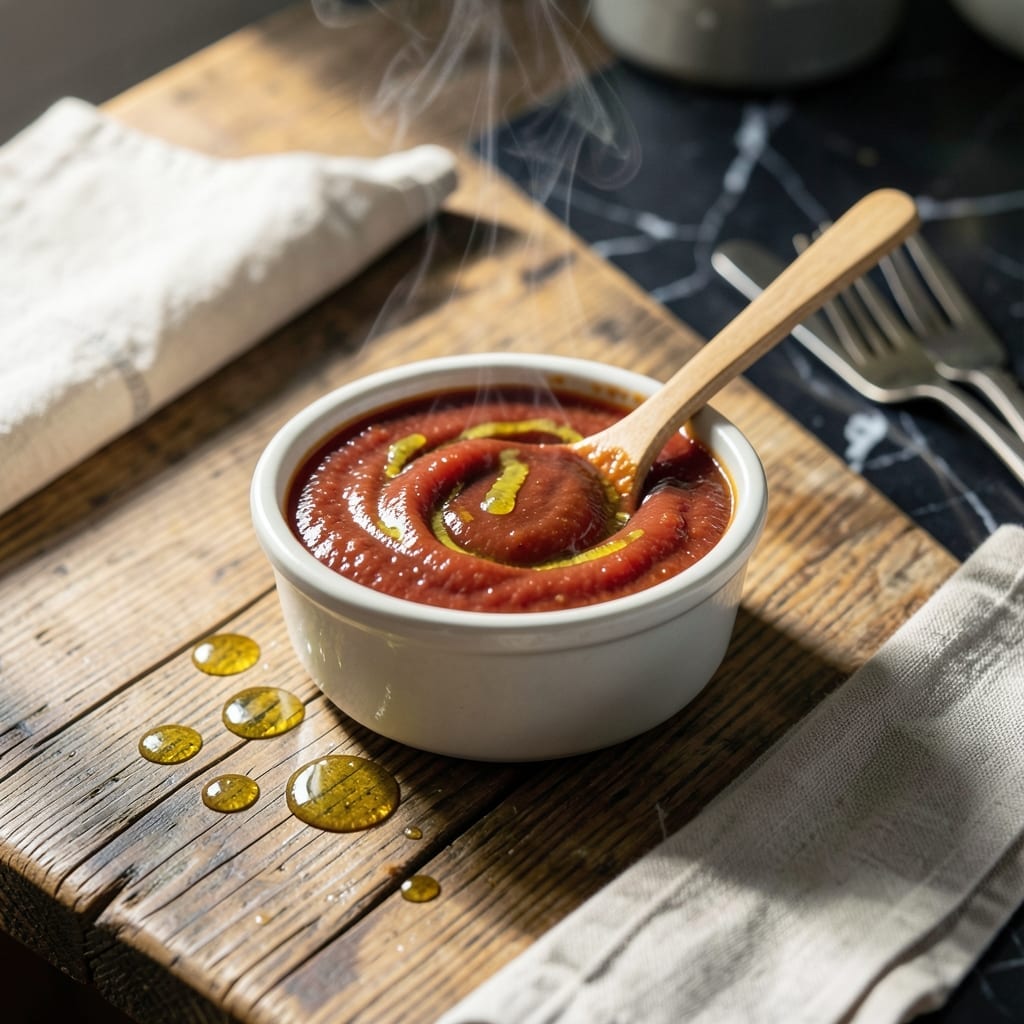
This regional specialty brings a unique blend of sweet and tangy flavors with a subtle spiced kick to your table.
Perfect for hot dogs, burgers, or as a dipping sauce, it delivers that authentic Plattsburgh taste in every bite.
Ingredients for Michigan Sauce Recipe Plattsburgh Ny
Sweet, tangy, and subtly spiced—this sauce captures Plattsburgh’s signature Michigan flavor in every bite.
| Ingredient | Amount | Notes |
|---|---|---|
| Tomato Paste 🍅 | ½ cup | For rich tomato base |
| Apple Cider Vinegar 🍏 | ½ cup | For tangy brightness |
| Granulated Sugar 🍚 | ¾ cup | Balances acidity and spice |
| Water 💧 | ½ cup | Adjusts sauce consistency |
| Yellow Mustard 🟡 | 2 tbsp | Adds classic hot dog flavor |
| Worcestershire Sauce 🫒 | 1 tbsp | Deep umami complexity |
| Ground Celery Seed 🌿 | 1 tsp | Signature Michigan sauce spice |
| Onion Powder 🧅 | 1 tsp | Savory depth without texture |
| Garlic Powder 🧄 | 1 tsp | Essential aromatic base |
| Salt 🧂 | 1 tsp | Season to taste |
| Ground Black Pepper 🌶️ | ½ tsp | Freshly ground preferred |
[recipe_ingredient_scaler]
The celery seed is non-negotiable—it’s what gives this its authentic Michigan character. Penzeys has the freshest ground celery seed (or grab whole seeds and grind them yourself). Most grocery stores carry it in the spice aisle, but check the date—old seeds lose their punch fast. For the tomato paste, San Marzano canned tomatoes blended smooth work if you’re making a bigger batch.
No celery seed? Celery salt at half the amount gets you close, but the flavor won’t be identical. Swap apple cider vinegar for white vinegar in a pinch (less tang, more bite). For a smoother sauce, blend it at the end. If you’re missing Worcestershire, soy sauce with a dash of lemon juice works—though the depth won’t be the same. Yellow mustard is key, but Dijon in a 1:1 swap won’t ruin it.
This keeps for 2 weeks in the fridge in a sealed jar. For longer storage, freeze in ice cube trays—thaw only what you need. The flavors actually get better after a day or two, so make it ahead if you can.
Why You’ll Love This Recipe
- 5-Minute Mix: I just stir together tomato paste, vinegar, sugar, water, and mustard—no cooking required.
- Sweet-Tangy Kick: The apple cider vinegar and sugar balance into this ridiculously good, slightly sweet tang that hits every time.
- Hot Dog Hero: I slather it on coneys, brats, even meatloaf sandwiches—honestly, it’s my secret weapon for quick meals.
- Pantry Staples Only: Between us, I always have these ingredients on hand, so I can whip this up without a last-minute store run.
Step-by-Step Instructions for Michigan Sauce
This regional specialty comes together quickly with precise timing and attention to texture.
Step 1: Combine Liquid Base Ingredients
In a medium saucepan, whisk together the 0.5 cup Tomato Paste, 0.5 cup Apple Cider Vinegar, and 0.5 cup Water over medium heat. The tomato paste will initially form small clumps, but persistent whisking will create a smooth, uniform liquid base.
Bring the mixture to a gentle simmer. You’ll notice the color deepen slightly as the ingredients meld together, which usually takes about 2-3 minutes. This step establishes the foundation for that signature tangy-sweet balance.
Step 2: Incorporate Sweetener and Seasonings
Add the 0.75 cup Granulated Sugar, 2 tbsp Yellow Mustard, 1 tbsp Worcestershire Sauce, 1 tsp Ground Celery Seed, 1 tsp Onion Powder, 1 tsp Garlic Powder, 1 tsp Salt, and 0.5 tsp Ground Black Pepper to the saucepan.
Stir continuously with a wooden spoon for 1-2 minutes until the sugar fully dissolves and the spices are evenly distributed. The mixture will begin to thicken slightly as the sugar caramelizes, creating a glossy sheen on the surface.
Here’s the thing—this is when you’ll start to smell the complex aroma developing. The celery seed adds that distinctive Michigan sauce character, while the onion and garlic powders provide savory depth.
Step 3: Simmer to Desired Consistency
Reduce heat to low and let the sauce simmer uncovered for 15-20 minutes. Stir occasionally to prevent sticking, especially as the mixture thickens toward the end of the cooking time.
You’ll know it’s ready when the sauce coats the back of a spoon and has reduced by about one-third. The color will transform into a rich, reddish-brown, and the texture should be smooth but thick enough to cling to hot dogs or burgers.
Real talk: if it thickens too quickly, add a splash of water and continue simmering. The sauce should have body but still be pourable.
Step 4: Cool and Store for Optimal Flavor
Remove the saucepan from heat and let the sauce cool to room temperature. This takes about 30-45 minutes and allows the flavors to fully meld and mellow.
Transfer to an airtight container once completely cooled. The sauce will continue to thicken slightly as it cools. For the best results, refrigerate for at least 4 hours before using—this resting time lets the spice blend reach its full potential.
Pro Tips For Making Michigan Sauce Recipe Plattsburgh Ny
- Simmer Low and Slow: Keep the heat at a gentle simmer—too high and the apple cider vinegar will overpower the sauce. I learned this the hard way after my first batch tasted like a vinegar shot.
- Bloom the Paste: Cook the tomato paste in the pot for 1-2 minutes before adding liquids. Sounds weird, but it works: it deepens the flavor and removes the raw tinny taste.
- Balance the Sweetness: Taste before adding all the sugar—some tomato pastes are sweeter than others. I skip the full amount if the sauce already has a mellow edge.
- Use Room-Temp Water: Cold water can make the sugar crystallize instead of dissolve. After burning three batches, I finally figured out that lukewarm water blends everything smoothly.
Dietary Considerations for These Flavors
Keto-Friendly Options
This tangy Michigan sauce can fit a keto diet with a few tweaks. Replace sugar with a keto-approved sweetener like erythritol or allulose to maintain the signature sweetness without the carbs. Also, ensure vinegar and spices are free of added sugars or fillers.
Gluten-Free Adaptations
Most Michigan sauce recipes are naturally gluten-free, but always check labels on ingredients like vinegar or Worcestershire sauce, as some brands may contain gluten. Use certified gluten-free versions to avoid cross-contamination.
Allergen Awareness
Common allergens in Michigan sauce may include mustard or soy (from Worcestershire). For those with sensitivities, substitute soy-free Worcestershire or omit mustard if needed. Always verify ingredient safety for individual dietary needs.
Vegetarian Modifications
Traditional recipes often use anchovies in Worcestershire sauce. For a vegetarian version, opt for anchovy-free Worcestershire or a plant-based alternative. The rest of the ingredients are typically vegetarian-friendly.
Low-Sodium Alternatives
To reduce sodium, use low-sodium soy sauce or Worcestershire, and limit added salt. Fresh herbs and citrus can boost flavor without extra sodium. Taste as you go to balance the tang and spice.
Nutrition Facts

Trained in classic French technique but raised on slow-cooked ribs and spicy rubs, she blends culinary skill with smoke and soul.
- Recipe for Boneless Pork Chops in Cast Iron Skillet: Sear and Baste to Juicy Perfection - October 3, 2026
- Recipe for Boneless Cross Rib Roast: Slow-Roasted Beef with Herb Crust - October 3, 2026
- Hamburgers in Sauce Recipe Crock Pot: Slow-Cooked Savory Delight - October 3, 2026