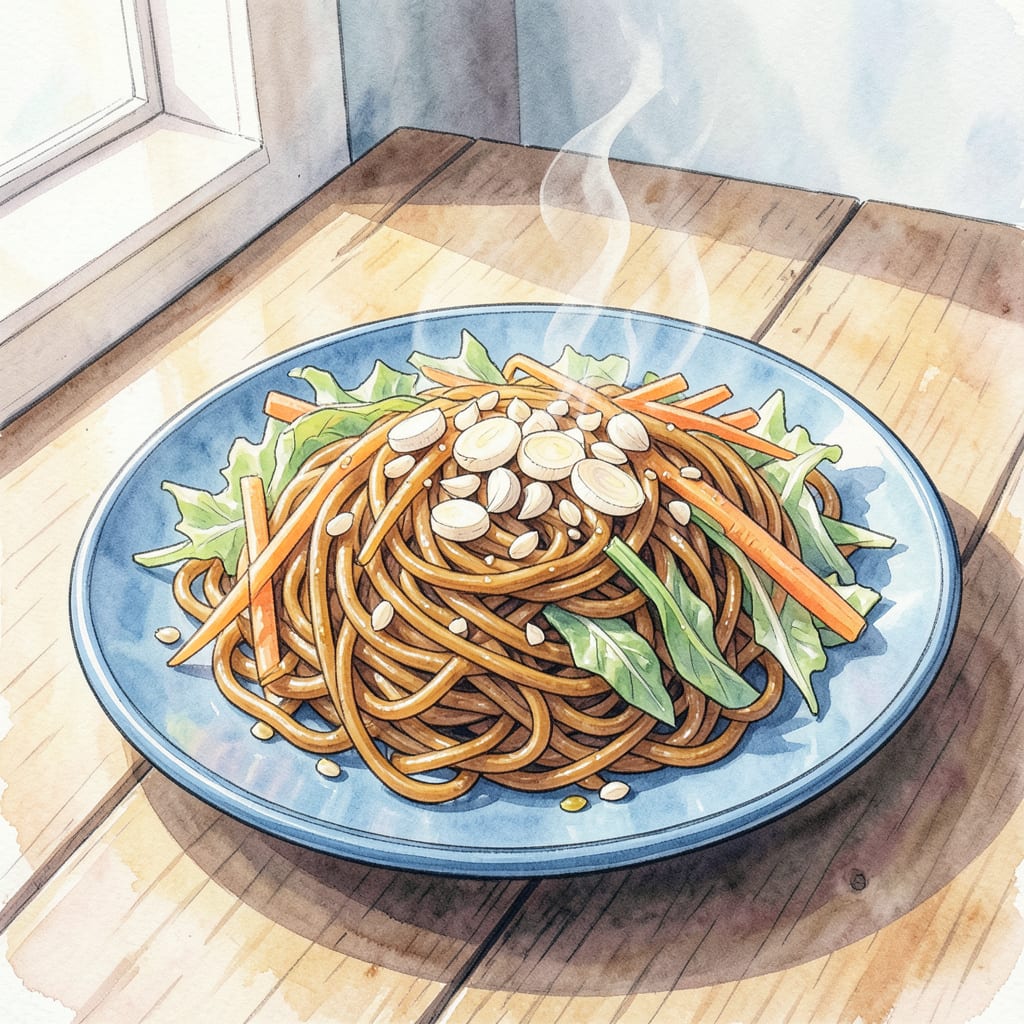
I’m excited to share my take on traditional Indonesian Mie Goreng, a stir-fry noodle dish that’s both flavorful and easy to make. This recipe brings together the perfect balance of sweet, savory, and spicy flavors.
With simple ingredients and straightforward instructions, you’ll have a delicious meal ready in no time. Let’s dive into the world of Indonesian cuisine and explore the rich flavors of Mie Goreng.
Ingredients for Mie Goreng
Simple ingredients come together for authentic Indonesian flavor in this easy stir-fry.
| Ingredient | Amount | Notes |
|---|---|---|
| Dried Mie Goreng Noodles 🍜 | 8 oz | Thick, yellow noodles preferred |
| Vegetable Oil 🫒 | 2 tbsp | For stir-frying |
| Garlic Cloves 🧄 | 4 cloves | Minced, for flavor |
| Shallots 🧅 | 2 whole | Thinly sliced |
| Cabbage 🥬 | 1 cup | Shredded, any variety |
| Carrots 🥕 | 1 cup | Julienned or grated |
| Bean Sprouts 🌱 | 1 cup | Fresh, for texture |
| Soy Sauce 🧂 | 2 tbsp | Or kecap manis for sweetness |
| Oyster Sauce 🌶️ | 1 tbsp | Optional, for umami |
| Tomato Ketchup 🍅 | 1 tbsp | For color and sweetness |
| Chili Sauce 🔥 | 1 tsp | Or sambal oelek for heat |
| Ground White Pepper 🌶️ | ½ tsp | For authentic flavor |
| Salt 🧂 | ½ tsp | To taste, for balancing |
| Scallions 🌿 | ¼ cup | Chopped, for garnish |
[recipe_ingredient_scaler]
For the best Mie Goreng experience, Asian grocery stores often have the right type of noodles. Look for thick, yellow noodles labeled ‘Mie Goreng’ or ‘Indonesian-style’. Most regular supermarkets carry similar dried noodles in their international section. If you can’t find specific Mie Goreng noodles, thick egg noodles are a good substitute. The key is to maintain that chewy texture.
No oyster sauce? No problem. Soy sauce with a splash of sesame oil gets you close. Want more heat? Sambal oelek brings serious chili flavor. Kecap manis (sweet soy sauce) is another Indonesian staple that adds depth—if you find it, use it in place of regular soy sauce for that authentic flavor. Don’t have bean sprouts? Skip them or substitute with thinly sliced bell peppers.
Leftover noodles keep for 3-4 days in the fridge. Reheat in a wok or large skillet with a splash of water to loosen them up. You can freeze cooked noodles for 2 months—just thaw overnight in the fridge. Fresh bean sprouts should be used within a day or two. Store them in water in the fridge to keep them fresh.
Step-by-Step Instructions for Mie Goreng
Let’s cook this authentic Indonesian dish together, step by step, with rich flavor and perfect texture.
Step 1: Prepare the Ingredients
Start by gathering all your ingredients. I like to have everything ready before I begin cooking. Mince the 4 cloves Garlic Cloves and thinly slice the 2 whole Shallots. You’ll notice the aroma filling your kitchen as you chop. Shred 1 cup Cabbage and julienne or grate 1 cup Carrots. Measure out 1 cup Bean Sprouts and set aside. Having everything prepped makes the stir-frying process smooth and efficient.
Now, let’s prepare the sauce mixture. In a small bowl, combine 2 tbsp Soy Sauce, 1 tbsp Oyster Sauce, 1 tbsp Tomato Ketchup, 1 tsp Chili Sauce, 0.5 tsp Ground White Pepper, and 0.5 tsp Salt. Whisk until well blended. The mixture should have a balanced sweet, savory, and spicy flavor. Set it aside for now.
Step 2: Cook the Noodles
Bring a large pot of water to a rolling boil. Cook the 8 oz Dried Mie Goreng Noodles according to package instructions, typically 3-5 minutes, until they’re al dente. Drain and rinse under cold water to stop the cooking process. I like to drizzle a bit of oil to prevent sticking. The noodles should be firm yet yield to the bite, ready to absorb all the flavors in the stir-fry.
Step 3: Stir-Fry the Aromatics
Heat 2 tbsp Vegetable Oil in a large wok or skillet over medium-high heat. Once the oil is hot and shimmering, add the minced Garlic Cloves and sliced Shallots. Stir-fry until they become fragrant and slightly caramelized, about 2-3 minutes. Be careful not to burn them—they should be golden, not dark brown.
Step 4: Add Vegetables and Noodles
Add 1 cup Cabbage, 1 cup Carrots, and 1 cup Bean Sprouts to the wok. Stir-fry for 2-3 minutes until the vegetables are tender-crisp. Then, add the cooked noodles to the wok along with the prepared sauce mixture. Toss everything together, ensuring the noodles are well coated and the vegetables are evenly distributed. Cook for another 2-3 minutes, stirring constantly, until everything is heated through and the flavors are well combined.
Step 5: Finish and Garnish
Taste and adjust the seasoning as needed. Transfer the Mie Goreng to serving plates. Sprinkle 0.25 cup Scallions on top for a fresh, oniony flavor. Serve immediately while hot, enjoying the harmony of flavors and textures. The noodles should be savory, the vegetables crisp, and the overall dish satisfying.
Common Mistakes When Making mie goreng
Overcooking the Noodles
Cooking noodles until they’re mushy is a common mistake that ruins the texture of Mie Goreng. I always check the package instructions for the recommended 3-5 minute cooking time. To achieve perfect noodles, I cook them until they’re just al dente, then immediately rinse them under cold water to stop the cooking process. This helps maintain their firm texture.
Skipping Ingredient Prep
Not having all ingredients prepped before starting to cook can lead to chaos in the kitchen, especially when stir-frying at high heat. I
Using Too Much Sauce
Adding too much sauce can make the noodles soggy and overpowering. I start with the recommended amounts—2 tbsp soy sauce, 1 tbsp oyster sauce, and 1 tbsp tomato ketchup—and adjust to taste. This balanced approach allows the flavors to meld together without overwhelming the dish.
Not Stir-Frying at High Heat
Mie Goreng requires high heat to achieve that signature wok hei (breath of the wok). I heat my wok over medium-high heat until it’s almost smoking, then add the ingredients quickly. This technique ensures a quick stir-fry that preserves the crunch of the vegetables and the texture of the noodles.
Omitting Key Seasonings
Forgetting to add key seasonings like ground white pepper can result in a lackluster flavor. I
Not Customizing to Taste
Mie Goreng is a versatile dish that can be tailored to individual tastes. I adjust the level of spiciness by adding more or less chili sauce, and I add other vegetables or proteins as needed. This flexibility makes the dish more enjoyable and satisfying.
Nutrition Facts

Trained in classic French technique but raised on slow-cooked ribs and spicy rubs, she blends culinary skill with smoke and soul.
- Recipe for Boneless Pork Chops in Cast Iron Skillet: Sear and Baste to Juicy Perfection - October 3, 2026
- Recipe for Boneless Cross Rib Roast: Slow-Roasted Beef with Herb Crust - October 3, 2026
- Hamburgers in Sauce Recipe Crock Pot: Slow-Cooked Savory Delight - October 3, 2026