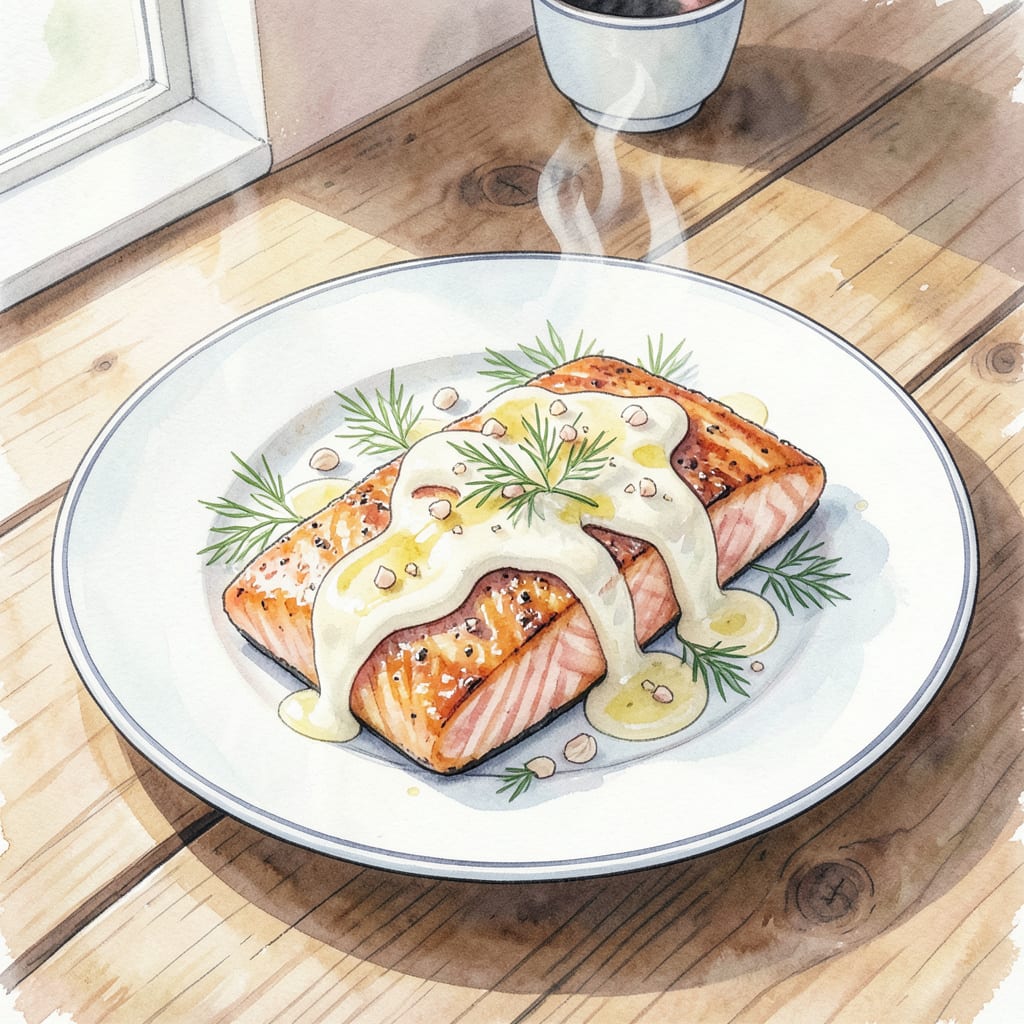
I’ve perfected a salmon mayo recipe that delivers creamy, flaky perfection in just minutes. The secret lies in combining tender grilled or baked salmon with a rich homemade mayo sauce.
This dish is a game-changer for weeknight dinners or special occasions. With simple ingredients and straightforward instructions, you’ll achieve restaurant-quality results at home. Let’s dive into the recipe!
Ingredients for Salmon Mayo
Elevate your weeknight dinners with these simple, premium ingredients for perfect salmon mayo.
| Ingredient | Amount | Notes |
|---|---|---|
| Salmon Fillets 🐟 | 1 ½ lb | Skin removed, wild caught preferred |
| Mayonnaise 🥘 | 1 cup | Homemade or high-quality store-bought |
| Fresh Dill 🌿 | ¼ cup | Chopped, fresh preferred |
| Fresh Lemon Juice 🍋 | 2 tbsp | Freshly squeezed, not bottled |
| Dijon Mustard 🌶️ | 1 tsp | Whole-grain or smooth |
| Garlic Cloves 🧄 | 2 cloves | Minced, fresh |
| Salt 🧂 | ½ tsp | Kosher or sea salt |
| Black Pepper 🌶️ | ¼ tsp | Freshly ground preferred |
| Olive Oil 🫒 | 2 tbsp | Extra-virgin for richness |
| Fresh Parsley 🌿 | ¼ cup | Chopped, for garnish |
| Lemon Zest 🍋 | 1 tsp | Freshly grated, from organic lemons |
[recipe_ingredient_scaler]
For the salmon, wild-caught Alaskan or Pacific varieties offer the best flavor and texture. Look for fresh, firm fillets at your local fish market or high-quality frozen options. If using frozen, thaw slowly in the refrigerator for best results. I prefer to buy from Whole Foods or local sustainable seafood sources.
No fresh dill? Dried dill at one-third the amount works as a substitute. For the mayo, making it homemade ensures creaminess, but a high-quality store-bought works too. If you need to substitute the Dijon, whole-grain mustard adds a nice texture. The garlic can be adjusted to taste—roasted garlic gives a different, milder flavor if you want to mix it up.
Store leftover salmon mayo in an airtight container in the refrigerator for up to 3 days. The homemade mayo will keep for 5-7 days in the fridge. When serving, a sprinkle of fresh parsley and lemon zest just before serving enhances both flavor and presentation. Freeze the salmon fillets if you can’t use them immediately—they keep well for 3 months.
Step-by-Step Instructions for Salmon Mayo Recipe
Here’s the method to achieve perfectly cooked salmon with a creamy mayo sauce.
Step 1: Prepare the Salmon Fillets
Start by seasoning the 1.5 lb Salmon Fillets with 0.5 tsp Salt and 0.25 tsp Black Pepper. I like to pat the fillets dry with paper towels first to help the seasoning adhere. Make sure to season both sides evenly. Let the fillets sit at room temperature for 15 minutes before cooking to ensure even cooking.
While the salmon is resting, heat 2 tbsp Olive Oil in a large skillet over medium-high heat. Once the oil is hot and shimmering, add the salmon fillets, skin side up (if they have skin). Cook for 3-4 minutes until the skin is crispy, then flip and cook for another 3-4 minutes until the salmon is cooked through and flakes easily with a fork.
Step 2: Make the Creamy Mayo Sauce
In a medium bowl, combine 1 cup Mayonnaise, 2 tbsp Fresh Lemon Juice, 1 tsp Dijon Mustard, and 1 tsp Lemon Zest. Mix until smooth and well combined. I like to use a microplane to grate the lemon zest finely, which helps it distribute evenly throughout the sauce.
Add 0.25 cup Fresh Dill and 2 cloves Garlic Cloves (minced) to the bowl and mix until just combined. Be careful not to overmix, as this can make the sauce too thin. Taste and adjust the seasoning with salt and pepper as needed. The sauce should be creamy and tangy, with a bright flavor from the lemon and dill.
Step 3: Serve the Salmon with Mayo Sauce
Once the salmon is cooked, remove it from the skillet and place it on a serving plate. Spoon the creamy mayo sauce over the top of each fillet, making sure they’re fully coated. Garnish with additional 0.25 cup Fresh Parsley if desired, and serve immediately.
The salmon should be moist and flaky, with a crispy exterior if cooked with skin. The mayo sauce adds a rich and creamy element that complements the delicate flavor of the salmon perfectly. Serve with your choice of sides, such as roasted vegetables or a fresh salad, to make a complete meal.
Troubleshooting Great salmon mayo
Common Cooking Mistakes
One of the most frequent issues with salmon is overcooking. To avoid this, use a meat thermometer to check for an internal temperature of 145°F. Remove from heat when it reaches 140°F as it will continue to cook while resting. I always say that a perfectly cooked salmon should flake easily with a fork.
Sauce Troubleshooting
If your mayo sauce turns out too thick, thin it with a little fresh lemon juice or water. If it’s too thin, refrigerate for 10-15 minutes to firm up before serving. Be careful not to overmix the sauce as it can separate. Adding the garlic and dill just before serving helps maintain freshness.
Texture Issues
If your salmon feels dry, it was likely overcooked or not properly rested. Letting it rest for 5 minutes after cooking allows juices to redistribute. For the mayo sauce, using high-quality mayonnaise makes a big difference in texture and flavor. If you notice separation, whisking in a little more mayo or lemon juice can help.
Flavor Adjustments
If the dish needs more brightness, add a squeeze of fresh lemon juice just before serving. For more depth, increase the amount of garlic or add a pinch of red pepper flakes. Taste as you go and adjust seasoning accordingly. I like to add a sprinkle of fresh herbs like parsley or dill for extra flavor.
Storage Solutions
For leftovers, store cooked salmon and mayo sauce separately in airtight containers. The sauce keeps for upstrong>5-7 days in the refrigerator, while the salmon is best consumed within 3 days. When reheating salmon, use a low-temperature oven (275°F) to prevent drying out. Re-whisk the mayo sauce before serving.
Equipment Tips
Using a cast-iron skillet helps achieve that perfect crispy crust on the salmon. For making mayo sauce, a microplane grater is essential for incorporating garlic and lemon zest smoothly. Having the right tools makes a big difference in both effort and results.
Nutrition Facts
540kcal

Trained in classic French technique but raised on slow-cooked ribs and spicy rubs, she blends culinary skill with smoke and soul.
- Recipe for Boneless Pork Chops in Cast Iron Skillet: Sear and Baste to Juicy Perfection - October 3, 2026
- Recipe for Boneless Cross Rib Roast: Slow-Roasted Beef with Herb Crust - October 3, 2026
- Hamburgers in Sauce Recipe Crock Pot: Slow-Cooked Savory Delight - October 3, 2026