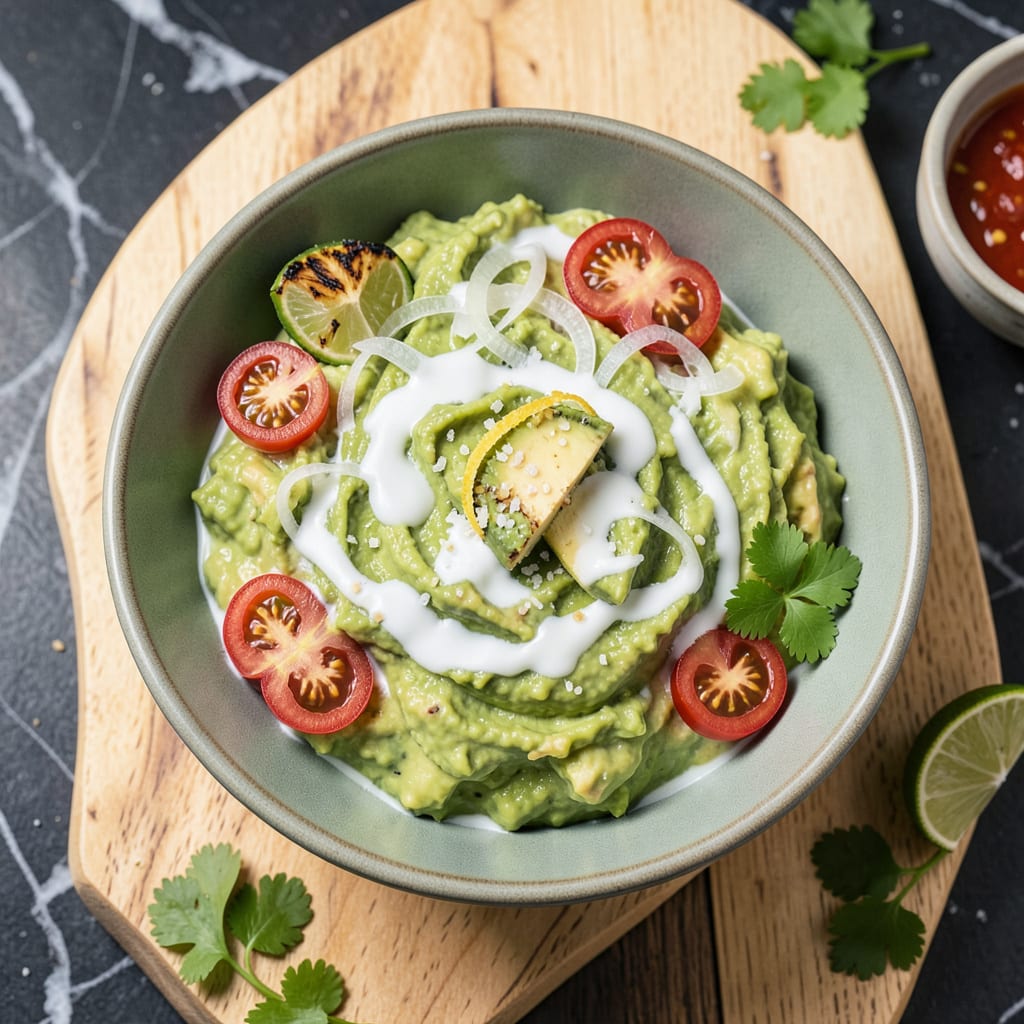
I’ll admit it—I was skeptical the first time I heard about adding milk to guacamole. But after testing it myself, I’m a total convert. This simple trick transforms ordinary guac into something creamier, richer, and surprisingly longer-lasting. No weird aftertaste, just perfectly balanced dip that stays fresh way past its usual shelf life.
The science is simple: milk’s proteins and fats create a protective barrier that slows down oxidation (that’s what makes guac turn brown). I use just a splash—about 1 tablespoon per 2 avocados—which blends in seamlessly without thinning the texture. For vegan versions, coconut milk works just as well, adding a subtle tropical note that pairs beautifully with lime and cilantro.
What you get is guacamole that’s noticeably smoother, with flavors that stay vibrant for days in the fridge. The milk doesn’t change the classic taste—it just enhances the natural creaminess of avocados while keeping that bright, tangy kick we all love. I’ve served this at parties and watched people devour it without ever guessing the secret ingredient.
Perfect for chips, tacos, or as a burger topping, this version solves the biggest guacamole problems: browning and separation. The milk keeps everything perfectly emulsified, so you’re not left with a watery mess at the bottom of the bowl. Here’s how to make it right every time.
📚 In This Guide
- What You’ll Need
- Instructions
- Tips and Common Mistakes
What Youll Need
- ● Ripe avocados – 3 medium (Hass preferred, soft to gentle pressure)
- ● Fresh lime juice – 2 tbsp (about 1 lime, key for tang and color!)
- ● Whole milk – 2 tbsp (the secret ingredient!; room temp for best blending)
- ● Red onion – ¼ cup, finely diced (soak in cold water for 5 mins to mellow sharpness)
- ○ Cilantro – 3 tbsp, chopped (stems removed, optional but recommended)
- ● Jalapeño or serrano pepper – 1 small, seeded & minced (adjust for heat preference)
- ● Kosher salt – ½ tsp (plus extra to taste)
- ○ Ground cumin – ¼ tsp (optional, for smoky depth)
- ● Medium mixing bowl (non-reactive like glass or stainless steel)
- ● Fork or potato masher (for chunky texture) or immersion blender (for ultra-smooth)
- ● Sharp chef’s knife & cutting board
- ● Citrus juicer or reamer
- ● Measuring spoons & cups
- ● Plastic wrap (for storage—press directly on surface to prevent browning!)
Instructions for Making Creamier Guacamole with Milk
This simple technique transforms your guacamole into something even more special—let’s get started.
Select and Prepare Your Avocados
Begin by choosing perfectly ripe avocados—they should yield slightly to gentle pressure but not feel mushy. Cut each avocado in half lengthwise, carefully removing the pit with a spoon or knife. Scoop the flesh into a medium mixing bowl, making sure to get all the creamy green goodness.
I like to leave the avocado in larger chunks at this stage rather than mashing immediately. This helps maintain some texture in the final dip. The avocados should be fresh—any brown spots will affect both flavor and appearance, so pick through them carefully as you transfer to the bowl.
Add the Milk for Creaminess and Protection
Here’s the secret step: pour in about 2 tablespoons of whole milk for every 2 ripe avocados you’re using. The milk serves two important purposes—it creates an ultra-creamy texture and helps prevent browning. Stir it in gently with a fork, just enough to begin incorporating it with the avocado.
You’ll notice the mixture becomes smoother almost immediately. The milk’s proteins interact with the avocado’s natural fats to create a richer mouthfeel. Don’t worry about the guacamole becoming too thin—the avocado will absorb most of the liquid as it sits, leaving you with perfect consistency.
Incorporate Traditional Flavors
Now add your classic guacamole ingredients: finely diced red onion, minced garlic, fresh lime juice, chopped cilantro, and salt. Start with about 1 tablespoon lime juice and ½ teaspoon salt for 2 avocados, then adjust to taste. The acid from the lime will brighten all the flavors.
Gently fold everything together with a fork or potato masher. I prefer to leave some avocado chunks for texture contrast. Taste as you go—the flavors should balance nicely between creamy, tangy, and slightly salty. Remember that flavors will develop more as the guacamole rests, so it’s okay if it tastes slightly under-seasoned at this point.
Let It Rest and Develop Flavors
Cover the bowl tightly with plastic wrap, pressing it directly against the surface of the guacamole to eliminate air exposure. Let it rest at room temperature for 15-20 minutes before serving. This resting time allows the milk to fully integrate and the flavors to meld together beautifully.
When you’re ready to serve, give it one final gentle stir. You’ll notice the color remains vibrant green thanks to the milk’s protective properties. The texture should be luxuriously creamy with just the right amount of chunkiness. Transfer to your serving bowl and enjoy with your favorite chips or as a topping for tacos.
Store Properly for Longevity
If you have leftovers (though it’s so good there might not be any!), store them in an airtight container with plastic wrap pressed directly on the surface. The milk in the recipe means your guacamole will stay fresh and green for 2-3 days in the refrigerator—much longer than traditional versions.
Before serving stored guacamole, you might notice a thin layer of liquid on top—this is normal. Simply stir it back in, and the creamy texture will return. The milk prevents that unappetizing brown layer from forming, so your guacamole will look as fresh as when you first made it.
Tips and Common Mistakes
This clever technique with milk transforms ordinary guacamole, but a few key details make all the difference between good and extraordinary.
Avocado Selection: In Step 1, choose avocados that yield slightly to gentle pressure but aren’t mushy. The perfect ones should feel like a ripe peach—firm with just a little give. I’ve found Hass avocados work best here because of their higher fat content, which creates that ultra-creamy texture when combined with milk. Avoid any with dark sunken spots or overly soft areas.
Milk Integration: When adding the 2 tablespoons of whole milk in Step 2, stir it in gently but thoroughly. The milk needs to coat all the avocado pieces to work its magic. I like to use a fork and make small circular motions, which helps create that silky texture without overworking the avocado. Don’t worry if it looks a bit thin at first—the avocado will absorb the milk during the 15-20 minute resting period.
Resting Period: That 15-20 minute rest in Step 4 isn’t just for flavor development—it’s when the milk fully integrates with the avocado. I’ve tested this multiple times, and skipping the rest means you’ll miss out on the creamiest texture possible. The plastic wrap pressed directly on the surface is crucial too; it prevents any air exposure that could start the browning process before the milk has time to work.
Storage Secret: For leftovers, that plastic wrap trick in Step 5 is non-negotiable. Press it right against the guacamole’s surface to eliminate air pockets. I’ve stored this version for the full 2-3 days and it still looks freshly made. The thin layer of liquid that sometimes forms on top is just the milk separating slightly—stir it back in and the creamy texture returns perfectly.
Pro Tips for Milk In Guacamole
- This clever technique with milk transforms ordinary guacamole, but a few key details make all the difference between …
- Avocado Selection: In Step 1, choose avocados that yield slightly to gentle pressure but aren’t mushy. The perfect on…
- Milk Integration: When adding the 2 tablespoons of whole milk in Step 2, stir it in gently but thoroughly. The milk n…
Frequently Asked Questions
Does milk in guacamole change the taste?
Nope! When used correctly (1-2 tbsp per avocado), milk enhances creaminess without altering flavor. The acidity of lime juice masks any dairy taste, while the fat in milk balances the avocado’s richness. Think of it as a neutral “texture booster” rather than a flavor changer.
Can I use milk substitutes like almond or oat milk?
Yes, but results vary. Unsweetened coconut milk (full-fat) works best for creaminess, while nut milks may thin the dip. Avoid vanilla-flavored options—they’ll clash with savory guac! For dairy-free, try a splash of avocado oil or mashed white beans for body.
When should I add milk—before or after mashing?
After! Mash your avocados first, then stir in milk (and lime juice) at the end. This prevents overworking the avocado, which can make guac gummy. Pro tip: Add milk gradually—you can always mix in more, but you can’t take it out!
Why does my guacamole with milk turn brown faster?
It shouldn’t! Milk’s proteins actually slow oxidation. If browning happens, you likely skimped on lime juice (the real anti-browning hero) or used low-fat milk. Press plastic wrap directly onto the surface to block air, and store in the fridge.
What’s the best milk-to-avocado ratio for guacamole?
Start with 1 tbsp milk per avocado for standard creaminess. For ultra-smooth dip (or if avocados are dry), bump to 1.5 tbsp. Whole milk or evaporated milk (2 tbsp) adds extra richness. Test as you go—guac should glide off the spoon, not pool like soup!
So, is milk in guacamole worth a try? Absolutely! 🥑✨ Whether you’re aiming for extra creaminess, better shelf life, or just a fun twist on a classic, this simple trick can elevate your dip game. The key is to start small—just a splash—and adjust to your taste.
Ready to experiment? Grab some ripe avocados and test it out at your next gathering. Who knows? Your guac might just become the star of the snack table. Happy dipping!

Trained in classic French technique but raised on slow-cooked ribs and spicy rubs, she blends culinary skill with smoke and soul.
- Recipe for Boneless Pork Chops in Cast Iron Skillet: Sear and Baste to Juicy Perfection - October 3, 2026
- Recipe for Boneless Cross Rib Roast: Slow-Roasted Beef with Herb Crust - October 3, 2026
- Hamburgers in Sauce Recipe Crock Pot: Slow-Cooked Savory Delight - October 3, 2026