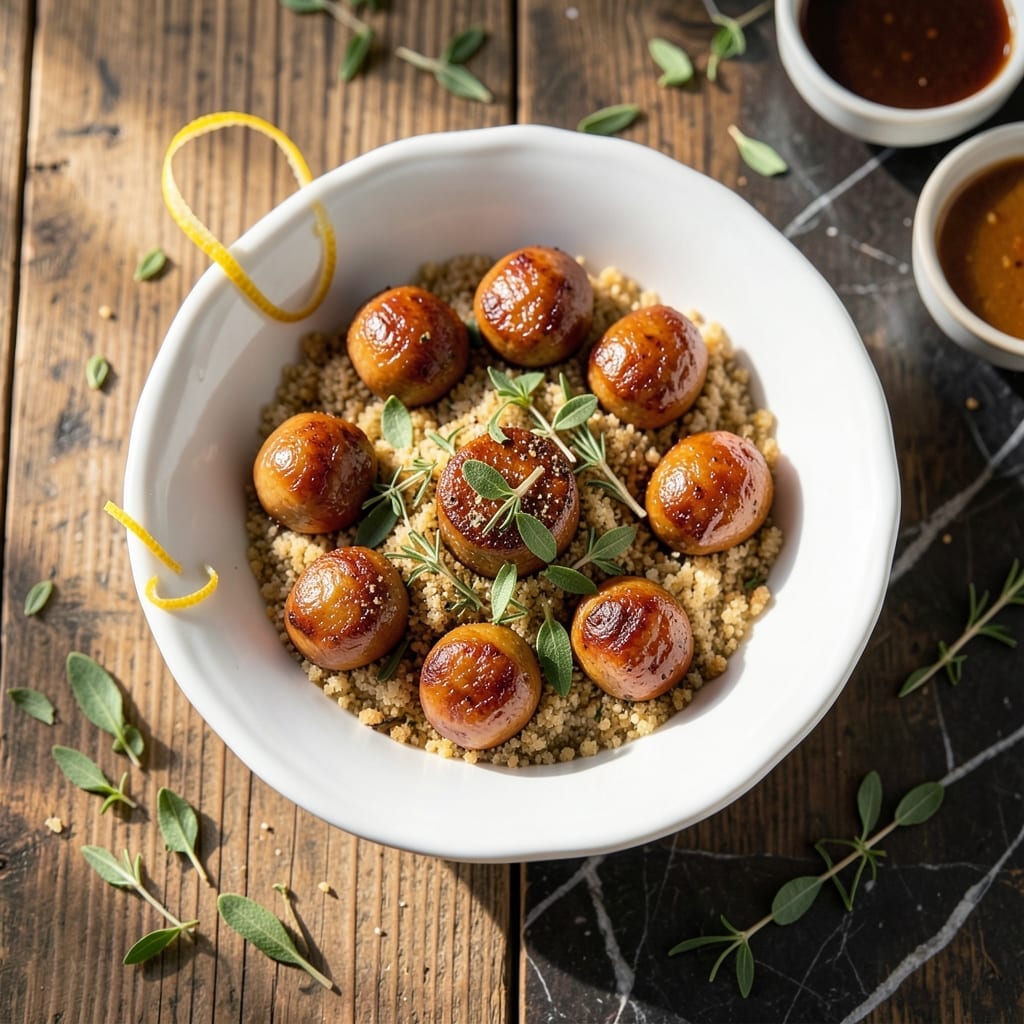
There’s something undeniably satisfying about bite-sized savory treats that pack a flavor punch. These mini sausages deliver restaurant-quality results in a convenient, single-bite format.
I developed this recipe to create versatile appetizers or main course components that work for any occasion. The key is using quality sausage meat and balancing seasonings to enhance rather than overpower the natural flavors.
What you’ll achieve is perfectly browned mini sausages with a slight crisp to the exterior and juicy, flavorful centers. They maintain their shape beautifully and can be customized with various herbs and spices to suit any palette.
Serve them as appetizers with dipping sauces, include them in breakfast spreads, or use as a protein component in main dishes. This recipe proves that great things really do come in small packages.
Ingredients for Mini Sausage Recipe Ideas
Quality meats and balanced spices create these restaurant-worthy bite-sized sausages with crisp exteriors and juicy centers.
| Ingredient | Amount | Notes |
|---|---|---|
| Ground Pork 🐖 | 1 lb | 80/20 fat ratio preferred |
| Ground Beef 🥩 | ½ lb | Chuck for best flavor |
| Dried Sage 🌿 | 1 tsp | Rubbed between fingers |
| Dried Thyme 🍃 | 1 tsp | French or English variety |
| Garlic Powder 🧄 | 1 tsp | Not garlic salt |
| Onion Powder 🧅 | 1 tsp | Fresh ground preferred |
| Black Pepper 🌶️ | 1 tsp | Freshly ground preferred |
| Sea Salt 🧂 | 1 ½ tsp | Fine grain preferred |
| Fennel Seeds 🌿 | 1 tsp | Lightly crushed |
| Red Pepper Flakes 🔥 | ½ tsp | Adjust for heat preference |
| Paprika 🌶️ | 1 tsp | Sweet or smoked variety |
| Breadcrumbs 🍞 | ¼ cup | Plain or panko style |
| Large Egg 🥚 | 1 whole | For binding mixture |
| Olive Oil 🫒 | 2 tbsp | For browning sausages |
[recipe_ingredient_scaler]
The meat blend is critical here. Ground pork with 80/20 fat ratio ensures juiciness, while chuck beef adds depth. Sourcing from a trusted butcher at Whole Foods or a local market guarantees freshness. Look for meat with vibrant color and minimal odor. The sage and thyme should be aromatic—if they smell like dust, replace them.
No fennel seeds? Anise seeds at equal amount work in a pinch. Missing paprika? Smoked paprika adds complexity, but regular is fine. For a milder heat, reduce red pepper flakes by half. The breadcrumbs can be swapped for crushed crackers or almond flour for a gluten-free option. Egg substitutions like flax eggs may alter texture slightly.
Raw sausage mixture keeps for 1-2 days refrigerated. Cooked mini sausages stay fresh for 4-5 days in the fridge or freeze for up to 3 months. Reheat from frozen in a skillet for best texture.
Why You’ll Love This Recipe
- Mix and Go: I dump the ground pork, beef, and spices in a bowl, mix, and shape—no fancy steps, just done.
- Herb-Packed Punch: The sage and thyme hit different with the garlic powder—savory, warm, and just right.
- Party or Freezer: I roll these into little patties for appetizers or freeze a batch for lazy dinners.
- Stretches the Budget: Ground meats and pantry spices keep costs low, and one batch makes enough for leftovers.
Step-by-Step Instructions for Mini Sausages
Master the technique for perfectly seasoned, bite-sized sausages with ideal texture and flavor balance.
Step 1: Combine and Season the Meat Mixture
In a large mixing bowl, combine 1 lb Ground Pork and 0.5 lb Ground Beef with your hands, breaking up any clumps. I prefer using my fingers for this—it gives you better control over the texture than a spoon or fork.
Add 1 tsp Dried Sage, 1 tsp Dried Thyme, 1 tsp Garlic Powder, 1 tsp Onion Powder, 1 tsp Black Pepper, 1.5 tsp Sea Salt, 1 tsp Fennel Seeds, 0.5 tsp Red Pepper Flakes, and 1 tsp Paprika. Rub the dried herbs between your fingers as you add them to release their aromatic oils. This ensures even distribution of flavors throughout the meat.
Mix thoroughly but gently—overworking the meat can make the sausages tough. You want the spices to be evenly incorporated without compacting the mixture too much. The meat should look uniformly seasoned with no visible streaks of spice.
Step 2: Incorporate Binders for Ideal Texture
Add 0.25 cup Breadcrumbs to the bowl. The breadcrumbs act as a binder and help retain moisture, ensuring your sausages stay juicy during cooking. I use plain breadcrumbs for a neutral flavor, but panko works if you prefer a slightly lighter texture.
Crack in 1 whole Large Egg and mix again until everything is just combined. The egg provides additional binding and richness. The mixture should hold together when pressed but still feel slightly tacky—this indicates the right consistency for forming into sausages.
If the mixture seems too loose, add a few more breadcrumbs, but avoid overcorrecting. The fat from the meat and the egg should create a cohesive mixture that sticks together when shaped.
Step 3: Form and Shape the Mini Sausages
Divide the mixture into 4 equal portions (since this recipe serves 4). Roll each portion into a log about 1 inch in diameter. For mini sausages, cut each log into 1-inch pieces, then roll each piece between your palms to form small, uniform sausages.
I find that slightly damp hands prevent sticking and make shaping easier. Press each sausage gently to ensure it holds its form, but don’t compact it too tightly—this can lead to dense, dry sausages. You should end up with about 16-20 mini sausages, depending on how thin you roll them.
Place the formed sausages on a plate or tray and refrigerate for 30 minutes. This chilling step firms them up, making them easier to handle and helping them retain their shape during cooking.
Step 4: Brown and Cook the Sausages to Perfection
Heat 2 tbsp Olive Oil in a large skillet over medium heat. Once the oil shimmers but isn’t smoking, add the sausages in a single layer, being careful not to overcrowd the pan. Cook in batches if necessary—this ensures even browning.
Let the sausages cook undisturbed for 3-4 minutes until they develop a deep golden-brown crust on one side. Resist the urge to flip them too soon. A well-browned exterior adds texture and locks in juices.
Flip the sausages and cook for another 3-4 minutes until browned on all sides and cooked through. The internal temperature should reach 160°F when checked with an instant-read thermometer. Transfer to a paper towel-lined plate to drain excess fat before serving.
Pro Tips For Making Mini Sausage Recipe Ideas
- Chill the Meat: Pop your ground pork and beef in the fridge for 20-30 minutes before mixing—I learned this the hard way after my first batch turned mushy from the fat warming up too soon.
- Toast the Spices: Lightly toast the dried sage and thyme in a dry pan for 30 seconds before adding to the meat; it wakes up the flavors and makes a real difference in the final taste.
- Don’t Overmix: Combine the ingredients just until evenly distributed—overworking the meat gives you dense, tough mini sausages instead of tender, juicy ones.
- Use a Cookie Scoop: A small cookie scoop or tablespoon measure makes portioning the sausage mixture quick and uniform, so they cook evenly without fussing with sticky hands.
Common Mistakes When Making Great mini sausage recipe ideas
Overmixing the Meat
Handling the meat too much develops excess gluten, which creates tough, dense sausages. I mix just until the spices are evenly distributed—about 1-2 minutes with my hands. The mixture should look uniform but still feel slightly loose.
Skipping the Chill
Forming the sausages without chilling first makes them prone to falling apart. I always refrigerate for at least 30 minutes to firm up the fat. This makes shaping easier and helps them hold their form during cooking. 💡
Overcrowding the Pan
Too many sausages in the pan lowers the oil temperature, causing steaming instead of browning. I cook in batches, leaving 1 inch between each piece for even searing. A 12-inch skillet comfortably fits about 8-10 mini sausages at a time.
Underseasoning the Meat
The spices need to penetrate the entire sausage, not just coat the surface. I rub the dried herbs between my fingers as I add them to release their oils. Taste a small piece of raw mixture (if comfortable) to check the seasoning before shaping.
Insufficient Browning
A deep golden-brown crust adds texture and flavor. I let the sausages cook undisturbed for 3-4 minutes per side. If they’re browning too quickly, reduce the heat slightly. The Maillard reaction needs time to develop properly. 🔥
Ignoring Internal Temperature
Appearance isn’t enough to ensure doneness. I always use an instant-read thermometer to check for 160°F. For pork-heavy blends, this guarantees safety while maintaining juiciness. Smaller sausages cook faster than full-sized ones.
Nutrition Facts
Frequently Asked Questions
Can I use turkey instead of pork?
Yes, but use ground turkey thigh for best results. It has more fat than breast meat, keeping the sausages juicy. You may need to add 1 tbsp olive oil to the mixture for extra moisture.
How do I make them ahead of time?
Shape the sausages and refrigerate up to 24 hours before cooking. For longer storage, freeze uncooked sausages on a tray first, then transfer to a bag for up to 3 months.
What’s the best way to serve them?
Try them with toothpicks and dipping sauces like mustard or aioli. They’re also great in breakfast burritos or skewered with veggies for appetizers.
Can I bake them instead of pan-frying?
Bake at 375°F for 15-20 minutes, flipping halfway. For extra crispiness, broil for 1-2 minutes at the end.

Trained in classic French technique but raised on slow-cooked ribs and spicy rubs, she blends culinary skill with smoke and soul.
- Recipe for Boneless Pork Chops in Cast Iron Skillet: Sear and Baste to Juicy Perfection - October 3, 2026
- Recipe for Boneless Cross Rib Roast: Slow-Roasted Beef with Herb Crust - October 3, 2026
- Hamburgers in Sauce Recipe Crock Pot: Slow-Cooked Savory Delight - October 3, 2026