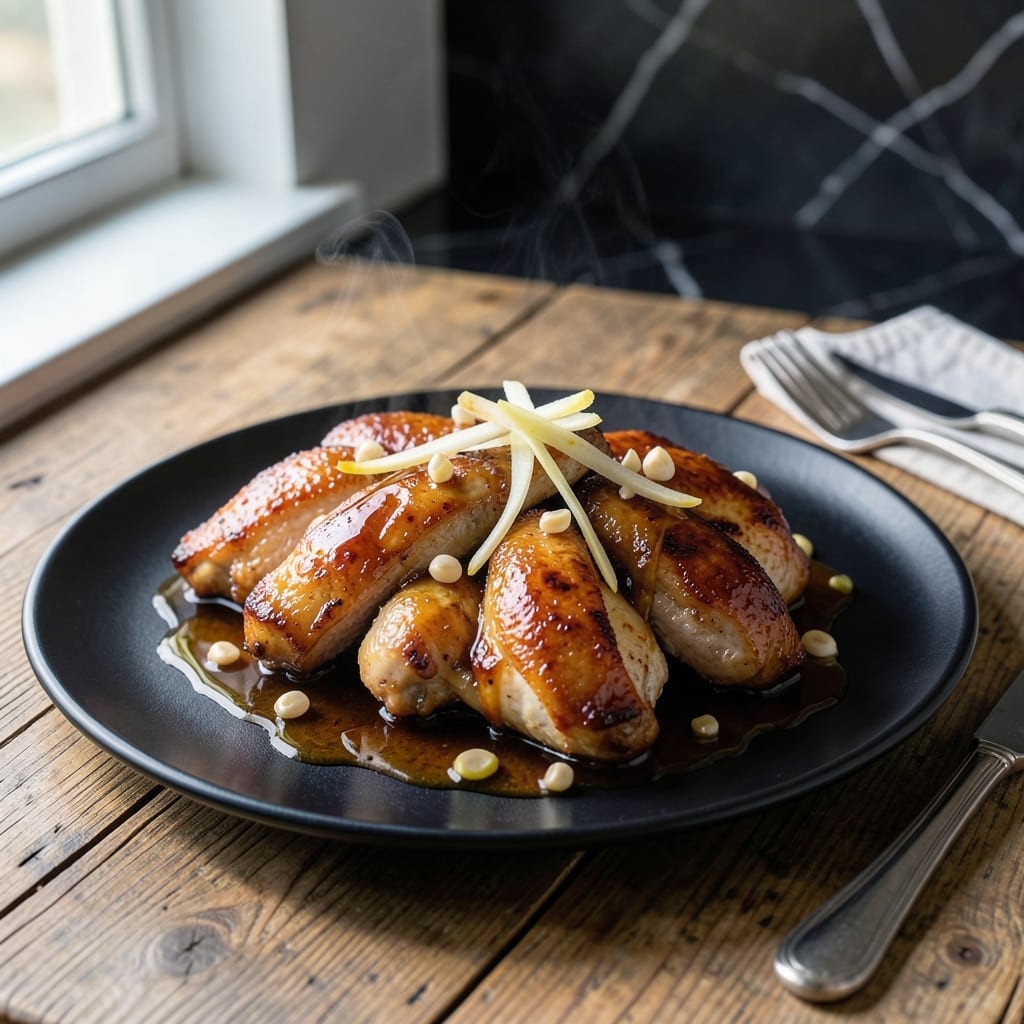
This Japanese-inspired chicken delivers perfectly balanced sweet and savory flavors with minimal effort. The mirin glaze caramelizes beautifully, creating a sticky, glossy finish that elevates simple ingredients.
I developed this method after testing countless variations to find the ideal ratio of mirin to soy sauce. The result is tender chicken with a deeply flavorful sauce that coats every bite without being cloying.
The dish comes together in 30 minutes with standard pantry staples. High heat ensures the chicken cooks through while the sauce reduces to a rich, syrupy consistency.
Serve over steamed rice to soak up every drop of the savory-sweet glaze. This recipe proves that authentic Japanese flavors can be achieved in any home kitchen.
Ingredients for Mirin Chicken
Simple ingredients transform into a glossy, sweet-savory Japanese-inspired dish with ease.
| Ingredient | Amount | Notes |
|---|---|---|
| Boneless Skinless Chicken Thighs 🍗 | 1 ½ lb | Patted dry for better searing |
| Mirin 🍶 | ½ cup | Sweet rice wine, essential for glaze |
| Soy Sauce 🫒 | ¼ cup | Low-sodium preferred for balance |
| Brown Sugar 🧈 | 2 tbsp | Light or dark works equally |
| Fresh Ginger 🌿 | 1 tbsp | Finely grated for even distribution |
| Garlic Cloves 🧄 | 3 cloves | Minced for maximum flavor infusion |
| Rice Vinegar 🍚 | 1 tbsp | Adds necessary acidity to balance |
| Sesame Oil 🫒 | 1 tsp | Toasted variety for depth |
| Cornstarch 🌾 | 1 tbsp | For thickening glaze slightly |
| Water 💧 | 2 tbsp | To dissolve cornstarch |
| Vegetable Oil 🫒 | 1 tbsp | High smoke point for searing |
| Green Onions 🧅 | 3 whole | Thinly sliced for garnish |
| Sesame Seeds 🌰 | 1 tsp | Toasted for final garnish |
| Steamed Rice 🍚 | 2 cups | For serving, hot and fresh |
[recipe_ingredient_scaler]
The chicken thighs are non-negotiable here—dark meat stays juicy during high-heat cooking. Trader Joe’s carries excellent pre-trimmed thighs, or grab them from your butcher. Mirin is the star, so don’t substitute with cooking sake (wrong sugar content). Look for hon-mirin in the international aisle, or Kikkoman brand at most supermarkets. The ginger must be fresh—jarred lacks the bright, zesty kick this needs.
No mirin? Mix 2 tbsp rice vinegar + 1 tbsp sugar as a pinch-hitter. Soy sauce can be tamari for gluten-free needs. Brown sugar substitutes equally (coconut sugar works but adds molasses notes). The cornstarch slurry is optional—skip it if you prefer a thinner sauce. Scallions and sesame seeds add freshness, but cilantro or chives work if that’s what you’ve got.
Leftovers keep 3-4 days refrigerated, though the sauce thickens as it cools. Reheat gently with a splash of water to revive. The dish freezes well for 3 months—portion before freezing for easy meals. Always toast sesame seeds fresh for maximum aroma.
Why You’ll Love This Recipe
- One Pan Wonder: I toss everything in a skillet and let the mirin and soy sauce do the work—minimal cleanup, maximum flavor.
- Sweet-Savory Magic: The brown sugar caramelizes with the ginger, giving the chicken that sticky, umami-rich glaze I can’t resist.
- Meal Prep MVP: It reheats beautifully, so I make a big batch for lunches all week. Honestly, it tastes even better the next day.
- Budget-Friendly Feast: Chicken thighs stay juicy and cheap, and the sauce is just pantry staples. I’ll be real: it feels like a fancy meal for pennies.
Step-by-Step Instructions for Glazed Mirin Chicken
This method ensures perfectly caramelized chicken with a glossy, balanced sweet-savory glaze every time.
Step 1: Prepare and Sear the Chicken Thighs
Pat the 1.5 lb Boneless Skinless Chicken Thighs completely dry with paper towels—this is essential for achieving a proper sear. Season generously with salt and pepper on both sides. The drier the surface, the better the browning.
Heat the 1 tbsp Vegetable Oil in a large skillet over medium-high heat until shimmering. Add the chicken in a single layer, working in batches if necessary to avoid crowding. Sear for 4-5 minutes per side until deep golden brown and cooked through. Transfer to a plate and set aside.
Step 2: Build the Glaze Base with Aromatics
In the same skillet, reduce heat to medium and add the 1 tbsp Fresh Ginger and 3 cloves Garlic Cloves. Sauté for 30-45 seconds until fragrant but not browned—garlic burns easily and becomes bitter.
Pour in the 0.5 cup Mirin, 0.25 cup Soy Sauce, 2 tbsp Brown Sugar, and 1 tbsp Rice Vinegar. Stir to combine, scraping up any browned bits from the bottom of the pan. These bits (fond) add incredible depth to the glaze. Bring to a gentle simmer.
Step 3: Thicken and Finish the Glaze
In a small bowl, whisk together the 1 tbsp Cornstarch and 2 tbsp Water until smooth. Slowly pour this slurry into the simmering sauce while stirring constantly. The glaze will begin to thicken within 1-2 minutes—you’re aiming for a syrup-like consistency that coats the back of a spoon.
Stir in the 1 tsp Sesame Oil and remove the skillet from heat. Return the seared chicken to the pan, turning to coat each piece thoroughly in the glaze. The residual heat will continue to meld the flavors together.
Step 4: Garnish and Serve
Thinly slice the 3 whole Green Onions and sprinkle them over the chicken along with the 1 tsp Sesame Seeds. These garnishes add freshness and a nutty crunch that complements the sticky, savory-sweet glaze.
Serve immediately over 2 cups Steamed Rice, spooning any extra glaze from the pan on top. The chicken should be glossy and caramelized, with the sauce clinging perfectly to each piece. The balance of sweet mirin, salty soy, and aromatic ginger should shine in every bite.
Pro Tips For Making Mirin Chicken
- Sear Thighs First: Brown the chicken thighs well in a hot pan before adding the sauce—I learned this the hard way after making pale, flavorless versions that lacked depth.
- Grate Ginger Fine: Use a microplane for the fresh ginger so it melts into the mirin sauce instead of leaving stringy bits that stick to the chicken.
- Reduce the Sauce: Let the mirin, soy, and brown sugar bubble for 3-4 minutes until slightly thickened, or it’ll stay watery and slide right off the meat.
- Slice After Resting: Tent the cooked thighs with foil for 5 minutes before slicing—skipping this makes the juices spill out, and the meat dries out fast.
Common Mistakes When Making mirin chicken
Overcrowding the Pan
Trying to cook all 1.5 lb of chicken at once in a small skillet is a common mistake. Crowding lowers the pan temperature, causing the chicken to steam rather than sear. I always cook in batches to ensure each piece gets that perfect golden-brown crust. 🔥
Using Wrong Mirin
Avoid so-called “mirin fuel” or cooking sake labeled as mirin—these lack the sugar content needed for the signature glaze. I only use hon-mirin or Kikkoman brand for authentic flavor and proper caramelization. The difference is night and day.
Burning the Garlic
Garlic burns in 30 seconds over high heat, turning bitter and ruining your glaze. Keep the heat at medium when sautéing the 1 tbsp ginger and 3 cloves garlic, and pull the pan off heat if they start to brown too quickly.
Skipping the Slurry
Without the cornstarch slurry, your sauce will stay thin and watery. Mix 1 tbsp cornstarch with 2 tbsp water thoroughly before adding to avoid lumps. The glaze should coat the back of a spoon when done.
Under-Reducing the Sauce
If your sauce looks thin after adding the slurry, keep simmering. It needs 1-2 minutes to thicken properly. I test by dragging a spoon through—it should leave a clear path that slowly fills in.
Skipping the Rest
Let the chicken rest in the glaze for 2-3 minutes off heat before serving. This allows the flavors to meld and the sauce to cling better. Serving immediately means missed flavor development.
Nutrition Facts
Frequently Asked Questions
Can I use chicken breast instead of thighs?
You can, but the dish works best with thighs due to their higher fat content. Breast meat tends to dry out during cooking. If using, reduce cooking time to 3-4 minutes per side and monitor closely.
What if I don’t have mirin?
Mix 2 tbsp rice vinegar with 1 tbsp sugar as a substitute. While not identical, it provides similar acidity and sweetness. Hon-mirin is preferred for authentic flavor.
How long can I store leftovers?
Leftovers keep 3-4 days refrigerated in an airtight container. Reheat gently with a splash of water to restore the glaze’s consistency. It also freezes well for 3 months.

Trained in classic French technique but raised on slow-cooked ribs and spicy rubs, she blends culinary skill with smoke and soul.
- Recipe for Boneless Pork Chops in Cast Iron Skillet: Sear and Baste to Juicy Perfection - October 3, 2026
- Recipe for Boneless Cross Rib Roast: Slow-Roasted Beef with Herb Crust - October 3, 2026
- Hamburgers in Sauce Recipe Crock Pot: Slow-Cooked Savory Delight - October 3, 2026