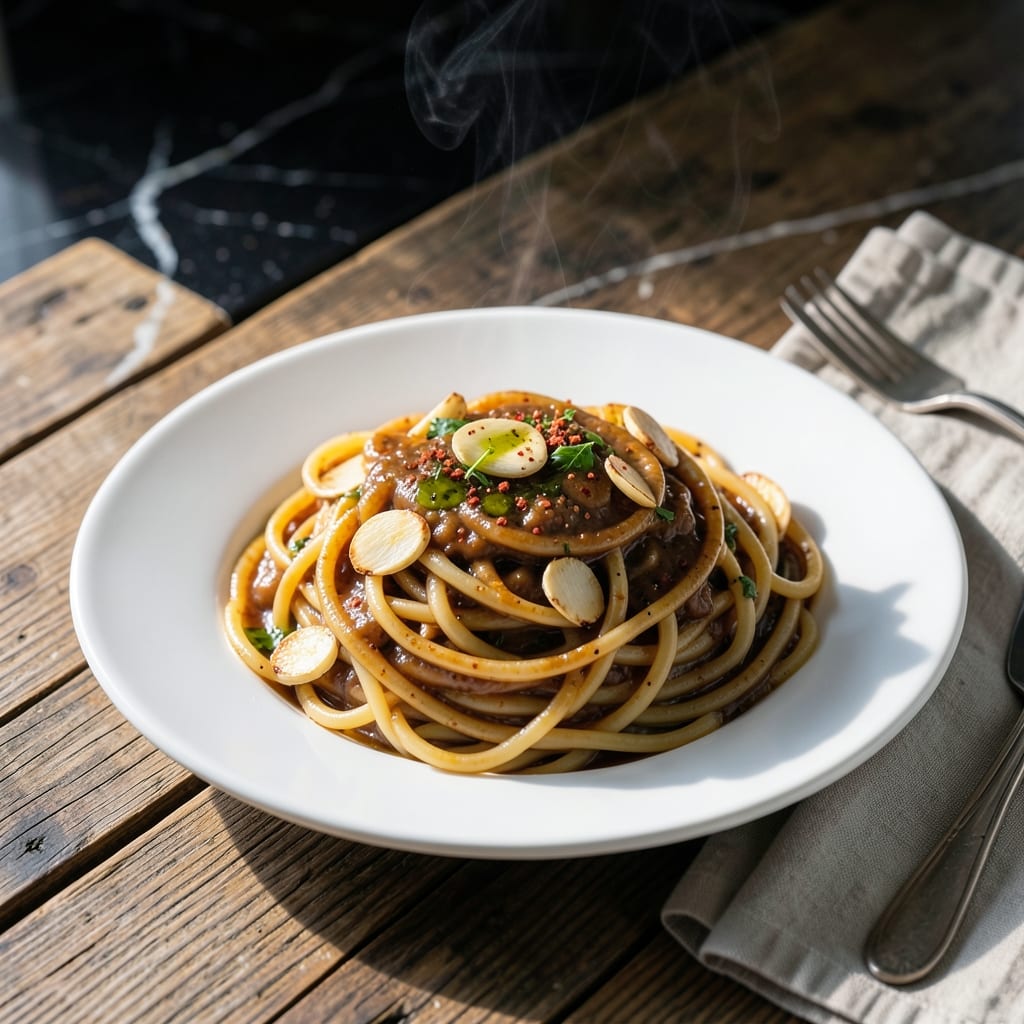
There’s a reason this pasta became my weeknight staple—it delivers restaurant-quality depth with almost no effort. The secret lies in white miso paste, which brings an intense umami richness that makes the dish feel indulgent without any dairy or meat.
In just 20 minutes, you’ll have al dente noodles coated in a velvety, savory sauce that clings perfectly. A splash of pasta water helps emulsify the miso into a creamy consistency, while a touch of maple syrup balances the saltiness.
Every bite offers a complex, satisfying flavor that’s both earthy and slightly sweet. It’s proof that vegan cooking doesn’t mean sacrificing taste or texture.
Simple ingredients, bold results. This is the kind of dish that makes plant-based eating effortless and delicious.
Ingredients for Miso Pasta Recipe Vegan
A handful of pantry staples transforms into a restaurant-worthy vegan dish.
| Ingredient | Amount | Notes |
|---|---|---|
| Spaghetti 🍝 | 12 oz | Or linguine or fettuccine |
| White Miso Paste 🥣 | ⅓ cup | Fermented soybean paste for umami |
| Maple Syrup 🍁 | 2 tbsp | Balances saltiness naturally |
| Garlic Cloves 🧄 | 4 cloves | Minced for aromatic base |
| Extra-Virgin Olive Oil 🫒 | 3 tbsp | For sautéing and richness |
| Vegetable Broth 🥣 | ½ cup | Low-sodium preferred for control |
| Soy Sauce 🥢 | 2 tbsp | Or tamari for gluten-free |
| Rice Vinegar 🍚 | 1 tbsp | Adds subtle tanginess |
| Sesame Oil 🫒 | 1 tsp | Toasted for nutty depth |
| Red Pepper Flakes 🌶️ | ½ tsp | Optional for heat |
| Fresh Cilantro 🌿 | ¼ cup | Chopped for garnish |
| Green Onions 🧅 | 3 whole | Thinly sliced for topping |
| Sesame Seeds 🌰 | 1 tbsp | Toasted for crunch |
[recipe_ingredient_scaler]
The miso is non-negotiable here. White miso paste (like Miso Master or South River brands) gives that signature umami without overpowering. Find it in the refrigerated section at Whole Foods or any Asian market—it keeps forever. The pasta shape matters less, but long strands (spaghetti, linguine) hold the sauce beautifully. I always use bronze-cut for better texture.
No white miso? Red miso at half the amount works but adds more salt and intensity. Swap maple syrup for agave nectar or date syrup. For gluten-free, use tamari instead of soy sauce and rice noodles. The cilantro can be swapped for parsley if you’re one of those people who thinks it tastes like soap (no judgment).
This keeps 3-4 days in the fridge but doesn’t freeze well—the sauce can separate. Store in an airtight container with a splash of water to loosen when reheating. Best eaten fresh, but leftovers still taste great cold straight from the fridge (worth trying).
Why You’ll Love This Recipe
- One-Pot Wonder: I just boil the spaghetti, reserve some pasta water, and toss everything together in the same pot—no extra dishes.
- Umami Bomb: The white miso and garlic create this deep, savory richness that’s balanced perfectly by the touch of maple syrup.
- Meal Prep Hero: It reheats beautifully for lunch the next day, and the flavors actually get better after sitting overnight.
- Budget Friendly: A little miso goes a long way, and the rest are pantry staples I always have on hand.
Step-by-Step Instructions for Umami-Rich Vegan Pasta
This method delivers bold miso flavor in under 20 minutes with foolproof results.
Step 1: Cook the Spaghetti to Al Dente Perfection
Bring a large pot of generously salted water to a rolling boil. Add the 12 oz Spaghetti and cook according to package directions for 1 minute less than al dente. You want the pasta slightly underdone because it’ll finish cooking in the sauce.
Reserve exactly ½ cup of pasta water before draining—this starchy liquid is essential for creating a silky, clingy sauce. Drain the pasta but don’t rinse it; the surface starch helps the miso sauce adhere beautifully to every strand.
Step 2: Bloom Aromatics in Oil for Deep Flavor
While the spaghetti cooks, heat 3 tbsp Extra-Virgin Olive Oil in a large skillet over medium heat. Add the 4 cloves Garlic Cloves, minced, and sauté for 30-45 seconds until just fragrant but not browned. Garlic burns easily, so keep it moving.
Add the 0.5 tsp Red Pepper Flakes and stir for 10 seconds to toast slightly. This step wakes up the heat and infuses the oil with a subtle spicy kick. Remove the pan from heat for the next addition to prevent scorching.
Step 3: Create the Creamy Miso Sauce Base
Off the heat, whisk in the 0.33 cup White Miso Paste, 2 tbsp Maple Syrup, 2 tbsp Soy Sauce, 1 tbsp Rice Vinegar, and 1 tsp Sesame Oil. The miso will seize up initially—this is normal. Return the pan to low heat and add the 0.5 cup Vegetable Broth to loosen the mixture.
Stir constantly for 2-3 minutes until the sauce is smooth and slightly thickened. Taste and adjust seasoning if needed, though the miso and soy sauce provide plenty of depth. The sauce should look glossy and coat the back of a spoon.
Step 4: Combine Pasta and Sauce for Perfect Coating
Add the drained spaghetti to the skillet with the miso sauce. Toss vigorously with tongs, adding reserved pasta water 1 tablespoon at a time until the sauce clings beautifully to the noodles. You’ll likely need about ¼ cup of the pasta water for the ideal consistency.
Cook for an additional 1-2 minutes over medium-low heat, stirring constantly, until the pasta is fully coated and heated through. The sauce should glisten and ribbons of miso should cling to each strand.
Step 5: Garnish and Serve Immediately
Transfer the pasta to serving bowls and top with the 0.25 cup Fresh Cilantro, chopped, and the 3 whole Green Onions, thinly sliced. Sprinkle with 1 tbsp Sesame Seeds for a nutty crunch. Serve right away while the sauce is creamy and the noodles are hot.
The cilantro adds a bright, fresh contrast to the rich umami flavors, while the green onions provide a mild bite. Each bite should deliver a perfect balance of salty, sweet, and savory with a hint of heat from the red pepper flakes.
Pro Tips For Making Miso Pasta Recipe Vegan
- Bloom the Miso: Heat the white miso paste in the olive oil for 30 seconds before adding liquids—sounds weird, but it deepens the umami and removes the raw edge.
- Save Pasta Water: Reserve at least a cup of the starchy cooking water; it’s the only thing that properly emulsifies the miso and maple syrup into a silky sauce.
- Mince Garlic Fine: I learned this the hard way—chop the garlic into a near-paste so it melts into the sauce instead of leaving harsh bites.
- Balance the Sweet: Add the maple syrup gradually and taste as you go; white miso varies in saltiness, and you can over-sweeten the dish in two seconds flat.
Regional Styles of This miso pasta recipe vegan
Japanese Tradition
In Japan, miso is a staple in shojin ryori (Buddhist temple cuisine), which is entirely plant-based. They use awase miso (mixed miso) for depth, but white miso works perfectly for this pasta. The key is balance—umami from miso, sweetness from maple syrup, and acidity from rice vinegar. 🌸
Korean Fusion
Korean cooks often blend miso with gochujang for heat, but here, I add ½ tsp red pepper flakes for a similar kick. The result is a spicy, tangy twist that still lets the miso shine. Garnish with extra sesame seeds for texture.
Thai-Inspired
For a Thai flair, swap the garlic for 1 stalk lemongrass (minced) and add 1 tbsp lime juice to the sauce. The citrus brightens the miso’s richness, while lemongrass adds a floral note. Top with crushed peanuts instead of sesame seeds. 🌿
Italian Adaptation
Believe it or not, miso works beautifully with Italian flavors. Add ¼ cup sun-dried tomatoes to the sauce for sweetness and 2 tbsp nutritional yeast for a cheesy depth. The pasta stays vegan but tastes like a gourmet hybrid.
American Comfort
For a heartier version, stir in 1 cup sautéed mushrooms or ½ cup roasted butternut squash before combining with the pasta. These additions add texture and make the dish feel like a full meal. A sprinkle of toasted breadcrumbs adds crunch.
Nutrition Facts
Frequently Asked Questions
Can I use red miso instead of white?
Yes, but use half the amount. Red miso is saltier and more intense, so 2-3 tbsp will suffice. It adds deeper umami but may darken the sauce significantly.
What if my sauce is too thick?
Add reserved pasta water 1 tbsp at a time while tossing. The starchy water emulsifies the miso into a silky consistency. Avoid plain water—it dilutes the flavor.
How can I make this gluten-free?
Swap regular pasta for rice noodles or gluten-free spaghetti. Use tamari instead of soy sauce. The miso flavor remains just as bold.
Does this dish reheat well?
Best eaten fresh, but leftovers keep 3-4 days in the fridge. Reheat gently with a splash of water to loosen the sauce. Avoid microwaving too long—the miso can separate.

Trained in classic French technique but raised on slow-cooked ribs and spicy rubs, she blends culinary skill with smoke and soul.
- Recipe for Boneless Pork Chops in Cast Iron Skillet: Sear and Baste to Juicy Perfection - October 3, 2026
- Recipe for Boneless Cross Rib Roast: Slow-Roasted Beef with Herb Crust - October 3, 2026
- Hamburgers in Sauce Recipe Crock Pot: Slow-Cooked Savory Delight - October 3, 2026