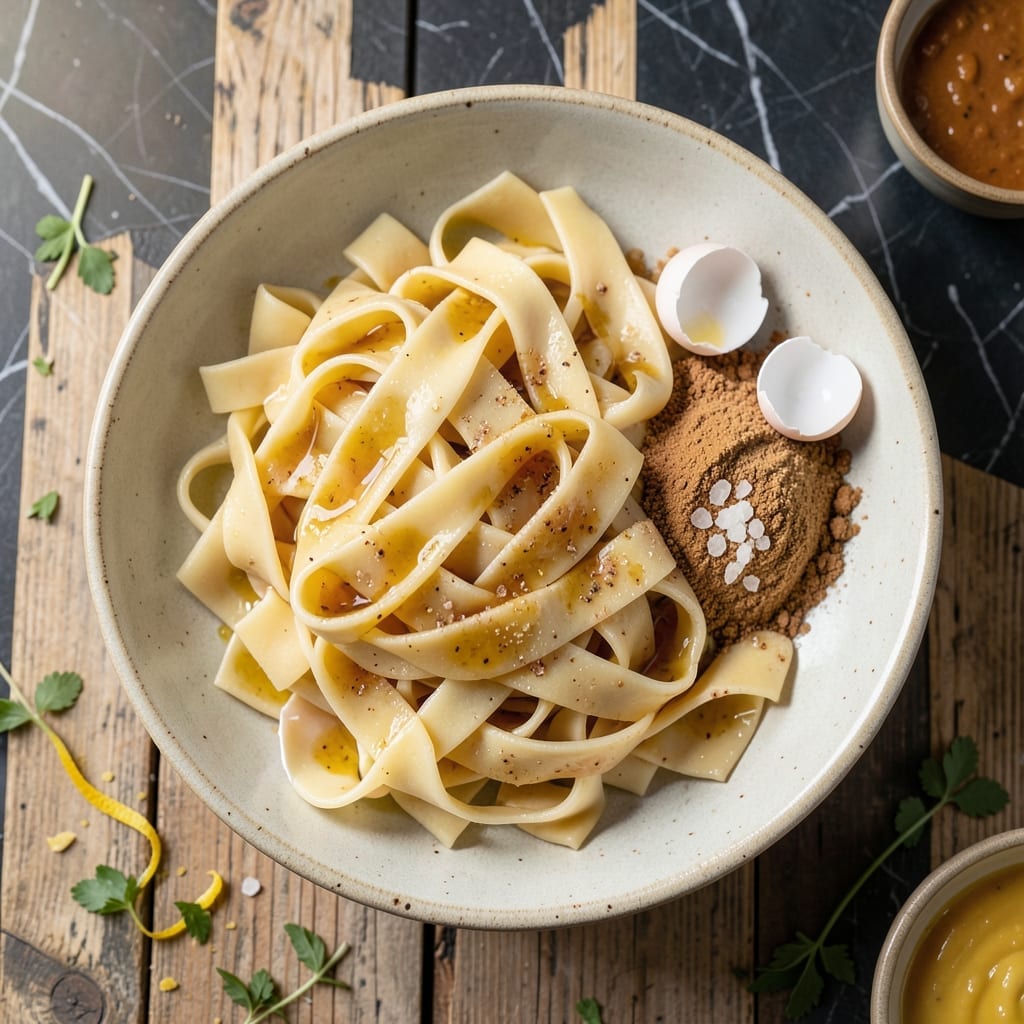
Making fresh pasta with semolina delivers a rustic texture that store-bought can’t match. I developed this method after years of testing in my small Boston kitchen, perfecting the ratio of flour to eggs for that ideal bite.
The dough comes together with just 4 ingredients, requiring only 10 minutes of active prep. Semolina adds a pleasant grit and golden hue, while traditional kneading builds the gluten structure for elastic, workable dough.
After resting, the pasta rolls out smoothly and holds its shape when cut. Cooked al dente, it offers a satisfying chew that absorbs sauces beautifully, transforming simple ingredients into something extraordinary.
This is the kind of recipe that connects you to generations of Italian cooks. The process is simple but demands attention to detail for the best results.
Ingredients for Homemade Italian Pasta Recipe with Semolina
Four simple ingredients transform into rustic, golden pasta with authentic Italian texture and bite.
| Ingredient | Amount | Notes |
|---|---|---|
| Semolina Flour 🌾 | 2 cups | Fine grind, labeled as semola rimacinata |
| All-Purpose Flour 🌾 | 1 cup | Unbleached preferred for texture |
| Large Eggs 🥚 | 4 whole | Room temperature for better incorporation |
| Extra-Virgin Olive Oil 🫒 | 1 tbsp | High quality, fruity finish |
| Sea Salt 🧂 | 1 tsp | Fine grain for even distribution |
[recipe_ingredient_scaler]
Semolina is non-negotiable here. King Arthur or Bob’s Red Mill brands are reliable (look for the fine grind labeled ‘rimacinata’). The eggs must be fresh—farmers market quality if possible—since they provide the binding and color. All-purpose flour tempers the semolina’s coarseness; avoid bread flour as it can make the dough too tough. Buy in bulk if you’ll make this often, but store semolina in an airtight container (it absorbs moisture).
No semolina? Durum wheat flour works as a substitute, though the texture won’t be quite as rustic. Short on eggs? Add water in 1-tbsp increments—but the pasta won’t hold together as well. For a richer dough, replace 1 egg with 1 egg yolk. The olive oil can be swapped for melted unsalted butter if you’re okay with a slightly different flavor profile (still vegetarian).
Fresh pasta cooks immediately, but the dough rests 30 minutes before rolling. Store uncooked dough wrapped tightly in plastic for 24 hours in the fridge. Freeze cut shapes on a tray first, then transfer to bags for up to 1 month. Cooked pasta? Toss with oil, refrigerate 3-4 days max.
Why You’ll Love This Recipe
- One Bowl Wonder: Just semolina, eggs, and a drizzle of olive oil—no fancy equipment, and the dough comes together faster than I can preheat the oven.
- Nutty Richness: That toasty semolina flavor shines through, with a texture that holds sauce better than any store-bought pasta I’ve tried.
- Weeknight Hero: I roll it out while the water boils, and it pairs with anything from a quick aglio e olio to a slow simmered ragù.
- Pantry Friendly: Between us, I always have semolina and eggs on hand, and this costs less than half of fresh pasta at the store.
Step-by-Step Instructions for Homemade Italian Pasta With Semolina
Here’s the method. Straightforward, tested, works every time.
Step 1: Form the Pasta Dough on a Clean Surface
On a clean work surface, create a mound with the 2 cups Semolina Flour and 1 cup All-Purpose Flour. Make a well in the center large enough to hold the 4 whole Large Eggs. This traditional method gives you better control over the texture than mixing in a bowl.
Crack the eggs into the well and add the 1 tbsp Extra-Virgin Olive Oil and 1 tsp Sea Salt. Using a fork, gently beat the eggs while gradually incorporating the flour from the inner rim of the well. Continue until the mixture becomes too thick to stir with the fork.
Step 2: Knead the Dough to Develop Gluten
Once the dough starts to come together, switch to using your hands. Begin kneading by pushing the dough away from you with the heel of your hand, then folding it back over itself. The dough will be shaggy and slightly sticky at first—this is normal.
Continue kneading for 8-10 minutes until the dough becomes smooth and elastic. You’ll know it’s ready when you can press your finger into it and the indentation springs back immediately. The semolina gives the dough a slightly grainy texture at first, but it will smooth out as you work it.
Step 3: Rest the Dough for Optimal Texture
Shape the dough into a ball and wrap it tightly in plastic wrap. Let it rest at room temperature for 30 minutes. This resting period allows the gluten strands to relax, making the dough much easier to roll out.
During this time, the flour will fully hydrate, resulting in a more pliable dough that won’t spring back as you roll it. The semolina flour in particular benefits from this rest, as it absorbs moisture more slowly than all-purpose flour.
Step 4: Roll and Cut the Pasta
Divide the rested dough into 4 equal portions. Working with one portion at a time (keep the others covered), flatten it slightly with your hands. Set your pasta machine to the widest setting and pass the dough through.
Continue passing the dough through the machine, narrowing the setting by one notch each time, until you reach the desired thickness (typically the second-to-last setting for most shapes). For hand-cut noodles, fold the sheet in thirds like a letter after each pass until the second-to-last setting to maintain a rectangular shape.
Cut the pasta sheets into your preferred shape—tagliatelle, fettuccine, or pappardelle. Dust the cut pasta with a bit of semolina flour to prevent sticking while you finish the remaining portions.
Step 5: Cook the Pasta to Al Dente Perfection
Bring a large pot of salted water to a rolling boil. The water should taste like the sea. Add the fresh pasta and cook for 2-3 minutes until it floats to the surface and is al dente.
Fresh pasta cooks much faster than dried, so taste test early. The semolina in the dough gives it a delightful bite that holds up well to hearty sauces. Drain immediately and toss with your favorite sauce or a simple drizzle of good olive oil.
Pro Tips For Making Homemade Italian Pasta Recipe With Semolina
- Knead Longer Than You Think: I learned this the hard way—semolina dough needs a solid 8-10 minutes of kneading to develop that elastic texture. Stop too soon and your pasta will crumble when rolled.
- Use Room-Temp Eggs: After cracking cold eggs into warm flour and getting a lumpy mess, I finally started pulling them out 30 minutes early. They incorporate smoother and bind better with the semolina.
- Skip the Over-Flouring: Resist the urge to dust your work surface with too much flour when rolling—it makes the pasta dry and tough. Just a light sprinkle, and re-flour only when absolutely necessary.
- Rest Before Rolling: My grandmother swore by this, and she was right: let the dough rest under a damp towel for at least 30 minutes. It relaxes the gluten so it rolls out thin without springing back.
Serving Suggestions for homemade italian pasta recipe with semolina
Classic Pairings
This pasta shines with simple tomato basil sauce—the semolina’s texture soaks up the bright, fresh flavors beautifully. I love using San Marzano tomatoes for authenticity, crushed by hand with a pinch of sea salt and torn basil. 💛
Rich and Creamy
A brown butter sage sauce with toasted walnuts complements the rustic bite perfectly. The nutty, caramelized butter clings to every strand, while a sprinkle of Parmigiano-Reggiano adds a salty finish. I learned this combo from Nonna’s kitchen.
Light and Fresh
For warmer months, toss with lemon zest, extra-virgin olive oil, and fresh parsley. The citrus lifts the earthy semolina, and a handful of toasted pine nuts adds crunch. It’s a taste of summer in Boston.
Hearty Options
Try a wild mushroom ragù with thyme and garlic—perfect for chilly New England evenings. The semolina’s chew stands up to the meaty mushrooms, and a splash of white wine deglazes the pan beautifully.
Simple Finishes
Sometimes, less is more. A drizzle of high-quality olive oil, flaky sea salt, and cracked black pepper lets the pasta star. I tested this in my tiny kitchen, and it’s still a favorite. ✨
Nutrition Facts
Frequently Asked Questions
Why use semolina instead of regular flour?
Semolina gives pasta its signature rustic texture and golden color. It creates a firmer dough that holds up better to hearty sauces, plus it adds a pleasant bite that absorbs flavors beautifully.
How thin should I roll the pasta?
For most shapes, use the second-to-last setting on your pasta machine. This creates sheets about 1-2mm thick—perfect for tagliatelle or fettuccine. Too thin and it may tear when cooking.
Can I make this without a pasta machine?
Roll the dough by hand with a rolling pin until paper-thin. It takes more effort but produces equally delicious results. Dust with flour to prevent sticking.
What if my dough is too dry?
Add room temperature water 1 teaspoon at a time until it comes together. Semolina absorbs moisture slowly, so let it rest 5 minutes between additions. Avoid adding too much at once.

Trained in classic French technique but raised on slow-cooked ribs and spicy rubs, she blends culinary skill with smoke and soul.
- Recipe for Boneless Pork Chops in Cast Iron Skillet: Sear and Baste to Juicy Perfection - October 3, 2026
- Recipe for Boneless Cross Rib Roast: Slow-Roasted Beef with Herb Crust - October 3, 2026
- Hamburgers in Sauce Recipe Crock Pot: Slow-Cooked Savory Delight - October 3, 2026