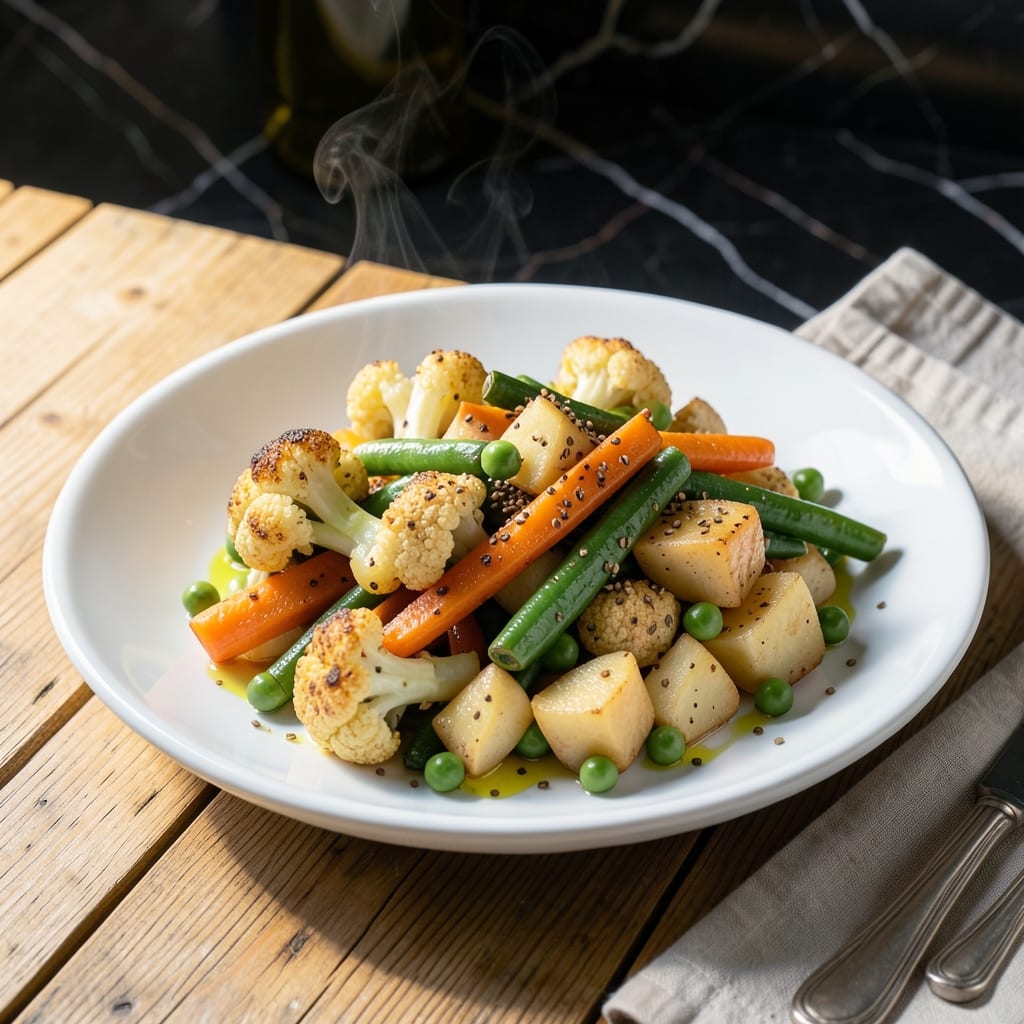
The secret to restaurant-style mixed vegetables lies in proper spice layering and precise cooking techniques. This vibrant medley brings authentic Indian flavors to your home kitchen without complicated steps.
I’ve refined this method over years of testing to achieve the perfect balance of tender-crisp vegetables coated in a fragrant, well-spiced sauce. The key is blooming whole spices in hot oil to unlock their full aroma before adding the vegetables.
What you’ll get is a colorful dish where each vegetable retains its identity while absorbing the rich, complex flavors of the spice blend. The result tastes like it came straight from your favorite Indian restaurant.
Serve it as a side or main dish with naan or rice. Here’s how to make it right every time.
Ingredients for Mixed Veg Recipe Restaurant Style
Fresh vegetables and warm spices create this vibrant, restaurant-worthy dish with ease.
| Ingredient | Amount | Notes |
|---|---|---|
| Caulfiflower Florets 🥦 | 3 cups | Fresh or frozen, cut evenly |
| Carrots 🥕 | 2 whole | Peeled, sliced into sticks |
| Green Beans 🌿 | 1 ½ cups | Trimmed, cut into 2-inch pieces |
| Potatoes 🥔 | 2 whole | Peeled, cubed into 1-inch pieces |
| Green Peas 🌱 | 1 cup | Fresh or frozen |
| Cumin Seeds 🌿 | 1 tsp | Whole seeds for blooming |
| Mustard Seeds 🌶️ | 1 tsp | Yellow or black variety |
| Turmeric Powder 🌿 | ½ tsp | Ground, for color and earthiness |
| Coriander Powder 🌿 | 1 tsp | Ground, for citrusy warmth |
| Garam Masala 🌶️ | 1 tsp | Store-bought or homemade blend |
| Vegetable Oil 🫒 | 3 tbsp | Neutral flavor, high smoke point |
| Yellow Onion 🧅 | 1 whole | Finely chopped for base flavor |
| Fresh Ginger 🌿 | 1 tbsp | Peeled, minced or grated |
| Fresh Green Chilies 🌶️ | 2 whole | Serrano or Thai, slit lengthwise |
| Salt 🧂 | 1 tsp | Adjust to taste at the end |
[recipe_ingredient_scaler]
The spices are non-negotiable here. Indian grocery stores will have the freshest whole cumin and mustard seeds—look for vibrant color and strong aroma. Garam masala varies by brand; MDH or Everest are solid choices. Potatoes should be waxy (like Yukon Gold) so they hold shape. I always grab my turmeric from Patel Brothers—their bulk bins are a game-changer (and way cheaper).
No fresh ginger? Ground ginger at half the amount works, but fresh is brighter. Swap green beans for bell peppers if you prefer. The chilies can be dried red chili powder at a pinch, but use one-fourth the amount—it’s potent. Frozen veggies are fine (I keep a bag of mixed in the freezer), just thaw and drain first. Skip the peas? Corn kernels add a nice sweetness.
Leftovers keep 3-4 days in the fridge, though the veggies soften over time. Reheat gently on the stove with a splash of water. Doesn’t freeze well—the texture changes too much. Best served fresh, straight from the pan.
Why You’ll Love This Recipe
- One Pan Wonder: I toss all the veggies—cauliflower, carrots, beans, potatoes, and peas—on a single tray, roast, and we’re eating in 25 minutes flat.
- Restaurant Flavor at Home: The cumin and coriander in the spice mix make the cauliflower florets taste just like my favorite takeout.
- Meal Prep Magic: I make a big batch Sunday night, and it reheats beautifully for lunches all week.
- Budget-Friendly Feast: A bag of frozen peas and a handful of fresh veggies stretch to feed four for less than a fiver.
Step-by-Step Instructions for Mixed Vegetable Medley
Here’s how I create this vibrant dish with restaurant-style flair and authentic spices.
Step 1: Prepare the Vegetables
Start by prepping all your vegetables. Peel and cube the 2 whole Potatoes into 1-inch pieces, and peel the 2 whole Carrots, slicing them into sticks. Trim the 1.5 cups Green Beans and cut them into 2-inch pieces.
Separate the 3 cups Caulfiflower Florets if using a whole head, and keep the 1 cup Green Peas ready—fresh or frozen works fine. Uniform cutting ensures even cooking, so take your time here. This is the foundation of a great dish.
Step 2: Bloom the Spices
Heat the 3 tbsp Vegetable Oil in a large, heavy-bottomed pan over medium heat. Once hot, add the 1 tsp Cumin Seeds and 1 tsp Mustard Seeds. Let them sizzle for 20-30 seconds until they pop and release their aroma—this is called blooming and it wakes up their flavors.
Add the finely chopped 1 whole Yellow Onion and cook for 3-4 minutes until it turns translucent. Stir in the minced 1 tbsp Fresh Ginger and the 2 whole Fresh Green Chilies (slit lengthwise), cooking for another 1 minute until fragrant.
Step 3: Cook the Vegetables with Spices
Add the turmeric powder, coriander powder, and 1 tsp Salt to the pan, stirring quickly to toast the spices for 10-15 seconds. This step deepens their flavors and prevents a raw taste.
Now add the Potatoes and Carrots, as they take the longest to cook. Stir to coat them in the spiced oil and cook for 5 minutes. Then add the Caulfiflower Florets and Green Beans, cooking for another 5-7 minutes until the vegetables start to soften.
Step 4: Finish with Peas and Garam Masala
Stir in the 1 cup Green Peas and sprinkle the 1 tsp Garam Masala over the top. Cook for an additional 3-4 minutes until all the vegetables are tender but still hold their shape. The peas will heat through quickly, and the garam masala adds a warm, finishing note.
Taste and adjust the Salt if needed. The vegetables should be vibrant in color and coated evenly in the fragrant, golden spices. This is how you achieve that restaurant-style depth of flavor.
Pro Tips For Making Mixed Veg Recipe Restaurant Style
- Blanch the Greens: Parboil the green beans for exactly 2 minutes in salted water before stir-frying—I learned this the hard way after serving crunchy, undercooked beans too many times.
- Cut Evenly: Chop all vegetables into uniformly small pieces, about 1-inch cubes, so they cook at the same rate. Sounds tedious, but it actually changes the outcome.
- Skip Overcrowding: Stir-fry in batches if needed; tossing too many veggies at once steams them instead of searing. After burning three batches, I finally figured this out.
- Boost with Garlic: Add minced garlic to the hot oil just before the veggies, not after—it infuses the dish with that restaurant-style aroma. My grandmother swore by this, and she was right.
Dietary Considerations for This Dish
Naturally Vegetarian
This dish is inherently vegetarian and packed with plant-based goodness. The combination of vegetables provides a wide range of vitamins, minerals, and fiber, making it a nutritious choice for any meal. I love how it satisfies without any meat.
Vegan-Friendly Adaptation
To make this dish fully vegan, simply ensure your garam masala blend doesn’t contain any dairy-based additives. Most store-bought versions are naturally vegan, but I always double-check the label. MDH and Everest brands are safe bets.
Gluten-Free by Nature
All ingredients in this recipe are naturally gluten-free, so it’s perfect for those avoiding gluten. Just be mindful of cross-contamination if you’re highly sensitive. I’ve served this to gluten-free friends many times without issues.
Allergen Considerations
The primary allergen to watch for is mustard seeds, which can trigger reactions in some individuals. If mustard is a concern, you can omit the seeds and add an extra ½ tsp of cumin seeds instead. 💡
Low-Calorie Option
For a lighter version, reduce the oil to 1 tbsp and use a non-stick pan. The spices will still bloom beautifully, and you’ll cut calories without sacrificing flavor. I often do this when I’m watching my intake.
Spice Level Adjustments
If you’re sensitive to heat, reduce or omit the green chilies. For extra flavor without spice, add ½ tsp of asafoetida (hing) when blooming the spices. It’s a common Indian ingredient that adds depth. 🌶️
Nutrition Facts
Frequently Asked Questions
Can I use frozen vegetables instead of fresh?
Yes, frozen works well if thawed and drained first. They may release more water, so cook uncovered to let excess liquid evaporate. The texture stays good with proper prep.
How do I keep the vegetables crisp-tender?
Cut all pieces evenly and add dense veggies like potatoes first. Cook on medium heat for 15-20 minutes total, stirring occasionally. Don’t overcrowd the pan.
Can I make this ahead of time?
Best served fresh, but leftovers keep 3-4 days in the fridge. Reheat gently with a splash of water to prevent drying. Avoid freezing as it softens the texture.
What if I don’t have garam masala?
Substitute with ½ tsp each of cinnamon and black pepper plus ¼ tsp cloves. It won’t be identical but adds warm depth.

Trained in classic French technique but raised on slow-cooked ribs and spicy rubs, she blends culinary skill with smoke and soul.
- Recipe for Boneless Pork Chops in Cast Iron Skillet: Sear and Baste to Juicy Perfection - October 3, 2026
- Recipe for Boneless Cross Rib Roast: Slow-Roasted Beef with Herb Crust - October 3, 2026
- Hamburgers in Sauce Recipe Crock Pot: Slow-Cooked Savory Delight - October 3, 2026