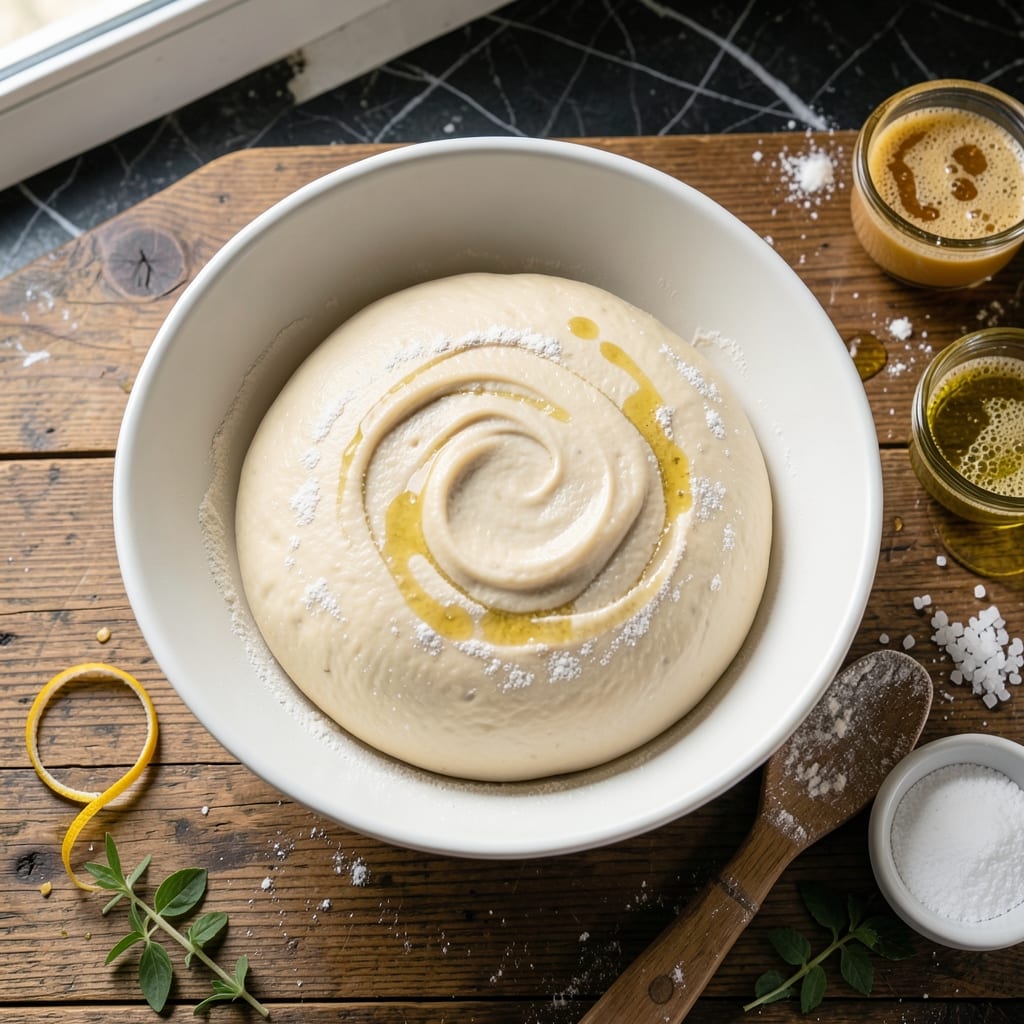
This modern pizza dough delivers the perfect chewy base for any topping combination you can imagine. I developed this recipe after testing countless variations in my small Boston kitchen, always searching for that ideal balance of crisp and soft.
The secret lies in the precise hydration and a slow, cold rise that develops complex flavors. Unlike traditional recipes, this version incorporates a touch of honey for subtle sweetness that enhances the crust’s depth.
What you’ll get is a dough that bakes up golden with a tender interior and just enough bite. It holds up beautifully to both classic and innovative toppings, making it the foundation for endless pizza creativity.
Ready in about 24 hours with minimal active time, this dough is worth the wait. Here’s how to make it perfectly every time.
Ingredients for Mod Pizza Dough
A few pantry staples and a touch of patience create this versatile dough base.
| Ingredient | Amount | Notes |
|---|---|---|
| Bread Flour 🌾 | 3 ½ cups | High-protein for chewy texture |
| Active Dry Yeast 🍞 | ¾ tsp | Instant or active dry both work |
| Kosher Salt 🧂 | 2 tsp | Diamond Crystal preferred for consistency |
| Honey 🍯 | 2 tbsp | Subtle sweetness for depth |
| Olive Oil 🫒 | 3 tbsp | Extra-virgin for rich flavor |
| Lukewarm Water 💧 | 1 ¼ cups | About 110°F for yeast activation |
| All-Purpose Flour 🌾 | ½ cup | For dusting work surface |
| Cornmeal 🌽 | ¼ cup | For dusting peel and pan |
| Sugar 🍚 | ½ tsp | Helps activate yeast |
| Semolina Flour 🌾 | 2 tbsp | Optional for extra crispiness |
[recipe_ingredient_scaler]
The flour is critical here. King Arthur Bread Flour is my go-to for its consistent high protein content (12.7%), which gives that perfect chew. You’ll find it at Whole Foods or any well-stocked supermarket. The yeast should be fresh—check the date on the packet. Honey adds that subtle sweetness that sets this apart from traditional doughs, and local raw honey (if you have it) brings extra depth.
No bread flour? All-purpose works in a pinch—just add an extra tablespoon of flour to compensate for the lower protein. Swap honey for agave or maple syrup if you prefer. For the olive oil, any extra-virgin will do, but I splurge on California Olive Ranch. The lukewarm water must be right—too hot kills the yeast, too cold slows activation (110°F is ideal).
Dough can rest in the fridge for up to 48 hours—longer develops more flavor. Bring to room temp before shaping. Baked dough freezes well for 1 month (slice, wrap tightly). Always store yeast in the freezer to extend shelf life.
Why You’ll Love This Recipe
- 5-Minute Mix: I can have this dough ready before the oven even preheats—just mix, rest, and roll.
- Honey-Kissed Crust: The honey adds a subtle sweetness that balances the olive oil’s richness perfectly.
- Endless Topping Canvas: Honestly, I’ve used this for thin crust, thick crust, and even garlic knots.
- Budget-Friendly Batch: One batch makes four pizzas, and the ingredients cost less than a takeout pie.
Step-by-Step Instructions for Mod Pizza Dough
This method delivers a chewy, flavorful base that holds up to any topping combination you choose.
Step 1: Activate the Yeast for Maximum Rise
In a small bowl, combine the 1.25 cups lukewarm water, 0.75 tsp active dry yeast, 0.5 tsp sugar, and 2 tbsp honey. The water should feel warm but not hot to the touch—about 110°F. This temperature wakes up the yeast without killing it.
Let this mixture sit for 5-7 minutes until it becomes frothy and bubbly. You’ll see the surface transform as the yeast activates—this is your visual confirmation that it’s alive and ready. If nothing happens, your yeast may be expired, and you’ll need to start fresh.
This activation step ensures your dough will rise properly and develop that airy, chewy texture we’re after.
Step 2: Mix and Knead the Dough to Develop Gluten
In a large mixing bowl, whisk together the 3.5 cups bread flour and 2 tsp kosher salt. Create a well in the center and pour in the yeast mixture and 3 tbsp olive oil. The bread flour’s high protein content is what gives this dough its signature chew.
Using a wooden spoon, stir until a shaggy dough forms. Then turn it out onto a surface dusted with 0.5 cup all-purpose flour and knead for 8-10 minutes by hand. The dough should become smooth and elastic, springing back when poked.
If it feels too sticky, resist the urge to add more flour—wet dough makes better pizza. The stickiness will decrease as you knead and the gluten develops.
Step 3: First Rise for Flavor Development
Lightly oil a clean bowl, place the dough inside, and cover it with a damp towel. Let it rise in a warm, draft-free spot for 1-2 hours or until doubled in volume. I like to place it in an oven with the light on for consistent warmth.
You’ll know it’s ready when the dough has puffed up significantly and a finger pressed gently into the surface leaves an indentation that slowly springs back. This first rise allows the yeast to ferment, developing complex flavors in your crust.
The timing can vary based on your kitchen’s temperature—don’t rush this step. Patience here means better texture and taste.
Step 4: Shape and Second Rise for Perfect Texture
Punch down the risen dough to release the air, then divide it into 4 equal portions for individual pizzas. On a surface dusted with 0.25 cup cornmeal, roll out each portion to your desired thickness. The cornmeal adds a subtle crunch and prevents sticking.
Transfer the shaped dough to a baking sheet or pizza peel dusted with 2 tbsp semolina flour. This extra layer of protection ensures your pizza slides off easily when it’s time to bake. The semolina also adds a pleasant texture to the bottom crust.
Let the dough rise again for 30-45 minutes until slightly puffed. This second rise relaxes the gluten, making the dough easier to stretch and shape without tearing.
Pro Tips For Making Mod Pizza Dough
- Proof the Yeast: Always bloom your active dry yeast in warm water (around 110°F) with a pinch of honey—if it doesn’t foam within 5 minutes, your dough won’t rise.
- Use Bread Flour: Skip all-purpose flour here; the higher protein in bread flour gives that chewy, stretchy texture MOD pizza is known for.
- Don’t Over-Knead: I learned this the hard way—mixing just until the dough comes together (about 3-4 minutes in a stand mixer) keeps it tender, not tough.
- Let It Rest: After shaping, give the dough a 30-minute rest at room temperature before stretching—it relaxes the gluten so it doesn’t snap back.
Troubleshooting Great mod pizza dough
Dense Dough Problems
If your dough feels too heavy after kneading, you likely used too much flour. Bread flour needs 8-10 minutes of kneading to develop properly. I made this mistake early on in my Boston kitchen—resist adding extra flour until you’ve kneaded the full time. 💪
Dough Won’t Rise
Check your yeast first. If it didn’t foam in the activation step, it’s likely expired. Also, ensure your kitchen is warm enough—75-80°F is ideal for rising. I’ve had to place my bowl in the oven with just the light on in winter.
Sticky Dough Issues
This dough should be slightly tacky. If it’s unbearably sticky, your flour may be old or low-protein. King Arthur Bread Flour is my go-to for consistent results. Dust your surface with all-purpose flour, but use a light hand.
Overproofed Dough
If your dough collapses when shaping, it’s overproofed. The first rise should take 1-2 hours at room temp. In my triple-decker, I set a timer to avoid forgetting. Poke the dough—if the indent stays, it’s ready.
Tough Crust
Over-kneading or too much flour creates tough crust. Knead just until smooth, about 10 minutes. Let the dough rest 30-45 minutes before shaping to relax the gluten. This was my pot pie lesson—sometimes less is more. ✨
Flat Pizza
If your pizza spreads too thin while baking, the dough may need more structure. Ensure you’re using bread flour and not overloading with toppings. I learned this the hard way with a sad, flat pizza night.
Nutrition Facts
Frequently Asked Questions
Can I use all-purpose flour instead of bread flour?
Yes, but add 1 tablespoon extra flour to compensate. Bread flour’s higher protein creates that ideal chew, but all-purpose works in a pinch.
Why does the dough need a cold rise?
A slow, cold rise develops deeper flavor. The 24-hour rest in the fridge allows fermentation to work its magic, creating a more complex, tasty crust.
How do I store leftover dough?
Wrap tightly in plastic and refrigerate for up to 48 hours. For longer storage, freeze for 1 month—just thaw overnight before using.
Can I skip the second rise?
No, the 30-45 minute second rise relaxes the gluten, making the dough easier to stretch and shape without tearing. Patience pays off!

Trained in classic French technique but raised on slow-cooked ribs and spicy rubs, she blends culinary skill with smoke and soul.
- Recipe for Boneless Pork Chops in Cast Iron Skillet: Sear and Baste to Juicy Perfection - October 3, 2026
- Recipe for Boneless Cross Rib Roast: Slow-Roasted Beef with Herb Crust - October 3, 2026
- Hamburgers in Sauce Recipe Crock Pot: Slow-Cooked Savory Delight - October 3, 2026